 Whatcom County
 Why Decks in Samish Wear Out Faster Than the Brochures Suggest
A deck in Samish doesn't fail the same way a deck in a dry inland climate fails. Out here, the damage is slow and it's usually hidden until it isn't. Salt-laden air off the water corrodes fasteners and hardware from the inside out, long before the boards themselves look bad. Driving rain gets pushed sideways under railings and against ledger boards by wind that most decks were never actually engineered to shed. And the tree cover that makes this part of Whatcom County so pleasant to live in also means shade, damp organic debris, and a moss season that can run half the year. Put those three things together and you get decks that look fine from the yard but are quietly rotting at the connections that matter most.
We replace decks in this area regularly enough to know where that failure shows up first — and it's almost never where a homeowner expects.
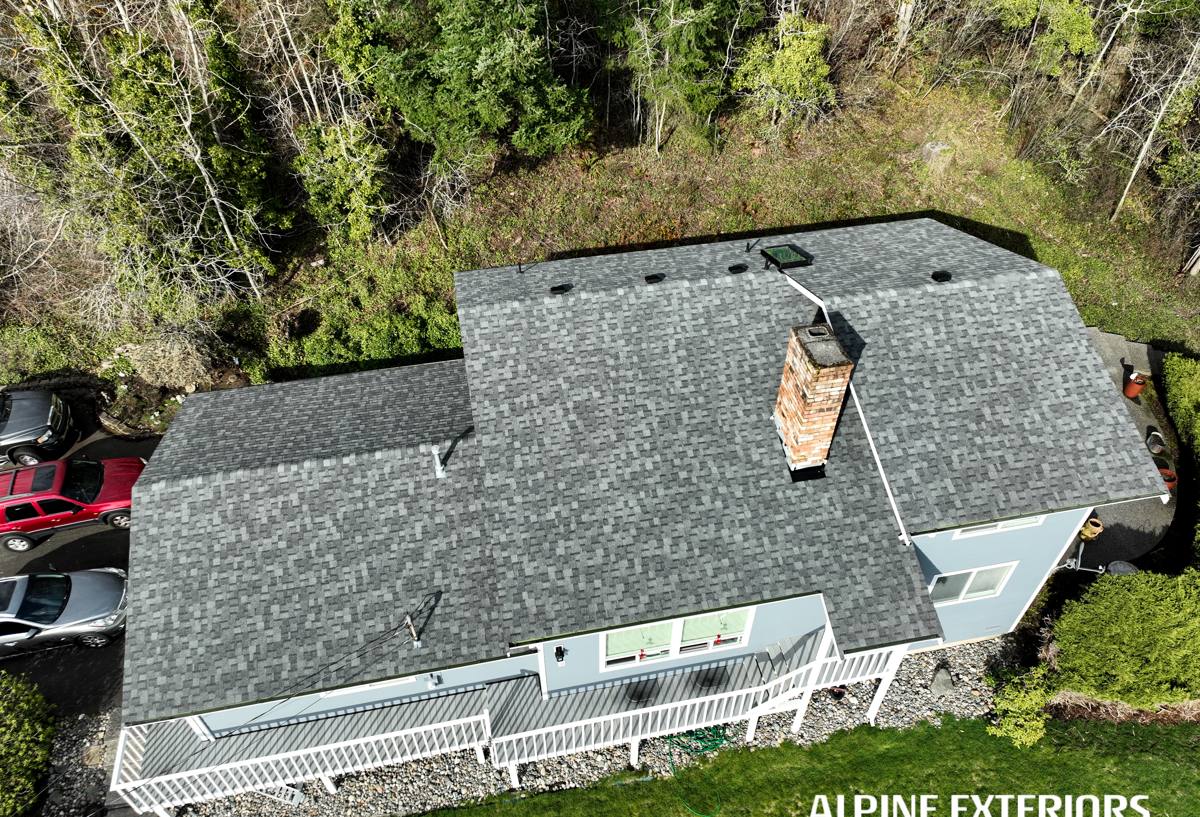
Signs a Deck Needs Replacing, Not Just Patching
Board replacement and spot repairs make sense for isolated damage. A full deck replacement is the honest answer when the problems are structural or systemic rather than cosmetic. Here's how to tell which situation you're in.
- A screwdriver sinks into the ledger board, rim joist, or posts with light pressure — that's rot, not just weathering.
- The deck feels bouncy or springy underfoot, especially near the house or at mid-span.
- Railings wiggle at the base even after tightening hardware, which usually means the post connection itself has failed.
- Rust streaks are bleeding out from under fastener heads or joist hangers.
- Moss or algae keeps returning within weeks of cleaning, which points to a moisture problem in the structure, not just the surface.
- The deck was built without a proper ledger flashing detail, which is common on older homes and is a slow, guaranteed source of hidden rot.
If more than one or two of these apply, patching individual boards is usually a short-term fix on top of a longer-term problem. Replacement lets us correct the structure once instead of chasing symptoms every season.
What a Correct Deck Replacement Actually Involves
The Ledger Connection
This is where a deck attaches to the house, and it's the single most common failure point we find in this climate. A correctly flashed ledger keeps water from tracking behind the siding and into the rim joist. A poorly flashed one lets water in slowly for years, which is exactly the kind of damage that stays invisible until the deck starts to sag. Replacement is our chance to fix this properly — with correct flashing, proper fastener spacing, and a gap that lets water drain instead of pool.
Footings and Framing
Undersized or frost-heaved footings are common in older decks in this region. We check footing depth and condition against current code requirements, not against whatever was acceptable when the original deck went in. Joists, beams, and posts get sized for the actual span and load, not just matched to what was there before.
Fasteners and Hardware
In an area with real salt air exposure, fastener choice isn't a minor detail — it's the difference between hardware that lasts and hardware that streaks rust through your decking within a couple of years. We use stainless steel or high-corrosion-resistance coated fasteners and hangers rated for the wood or composite being installed, not general-purpose hardware.
Drainage and Ventilation
A deck that can't shed water and dry out underneath will grow moss and mildew no matter what decking material sits on top. Correct joist spacing, gapping between boards, and grading underneath the deck all matter more here than they would in a drier climate.
Choosing the Right Decking Material for This Climate
There's no single "best" decking material — there's the right material for your budget, your maintenance appetite, and this specific climate. Here's how the common options actually perform in a Samish/Whatcom County setting.
| Material | How It Handles Rain & Moss Season | Maintenance | Typical Lifespan |
|---|---|---|---|
| Pressure-treated wood | Needs sealing to resist moisture pickup; can trap dampness against fasteners if not gapped correctly | Annual cleaning and periodic sealing/staining | 10–15 years with upkeep |
| Cedar | Naturally moisture- and insect-resistant, but still needs sealing in a wet climate to prevent graying and moss growth | Regular cleaning and sealing | 15–20 years with upkeep |
| Capped composite | Doesn't absorb water like wood, resists moss better, but the capped shell can be damaged and needs proper hidden-fastener spacing to drain | Occasional washing, no sealing or staining | 25–30 years, manufacturer-dependent |
| PVC decking | Fully synthetic, best resistance to moisture and moss buildup, but installation is less forgiving of expansion/contraction than wood | Low — occasional washing | 25–30+ years, manufacturer-dependent |
We install a range of these depending on what the homeowner wants, and we're honest about the trade-offs rather than pushing whatever has the best margin. Wood is a real, reasonable choice if you're willing to keep up with sealing on a schedule — in this climate that means staying ahead of moss, not catching up to it. Composite and PVC cost more up front but shift the long-term burden from maintenance to installation quality, which is exactly why correct fastening and spacing matter more with those products, not less.
What Drives the Cost of a Deck Replacement
| Factor | Why It Matters |
|---|---|
| Size and shape of the deck | Multi-level decks, curves, and built-in benches or stairs add labor beyond a simple square footprint |
| Structural condition underneath | Rotted joists, undersized footings, or a failed ledger connection add rebuild scope beyond surface-level replacement |
| Decking material selected | Wood, composite, and PVC carry different material costs and different fastening requirements |
| Railing style | Cable, glass, and custom railing systems cost more than standard baluster railing |
| Site access | Tight side yards, slopes, or limited equipment access can add labor time |
| Permit and inspection requirements | Structural changes typically require permitting, which adds time and a modest fee but protects you at resale |
We won't quote a number without seeing the deck — anyone who does is guessing at the structural condition, which is usually where the real cost differences show up.
Permits and Code Compliance
Deck replacement involving structural changes — new footings, altered framing, or railing height changes — typically requires a building permit in Whatcom County. This isn't paperwork for its own sake: it means a third party confirms your footings, framing, and railings meet current safety code, which matters both for your family's safety and for a clean sale down the road if you ever list the home. We handle the permit process as part of the job rather than leaving homeowners to navigate it alone, and we build to current code even in cases where the old deck was grandfathered in under older rules.
Our Deck Replacement Process
1. On-Site Assessment
We check the ledger connection, footings, framing, and hardware condition before quoting anything. This is where we catch hidden rot that isn't visible from the surface.
2. Demolition and Disposal
The old deck comes out, including any compromised framing, and we haul away debris — you're not left with a pile of old boards to deal with.
3. Structural Rebuild
Footings, framing, and the ledger connection get rebuilt to current code with corrosion-resistant hardware and proper flashing.
4. Decking and Railing Install
Boards go down with correct gapping for drainage, and railings are installed to current height and spacing requirements.
5. Final Walkthrough
We walk the finished deck with you, point out anything specific to your material's care, and make sure everything is solid before we call it done.
Why It Matters That We Already Work in Samish
A crew that mostly works in a different climate zone will default to habits that make sense somewhere drier — lighter flashing details, standard fasteners, less attention to drainage under the deck. None of that holds up well against the combination of salt air, driving rain, and a long moss season that defines this part of Whatcom County. Working locally and repeatedly in Samish means we've already seen how decks here actually fail, not just how they're built to spec on paper.
A few questions worth asking any contractor before you hire them for a deck replacement:
- Do they pull permits for structural deck work, or suggest skipping it?
- What fastener and hardware grade do they use, and is it rated for coastal/salt-air exposure?
- How do they detail the ledger flashing where the deck meets the house?
- Are they licensed and insured in Washington, and will they show proof without hesitation?
- Do they give a written scope of work, or just a lump-sum number with no breakdown?
- Can they explain the trade-offs between decking materials honestly, without steering you toward the most expensive option by default?
Keeping a New Deck in Good Shape
A correctly built deck still needs some seasonal attention in this climate. Clear leaves and debris off the surface and out from between boards before wet weather sets in — trapped organic matter is what feeds moss growth. Rinse the deck periodically, especially in shaded areas, to interrupt moss before it establishes. If you chose wood, plan on resealing on the schedule your product calls for rather than waiting until it visibly grays. Check railing posts and stair connections once a year for movement, since that's often the first sign of a developing problem, structural or otherwise.
If your deck is showing its age, or you're just not sure whether it needs repair or full replacement, we're happy to take a look and give you a straight answer. Reach out for a free, no-pressure estimate — we'll assess the structure honestly and walk you through what it actually needs.