 Whatcom County
 Why Edgemoor Siding Has to Work Harder Than Siding Inland
Edgemoor sits close to Bellingham Bay, which means homes here deal with a combination that inland Whatcom County neighborhoods don't face in the same way: salt-laden air rolling off the water, wind-driven rain that hits walls at an angle instead of just falling straight down, and heavy tree cover that keeps north- and west-facing walls damp and shaded for long stretches of the year. Add in a moss season that can run from fall through spring, and you have a climate that's constantly testing whatever material is on the outside of the house.
None of this is dramatic weather — no hurricanes, no extreme freeze-thaw cycling. It's the slow, patient kind of exposure that wears down siding over years, not days. Paint film breaks down faster under salt exposure. Wood-based products absorb moisture at seams and edges that never fully dry between rains. Moss and algae take hold on shaded siding and hold water against the surface long after the sun comes back out. A siding material that's marginal in a drier climate can fail years ahead of schedule on a shaded, bay-facing lot in Edgemoor.
That's the backdrop for every siding decision we make on homes in this neighborhood: pick a material engineered for this kind of exposure, then install it in a way that doesn't create weak points for moisture to exploit.
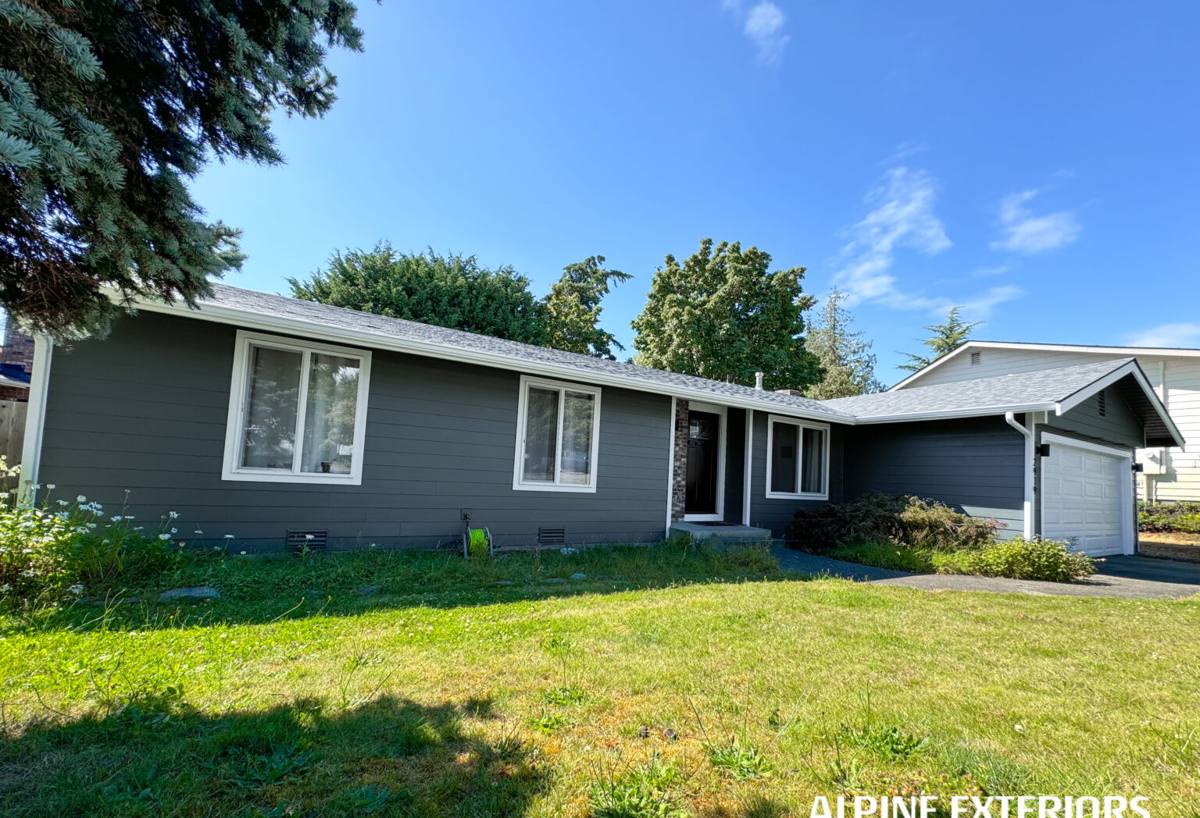
What a Correct Fiber Cement Install Looks Like on a Bay-Facing Lot
Fiber cement siding is only as good as the assembly behind it. On Edgemoor homes, we pay particular attention to the details that matter most in a wet, shaded, salt-air environment:
Weather-resistive barrier and flashing
Every wall gets a continuous weather-resistive barrier installed with proper shingle-lap overlaps, and every window, door, and penetration gets flashed so water is directed out and away from the sheathing, never trapped behind it. On roof-to-wall intersections — common on the multi-gable rooflines you see throughout this neighborhood — kick-out flashing is non-negotiable. Skip it and water runs straight down behind the siding at that corner for the life of the house.
Rainscreen gaps on shaded walls
On walls that stay damp longer — heavily treed lots, north-facing elevations, anything close to the water — we build in a drainage gap behind the siding rather than nailing it tight to the wall. That gap lets bulk water and moisture vapor escape instead of sitting against the back of the panel, which matters more in Edgemoor's tree cover than it would on an open, sun-exposed lot elsewhere in the county.
Fastening and clearances to spec
James Hardie publishes exact fastener types, spacing, and embedment depth for every product line, along with minimum clearances from grade, roofing, decks, and other siding. We follow those specs, not a shortcut version of them, because the clearances exist specifically to keep splashback and standing water off the bottom edge of the siding — the first place fiber cement siding fails when it's installed wrong.
Sealed cut edges and factory finish
Every field cut gets primed or sealed before installation so raw fiber cement edges aren't left exposed to weather. On ColorPlus-finished siding, we use the manufacturer's touch-up system so cut edges and any minor scuffs match the factory finish instead of standing out as a different sheen or shade down the road.
Why We Only Install James Hardie
We install one siding brand: James Hardie fiber cement. That's a deliberate standard, not a lack of options. We don't install vinyl, LP SmartSide, primed wood, or other fiber cement brands, because after years of doing this work in Whatcom County's climate, Hardie is the product we trust to hold up to salt air, sustained moisture, and a long wet season without the maintenance headaches or premature failures we've seen from other materials in this exact environment. It's non-combustible, which matters more every year as wildfire smoke and ember exposure become a bigger part of Pacific Northwest summers. It carries a factory-applied ColorPlus finish that resists fading and chipping far better than field-applied paint. And it comes with a strong, transferable warranty backed by a manufacturer that engineers specific product lines for climates like ours.
James Hardie Product Lines That Fit Edgemoor Homes
Edgemoor has a mix of architectural styles — older craftsman and traditional homes with classic horizontal lap siding, newer builds with cleaner lines, and everything in between. James Hardie's lineup covers that range without forcing a compromise:
- HardiePlank lap siding — the standard horizontal lap look for traditional and craftsman-style homes, available in several exposure widths and textures.
- HardiePanel vertical siding — used for board-and-batten sections, accent walls, or full vertical applications on more contemporary homes.
- HardieTrim — matching trim boards for corners, windows, and fascia so the whole exterior reads as one system instead of mismatched materials.
- HZ5 climate-engineered formulation — Hardie's product line engineered for cold, wet climates like the Pacific Northwest, which is what we specify on homes in this region rather than a warmer-climate formulation.
ColorPlus finish comes in a range of factory colors, which matters in a neighborhood like Edgemoor where a lot of homes sit close together among mature trees — the color needs to hold up without a repaint in five or six years, not just look good on installation day.
Our Process, Start to Finish
The steps don't change much from house to house, but the details we check at each one are shaped by what we see repeatedly on Edgemoor's bay-adjacent, tree-shaded lots.
- On-site assessment. We look at the existing siding, check for soft or delaminated sheathing, note shaded and wind-exposed walls, and identify any flashing or drainage problems already present.
- Written scope and estimate. You get a clear breakdown of product lines, colors, tear-off scope, and any sheathing or rot repair identified — no vague allowances.
- Tear-off and substrate repair. Old siding comes off, and any damaged sheathing or framing gets repaired before anything new goes up. Covering over a moisture problem never fixes it.
- Weather barrier and flashing. WRB, flashing, and (on shaded or exposed walls) a drainage gap go in before a single piece of siding is hung.
- Siding installation to manufacturer spec. Fastening, clearances, and joint treatment follow James Hardie's published installation guidelines.
- Trim, caulking, and touch-up. Trim goes on, joints get sealed with the right sealant for a ColorPlus finish, and any cut edges are touched up to match.
- Final walk-through. We go over the finished job with you before calling it done, and warranty registration is handled as part of the project — not left for you to track down later.
What Drives Cost on a Fiber Cement Project in Edgemoor
Every home is different, and we won't quote a number without seeing the house, but these are the factors that most often move a project up or down in scope:
| Factor | Why It Matters Here |
|---|---|
| Existing siding removal | Tear-off and disposal add time, especially if old siding conceals moisture damage that needs repair first |
| Sheathing or framing repair | Common on bay-facing or heavily shaded walls where moisture has been sitting behind old siding for years |
| Wall height and access | Multi-story sections and tight, treed lots slow down staging and material handling |
| Trim and detail complexity | Multiple gables, window trim, and accent details take more labor than a simple rectangular wall |
| Rainscreen/drainage gap | Added on shaded or exposure-prone walls for better long-term moisture performance |
| Color and product line | ColorPlus factory colors and specific product lines (lap vs. panel vs. trim mix) affect material cost |
Signs Your Current Siding Is Already Failing
A lot of homeowners call us after noticing something that's been building for a while, not something new. If you're seeing any of the following, it's worth having the wall assembly checked, not just the surface:
- Paint that's bubbling, peeling, or chalking heavily, especially on north- or west-facing walls
- Soft spots or areas that flex when you press on the siding
- Dark staining or streaking at seams and butt joints
- Persistent moss or algae growth that comes back within weeks of cleaning
- Visible gaps or separation at trim boards and corners
- Warping, cupping, or buckling panels, particularly near the ground or roofline
Maintaining Fiber Cement in a Marine, Moss-Prone Climate
One of the real advantages of correctly installed fiber cement is how little maintenance it asks for compared to wood-based siding — but "little" isn't "none," especially this close to the water. A yearly rinse-down (garden hose pressure, not a pressure washer aimed directly at seams) keeps salt residue and organic buildup from taking hold. Gutters and downspouts should stay clear so water isn't overflowing down the wall face during heavy rain. It's worth a periodic look at caulking around trim and penetrations, since sealant is the one component that ages faster than the siding itself and is cheap to touch up before it fails. On lots with heavy tree cover, keeping branches and shrubs pulled back a bit from the walls helps sunlight and air reach shaded siding faster after a rain, which cuts down on moss regrowth.
Why a Crew That Already Works in Whatcom County Matters
Siding installation is the same skill set everywhere in the sense that fasteners and flashing details don't change by zip code. What changes is judgment — knowing which walls in a neighborhood like Edgemoor need a drainage gap and which don't, recognizing moisture damage that's been quietly building behind old siding on a bay-facing wall, and scheduling tear-off and dry-in around a wet season that can stretch on longer here than it does thirty miles inland. A crew that's worked this part of Whatcom County repeatedly has already seen how these specific lots — close to the water, shaded by mature trees, exposed to salt air — behave over time, and builds that knowledge into every install instead of learning it on your house.
If you're considering fiber cement siding for a home in Edgemoor, we're happy to take a look and walk you through what we're seeing, no pressure and no obligation. Reach out using the form below for a free estimate.