 Whatcom County
 Why Columbia Roofs Wear the Way They Do
Homes in the Columbia neighborhood sit close enough to Bellingham Bay that salt-laden air is a daily fact of life, not an occasional event. Add Whatcom County's long wet season — months of driving rain broken up by heavy fog and dew — and you get a roof environment that's harder on materials than most manufacturers' warranty testing accounts for. Metal fasteners corrode faster near the water, organic growth gets a head start in shaded, damp yards, and shingles that would last three decades in a dry inland climate can start showing granule loss and edge curling well ahead of schedule here.
None of that means Columbia roofs are doomed to fail early. It means the replacement has to be specified for this climate, not for a generic average. That's the difference between a roof that needs attention again in twelve years and one that quietly does its job for its full rated life.
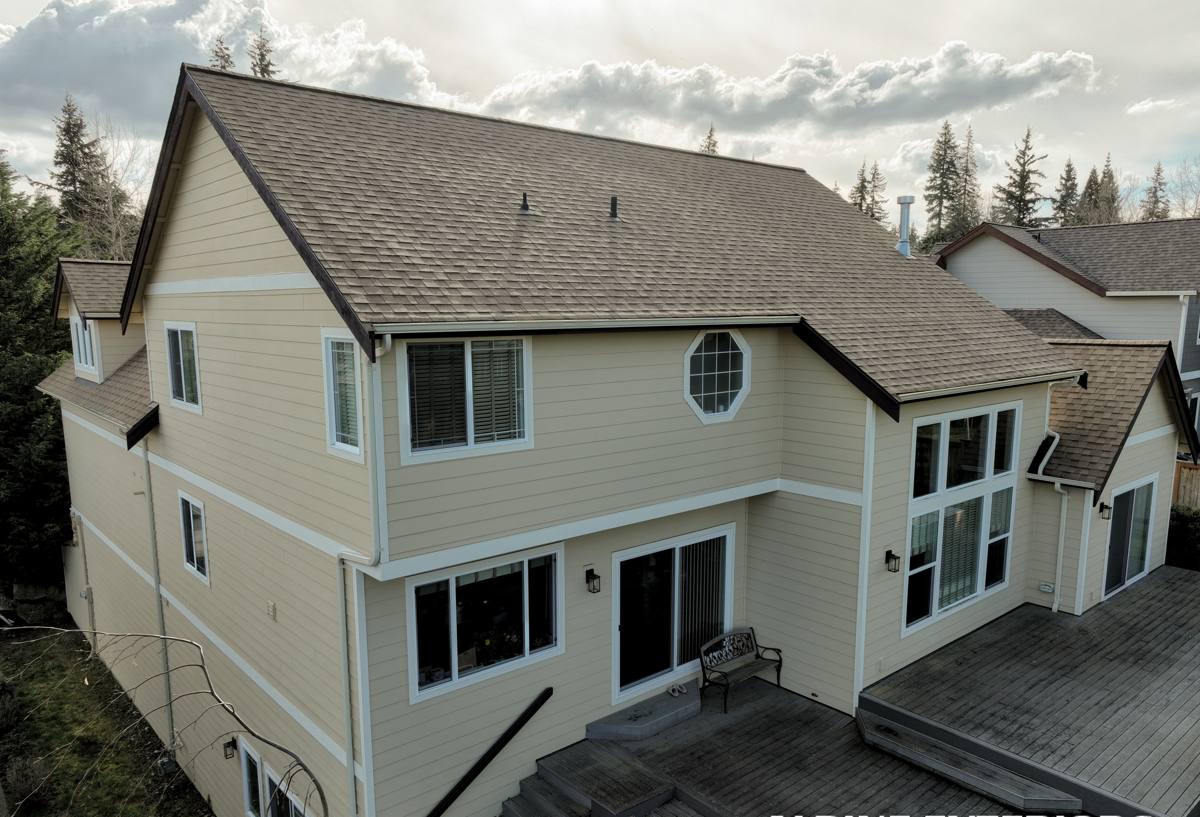
What a Correct Replacement Actually Involves
A roof replacement is more than stripping old shingles and nailing down new ones. In a wet, moss-prone county like this one, several steps matter more than they would elsewhere.
Tear-Off and Deck Inspection
Every layer of old roofing comes off so we can see the actual deck — not just patch over it. Whatcom County's rain doesn't forgive hidden rot. Soft, delaminated, or water-stained plywood or plank sheathing gets replaced before anything new goes down. Skipping this step is the single most common reason a "new" roof leaks within a few years.
Underlayment and Moisture Barriers
Given how many wet-to-dry cycles a Columbia roof goes through in a year, we use synthetic or high-quality underlayment rated for extended UV and moisture exposure, and we install self-adhering ice-and-water barrier at eaves, valleys, and roof-to-wall transitions — the spots where wind-driven rain gets pushed sideways under standard shingles.
Ventilation
A roof deck that can't breathe stays damp longer, which feeds both rot and moss growth from underneath. We check intake and exhaust venting as part of every replacement and correct it when the attic isn't moving air the way it should, rather than just replicating whatever ventilation (or lack of it) was there before.
Flashing and Valleys
Flashing around chimneys, skylights, and sidewalls is where most roof leaks actually start, not in the open field of shingles. We replace flashing rather than reusing old pieces, and we use metal and sealants chosen for coastal-air corrosion resistance.
Material Choices That Make Sense for This Climate
There's no single "best" roofing material for every Whatcom County home — it depends on the roof's pitch, the home's exposure to salt air, budget, and how much moss maintenance a homeowner wants to take on. Here's how the common options stack up for a coastal, moss-prone property like those in Columbia.
| Material | Moss & Algae Resistance | Coastal Air Durability | Typical Lifespan Here |
|---|---|---|---|
| Standard asphalt shingle | Moderate — needs periodic cleaning | Good with corrosion-resistant fasteners | 18-22 years |
| Algae-resistant (AR) shingle | Better — copper-infused granules slow growth | Good | 20-25 years |
| Standing-seam metal | Very good — little for moss to grip | Excellent with the right coating and fastener spec | 40-50+ years |
| Cedar shake | Poor without regular treatment | Fair — needs diligent maintenance near salt air | 15-25 years, maintenance-dependent |
We install algae-resistant shingles as our standard on most Columbia replacements because they hold up well against this climate without a major cost jump over standard shingle. Metal is a strong option for homeowners who want to minimize long-term moss maintenance and are comfortable with the higher upfront cost. We're honest with clients about cedar shake: it can look great, but it demands a maintenance commitment — periodic cleaning and treatment — that many homeowners underestimate in a climate this wet, and we say so up front rather than after the sale.
Moss, Algae, and Whatcom County's Long Wet Season
Moss doesn't just sit on top of a roof — its root structure lifts shingle edges and holds moisture against the surface, which accelerates granule loss and, eventually, leaks. In a county where roofs stay damp for a large part of the year, moss isn't a cosmetic issue; it's a maintenance issue with real consequences if ignored.
A few things reduce moss pressure on a new roof:
- Zinc or copper strips installed near the ridge, which release trace metal ions that inhibit growth as rain washes over them
- Keeping tree branches trimmed back so the roof gets more sun and airflow, especially on north-facing slopes
- Choosing algae-resistant shingles or metal roofing where shading is unavoidable
- Gentle, scheduled cleaning — soft washing rather than pressure washing, which strips granules and shortens shingle life
We factor shade patterns and roof orientation into the replacement plan itself, not just as an afterthought for the homeowner to manage later.
Salt Air and Coastal Exposure
Proximity to Bellingham Bay means airborne salt reaches roofs and speeds up corrosion on anything less than fully rated hardware. We use stainless or hot-dip galvanized fasteners and flashing rated for coastal exposure rather than standard-grade materials that look fine on day one but start rusting at the head of every nail within a few years. It's a small cost difference at install time and a significant difference in how the roof looks and performs a decade out.
Our Roof Replacement Process
Every roof we replace in Columbia follows the same sequence, adjusted for the specific home:
- On-site inspection of the current roof, attic ventilation, and any visible interior water staining
- Written estimate that spells out material, scope, and any deck repair contingencies before work starts
- Material selection walkthrough, including the trade-offs above so the choice fits the budget and the climate
- Full tear-off and deck inspection, with any damaged sheathing replaced and documented
- Underlayment, ice-and-water barrier, and flashing installed before the finish material goes down
- New roofing installed to manufacturer spec, with attention to nailing pattern and exposure — both of which matter more in high-wind, high-rain conditions
- Full site cleanup, including a magnetic sweep for stray nails
- Final walkthrough with the homeowner and warranty paperwork provided
We keep the roof dried-in at the end of every work day. In a climate where an afternoon shower can show up with little warning, an open deck overnight isn't a risk we take.
What Drives the Cost of a Roof Replacement
Every roof is priced individually, but the same handful of factors move the number up or down on most Whatcom County homes:
| Factor | Why It Matters |
|---|---|
| Roof size and pitch | Steeper roofs take longer and require more safety setup |
| Number of existing layers | Removing multiple old layers adds labor and disposal cost |
| Deck condition | Rot found during tear-off means sheathing replacement, priced as it's found |
| Material choice | Standard shingle, algae-resistant shingle, and metal carry different material and labor costs |
| Roof complexity | Valleys, dormers, chimneys, and skylights each add flashing work |
| Access | Tight lots, tall trees, or difficult truck access can add setup time |
We walk through these factors on-site so an estimate reflects the actual roof, not a generic square-footage guess.
Repair or Replace: Knowing Which One You Need
Not every roof problem calls for a full replacement. Isolated flashing leaks, a handful of damaged shingles, or moss buildup on an otherwise sound roof can often be addressed as a repair. Replacement makes more sense when:
- Shingles are curling, cracking, or losing granules across large sections rather than one spot
- The roof is past 20-25 years old and repairs are becoming frequent
- There's evidence of deck damage or multiple leak points rather than one isolated source
- Moss and moisture damage have compromised more than a small area
We'll tell a homeowner honestly if a repair is the smarter move — a full replacement isn't the right answer for every roof that has a problem.
Why a Crew That Already Works Columbia Makes a Difference
Roofing in Whatcom County means working around a genuinely narrow dry-weather window compared to drier parts of the state, which makes scheduling and sequencing matter more here than almost anywhere else. A crew that already works this area understands local permitting requirements, knows how older Bellingham-area homes tend to be built and where their roofs typically show wear first, and plans installs around realistic weather windows rather than hoping for the best. That local familiarity shows up in fewer surprises during tear-off and a roof that's specified correctly for this climate from the start, rather than treated as a one-size-fits-all install.
If you're weighing a roof replacement for a home in Columbia or anywhere else in Whatcom County, we're happy to take a look and give you a straight, no-pressure estimate — just fill out the form below.