 Whatcom County
 Why Fairhaven Roofs Wear Differently Than Roofs Inland
Fairhaven sits close to Bellingham Bay, and that waterfront position changes what a roof has to put up with year after year. It isn't just "more rain than average" — it's the combination of salt-laden air off the water, wind-driven rain that gets pushed sideways into laps and flashing instead of falling straight down, and long stretches of shade and dampness that let moss and algae take hold on north-facing slopes. A roof repair here has to account for all three, not just patch the spot that's leaking today.
Salt Air and Metal Fatigue
Airborne salt accelerates corrosion on anything metal: nails, flashing, vent caps, gutter hardware, and the fasteners holding shingles or panels down. In homes further from the water, a metal flashing detail might last decades without issue. Close to the bay, we see that same detail pitting and thinning years earlier. A repair that reuses corroded fasteners or flashing because it "still looks okay" is a repair that fails again soon.
Driving Rain and Wind-Driven Wet
Whatcom County storms coming off the water often carry real wind behind them. That matters because most roofing systems are designed to shed water moving downhill — not water being pushed uphill or sideways under a shingle edge or through an under-sized flashing lap. Leaks that show up only during a windy rain, and stay dry during a calm one, are almost always a sign of wind-driven water finding a gap that a slower, gentler rain never would.
Moss Season and Sustained Shade
Between the marine layer, the tree cover common in this part of the county, and roof sections that rarely see direct sun, moss and moss-adjacent algae have a long growing window here. Moss isn't just cosmetic — its root structure lifts shingle edges, holds moisture against the roofing material, and channels water sideways instead of letting it run off. Left alone through a full moss season, what starts as a surface issue becomes a decking and underlayment issue.
Common Roof Repair Needs We See in Fairhaven
Every roof and every house is different, but certain problems show up again and again on the homes we work on in this neighborhood. Knowing the pattern helps you catch small issues before they turn into a much larger repair, or worse, water damage inside the house.
- Moss buildup along north- and shade-facing slopes, especially where tree canopy keeps the roof from drying out between rains
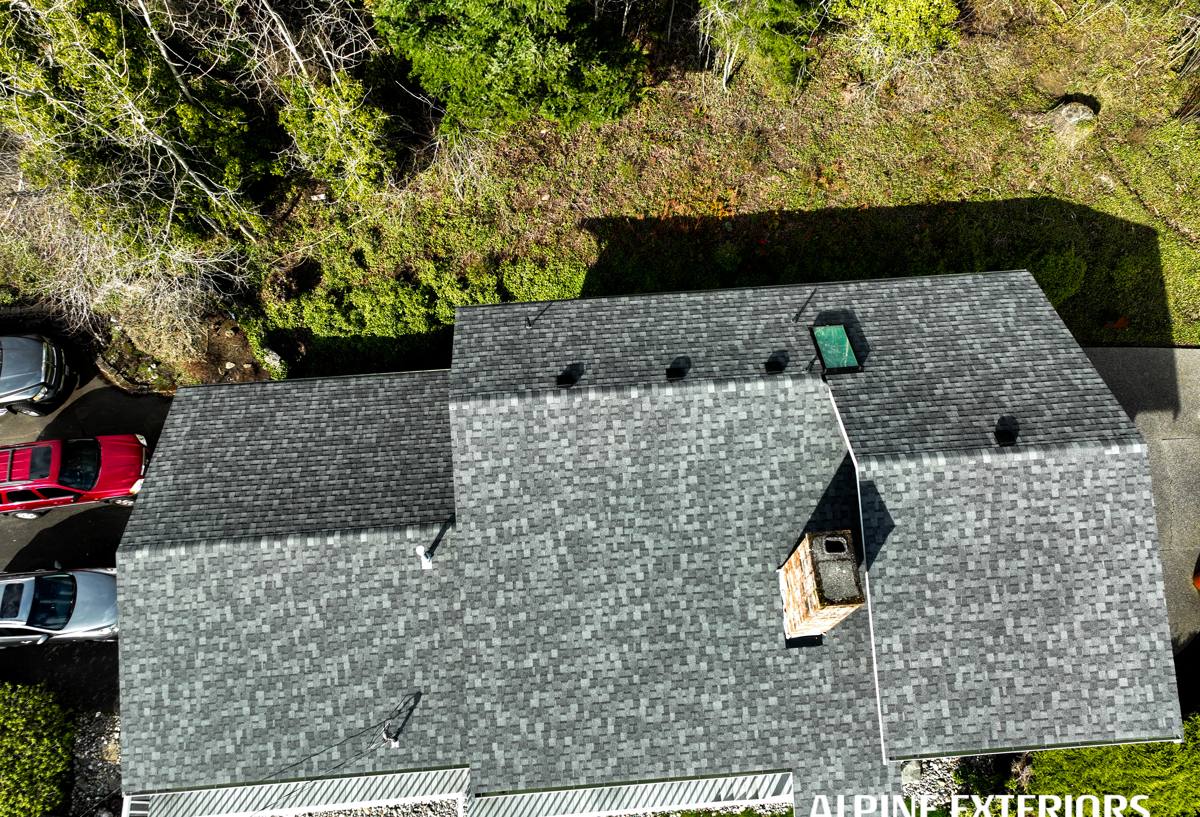
- Corroded or lifting flashing around chimneys, skylights, and roof-to-wall transitions
- Granule loss and brittle shingles on older asphalt roofs, accelerated by repeated wet-dry cycling
- Clogged or undersized gutters that back water up under the roof edge during heavy storms
- Soft or spongy decking discovered only once a shingle or flashing repair is opened up
- Nail pops and lifted shingle tabs from wind gusts common to storms moving in off the water
- Staining or discoloration on ceilings that traces back to a slow leak, not a sudden one
What a Correct Roof Repair Actually Involves
Diagnosis Before Patching
The most common mistake in roof repair isn't bad workmanship — it's fixing the spot where water showed up inside the house instead of the spot where it actually entered the roof. Water travels along rafters, decking seams, and underlayment before it drips through a ceiling, so the visible stain and the real entry point are often several feet apart. A correct repair starts with tracing the path, not just patching the ceiling-side symptom.
Flashing and Penetration Points
Most roof leaks trace back to a penetration — a chimney, vent pipe, skylight, or wall intersection — rather than the open field of shingles or panels. These are the places where two materials meet, and meeting points are where seals fail first, especially with corrosion working against the metal near the water. A proper repair rebuilds the flashing detail correctly rather than caulking over the gap, since caulk is a short-term seal, not a long-term flashing solution.
Underlayment and Decking Checks
Once a repair area is opened up, we check the underlayment and decking underneath, not just the visible roofing layer. If moisture has been getting in for a while, the plywood or planking underneath can be soft, delaminated, or starting to rot. Replacing the surface layer over compromised decking hides the problem instead of solving it, and it won't hold up through the next moss season or windstorm.
Repair or Replace? How We Help You Decide
Not every roof problem needs a full replacement, and we don't push one when a targeted repair will genuinely hold up. The right call depends on a few honest factors.
| Factor | Leans toward repair | Leans toward replacement |
|---|---|---|
| Roof age | Well within expected lifespan for the material | At or past the material's typical service life |
| Extent of damage | Isolated to one area — a flashing detail, a few shingles | Spread across multiple slopes or recurring in different spots |
| Decking condition | Solid and dry once opened up | Soft, delaminated, or rotted in more than a small area |
| Repair history | First repair, or an isolated storm-related fix | Same area has already been patched more than once |
| Moss/algae staining | Surface growth, roof otherwise sound | Long-term moss damage has degraded the roofing material itself |
We'll walk the roof, show you what we find, and give you a straight answer — including telling you when a repair is genuinely the right call and a full replacement would be overkill.
Our Roof Repair Process
- Full roof inspection, including attic and ceiling areas where accessible, to trace the actual source of the leak or damage
- A written explanation of what we found and what it will take to fix it correctly — no vague "you need a new roof" without evidence
- Removal of damaged roofing material back to sound decking, not just around the visible problem
- Repair or replacement of underlayment and flashing at the affected area, matched to how the surrounding roof is built
- Proper re-integration of the repaired section with the existing roof so water sheds correctly across the transition
- Cleanup of the work area and a final check that the repair holds under a hose test where appropriate
Materials and Standards We Hold To
We use roofing materials and fastening methods matched to what a Fairhaven roof actually needs to handle — not whatever is fastest to install. That means corrosion-resistant fasteners near the water instead of standard galvanized where salt exposure is a real factor, properly formed step and counter-flashing at penetrations instead of relying on sealant alone, and underlayment suited to the extended damp periods this area gets rather than the bare minimum. These choices cost a little more up front and take longer to install correctly. We hold to them anyway, because a repair that has to be redone in two years costs more in the long run, in money and in hassle, than doing it right the first time.
After the Repair: Keeping Moss and Debris From Coming Back
A roof repair holds up longer when it's paired with basic upkeep, especially in a moss-prone, tree-shaded area like this one. A few habits make a real difference:
- Clear gutters and downspouts before the fall rains start, and again mid-winter if trees are nearby
- Keep overhanging branches trimmed back so shaded roof sections get more airflow and light
- Remove moss growth using methods appropriate to the roofing material rather than pressure-washing, which can strip granules or force water under shingles
- Check flashing and penetrations visually once a year, ideally before winter storms and again after moss season
- Address small leaks and lifted shingles promptly — a five-minute fix in year one is a decking replacement in year three if it's ignored
Why Hire a Crew That Already Works in Fairhaven
Roofing here isn't identical to roofing twenty miles inland. A crew that regularly works this neighborhood already knows which details tend to corrode first near the water, how much moss buildup is normal versus a sign of a bigger problem, and how the area's older, character-driven homes are typically built, which affects everything from roof pitch to how flashing details were originally installed. That familiarity means less time spent diagnosing and more time spent fixing the actual problem. It also means we're realistic about timing: scheduling repairs around the wettest stretches of the year isn't always possible, but we plan the work to minimize how long a roof sits open in weather that doesn't cooperate.
What This Means for Cost
Straightforward repairs, like resealing a single flashing detail or replacing a handful of damaged shingles, often run in the low hundreds of dollars. Repairs involving rotted decking, extensive moss damage, or multiple problem areas discovered once the roof is opened up can run well into the thousands. We won't know which category your repair falls into until we've actually looked at it, which is why the inspection comes before any number does.
Get a Straight Answer on Your Roof
If you've got a leak, a stain on the ceiling, visible moss buildup, or flashing that's starting to look rough, it's worth having someone look at it before the next round of Whatcom County rain makes the problem bigger. We'll give you a clear, honest assessment of what's actually going on and what it will take to fix it, no pressure, no inflated scope. Reach out for a free estimate using the form below, and we'll take it from there.