 Whatcom County
 Storm Damage Roofs in Nooksack: What Our Climate Actually Does
Nooksack sits in a part of Whatcom County that gets hit from two directions. Weather moves in off the water carrying salt-laden air, then stalls against the foothills and dumps rain for days at a time. Add in windstorms that come through several times a winter, and a roof here is under more stress than most homeowners realize. It's not one dramatic event that usually causes the damage we get called out for — it's the accumulation of wind-driven rain finding a weak seam, salt air slowly breaking down fasteners and flashing, and moss holding moisture against the roof deck for months on end.
A storm doesn't have to be severe to cause real damage. A 40-50 mph gust can lift shingle tabs just enough to break the seal without tearing them off, which means the roof looks fine from the ground but is no longer shedding water the way it should. That's the trap with storm damage in this area — the visible damage is often the smallest part of the problem.
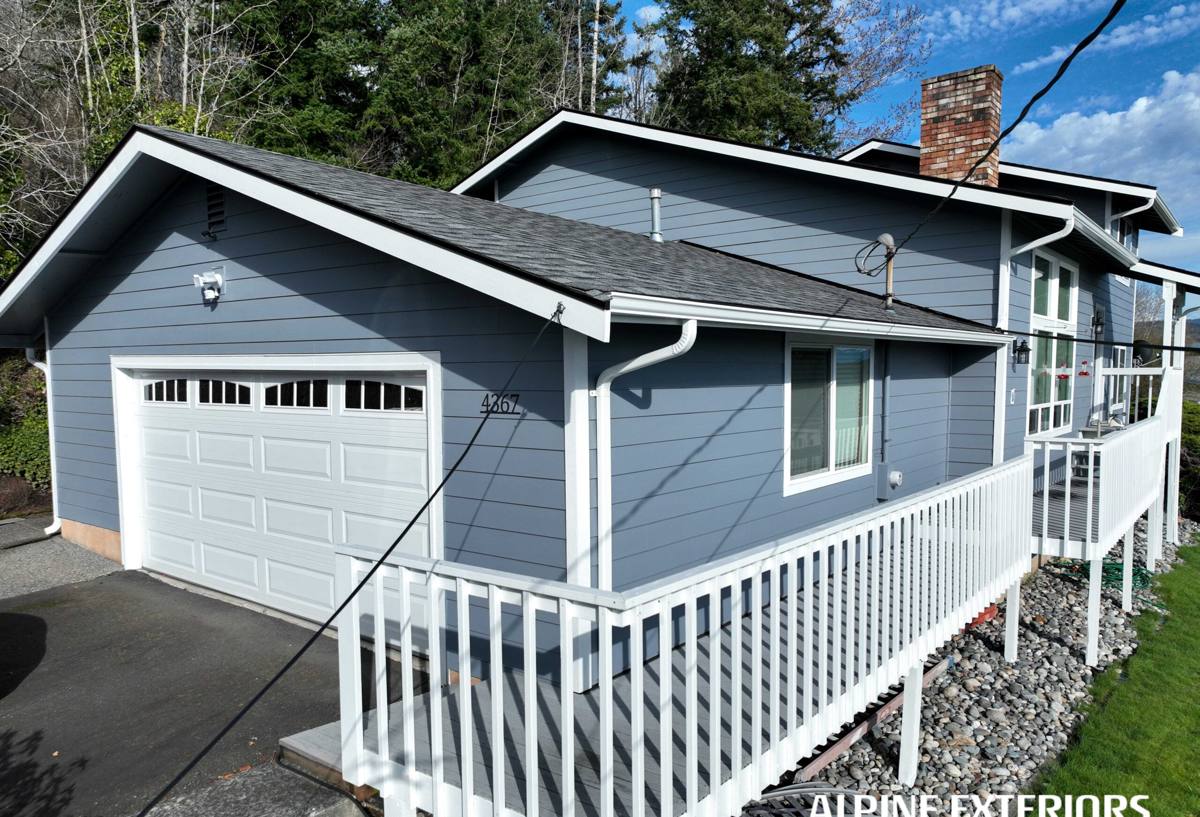
Signs Your Nooksack Roof Has Storm Damage
Most homeowners call us for one of two reasons: they saw damage after a windstorm, or they noticed a leak and want to know if a recent storm caused it. Here's what we look for on both fronts.
Visible signs from the ground
- Shingles that look curled, lifted, or out of alignment with the row around them
- Granules collecting in gutters or at the base of downspouts
- Bent, dented, or missing flashing around chimneys, vents, or skylights
- Visible daylight or gaps at the ridge line
- Debris strikes — branch marks, dented vents, or displaced ridge caps
Signs inside the house
- New water stains on ceilings, especially after a windy rain rather than a calm one
- Musty smell in the attic or top-floor closets
- Daylight visible through the roof deck from inside the attic
- Insulation that's damp or compressed in one area
If you only have interior signs and nothing obvious from the ground, that's not unusual. Wind can break a shingle seal without tearing anything visibly loose, and that's exactly the kind of damage that leaks for months before it's noticed.
What a Correct Storm Damage Repair Actually Involves
A lot of storm repair work in this region gets done wrong — not out of dishonesty, but because it's tempting to patch the visible spot and move on. A patch over a symptom doesn't fix the cause, and in a climate this wet, an incomplete repair usually fails again within a season or two.
A repair done right includes:
- Identifying every point of entry, not just the one causing the visible leak — wind damage is rarely isolated to a single shingle
- Checking the roof deck underneath for soft spots, rot, or moisture staining before replacing anything on top of it
- Matching underlayment and flashing details to what's already there, or upgrading them if they were part of the failure
- Re-sealing or replacing shingle tabs so the wind seal is fully restored, not just cosmetically closed
- Checking ventilation — poor attic airflow is a major contributor to how much moisture damage a leak causes once it starts
Skipping the deck inspection is the most common shortcut we see from repairs that don't hold up. If the sheathing underneath has taken on moisture, new shingles over a soft deck will look fine for a while and then fail again, often worse than the original damage.
Our Process: From First Call to Finished Repair
1. Inspection
We walk the roof (weather permitting) and the attic, and we photograph what we find. If it's not safe to get on the roof during active weather, we'll assess from the ground and interior first and schedule the roof walk for the next dry window.
2. Honest scope of work
We tell you plainly whether this is a repair, a partial re-roof of the affected slope, or something bigger. We don't upsell a full roof replacement when a targeted repair will genuinely hold — but we also won't patch something that's going to fail again in a year, because that just costs you twice.
3. Documentation for insurance
If you're filing a claim, we provide a written assessment and photos that describe the damage and likely cause in terms an adjuster can work with. We're not a public adjuster and we don't negotiate your claim for you, but a clear, unbiased contractor report makes the claims process move faster.
4. The repair
We match materials as closely as possible to your existing roof, address the deck and flashing issues found during inspection, and re-check the ventilation path in the repaired area.
5. Final walkthrough
We show you what was done, where, and why — no vague invoice line items.
Repair or Replace? How We Decide
This is the question every homeower asks, and the honest answer depends on more than just the storm damage itself — it depends on the condition and age of the roof the storm hit.
| Factor | Leans Toward Repair | Leans Toward Replacement |
|---|---|---|
| Roof age | Under 12-15 years | Nearing or past expected lifespan |
| Extent of damage | Isolated to one slope or area | Spread across multiple slopes |
| Deck condition | Solid, dry sheathing | Soft spots or rot found in more than one area |
| Moss/algae history | Minor, surface-level | Long-term growth that's degraded granules broadly |
| Matching materials | Shingle line still available or close match exists | Discontinued product, visible mismatch unavoidable |
Most of the calls we get in Nooksack after a windstorm fall into the repair category — a section of shingles, a flashing detail, a ridge cap. But a roof that was already near the end of its service life before the storm hit is a different conversation, and we'll tell you that up front rather than repairing around a bigger problem.
Materials and Why We Use Them Here
Not every roofing product performs the same in a climate with this much sustained moisture and salt exposure. Our standard is to use materials that hold up to wind-driven rain and resist moss colonization better than budget alternatives, and to install them with details suited to this specific climate rather than a generic install.
| Component | What We Prioritize | Why It Matters Here |
|---|---|---|
| Shingles | Wind-rated architectural shingles with a strong sealant strip | Resists the wind-seal failures that cause most of our repair calls |
| Underlayment | Synthetic, fully water-resistant underlayment | Backup protection during the long stretches of driving rain typical here |
| Flashing | Corrosion-resistant metal, properly lapped | Salt air accelerates corrosion on cheaper or poorly sealed flashing |
| Ridge/vent details | Baffled ridge vents with wind-driven-rain protection | Standard ridge vents can let rain in during sideways storms |
We don't push premium products as a sales tactic. When we recommend an upgrade over what's already on the roof, it's because that specific component is the reason the roof failed in the first place, and we'll explain exactly why.
Insurance Claims: What Homeowners Should Know
Wind and storm damage is often covered, but coverage details vary by policy, and insurers distinguish between sudden storm damage and gradual deterioration (like long-term moss damage) that's treated as a maintenance issue rather than a covered event. A few things that help:
- Document the damage with photos as soon as it's safe to do so, before any repairs begin
- Get an independent contractor inspection — not just the insurance adjuster's — so you have a second opinion on cause and scope
- Ask your adjuster directly whether they're treating the damage as storm-caused or as wear, since that changes what's covered
- Keep receipts for any emergency tarping or temporary repairs done to prevent further damage
We can provide the contractor documentation piece of this, but the claim itself is between you and your insurer.
What to Do Right After a Storm: A Practical Checklist
- Check the attic and ceilings for new water stains or damp spots as soon as it's safe
- Look at gutters and the ground around downspouts for granule buildup
- Photograph any visible roof damage from the ground — don't get on the roof yourself after a storm
- If there's an active leak, place a container to catch water and move anything valuable out from underneath it
- Call for an inspection before the next rain, not after — small damage gets worse fast in this climate
- Avoid patch kits or sealant tubes from the hardware store as a long-term fix; they're a stopgap at best
Why a Crew That Already Works Nooksack Matters
Roofing problems in this part of Whatcom County have patterns — the way moss establishes on north-facing slopes, the flashing details that tend to fail first in wind-driven rain, the roof ages and material types common in local housing stock. A crew that works this area regularly has already seen how a given roof type holds up over a few winters here, which shortens the guesswork during inspection and helps us catch problems a generic inspection might miss.
There's also a practical side to being local: storm damage is time-sensitive. A roof that's been compromised for two weeks waiting on a contractor from outside the area has had two more weeks of rain finding its way in. Being close means we can usually get eyes on the roof faster, especially in the days right after a storm when several homes in the same area may need attention at once.
Maintenance That Prevents the Next Storm From Doing Damage
A roof in good condition handles wind and rain far better than one that's already compromised by moss, clogged gutters, or aging flashing. A few habits go a long way in this climate:
- Keep gutters clear so wind-driven rain has somewhere to go besides under the shingles
- Have moss treated and removed before it builds up enough to hold moisture against the roof surface
- Trim back branches that overhang the roof — both for debris and for the shade that keeps moss growing longer into the year
- Get a roof checked after any storm with sustained winds over 40 mph, even if nothing looks obviously wrong
Storm damage repair and routine maintenance aren't really separate services — a well-maintained roof simply has less to go wrong when the next windstorm comes through, and a repair done right restores that same resilience rather than just closing the visible gap.
If you've had storm damage or you're not sure whether recent weather affected your roof, we're happy to take a look. The estimate is free, there's no pressure to move forward, and you'll get a straight answer about what the roof actually needs — use the form below to get started.