 Whatcom County
 Why Nooksack Roofs Wear Out Faster Than the Manufacturer's Warranty Suggests
If you own a home in Nooksack, you already know the roof over your head has a harder job than the same roof would have almost anywhere else in the country. This part of Whatcom County sits close enough to Bellingham Bay and the Salish Sea to catch salt-laden air on a regular basis, and the Nooksack River valley funnels moisture and wind through in a way that keeps roofing materials wet for long stretches at a time. Add in a moss season that can run from early fall through late spring, and you have a climate that is genuinely tough on shingles, flashing, and fasteners.
A roof that was installed correctly, with the right materials and the right attention to ventilation and moisture control, will handle all of that without drama for decades. A roof that was installed a little too fast, or with shortcuts that don't show up until year five or ten, will fail early — usually starting with granule loss, moss intrusion at the edges, and soft decking that nobody notices until there's a stain on a ceiling. This page is about what a correct new roof installation actually involves in Nooksack, and why the details matter more here than they would in a drier climate.
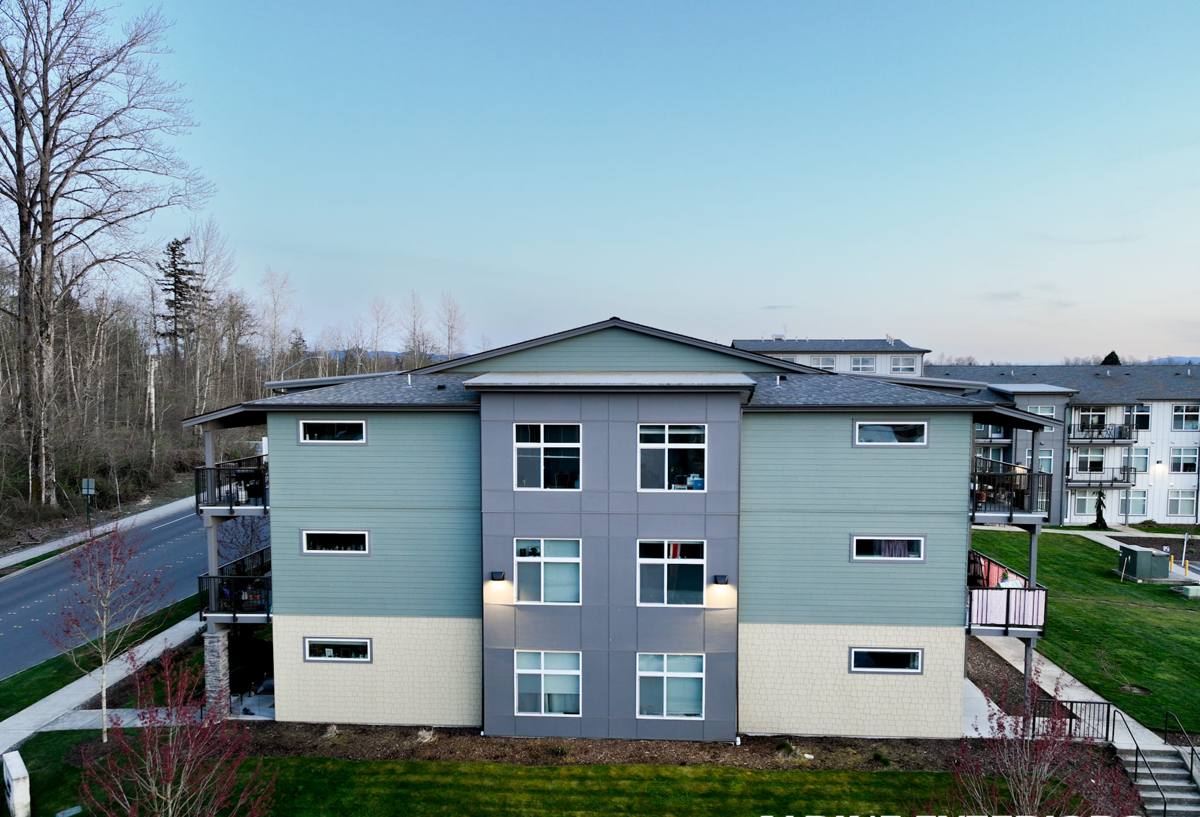
What Nooksack's Climate Actually Does to a Roof
Salt Air and Corrosion
Salt-bearing moisture in the air accelerates corrosion on any exposed metal — nail heads, flashing, drip edge, and fastener hardware. Standard galvanized fasteners can start showing rust streaks well before a roof's expected lifespan is up if they weren't rated for coastal-adjacent exposure. This is one of the most overlooked details in roofing, because it doesn't affect how the roof looks on installation day — it shows up years later as staining, weakened fastening, and premature flashing failure.
Driving Rain
Whatcom County storms often come with real wind behind them, which means rain doesn't just fall — it drives sideways and works its way under shingle edges, around vent boots, and into any gap in flashing that wasn't sealed properly. A roof built for a calmer climate can get away with minimal underlayment overlap and looser flashing details. A roof built for Nooksack can't.
Moss Season
Long, wet, mild winters here are ideal growing conditions for moss, and moss is more than a cosmetic problem. It holds moisture against the roof surface, lifts shingle edges as it grows, and works its way into seams over time. Roofs installed without moss-resistant materials or proper attention to shaded, north-facing slopes tend to show heavy moss growth within just a few years, especially under tree cover, which is common on many Nooksack lots.
What a Correct New Roof Installation Includes Here
A roof that's actually built for this area isn't just "a roof" — it's a system of decisions, each one addressing a specific way this climate causes failure. The components below aren't optional upgrades; they're what we consider the baseline for a job we're willing to warranty in Whatcom County.
- Full tear-off and decking inspection — every old layer removed so the deck underneath can be checked for soft spots, rot, or prior water damage before anything new goes down.
- Ice-and-water shield at vulnerable points — valleys, eaves, and penetrations get a self-adhering waterproof membrane, not just felt, because these are the spots where driving rain and moss backup cause the most leaks.
- Synthetic underlayment across the full deck — more tear-resistant and more water-resistant than old-style felt, and it holds up better during the install itself if weather turns mid-job.
- Corrosion-resistant fasteners and flashing — chosen with the salt air exposure in mind, not just whatever is cheapest at the supply house.
- Balanced attic ventilation — intake and exhaust sized to move moist air out from underneath the roof deck, which reduces the condensation that feeds rot and mold from the inside.
- Moss-resistant shingle selection where appropriate — particularly on shaded or north-facing sections of the roof.
- Careful flashing work at every penetration — chimneys, skylights, plumbing vents, and wall-to-roof transitions, which is where the overwhelming majority of roof leaks actually start.
Our Installation Process
1. On-Site Assessment
We walk the roof (weather permitting) and inspect from the ground and attic when needed, looking at slope, shading, ventilation, and current condition. We'll tell you honestly if you have years left or if you're at the point where a patch just delays the inevitable.
2. Material Selection Built for This Property
Not every Nooksack roof needs the same spec. A steep, shaded roof under fir trees needs different moss management than an open, wind-exposed roof near the river. We walk you through options with real trade-offs, not a single default product pushed on every job.
3. Tear-Off and Deck Repair
Old roofing comes off completely. Any damaged decking is replaced — this is called out and priced transparently, not buried as a surprise change order once the crew is already mid-job.
4. Underlayment, Flashing, and Ventilation Installed to Spec
This is where most of the long-term durability of the roof actually gets decided, well before a single shingle is visible.
5. Roofing Material Installed
Installed to manufacturer spec and to the pattern the local climate calls for — correct nailing, correct exposure, correct fastening for wind and moisture exposure.
6. Final Walkthrough and Cleanup
We walk the finished roof and the property with you, including a magnetic sweep for stray fasteners, before calling the job done.
Roofing Material Comparison for Whatcom County Homes
| Material | Moss Resistance | Wind/Rain Performance | Typical Lifespan Here | Maintenance Considerations |
|---|---|---|---|---|
| Standard architectural asphalt shingle | Moderate — benefits from moss-resistant granule option | Good when installed with proper fastening and flashing | 20-30 years | Periodic moss treatment on shaded slopes |
| Moss-resistant asphalt shingle (copper/zinc-infused granules) | Higher — actively discourages moss growth | Same as standard architectural, plus the coating benefit | 25-30+ years | Lower moss maintenance, still benefits from gutter care |
| Standing seam metal | High — moss struggles to hold on smooth metal | Excellent in wind and driving rain when seams are installed correctly | 40-50+ years | Requires corrosion-rated fasteners and coatings near salt air |
| Cedar shake | Low without regular treatment | Can perform well but is more moisture-sensitive over time | 20-25 years with upkeep | Highest maintenance burden in a wet, mossy climate |
We're happy to talk through any of these honestly, including the maintenance burden that comes with cedar in a climate this wet — it's a good-looking product, but it asks more of a homeowner here than asphalt or metal does.
Cost Factors for a Nooksack Roof Replacement
We don't publish blanket prices because roof cost depends on real, property-specific variables. The honest range for a full roof replacement on a typical single-family home runs from the low five figures into the high five figures depending on the factors below — we'll give you a firm number after seeing the actual roof.
- Roof size and number of facets (a simple gable roof costs less to do right than a roof with multiple valleys, dormers, and hips)
- Current layers on the roof and whether a full tear-off is needed
- Decking condition and how much replacement is required
- Roof pitch and accessibility for the crew
- Material choice (asphalt vs. metal vs. cedar, as outlined above)
- Ventilation upgrades needed to meet proper intake/exhaust balance
- Chimney, skylight, and penetration flashing complexity
Why Local Experience in Whatcom County Matters
Roofing crews who mostly work drier, inland climates tend to under-spec for what this area actually throws at a roof. They're not being careless — they're building to the conditions they normally see. A crew that regularly works Nooksack and the surrounding Whatcom County communities already knows which slopes hold moss longest, which fastener grades hold up against the salt air, and which flashing details actually stop driving rain instead of just meeting code minimum. That local pattern recognition is the difference between a roof that needs attention in year six and one that's still solid at year twenty-five.
Signs You May Need a New Roof Soon
- Granules collecting in gutters or at downspout outlets
- Heavy moss growth on north-facing or shaded slopes
- Curling, cracking, or lifted shingle edges
- Daylight visible through the attic decking
- Soft or spongy spots when walking the roof
- Rust staining around flashing, vents, or fastener heads
- Interior ceiling stains after heavy rain events
Get an Honest Look at Your Roof
If your Nooksack home is showing any of the signs above, or if you just want a straight answer about how many good years are left on your current roof, we're glad to come take a look. There's no pressure and no sales script — just a clear assessment of what your roof needs, using a form below to get started with a free estimate.