 Whatcom County
 Decks in Nooksack Take a Different Kind of Beating
A deck in Nooksack doesn't fail the way a deck in a dry climate fails. It doesn't crack from UV exposure alone or bake apart from heat cycling. It fails from the inside out — moisture that gets trapped where it shouldn't, wood that never fully dries between rain events, and hardware that corrodes years before the boards on top of it show any wear. Whatcom County's long wet season, the driving rain that comes sideways off a storm front, and the persistent dampness that settles into shaded, low-airflow areas all work against a deck that wasn't built with this climate in mind.
Moss is the visible symptom, not the real problem. If moss is growing on your decking, moisture is sitting on and under that structure longer than it should, and that same moisture is doing quiet damage to fasteners, ledger connections, and framing that you won't see until something gives. A deck built for Nooksack has to manage water on purpose — not just tolerate it.
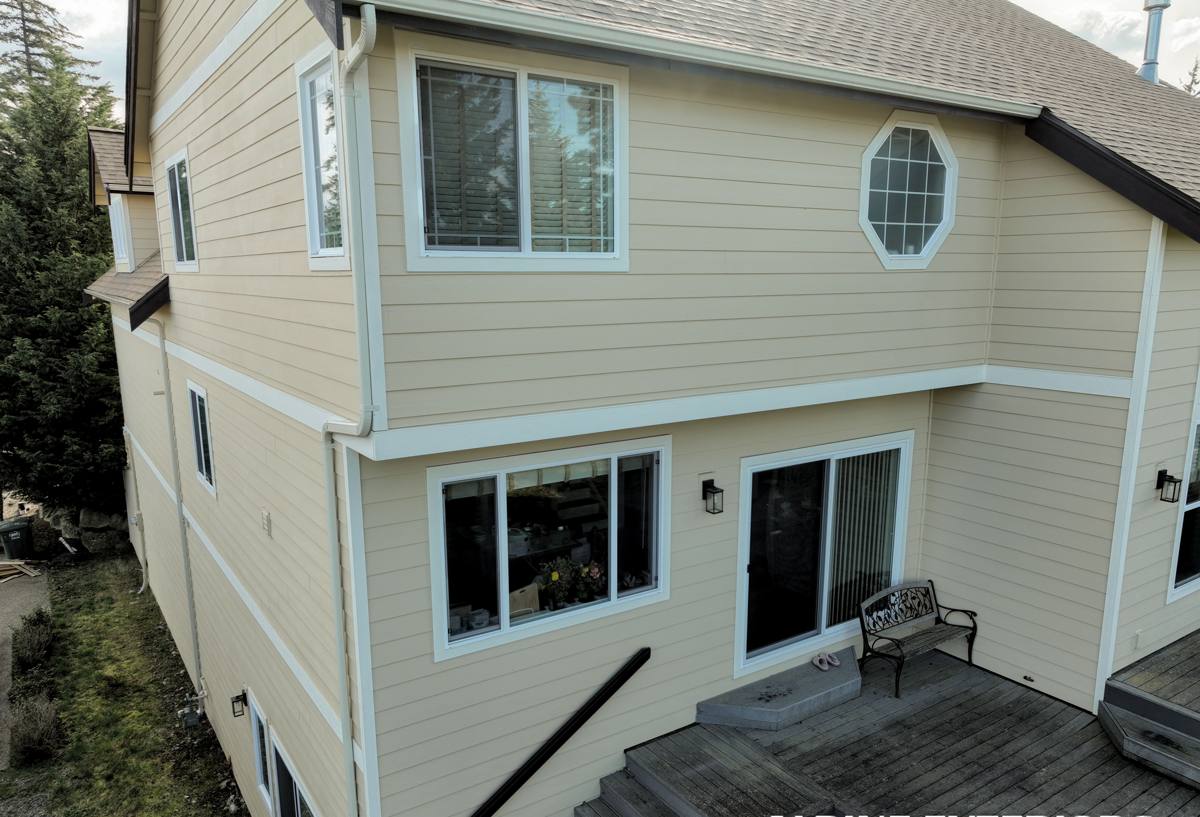
What Nooksack Homes Actually Need From a Deck
Every deck we build here starts from the same premise: water is going to hit this structure constantly for months at a time, and it needs somewhere to go. That shapes almost every decision, from how the frame is built to what fasteners go into it.
Drainage and Airflow Underneath
A deck built tight to grade, or over a crawlspace with poor airflow, traps humidity underneath it year-round. We build in clearance and slope so water sheds away from the house and out from under the structure instead of pooling. On lower decks, that sometimes means adjusting footing height or grading before framing even starts.
Ledger Board Flashing
The ledger board — where the deck attaches to the house — is the single most common failure point on decks in this climate, and it's almost always a flashing problem, not a framing problem. Water that gets behind an improperly flashed ledger doesn't just rot the ledger; it can migrate into the house's rim joist and wall framing. We flash this connection the way it should be done every time: proper metal flashing, correct lap order with the house's water-resistive barrier, and a capillary gap so water can't wick back in.
Fasteners and Hardware Rated for the Climate
Deck screws and structural hardware that would hold up fine in a dry inland climate corrode fast under Whatcom County's near-constant moisture load, especially with the modern chemical-treated lumber most decks are framed with today, which reacts with plain galvanized steel. We use fasteners and connectors rated for that combination — hot-dip galvanized or stainless where it matters most — because a rusted joist hanger or screw head is a structural problem, not a cosmetic one.
Choosing the Right Decking Material for This Climate
Homeowners in Nooksack usually narrow it down to three options: pressure-treated wood, cedar, or composite/PVC decking. Each behaves differently once moss season sets in.
| Material | Upfront Cost | Moss/Mildew Behavior | Maintenance | Realistic Lifespan Here |
|---|---|---|---|---|
| Pressure-treated wood | Lowest | Holds surface moisture; needs regular cleaning to keep moss from taking hold | Annual cleaning, re-staining or sealing every 2-3 years | 15-20 years with upkeep |
| Cedar | Mid to high | Naturally moisture-resistant but still needs care in shaded, damp areas | Cleaning and sealing every 1-2 years to hold color and resist decay | 15-25 years with upkeep |
| Composite / PVC | Highest | Won't rot, but can still grow surface algae/moss film if never cleaned | Periodic washing; no staining or sealing required | 25-30+ years, manufacturer-dependent |
There's no single "right" answer — it depends on budget, how much upkeep you're willing to do, and how shaded the deck site is. What we won't do is install a decking product in a low-airflow, heavily shaded spot without talking through how that specific location will perform, regardless of material. A north-facing deck tucked under trees is going to hold moisture longer than an open, sun-exposed one no matter what's on top of it, and that changes the maintenance conversation.
Design Choices That Fight Moss and Trapped Moisture
Beyond material selection, how a deck is built has a real effect on how much moss and mildew maintenance a homeowner ends up doing.
- Consistent board spacing that lets water drain through rather than pool on the surface
- Joist tape or flashing over the top of the framing so the boards aren't fastened directly into exposed, absorbent wood
- Adequate clearance between the decking and grade or roofline to keep airflow moving underneath
- Keeping the deck surface clear of overhanging foliage where possible, since constant leaf litter and shade are what accelerate moss growth
- Routing downspouts and roof runoff away from the deck footprint instead of letting it sheet across the surface
None of these add much to the cost of a build. They're just habits that come from building decks in a place where it rains for months at a stretch, and they're often skipped by crews that mostly work drier climates or build decks as an occasional side job.
Our Deck Building Process
- On-site assessment — We look at drainage, sun/shade exposure, grade, and how the deck will tie into the house before we talk materials.
- Design and material walkthrough — We go over decking options, framing approach, and any site-specific concerns like a low grade or a heavily shaded footprint.
- Permitting — We handle the permit application and inspections required for the scope of work.
- Framing and flashing — Footings, ledger attachment and flashing, and structural framing, built to the standard described above regardless of what decking goes on top.
- Decking, railing, and finish work — Installed to the manufacturer's specifications for the material you chose, including proper fastening patterns and expansion gaps for composite products.
- Final walkthrough — We go over the finished deck and what maintenance it needs going forward.
Permits and Local Requirements
Most new decks and many deck replacements in Whatcom County require a building permit, particularly once you're above a certain height off grade or attaching a structure to the house. Requirements can also depend on setbacks from property lines and whether the property is inside town limits or in the unincorporated county. We handle the permit process as part of the job rather than leaving it for the homeowner to sort out, and we build to the code requirements that apply to your specific site and scope.
What Maintenance Looks Like After the Build
A well-built deck in this climate still needs some seasonal attention — it just needs far less than a poorly built one.
- Sweep debris and leaves out from between boards regularly during fall and winter
- Rinse or gently pressure-wash the surface once or twice a year to knock back moss and algae before it takes hold
- Check the ledger board area and any visible flashing for gaps or damage annually
- Inspect visible hardware — screws, joist hangers, post bases — for rust or corrosion
- Re-stain or reseal wood decking on the schedule appropriate to that product; composite and PVC don't need this step
- Keep gutters and downspouts near the deck clear so runoff isn't draining across the surface
Why It Matters to Hire a Crew That Already Works in Nooksack
A deck built by a crew that mostly works in a different climate will often look fine on the day it's finished and still develop moisture problems within a few years — trapped water at the ledger, moss taking over a shaded section, hardware rusting faster than expected. Those aren't defects you can see during a walkthrough; they show up later. Building decks and siding across Whatcom County day in and day out means we're making the flashing, drainage, and fastener decisions that this specific climate requires as a matter of habit, not as an afterthought.
It also means we're already familiar with the permitting process for the county and the kind of sites common around Nooksack — properties with a mix of open yard and mature tree cover, and homes where the deck ties into siding or trim work we may also be handling. Coordinating that as one job, with one crew that understands how the deck and the exterior envelope interact, avoids the gaps that show up when separate trades handle each piece without talking to each other.
If you're planning a new deck or need to replace one that's showing its age, we're happy to take a look and give you a straightforward, no-pressure estimate. Use the form below to get started.