 Whatcom County
 Why Blaine Roofs Take a Different Kind of Beating
Blaine sits right up against the water, close enough to the Strait that salt-laden air is a constant, not an occasional thing. Add in wind-driven rain off the coast and a wet season that stretches long and gray, and you've got conditions that are harder on a roof than most inland parts of Whatcom County ever see. Materials that hold up fine forty miles east can fail early here simply because they weren't chosen or installed with salt exposure and standing moisture in mind.
A metal roof can handle this environment better than almost anything else on the market — but only if the metal, the fasteners, the flashing, and the installation details are all matched to a coastal setting. That's the part that gets skipped when a roof is installed by a crew that doesn't normally work this close to the water.
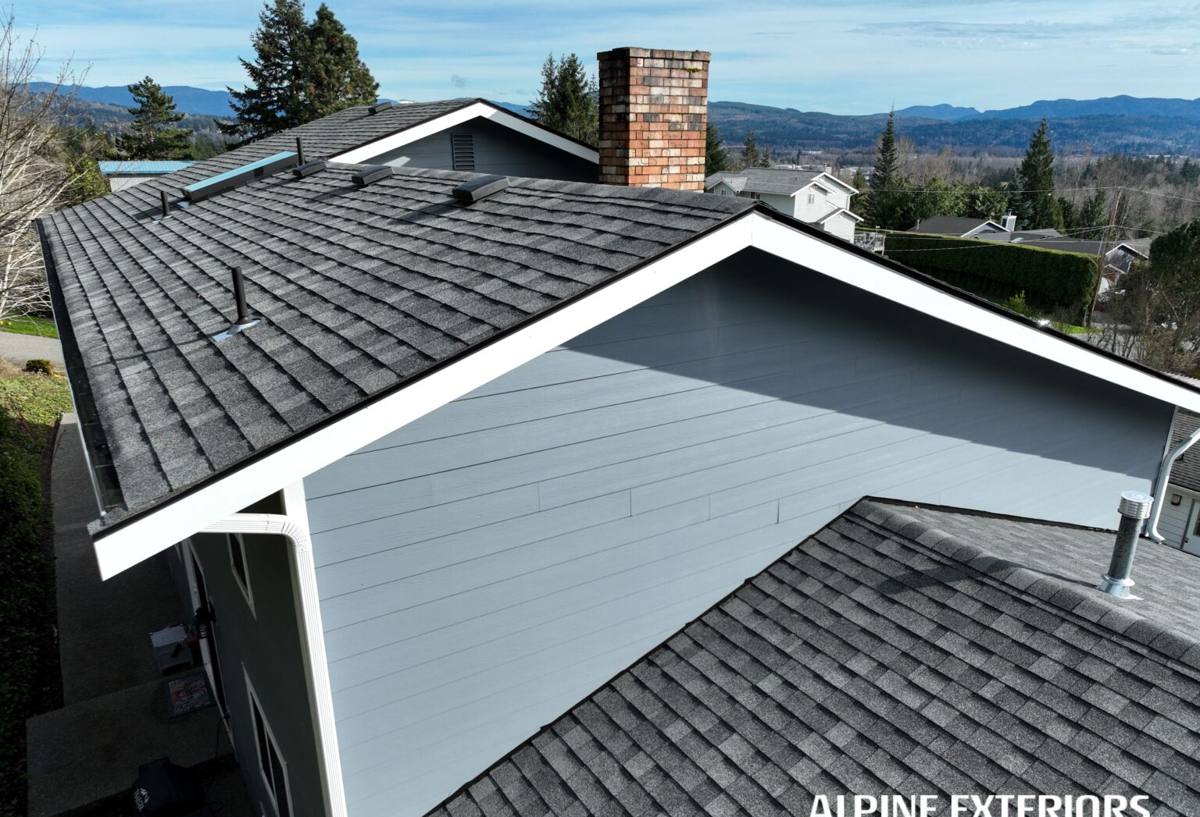
What Metal Roofing Brings to a Coastal Whatcom County Home
Metal sheds water fast, doesn't absorb moisture the way wood or composition shingle does, and gives moss and algae almost nothing to grab onto. In a climate where roofs stay damp for weeks at a stretch, that matters more than most homeowners realize until they've dealt with a moss-covered shingle roof for a few winters. Metal also handles wind uplift well when it's fastened correctly, which is worth something in a town that gets its share of exposed, gusty weather off the water.
Panel Types We Install
- Standing seam (concealed fastener): Panels lock together with hidden clips, so there are no exposed screw heads for salt air to work on over time. This is our default recommendation for homes close to the water.
- Exposed-fastener panels: A lower-cost option using screws with rubber washers driven through the panel face. It works fine, but the washers and fastener heads are exposed to weather and need periodic attention.
- Stone-coated steel: Steel panels formed and coated to resemble shake or tile. Good option when a homeowner wants a traditional look with metal's durability underneath.
Salt Air Changes What "Correct" Means
Inland, a roofing crew can be a little looser about which metals and fasteners they mix without much consequence. Near the water, that looseness causes problems within a few years, not a few decades. Two different metals in direct contact — say, the wrong grade of steel flashing against an aluminum panel — set up a galvanic reaction that's accelerated by salt in the air and corrodes one of the metals faster than it should ever wear. The same goes for fasteners: a fastener alloy that doesn't match the panel material will corrode first, and once fasteners start failing, the whole panel is at risk in a wind event.
We also pay attention to the paint or coating system on the panel itself. A quality PVDF-type finish resists UV breakdown and salt exposure far longer than a basic paint system, which matters in a spot where the roof is dealing with both salt air and long sun exposure in summer. It costs a little more up front. On a coastal roof, it's not a place to cut corners.
Fastener and Flashing Compatibility
Every fastener, flashing piece, and trim component on a metal roof should be compatible with the panel material — not just close enough. On a Blaine roof, we treat this as a non-negotiable part of the spec, not an upgrade option.
Moss, Drainage, and the Long Wet Season
Whatcom County's wet season runs long, and north-facing or shaded roof slopes stay damp for extended stretches even when the rest of the roof has dried out. That's exactly the kind of surface moss thrives on. Metal panels themselves don't give moss the texture it needs to establish, which is a real advantage over shingle or shake. But a metal roof isn't automatically moss-proof — debris that collects in valleys, at panel laps, or in clogged gutters holds moisture against the metal and against any trim or flashing nearby, and that's where problems start even on a metal roof.
This is why pitch, valley detailing, and gutter capacity matter as much as the panel choice. A roof with tight valleys and undersized gutters will trap water and debris no matter what material is on top of it. Part of doing this correctly in Blaine is designing the drainage path, not just installing panels and hoping for the best.
What a Correct Metal Roof Installation Actually Involves
A metal roof is only as good as what's underneath it and how the details are handled. On every metal roofing job, the following need to be right:
- A self-adhered underlayment at eaves, valleys, and around every penetration — not just felt paper, which doesn't hold up under a metal roof in a wet climate.
- Proper ventilation and airspace so moisture from inside the home doesn't condense against the underside of the panels.
- A fastening pattern and spacing that matches the manufacturer's specification for the panel profile and the local wind exposure.
- Correctly formed flashing at chimneys, skylights, sidewalls, and roof-to-wall transitions — the majority of roof leaks start at these details, not in the field of the roof.
- Proper ridge cap, rake trim, and end-lap sealing so wind-driven rain can't work its way underneath a panel edge.
Shortcuts We Won't Take
It's our standard to never skip the underlayment upgrade to save cost, reuse old flashing that doesn't match the new panel system, mix incompatible fasteners, or under-vent a roof deck to save a step. None of these shortcuts show up as a problem on installation day — they show up two, five, or ten years later as a leak, a corroded fastener, or trapped moisture in the deck. On a coastal roof, that timeline moves faster.
Metal Roofing Compared to Other Options for a Blaine Home
| Material | Typical Lifespan Near the Coast | Moss/Algae Resistance | Maintenance Needs | Relative Upfront Cost |
|---|---|---|---|---|
| Standing seam steel or aluminum | 40–60+ years | Very good | Low — periodic inspection | Highest |
| Exposed-fastener metal panel | 25–40 years | Good | Moderate — fastener/washer checks | Moderate |
| Asphalt composition shingle | 15–25 years | Poor without treatment | Moderate to high — moss treatment, granule loss | Lowest |
| Cedar shake | 15–25 years | Poor | High — moss, rot, and moisture upkeep | Moderate to high |
None of these is universally "wrong" — a lower-cost shingle roof can still make sense on a budget, and we'll say so honestly if that's the better fit for a given home. But for a homeowner planning to be in Blaine long-term and tired of fighting moss and moisture every winter, metal is the option that changes the maintenance conversation the most.
How We Approach a Metal Roofing Project in Blaine
- On-site assessment of the roof's pitch, exposure, existing deck condition, and distance from the water, since that affects panel and coating recommendations.
- A straightforward walkthrough of panel profile, gauge, and coating options, with honest trade-offs on cost versus long-term performance for this specific site.
- A decision on tear-off versus overlay based on what's actually under the existing roof — we won't cover up a deck problem with new panels.
- Installation of underlayment, flashing, and panels to spec, with attention to every valley, penetration, and transition point.
- A final walk-through so the homeowner understands what was installed and what, if anything, needs periodic attention.
Living With a Metal Roof: Maintenance and What to Expect
Metal roofing is genuinely low-maintenance, but "low" isn't "none." A little seasonal attention keeps a well-installed roof performing for decades:
- Clear leaves, needles, and debris from valleys and gutters heading into the wet season — trapped debris holds moisture against the roof and trim.
- Rinse accumulated salt film and pollen off the panels occasionally, especially on roofs closest to the water.
- Have sealant at penetrations and flashing checked every few years — sealant is the one component on a metal roof that does wear out before the metal does.
- On exposed-fastener systems, have someone check for fasteners that have backed out or washers that have hardened after a hard winter of wind.
- Avoid unnecessary foot traffic on the panels, which can scuff the coating and create a spot where corrosion can start early.
Why a Crew That Already Works in Blaine Matters
A roofing crew that regularly works this stretch of Whatcom County already knows how far a given panel and coating combination needs to be upgraded based on proximity to the water, what wind exposure looks like on an open coastal lot versus a more sheltered one, and how the permitting process runs locally. That familiarity shows up in fewer surprises during installation and a faster response if something needs attention after a storm. A crew that treats every job the same regardless of how close it sits to saltwater is more likely to under-spec the coating, fasteners, or flashing details that a coastal roof actually needs.
If you're weighing metal roofing for a home in Blaine, we're happy to take a look, walk you through honest options for your specific roof and budget, and put together a straightforward estimate — no pressure, no pushy sales pitch. Use the form below to get started.