 Whatcom County
 Why Lynden Roofs Wear Differently Than Roofs Inland
A roof in Lynden doesn't fail the same way a roof fails in Spokane or Boise. Whatcom County sits under a marine-influenced weather pattern most of the year, and even though Lynden is set back from the water, that damp, salt-tinged air off Bellingham Bay and the Strait still reaches this far inland. Add the driving rain that comes through in fall and winter storms, plus a moss season that can run from October well into spring, and you've got a roof that's under near-constant low-grade attack for most of the year. None of this means a roof in Lynden is doomed to fail early. It means the roof has to be built and installed correctly for these conditions from day one, because the margin for error is smaller here than it is in drier climates.
What Moss, Moisture, and Salt Air Actually Do Over Time
Moss isn't just cosmetic. Once it establishes on a shingle roof, its root structure holds moisture directly against the roofing material, which keeps that section of the roof wet long after the rest has dried out. Over several seasons, that trapped moisture breaks down shingle granules, softens the mat underneath, and can work its way under shingle edges and laps. Driving rain compounds this by testing every flashing detail and shingle overlap on the roof, not just the field area — wind-driven rain finds the weak points that a straight-down rain never would. And while Lynden isn't right on the water, the salt-laden moisture in the regional air contributes to faster corrosion on exposed metal fasteners, flashing, and vents if they aren't rated for it. Individually, none of these are dramatic. Together, over 10-20 years, they're the difference between a roof that needs replacement at year 18 and one that's still solid at year 30.
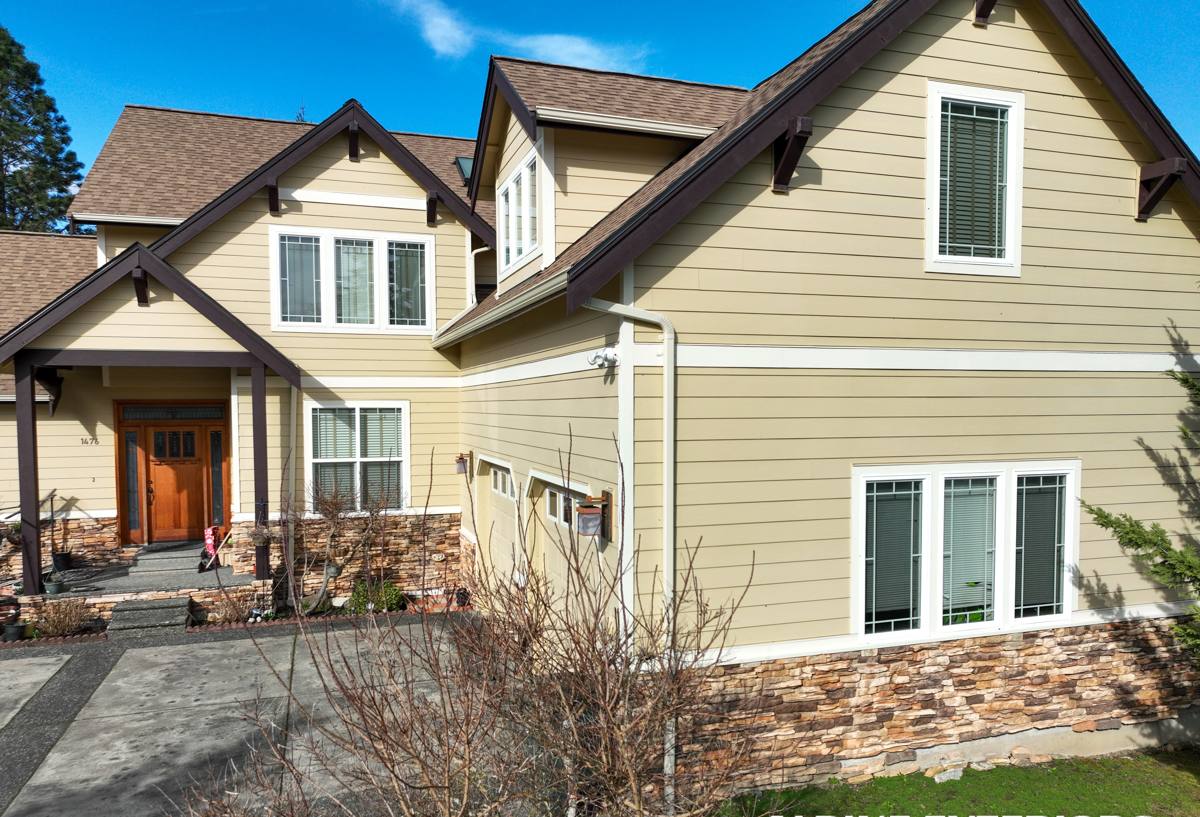
Signs a Lynden Home Needs a New Roof, Not Another Repair
Not every roof problem calls for a full tear-off. But there's a point where patching stops making financial sense and starts throwing money at a system that's fundamentally worn out. Here's what we look for when we're evaluating whether a Lynden roof is a repair candidate or a replacement candidate:
- Granule loss heavy enough that you can see bare, shiny patches on multiple shingles, not just one or two
- Shingles that are curling, cupping, or cracking across large sections of the roof rather than in one isolated spot
- Moss or algae staining that keeps returning within a season or two of cleaning
- Soft spots or visible sagging when walking the roof deck, which usually means the decking underneath has taken on moisture damage
- Daylight visible through the roof deck from the attic, or water stains on attic sheathing after a rainstorm
- A roof that's already had two or more full re-roofs' worth of repairs and is approaching or past its expected material lifespan
- Multiple leaks in different locations rather than one recurring leak at a single flashing point
If you're seeing one or two of these, a repair may still buy you a few good years. If you're seeing several at once, that's usually a sign the whole system — not just the shingles, but the underlayment and decking beneath them — has reached the end of its useful life.
What a Correct New Roof Installation Actually Involves
A new roof is more than shingles nailed to plywood. In a climate like Whatcom County's, the parts you don't see are what determine whether the roof performs for 20-30 years or starts giving you trouble in year eight. Here's what a proper installation covers.
Tear-Off and Deck Inspection
We remove the old roofing down to bare deck rather than layering over it. That's the only way to actually see what condition the plywood or OSB sheathing is in. Any deck sections that are soft, delaminated, or water-stained get replaced before anything new goes down — installing new roofing over a compromised deck just guarantees a shorter lifespan and a harder repair down the road.
Underlayment and Ice-and-Water Protection
Given how much wind-driven rain Whatcom County sees, the underlayment layer matters as much as the shingle choice. We use synthetic underlayment across the field for its tear resistance and water shedding, and we install self-adhering ice-and-water membrane at the vulnerable spots — eaves, valleys, around chimneys and skylights, and roof-to-wall transitions — where wind-driven rain and ice damming are most likely to force water backward under the shingles.
Ventilation
A roof that traps heat and moisture in the attic ages faster from the underside, regardless of what's happening outside. Balanced intake and exhaust ventilation keeps attic temperatures and moisture levels in check, which protects the decking, the insulation, and the shingles' warranty from the inside out. This gets checked and corrected on every new roof install, not just assumed to be fine because the old roof had vents.
Flashing Details
Flashing failure is the single most common cause of roof leaks — more than worn-out shingles. Chimneys, skylights, vent pipes, dormers, and any wall-to-roof transition all need properly formed and sequenced flashing, not just a bead of sealant. We install new flashing on every re-roof rather than reusing old pieces, since flashing that's been through 15-20 years of Whatcom County storms is rarely still doing its job correctly.
Choosing the Right Roofing Material for Lynden's Climate
There isn't one "best" roofing material for every home — it depends on your budget, your home's style, and how much long-term maintenance you're willing to do. Here's an honest comparison of what we typically install and how each option holds up locally.
| Material | Typical Lifespan | Moss/Moisture Resistance | Maintenance Needs | Best For |
|---|---|---|---|---|
| Architectural asphalt shingle | 25-30 years | Good with proper ventilation; moss-resistant algae-shield shingles help further | Periodic moss treatment and gutter clearing | Most Lynden homes; strong value and wide style options |
| Standing seam metal | 40-50+ years | Excellent; moss struggles to root on smooth metal surfaces | Low; occasional fastener and seam check | Homeowners wanting maximum longevity and lower long-term upkeep |
| Cedar shake | 20-30 years with upkeep | Poor without diligent maintenance; holds moisture and is a natural moss host | High; regular treatment, cleaning, and inspection required | Homeowners committed to the traditional look and the upkeep it demands |
| Synthetic composite shingle | 30-50 years | Very good; engineered to resist moisture absorption | Low to moderate | Homeowners wanting shake or slate appearance without the moisture sensitivity |
We install cedar shake when a homeowner wants that look and understands the maintenance commitment, but we're upfront that in a climate with this much sustained moisture and moss pressure, it asks more of the homeowner than asphalt, metal, or synthetic composite do. That's not a knock on the product — it's just a fair trade-off to weigh before committing to it.
Our New Roof Installation Process, Start to Finish
- On-site inspection and estimate. We walk the roof (or use a drone where access is limited), check the attic, and give you a written estimate with material options — no pressure, no gimmicks.
- Material selection. We go over the trade-offs above in the context of your home specifically, so you're choosing based on your priorities, not a sales pitch.
- Scheduling around Whatcom County weather. Roofing needs a reasonable dry window to install correctly. We plan installation dates with realistic weather margins rather than rushing a job into a forecast that doesn't support it.
- Tear-off and deck inspection. Old roofing comes off, the deck gets inspected, and any damaged sheathing is replaced before we move forward.
- Underlayment, flashing, and ventilation installation. This is where a roof's real performance gets built — done right, out of sight, and done to hold up under Whatcom County's wind and rain.
- Shingle or material installation. Installed to manufacturer specification, which is also what keeps the material warranty valid.
- Cleanup and final walkthrough. We clear debris and nails from the property and walk the finished roof with you before calling the job done.
What Drives the Cost of a New Roof in Lynden
Every roof is priced based on the specifics of the home, but a few factors consistently move the number up or down:
- Roof size and pitch — steeper roofs take longer to work safely and require more material overage
- Number of roof planes, valleys, and penetrations (chimneys, skylights, vents) — more complexity means more flashing labor
- Material choice, from standard asphalt through metal, synthetic, or cedar
- Deck condition — hidden rot or water damage found during tear-off adds material and labor to replace it properly
- Access — how easily equipment and materials can reach the roof affects labor time
We won't quote a number sight unseen, and we're wary of anyone who will — a fair estimate comes from actually looking at your roof, not a phone guess.
Why Hiring a Crew That Already Works Lynden Matters
A roofing crew that works Whatcom County regularly already knows how local moss growth behaves, which flashing details tend to fail first in this weather, and how to schedule around a fall and winter rain pattern that can shut down a job with little notice. That local experience shows up in small decisions — where to add extra ice-and-water membrane, how much ventilation a particular attic actually needs, which material handles moss pressure best on a shaded, tree-covered lot versus an open one. It also means we're a known, reachable crew if a warranty question or a storm-related concern comes up years after installation, not a company that did one job in the area and moved on.
Keeping Your New Roof Performing After Installation
A correctly installed roof still benefits from basic upkeep in this climate. Keeping gutters clear so water doesn't back up under the eaves, having moss treated before it establishes rather than after, and doing a visual check after major windstorms all extend the life of a new roof significantly. None of this is intensive work, but skipping it entirely in a climate this wet will shorten the lifespan of even a well-installed roof.
If your Lynden roof is showing its age or you're planning ahead rather than waiting for a leak, we're happy to take a look and walk you through your options. There's a form below to request a free, no-pressure estimate — no obligation, just a straight answer on where your roof stands.