 Whatcom County
 Why Bellingham Siding Has to Work Harder Than the Manual Says
Most siding products are engineered against a generic weather profile. Bellingham doesn't have generic weather. Homes here sit close to Bellingham Bay and the Salish Sea, which means airborne salt finds its way onto exterior surfaces even several miles inland. Add Whatcom County's long, wet fall-through-spring stretch of driving rain off the water, plus a shoulder season where tree cover and low winter sun keep north- and west-facing walls damp for weeks at a time, and you get a climate that punishes any siding product with a weak moisture strategy. Add a real moss and algae season — not a nuisance, a months-long biological load sitting on your walls — and you understand why so many Bellingham homes show premature staining, soft trim, or cupped boards well before a siding product's rated lifespan.
This is the environment we install into every day. It's also why we standardized on one product system rather than offering whatever's cheapest that week.
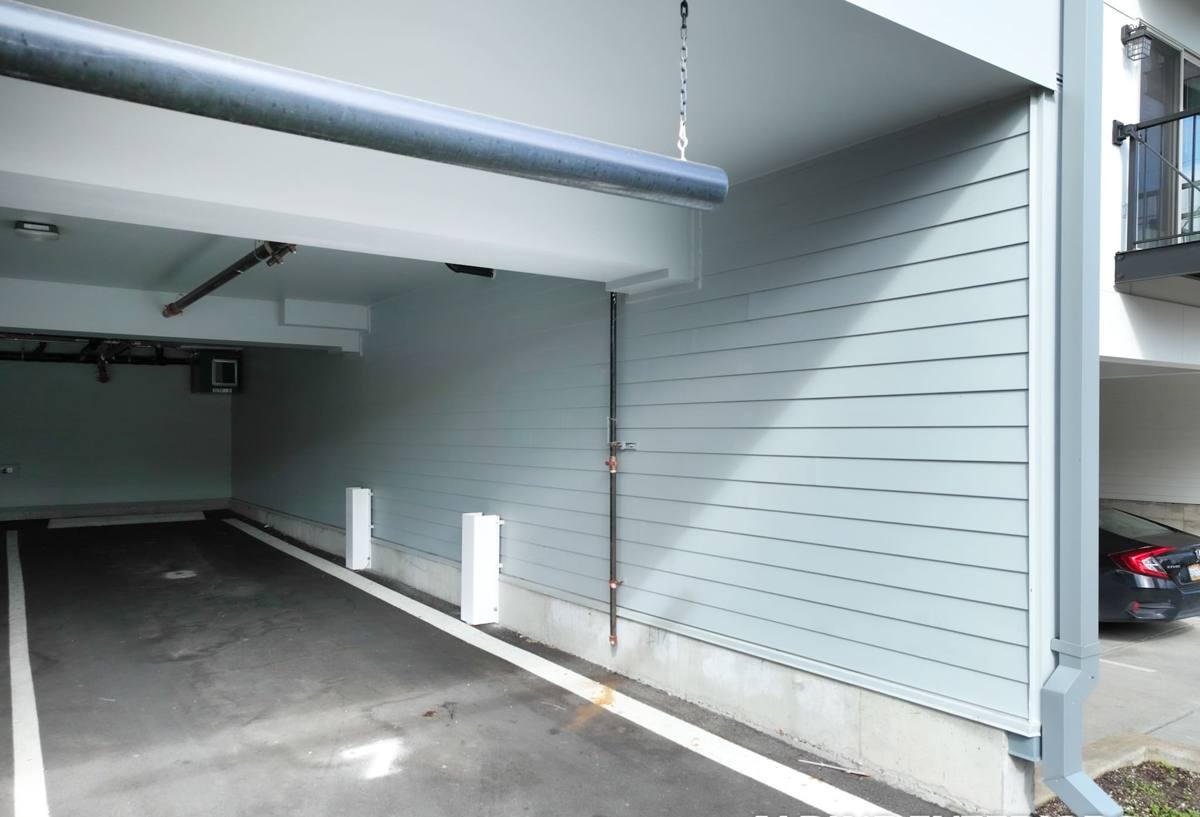
Why We Only Install James Hardie in This Climate
James Hardie fiber cement is engineered specifically for regional moisture conditions through its HZ product system. HZ5 boards are built for freeze-thaw climates further inland; HZ10 boards are engineered for high-moisture, marine-influenced climates — which is exactly what Whatcom County is. The difference isn't marketing language. It shows up in how the board resists moisture absorption, how it holds paint and factory finish over time, and how it performs at butt joints and end cuts, which are the places moisture actually gets in.
Fiber cement is also non-combustible, which matters as wildfire smoke and dry-season fire risk have become a more regular part of the Pacific Northwest's summer, even in a normally wet county like this one. It won't warp, delaminate, or feed insects the way some wood-based and engineered-wood products can when installation details slip even slightly — and in a climate this wet, details slip on a lot of jobs that aren't done carefully.
What a Correct Installation Actually Involves Here
Fiber cement siding is only as good as the assembly behind it. In a low-rainfall climate, a sloppy install might survive on luck for a decade. In Bellingham, it won't. A correct install for this area includes:
- A drainage plane and rainscreen gap behind the siding so wind-driven rain that gets past the surface has somewhere to go besides your sheathing
- Weather-resistive barrier lapped correctly with flashing at every window, door, and penetration — this is where most leaks actually start, not through the field of the siding
- Kick-out flashing at roof-to-wall intersections so water is diverted away from the wall plane instead of running behind the siding
- Manufacturer-specified clearances from grade, roofing, decks, and hardscape so board edges aren't sitting in standing water or splash-back
- Correct fastener type, spacing, and depth — Hardie's warranty is conditioned on installation to their published specs, not general carpentry judgment
- Minimal reliance on caulking as a primary water barrier, since caulk is a maintenance item, not a substitute for correct flashing
None of this is exotic. It's just easy to skip when a crew is moving fast or doesn't work this coastline regularly. In a marine climate, the gap between "installed" and "installed correctly" shows up as a moisture problem in three to five years, not thirty.
Moss and Algae: Designing the Wall to Fight Back
Whatcom County's moss season isn't solved with a pressure washer once a year — that's a symptom fix, not a solution. It's solved by giving the wall assembly a chance to dry between rain events (the rainscreen gap again), by using a factory finish that resists biological growth better than field-applied paint, and by making sure roof overhangs, gutters, and grading aren't dumping extra water onto specific wall sections. We look at all of this during the estimate, not after the first callback.
ColorPlus Factory Finish vs. Field-Painted Siding
James Hardie's ColorPlus finish is baked on and cured at the factory under controlled conditions, rather than applied on-site with a brush or sprayer. In a climate where paint has to fight moss, algae, salt residue, and near-constant humidity, that difference matters:
| Factor | ColorPlus Factory Finish | Field-Applied Paint |
|---|---|---|
| Application environment | Controlled factory conditions | Job-site weather, temperature swings |
| Coating consistency | Uniform, multi-coat, baked-on | Depends on crew, weather window, prep |
| Fade/moss resistance | Engineered for UV and biological growth | Varies by paint quality and maintenance |
| Touch-up needs | Rare, color-matched touch-up available | Full repaint typically needed sooner |
| Warranty coverage | Backed by finish-specific warranty | Separate from siding warranty |
Field-primed or unfinished siding isn't wrong in every climate — but in Whatcom County's wet season, it's asking a lot of a paint job to hold up the way a factory finish is designed to.
Signs Your Current Siding Is Already Losing the Fight
If your home has older wood, engineered wood, or aging vinyl siding, Bellingham's climate tends to expose problems in predictable ways. Worth checking before they get worse:
- Persistent moss or dark streaking that returns within weeks of cleaning
- Soft or spongy spots, especially low on the wall or near ground contact
- Visible cupping, bowing, or separation at board seams
- Peeling or bubbling paint concentrated on north- or west-facing walls
- Staining or rust trails below fasteners or trim
- Gaps at window and door trim that weren't there a few years ago
Any one of these can be cosmetic. Several together usually mean water is getting past the surface, which is worth an honest look before it reaches the sheathing.
Our Process for a Bellingham Home
1. On-Site Assessment
We look at your home's actual exposure — which walls take the most driving rain, where moss is already established, roofline and overhang conditions, and existing moisture damage — not a generic checklist.
2. Removal and Substrate Check
Once old siding comes off, we check the sheathing and framing underneath for hidden rot or moisture damage before anything new goes on. This is the step that gets skipped on rushed jobs and it's the one that matters most in this climate.
3. Weather Barrier and Rainscreen Install
Correct house wrap, flashing at every penetration, and a drainage gap go in before a single piece of Hardie board is hung.
4. Hardie Installation to Spec
HZ10 boards, correct fastener schedule, correct clearances, and manufacturer-specified overlaps and joints.
5. Final Walkthrough
We walk the whole exterior with you before calling it done — trim, caulking points, flashing details, and touch-up all get checked.
What It Costs — and What Drives the Range
Every home is different, but the main cost factors on a Bellingham project are usually the same:
| Factor | Why It Matters Here |
|---|---|
| Existing wall condition | Hidden rot from past moisture intrusion adds repair work before new siding goes on |
| Home size and wall complexity | Dormers, multiple stories, and cut-up wall planes add labor and flashing detail |
| Board profile and trim choice | Lap width, trim style, and accent details affect material cost |
| Access and site conditions | Steep lots, tight setbacks, and mature landscaping common in Whatcom County neighborhoods can affect staging and cleanup |
| Color and finish selection | Standard ColorPlus colors vs. custom options |
We give a real number after the on-site assessment, not a phone estimate — too much of the cost here depends on what's actually behind the existing siding.
Why Hiring a Crew That Already Works Whatcom County Matters
A crew that mainly works drier inland regions and occasionally takes a coastal job doesn't have the same instinct for where this climate causes problems. A crew based in and around Whatcom County has already seen which wall orientations moss out first, which older subdivisions tend to have specific drainage quirks, and how local permitting and inspection expectations work. That local pattern-recognition is the difference between a siding job that looks good at handoff and one that's still performing correctly in year eight, after a few real Bellingham winters have tested it.
Long-Term Care and Warranty
James Hardie backs its products with a strong transferable warranty when installed to specification — which is exactly why installation detail isn't optional for us. On your end, ongoing care is minimal: periodic gentle washing to keep moss and algae from establishing, keeping gutters and downspouts clear so water isn't dumping onto specific wall sections, and an occasional visual check at trim and flashing points. That's a much lighter maintenance load than repainting cycles or the moisture-monitoring some other materials require in this climate.
If you're dealing with aging or failing siding on a Bellingham home, or just want an honest read on where your current exterior stands, we're happy to take a look. The estimate is free, there's no pressure, and you'll get a straight answer about what your home actually needs.