 Whatcom County
 Windows Built for Happy Valley's Weather, Not Just Any Weather
Happy Valley sits close enough to the water and open enough to the weather patterns that move through Whatcom County that homes here take a different kind of beating than houses twenty miles inland. Salt-laden air corrodes hardware that would last decades elsewhere. Driving rain, pushed sideways by wind off the water, finds every gap in a window that wasn't installed with that exact wind direction in mind. And the long moss season — stretching from fall through spring in this climate — keeps humidity parked against exterior walls for months at a time. Windows in Happy Valley aren't just glass and frame; they're a sealed system that either holds up to that combination or slowly fails at it.
When we talk about custom windows for this neighborhood, we mean windows sized, flashed, and specified for the actual conditions on your lot — not a generic install pulled from a big-box catalog. That distinction matters more here than it does in drier parts of the state.
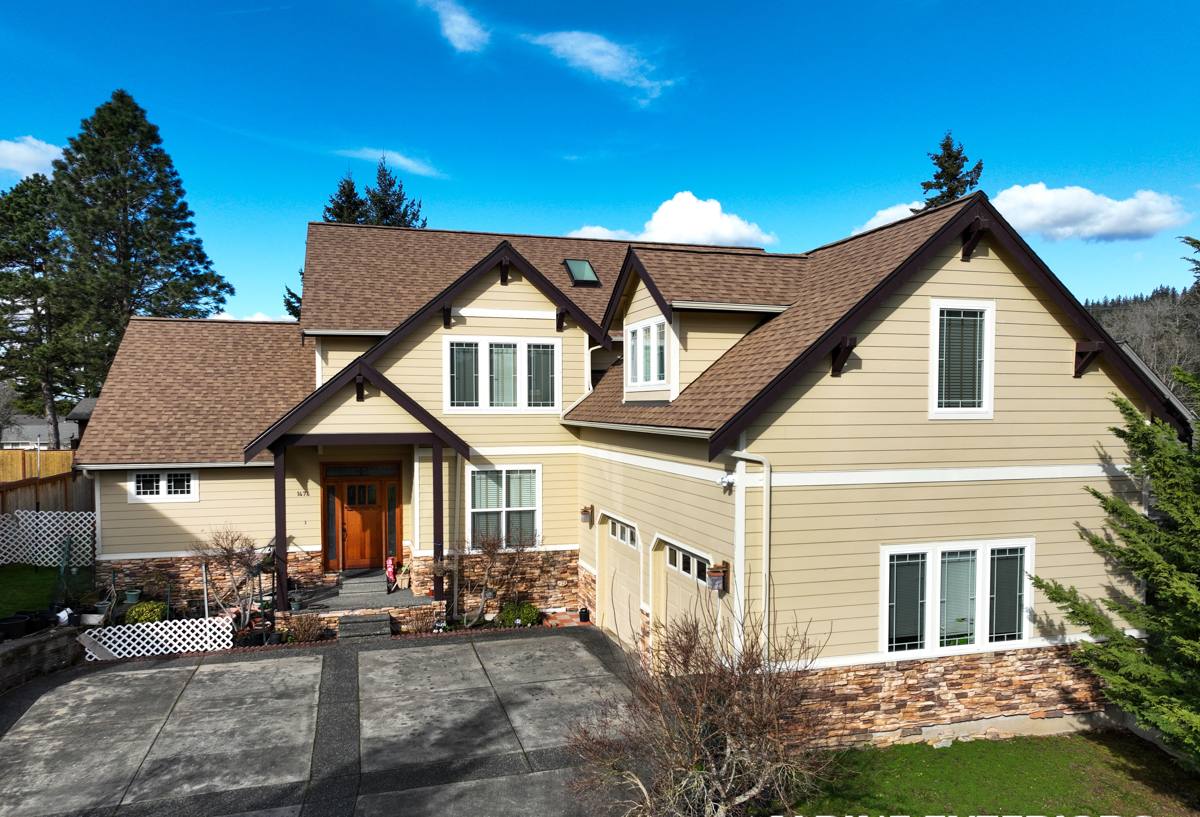
What Local Homes Actually Need From Their Windows
Corrosion-Resistant Hardware and Frames
Salt air doesn't need to come from a beachfront lot to do damage — it travels on wind and settles on everything downwind of the water, which describes a lot of Whatcom County. Cheap fasteners, exposed steel components, and low-grade aluminum cladding pit and corrode faster than most homeowners expect. We spec corrosion-resistant hardware and frame materials as a baseline for Happy Valley work, not an upgrade.
Real Weatherproofing at the Rough Opening
A window is only as good as the flashing and sealing around it. Driving rain in this area doesn't fall straight down — it hits siding and window openings at an angle, which means flashing details that work fine in calmer climates can let water track behind the trim and into the wall cavity here. Correct window installation means proper flashing tape, a sloped sill pan, and sealant placed so water sheds outward instead of pooling.
Moisture and Moss Management at the Frame
Long wet seasons keep exterior surfaces damp for extended stretches, and moss doesn't stay confined to the roof — it colonizes window sills, trim, and anywhere moisture sits undisturbed. Frame materials and finishes that resist moisture absorption, plus sill designs that don't trap standing water, cut down on the moss and rot problems that show up on lower-grade installations after a few wet seasons.
Condensation Control
Coastal humidity plus temperature swings between a heated home and a cold, damp exterior is a recipe for condensation on interior glass and, worse, inside the frame cavity if the window isn't properly insulated and sealed. Good glazing packages and correctly sealed frames keep that moisture where it belongs — outside.
What a Correct Custom Window Job Involves
"Custom" doesn't mean an unusual shape or a premium price tag — it means the window is specified and installed to match your home's actual exposure, framing, and existing envelope, rather than treated as an off-the-shelf swap. A correct job typically includes:
- Accurate field measurement of each rough opening — older Whatcom County homes are rarely perfectly square
- Removal of the old window without damaging surrounding siding, trim, or sheathing
- Inspection of the opening for hidden rot or water damage before the new window goes in
- Correct sill pan flashing, sloped to drain water outward
- Weather-resistant barrier integration so the window ties into the home's existing drainage plane
- Proper shimming and fastening so the frame isn't racked or under stress
- Interior and exterior sealant appropriate for this climate's UV and moisture exposure
- A final function check — smooth operation, tight seal, no drafts
Skipping any of these steps is exactly how a window that looks fine on installation day starts leaking or fogging within a couple of wet seasons.
Choosing Frame Materials for This Climate
There's no single "best" window material for every home — the right choice depends on your budget, your home's exposure, and how much maintenance you want to take on. Here's how the common options actually perform in Happy Valley's conditions:
| Frame Material | Moisture & Salt Air Performance | Maintenance | Typical Fit |
|---|---|---|---|
| Vinyl | Good — won't rot or corrode, handles humidity well | Low | Most homes; strong value for coastal exposure |
| Fiberglass | Excellent — very stable in moisture and temperature swings | Low | Homes wanting long-term durability, higher budget |
| Wood | Requires diligent upkeep — attractive but vulnerable to the region's long wet season | High | Character homes where appearance is the priority |
| Wood-clad | Good if cladding and flashing details are done right | Medium | Homeowners who want wood interior look with better exterior protection |
| Aluminum | Poor without thermal breaks — prone to condensation and corrosion near salt air | Medium | Rarely our first recommendation for this area |
For most Happy Valley homes, vinyl or fiberglass frames offer the best balance of durability and low upkeep against this climate. We'll walk through the trade-offs for your specific home rather than push one option across the board.
Our Process for Happy Valley Window Projects
1. On-Site Assessment
We look at your existing windows, the condition of the openings, and any signs of past water intrusion — staining, soft trim, or musty smells near sills are all clues we check for before quoting anything.
2. Honest Recommendations
We'll tell you which frame material and glazing package make sense for your home's exposure and your budget, including where a mid-range option is genuinely adequate and where it's worth spending more.
3. Accurate Measurement and Ordering
Custom windows are ordered to the exact dimensions of your openings after we've confirmed the framing is sound — not before.
4. Careful Installation
Our crews follow the same flashing and sealing sequence on every job, because that sequence is what keeps water out — not the window brand alone.
5. Final Walkthrough
We check operation, seal quality, and cleanup before we consider the job done.
Why It Matters to Hire a Crew That Already Works This Area
A contractor who's worked window installs across Whatcom County knows which details actually matter here versus which ones are marketing language on a manufacturer's brochure. We know how far salt air travels inland in this region, what wind-driven rain does to a poorly flashed opening, and how moss and moisture behave against exterior trim through a long wet season. That's not something you get from a crew that installs windows the same way in every climate they work.
Local experience also means we're not guessing at what's under your siding when we pull an old window — we've seen the common trouble spots in homes of this area's typical age and construction, and we check for them as a matter of routine, not an upsell.
Questions Worth Asking Any Window Contractor
- Will you inspect the rough opening for hidden rot before installing, and what happens if you find some?
- What flashing method do you use, and how does it handle wind-driven rain specifically?
- Are you licensed and insured for exterior work in Washington?
- What's covered under warranty — labor, materials, or both — and for how long?
- Can you explain why you're recommending a particular frame material for my home?
Signs Your Current Windows May Be Falling Behind This Climate
Not every window needs replacing just because it's old. But a few signs point to windows that are actively losing the fight against local conditions:
- Visible fogging or moisture between double-pane glass
- Soft or discolored trim and sill wood
- Drafts you can feel even when the window is fully closed and locked
- Difficulty opening, closing, or locking due to swollen or warped frames
- Moss or persistent green growth on sills or lower trim
- Noticeably higher heating costs than a comparable home nearby
What Custom Windows Cost — And What Drives the Price
Pricing depends on frame material, glass package, size, and how much work the opening itself needs before a new window can go in. Rather than quote a number that won't reflect your home, here's what actually moves the price:
| Cost Factor | Why It Matters |
|---|---|
| Frame material | Vinyl is generally most affordable; fiberglass and wood-clad cost more upfront but may cost less in upkeep over time |
| Glazing package | Double vs. triple pane, and low-E coatings, affect both price and long-term energy performance |
| Opening condition | Hidden rot or damaged framing found during removal adds repair work before the new window can be installed |
| Number and size of openings | Larger or custom-shaped windows cost more to manufacture and install than standard sizes |
| Access and site conditions | Second-story or hard-to-access windows take more labor time |
We give straightforward, itemized quotes so you know exactly what you're paying for and why — no inflated "estimates" designed to be negotiated down.
Get a Straight Answer About Your Windows
If you're weighing whether to repair, replace, or hold off on your windows, we're glad to take a look and give you an honest read — no pressure, no upsell script. Fill out the form below for a free estimate on custom window work for your Happy Valley home.