 Whatcom County
 Ferndale Roofs Take a Different Kind of Beating
Ferndale sits close enough to the water and open farmland that roofs here deal with weather most inland towns never see in the same combination. Wind off the Strait and the bay pushes rain sideways instead of straight down, which finds every weak seam a roof has. Add in salt-laden air that speeds up corrosion on fasteners, flashing, and metal roof components, and you've got a roof aging faster than the shingles' warranty paperwork suggests it should. Then there's moss. Western Whatcom County stays damp and shaded for long stretches of the year, and moss doesn't just sit on top of a roof looking bad — it works its way under shingle edges, holds moisture against the deck, and lifts material loose over time.
None of this means Ferndale homes need exotic roofing solutions. It means storm damage repair here has to account for what actually caused the damage, not just patch the visible hole and move on. A repair that ignores the moss, the salt exposure, or the wind direction that caused the failure is a repair that fails again in a year or two.
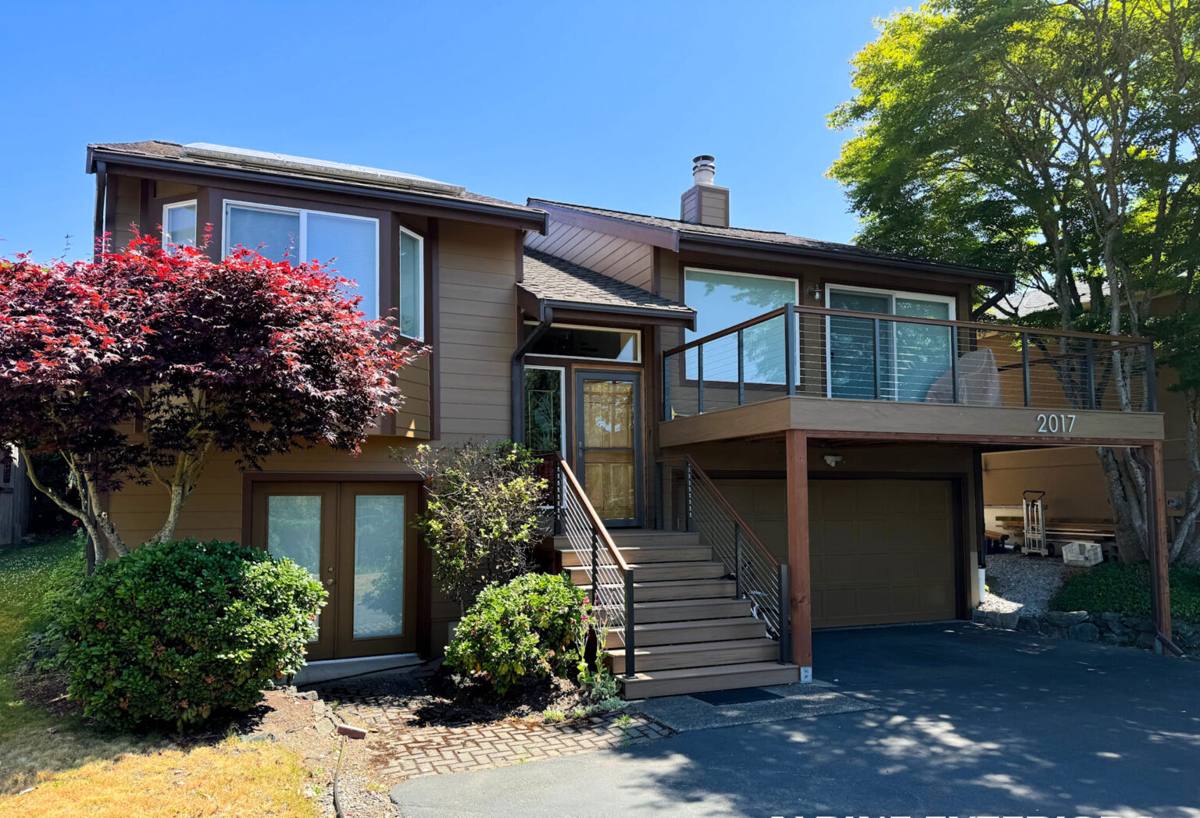
What Actually Counts as Storm Damage
Homeowners often picture storm damage as a tree branch through the roof, and sometimes it is. But most of the storm-related roof calls we get in this area are less dramatic and easier to miss:
Wind-Lifted or Missing Shingles
Sustained wind and gusts during a front moving through can lift shingle tabs, break the sealant strip, or tear shingles off entirely — especially on older roofs where the adhesive has already weakened from age and moss growth underneath.
Moss-Driven Rot and Lift
This one develops slowly and then gets "discovered" during a storm when a section finally gives way. Moss holds water against the shingle and deck, the wood underneath softens, and a wind event finishes the job.
Flashing and Fastener Failure
Flashing around chimneys, vents, and valleys is where most water intrusion actually starts. Salt air and repeated wet-dry cycles corrode fasteners and cause sealant to crack, and a storm just exposes what was already failing.
Debris Impact
Branches, gutter debris, and wind-blown material can crack or puncture shingles, dent metal roofing, or clog valleys so water backs up under the roofline instead of draining off it.
What a Correct Repair Actually Involves
A storm damage repair is only as good as what happens underneath the new shingles. We treat every repair as three separate questions, in this order:
1. Is the Decking Still Sound?
If water has been getting under the roofing material for any length of time, the plywood or OSB decking underneath may be soft, delaminated, or rotted. Nailing new shingles over compromised decking doesn't fix anything — it just hides the problem until it fails again, usually somewhere new.
2. Does the Repair Match What's There?
Shingle color, profile, and age all matter. We match materials as closely as possible so a repair doesn't stand out as a patch, and we're upfront when an exact match isn't available — sometimes the honest answer is that a larger section needs to be redone for the repair to blend and perform consistently.
3. Is the Root Cause Addressed?
If moss caused the failure, we don't just replace shingles and leave the same conditions in place. If a flashing detail was undersized or poorly sealed to begin with, we correct the detail, not just the symptom.
Our Process, Start to Finish
- Inspection and honest assessment. We walk the roof (or use safe access methods when conditions don't allow foot traffic) and document what we find — damage, contributing conditions, and decking condition where visible.
- Plain-language explanation. You get a clear picture of what's damaged, what's simply worn, and what can wait. We don't pad a storm repair with unrelated upsells.
- Written estimate. Scope, materials, and price before any work starts. No verbal-only agreements.
- Repair work. Decking replaced where needed, matching materials installed, flashing details corrected, and the surrounding area checked so the repair holds up to the next storm, not just this one.
- Final walkthrough. We show you what was done and why, and flag anything worth watching going forward.
Repair or Replace? What Actually Decides It
Storm damage doesn't automatically mean a full replacement, and it doesn't automatically mean a quick patch is enough either. These are the factors that actually drive the decision:
| Factor | Leans Toward Repair | Leans Toward Replacement |
|---|---|---|
| Roof age | Under 10–12 years, otherwise sound | Near or past expected shingle lifespan |
| Decking condition | Solid, dry, no soft spots | Widespread rot or delamination |
| Extent of damage | Localized to one slope or section | Scattered across multiple slopes |
| Moss history | Minor, recently treated | Long-term, widespread, recurring lift |
| Material availability | Close match available | Discontinued or badly weathered existing material |
We'll tell you honestly which side of that table your roof falls on. A repair that's likely to need redoing within a couple of years isn't a good use of your money, and we'll say so instead of just taking the smaller job.
Materials That Hold Up to Whatcom County Conditions
We use algae- and moss-resistant shingle lines where they make sense for a repair, particularly on north-facing or shaded slopes where moss tends to establish first. These shingles use embedded copper or zinc granules that discourage regrowth — they don't make a roof moss-proof, but they meaningfully slow it down compared to standard shingles in a damp, shaded climate.
For flashing and fasteners, we favor corrosion-resistant materials given the salt air exposure common closer to the water. It costs a little more upfront than standard-grade hardware, but replacing corroded flashing every few years costs more in the long run — and it's the detail most likely to cause a repeat leak if it's skipped.
We're selective about products with a track record of installation sensitivity or a complicated warranty structure that shifts liability onto the homeowner if every step isn't documented exactly right. That's less about the product being bad and more about our standard: a repair should be something we can stand behind without asking you to keep paperwork on every fastener.
If You're Filing an Insurance Claim
Many storm damage repairs in this area go through a homeowner's insurance claim, especially after a significant wind or rain event. A few things help that process go smoothly:
- Document damage with photos as soon as it's safe to do so, before any temporary tarping or cleanup.
- Get a written estimate that separates storm-caused damage from pre-existing wear — adjusters look for that distinction.
- Avoid full replacement of undamaged sections unless the adjuster's scope calls for it; matching materials is preferred over unnecessary tear-off.
- Keep records of any temporary repairs (tarping, emergency patches) and their cost.
- Ask questions if the adjuster's scope seems to miss something you can see — a second, independent inspection is a reasonable thing to request.
We're glad to provide a straightforward written estimate you can hand to your insurance company. We don't inflate scope to chase a bigger payout, and we don't pad numbers — it slows the claim down and it's not how we want to do business.
Signs Your Roof Has Storm Damage — Check From the Ground
You don't need to get on the roof to spot most of these. A pair of binoculars and a walk around the house covers it:
- Shingles that look curled, cracked, or missing entirely, especially after a windy stretch
- Granules collecting in gutters or at downspout outlets
- Visible moss or dark streaking concentrated on shaded or north-facing slopes
- Sagging or uneven roofline sections
- Water stains on interior ceilings, especially near chimneys, vents, or valleys
- Flashing that looks lifted, cracked, or rusted around roof penetrations
- Debris buildup in valleys that's holding moisture against the roof surface
Why a Crew That Already Works Ferndale Matters
Storm damage repair isn't just a skill — it's local knowledge applied to a specific roof in a specific climate. A crew that works Whatcom County regularly already knows which slopes in this area tend to hold moss longest, how far salt air exposure reaches inland from the water, and which flashing details fail first under sustained driving rain. That's the difference between a repair that patches what's visible and one that accounts for what actually caused the failure.
It also means faster response after a storm moves through. When wind and rain damage several roofs in the same event, being local means we're not driving in from another county to get to you — we're already working the area.
If you've got storm damage, suspected moss lift, or just want an honest look at a roof that's been through a rough season, we're happy to come take a look. The estimate is free, there's no pressure attached to it, and you'll get a straight answer about what your roof actually needs — just fill out the form below.