 Whatcom County
 Why Fairhaven's Climate Is Hard on an Asphalt Shingle Roof
Fairhaven sits close enough to Bellingham Bay that salt-laden air is a constant, low-grade stress on every exterior surface, roofs included. Add in Whatcom County's long stretch of wet months, wind-driven rain off the water, and shaded, tree-covered lots that stay damp for days after a storm, and you have a combination that wears out a poorly installed or poorly maintained asphalt shingle roof faster than it would inland. None of this means asphalt shingles are the wrong choice for Fairhaven — they're not. It means the installation details that get skipped on an easier job in a drier climate are the details that actually matter here.
Three things drive most of the roofing problems we see on Fairhaven homes: moisture that finds its way under shingles through wind-driven rain, moss and algae growth that takes hold in shaded, north-facing sections and holds moisture against the shingle surface, and salt air that accelerates the breakdown of cheaper granule coatings and exposed metal flashing over time. A correctly built roof accounts for all three from day one instead of trying to fix them after the fact.
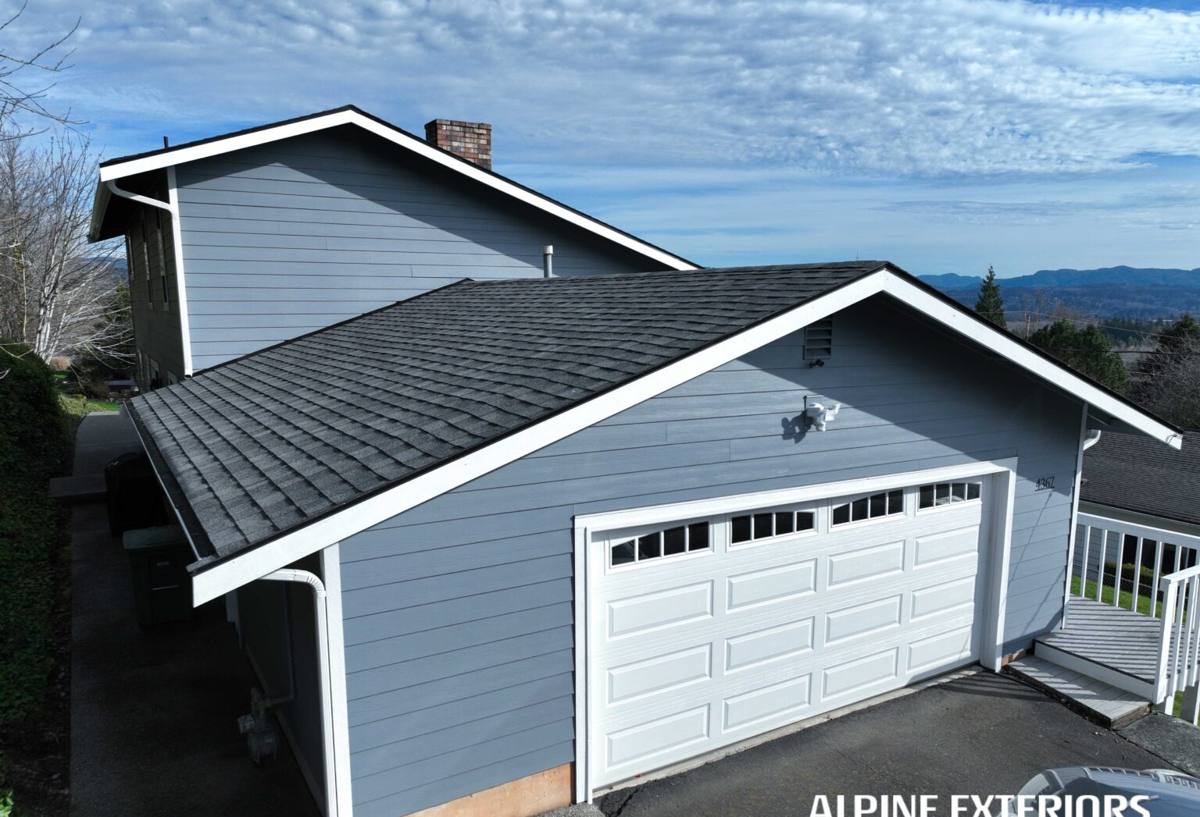
What a Correct Asphalt Shingle Roof Looks Like Here
Underlayment and Water Barriers
In a marine climate, the underlayment does more work than in drier parts of the state. We use synthetic underlayment across the field of the roof and self-adhering ice-and-water shield along eaves, valleys, and any low-slope transitions — the spots where wind-driven rain is most likely to get pushed backward under the shingle edge. This isn't an upgrade; on a Fairhaven roof it's a baseline expectation.
Ventilation
Trapped moisture in the attic is just as damaging as moisture on the roof surface. Balanced intake and exhaust ventilation keeps warm, humid air from condensing against the roof deck, which in a wet climate like this prevents both premature shingle failure from underneath and the kind of deck rot that turns a shingle job into a structural repair.
Flashing and Fastening
Salt air is hard on exposed metal. We use corrosion-resistant flashing at chimneys, skylights, sidewalls, and valleys, and we fasten shingles to the manufacturer's high-wind nailing pattern rather than the minimum spec — the extra nails per shingle cost very little and matter a lot the first time a real windstorm rolls off the water.
Choosing a Shingle That Holds Up to Salt Air and Moss
Not every asphalt shingle product performs the same way in a coastal, moss-prone climate. The table below compares the common options homeowners in Fairhaven ask us about.
| Shingle Type | Wind/Rain Performance | Moss & Algae Resistance | Typical Lifespan Here |
|---|---|---|---|
| Standard 3-tab | Adequate; lower wind rating | None built in | 15-20 years |
| Architectural (laminated) | Strong; heavier, more wind-resistant | Better shedding profile | 25-30 years |
| Algae-resistant (AR) architectural | Strong | Copper- or zinc-infused granules resist streaking | 25-30 years, cleaner appearance longer |
| Impact-rated architectural | Highest wind/impact rating | Available in AR versions | 25-30+ years |
For most Fairhaven homes, we recommend an algae-resistant architectural shingle. The upfront cost difference over standard 3-tab is modest, and the payoff is a roof that doesn't develop the dark streaking and moss footholds that shaded, damp lots in this area produce within just a few years on unprotected shingles.
Signs a Fairhaven Roof Needs Attention
- Moss growing in clumps rather than light surface staining, especially on north-facing or shaded slopes
- Granules collecting in gutters or at downspout outlets
- Shingle edges curling or lifting, which lets wind-driven rain get underneath
- Dark streaking that doesn't wash off with light rain
- Soft spots or sagging when walked on, a sign moisture has reached the deck
- Daylight visible through the attic roof boards, or damp insulation after a storm
Catching these early is almost always cheaper than waiting. Moss in particular does real damage the longer it sits — its root structure holds water against the shingle surface and gradually lifts granules, which is exactly the kind of slow, invisible wear that turns into a leak two winters later.
How We Approach a Fairhaven Roofing Project
1. Inspection and Honest Assessment
We start by walking the roof and the attic, not just the roof. A lot of what determines whether a roof needs full replacement versus repair shows up in the attic — deck condition, ventilation, and any moisture staining that points to a specific problem area rather than a whole-roof failure.
2. Tear-Off Done Right
We remove old shingles down to the deck rather than layering over existing material. Layering hides deck problems and voids most manufacturer warranties — it's a shortcut we don't take, even though it's faster and cheaper up front.
3. Deck Repair Where Needed
Any soft, delaminated, or water-damaged decking gets replaced before new underlayment goes down. Skipping this step is the single most common reason a new roof fails early.
4. Underlayment, Flashing, and Shingle Installation
Ice-and-water shield at vulnerable points, synthetic underlayment across the field, corrosion-resistant flashing, and shingles installed to the manufacturer's wind-rated nailing pattern — the process described above, applied consistently rather than only where it's convenient.
5. Cleanup and Final Walkthrough
We use magnetic sweeps for stray nails and walk the property with the homeowner before we call the job done, so there are no surprises about what was actually done versus what was quoted.
Living With Moss Season After Installation
Even the best shingle and the cleanest installation won't make moss disappear from a shaded Whatcom County property forever — it reduces how fast and how badly it comes back. Beyond product choice, a few habits keep a Fairhaven roof performing well between inspections: keep overhanging branches trimmed back so shaded areas get more sun and airflow, keep gutters clear so water doesn't back up under the shingle edge, and have the roof looked at every year or two rather than only after a problem shows up. Zinc or copper strips near the ridge can also help suppress regrowth on shaded slopes, and we can walk through whether that's worth adding on a given roof.
What Affects the Cost of a Fairhaven Asphalt Shingle Roof
| Factor | Why It Matters Locally |
|---|---|
| Roof pitch and access | Steeper roofs and tight, tree-covered lots common in Fairhaven take longer to work safely |
| Deck condition | Coastal moisture exposure means deck repair is more common here than in drier areas |
| Shingle grade | Algae-resistant and impact-rated products cost more upfront but reduce maintenance and reroof frequency |
| Number of penetrations | Chimneys, skylights, and vents each need proper flashing, which adds labor |
| Existing layers | Removing old layers versus a single tear-off changes disposal and labor time |
| Ventilation upgrades | Older Fairhaven homes often need added intake or exhaust vents to meet current standards |
We give a written, itemized estimate before any work starts, so you know what's driving the price rather than getting a single lump number.
Why Local Experience in Fairhaven and Whatcom County Matters
A roofing crew that works Whatcom County regularly already knows which details can't be skipped here — the underlayment coverage a marine climate demands, the flashing that holds up to salt air, the shingle lines that actually resist moss instead of just claiming to. That's different from a crew that mostly works drier inland climates and treats Fairhaven as just another job. Local permitting requirements, typical roof pitches and lot conditions in the neighborhood, and realistic timing around the wettest months of the year all factor into how a job gets planned and sequenced — knowledge that only comes from doing this work here repeatedly, not from a general specification sheet.
Questions Worth Asking Before You Hire
- Do you use ice-and-water shield at eaves and valleys, or only synthetic underlayment across the whole roof?
- What nailing pattern do you use — manufacturer minimum or high-wind spec?
- Is the deck inspected and repaired before new material goes down, or only if it's visibly failing?
- What warranty applies to materials versus labor, and who handles a claim if something goes wrong?
- Do you carry current liability insurance and workers' comp coverage?
- Can you explain, in plain terms, why you're recommending one shingle product over another for this specific roof?
If a contractor can't answer these clearly, that's worth noticing before you sign anything.
If you're weighing a repair versus a full replacement, or just want an honest read on how much life is left in your current roof, we're happy to take a look. Use the form below to request a free, no-pressure estimate for your Fairhaven property.