 Whatcom County
 Composite Decking for Everson's Nooksack Valley Climate
Everson sits in the Nooksack River valley, and that location shapes what a deck here has to put up with. It's a few miles inland from the open water that gives much of Whatcom County its marine air, but the same weather systems still push through — long stretches of steady rain, heavy fall and winter humidity, and shaded, slow-drying yards where moss and algae get a real foothold. Add river-bottom fog on cool mornings and a growing season that keeps trees and shrubs leafing out well into fall, and you've got conditions that are hard on any outdoor surface, wood decking especially.
A deck built for Everson needs to shed water fast, resist the kind of persistent moisture that promotes rot and mold, and not need refinishing every year or two just to stay looking decent. That's the case for composite decking here — not because it's trendy, but because it's a better match for what this valley actually does to exterior wood.
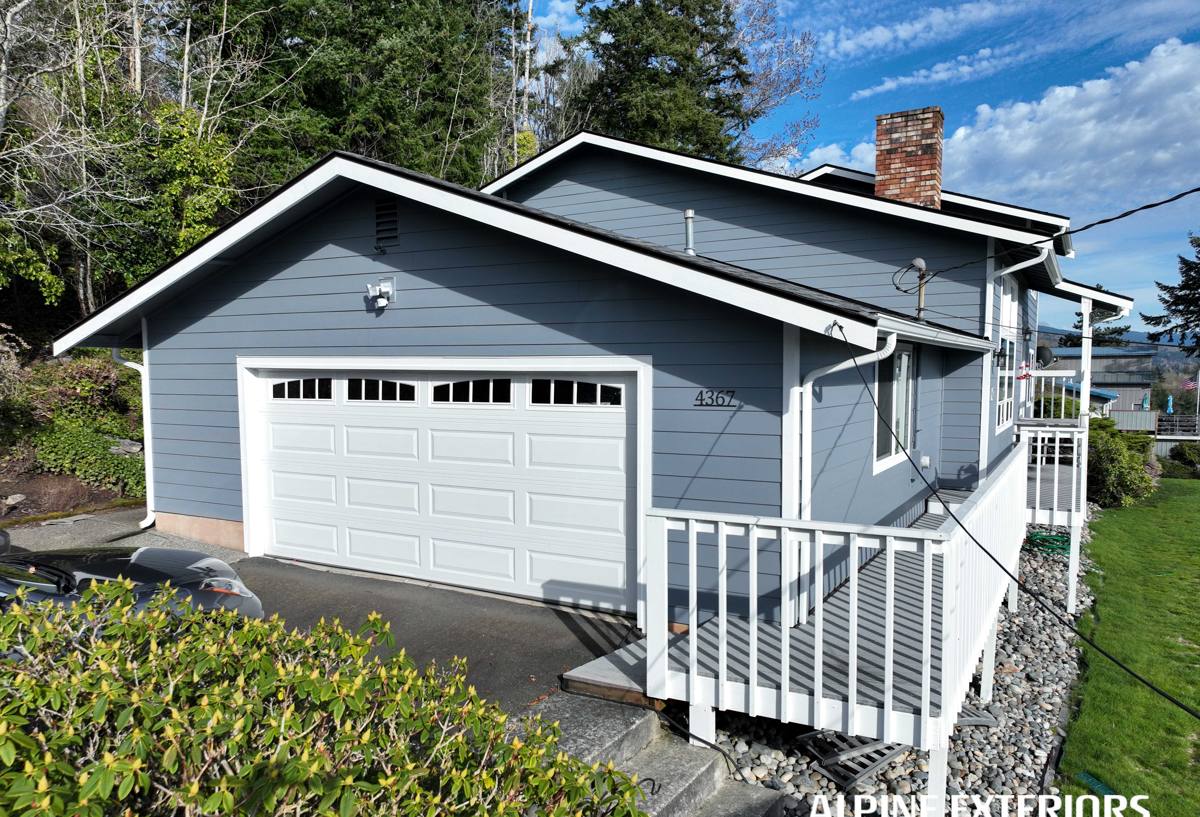
What Everson Homes Actually Need From a Deck
Every deck we build or replace in this area gets evaluated against the same local pressures:
- Standing moisture: low-lying yards near the river and heavy tree cover mean some decks stay damp longer than others just a mile away.
- Moss and algae growth: shaded, north-facing, or tree-covered decks in this climate grow moss on wood surfaces within a season or two if left untreated.
- Freeze-thaw cycling: Whatcom County winters aren't brutal, but repeated freeze-thaw at the surface and in fastener holes stresses wood fibers and finishes over years.
- UV and rain, back to back: summer sun followed by fall rain is what actually breaks down cheap coatings and sealants — it's the cycling, not either extreme alone.
Composite decking doesn't solve all of this by default — a poorly installed composite deck can still trap moisture and grow moss just like wood. The board matters, but the installation matters more.
What Composite Decking Actually Is
Composite decking is a blend of wood fibers and plastic, usually with a separate polymer cap layer bonded over the core. That cap is what gives modern composite boards their stain resistance, color retention, and moss resistance — it's a plastic surface, not a fiber surface, so it doesn't absorb water and organic growth the way exposed wood or fiber does.
Why We Lean Composite for This Area
We install composite decking on the majority of new deck and deck-replacement jobs in Everson and the surrounding Whatcom County towns, for a simple reason: it holds up to sustained moisture exposure without annual maintenance. Real cedar or fir decking can look great, but it demands yearly cleaning, sealing, and moss treatment to keep performing in this climate — skip a season and you're often looking at premature graying, cupping, or soft spots at fastener points.
Where Composite Has Trade-Offs
We tell homeowners the honest downsides too. Composite boards run hotter underfoot in direct summer sun than most wood. Lower-grade, uncapped composite (older or budget product lines) can still absorb moisture at cut ends and swell over time if those ends aren't properly sealed. And composite is a bigger upfront investment than pressure-treated wood — the payoff shows up in avoided maintenance over the following 10-plus years, not on day one.
What a Correct Composite Deck Installation Involves
The board brand matters less than most homeowners are told. What actually determines whether a composite deck performs for 20-plus years in this climate is the substructure work underneath it — the part nobody sees once the boards go down.
- Joist tape or a comparable moisture barrier over every joist top, so rain that gets between boards doesn't sit against exposed wood framing.
- Correct joist spacing and blocking for the specific composite product — composite boards flex differently than wood and most manufacturers spec tighter spacing, especially on angled or picture-frame layouts.
- Proper ledger board flashing and a positive gap where the deck meets the house, so water sheds away from the structure instead of wicking into the band joist or siding.
- Hidden fastener systems installed to the manufacturer's exact clip spacing — under-fastening leads to board movement and squeaks; over-fastening can restrict the board's normal thermal expansion and cause buckling.
- Airflow underneath the deck — enough ground clearance and, on low-profile decks, vented skirting so the underside can actually dry out between rain events instead of staying damp for days.
Skip any one of these and you can end up with a composite deck that still traps moisture, still grows moss in the gaps, and still needs framing repair in 10 years — just with a nicer-looking top surface than the wood deck it replaced.
Composite vs. Wood vs. PVC: How They Compare in This Climate
| Factor | Cedar / Fir Wood | Capped Composite | Solid PVC |
|---|---|---|---|
| Moisture resistance | Low — absorbs and swells | High — capped surface sheds water | Very high — fully synthetic |
| Moss/algae resistance | Poor without yearly treatment | Good, especially lighter colors | Good to very good |
| Annual maintenance | Sealing/staining most years | Occasional soap-and-water wash | Minimal |
| Upfront cost | Lowest | Mid to upper-mid | Highest |
| Typical lifespan here | 10-15 yrs before major work | 20-30 yrs | 25-30+ yrs |
| Surface heat in sun | Moderate | Warmer, varies by color | Warmer, varies by color |
We install all three when a homeowner has a specific reason to want them, but for a straight replacement or new build in Everson's climate, capped composite is where most budgets land — it closes most of the gap to PVC on moisture and moss performance at a lower material cost.
Our Process for an Everson Deck Project
Every job starts with a walk of the site, not a sales pitch. We look at drainage around the existing deck footprint, how much shade the area gets through the day, the condition of the ledger connection to the house, and what's happening with the framing underneath if we're replacing an existing deck.
- On-site assessment: we check for soft framing, inadequate ledger flashing, and drainage problems before quoting anything — these are the issues that actually shorten a deck's life.
- Honest product walkthrough: we show you two or three composite lines in a range that fits the project, explain the real difference between them, and never push the most expensive option as the only "good" one.
- Written scope and timeline: what's being replaced, what's being reused, ledger and flashing work, fastening method, and a realistic weather-dependent schedule for this valley.
- Build to the manufacturer's spec: joist spacing, joist tape, fastener clips, and ventilation done to the product's actual installation requirements, not shortcuts.
- Final walkthrough: we go over basic care and point out anything worth watching, like a shaded corner that may need occasional cleaning.
Why a Crew That Already Works Everson Matters
Deck work here isn't just a product question — it's a site question. A crew that's already built and repaired decks in Everson and the rest of Whatcom County has already run into the low-clearance crawlspaces common on older valley homes, the ledger connections that need extra attention on houses close to the river, and the drainage quirks of yards that stay soft into late spring. That's the kind of thing you only learn by doing the work locally, not from a manufacturer's install manual.
It also means someone answering the phone who understands Whatcom County permitting requirements for deck height, guardrails, and footings, and who isn't guessing at frost depth or setback rules because they normally work somewhere with a different climate and code jurisdiction.
Maintaining a Composite Deck in This Climate
Composite is low-maintenance, not no-maintenance. In Everson's wet, shaded conditions, a little seasonal attention goes a long way:
- Sweep debris out of board gaps in fall — trapped leaves and needles hold moisture against the boards and framing below.
- Wash the deck surface once or twice a year with soap and water or a manufacturer-approved composite cleaner to prevent surface film that moss and algae can grip onto.
- Check that skirting vents and under-deck airflow paths haven't been blocked by landscaping, stored items, or debris buildup.
- Look at the ledger board area at the house each fall — this is the single most common spot for hidden moisture problems on any deck, composite or wood.
Questions to Ask Before Hiring a Deck Contractor
Whether you call us or someone else, these are the questions that separate a deck that lasts from one that doesn't:
- Do you install joist tape or an equivalent moisture barrier over the framing as standard practice, or only if asked?
- What's your fastener spacing and clip system, and does it match this specific board's manufacturer spec?
- How is the ledger board flashed where it meets the house, and is there a drainage gap?
- What's the manufacturer's warranty, and does it cover fading, staining, and structural failure, or just one of those?
- Have you built or repaired decks elsewhere in Whatcom County, and what problems do you typically see in this area?
If you're weighing a new composite deck or a wood-to-composite replacement in Everson, we're glad to walk the site, look at what's actually going on underneath your current deck if you have one, and give you a straight, no-pressure estimate — fill out the form below and we'll set up a time to take a look.