 Whatcom County
 Edgemoor's Waterfront Climate Is Hard on Siding
Edgemoor sits close to the water, and that proximity shapes everything about how siding ages here. Homes catch salt-laden air off Bellingham Bay, take driving rain straight off the Sound during fall and winter storms, and sit under a tree canopy that keeps north- and west-facing walls damp and shaded for long stretches of the year. That combination — salt air, wind-driven rain, and a moss season that can run six months or more in a wet year — is a tougher test than most siding products were designed for.
When siding fails in Whatcom County, it rarely fails all at once. It starts small: a soft spot near a butt joint, a bloom of moss creeping up from a shaded corner, a panel that's started to cup at the edges. Left alone, those small problems compound, because once water gets behind a wall assembly in this climate, it doesn't dry out quickly. Understanding what's actually happening behind the surface is the difference between a repair that holds and one that's just cosmetic.
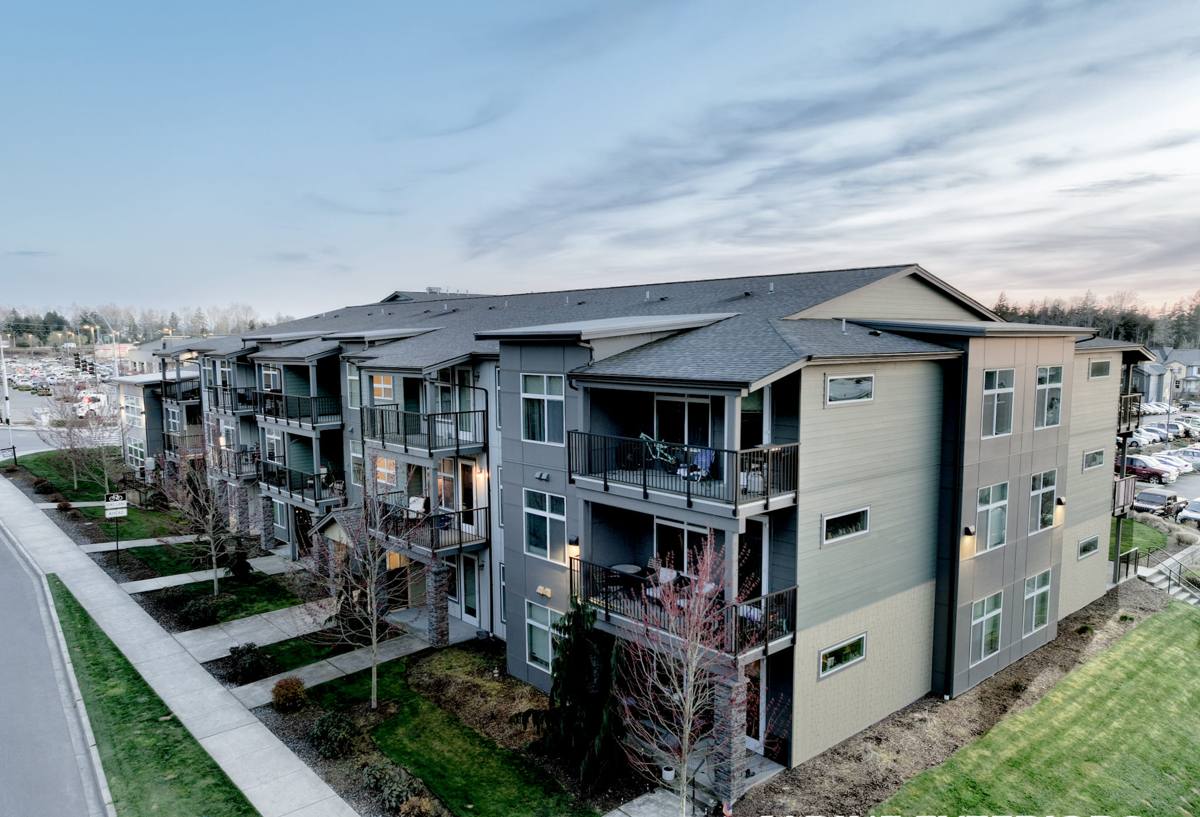
Signs Your Edgemoor Home Needs Siding Repair
Most homeowners notice siding problems visually first, but the visible damage is often the smallest part of the issue. Here's what we look for, and what you should be watching for between visits:
- Soft, spongy, or bouncy areas when you press on the siding, especially near the bottom courses or below windows
- Persistent moss or algae growth that returns within weeks of cleaning, particularly on shaded or north-facing walls
- Cracked, split, or delaminating panels, especially near butt joints, corners, and penetrations like hose bibs or vents
- Paint that's peeling, bubbling, or failing faster than it should on one section of the house but not others
- Visible gaps at trim, corner boards, or window and door casings where caulking has shrunk or pulled away
- A musty smell in an adjacent interior room, or discoloration on interior drywall near an exterior wall
- Staining or streaking that runs downward from a fastener, joint, or flashing line
Any one of these on its own might be minor. Several together, or any sign paired with soft sheathing underneath, usually means water has already gotten past the surface layer.
What a Correct Siding Repair Actually Involves
A siding repair that only addresses what's visible is a temporary fix. A correct repair starts by figuring out how water got in, not just where it's showing up. That means pulling the damaged siding, checking the water-resistive barrier and flashing underneath, and confirming the sheathing itself hasn't gone soft before anything new goes back on the wall.
Diagnosis Before Repair
We open up the affected area enough to see the actual condition of the wall assembly — not just the piece of siding that's cracked or stained. In Edgemoor's climate, it's common to find that the visible damage is a symptom of a flashing detail that was never sealed correctly, or a joint that was caulked instead of properly lapped and drained. Repairing the surface without correcting the underlying detail just buys a year or two before the same spot fails again.
Matching Material and Method
Once we know what's actually wrong, the repair has to match the original installation in both material and technique — same reveal, same fastening pattern, same joint treatment — so the patched section performs and weathers the same as the surrounding wall. This is where a lot of repairs go wrong: a mismatched panel, an inconsistent nailing pattern, or a joint that isn't properly lapped can create a new failure point right next to the one you just fixed.
Common Failure Points We See Around Edgemoor
Certain parts of a house take the brunt of this region's weather, and repair calls tend to cluster around the same handful of details:
- Lower courses and grade-level siding — splash-back from driving rain and irrigation keeps these areas wetter longer than the rest of the wall
- North and west exposures — shaded, tree-covered walls stay damp and are where moss and algae take hold fastest
- Butt joints and panel seams — factory-cut edges are the most vulnerable point on any lap siding if they weren't sealed or backed correctly at install
- Window and door flashing — a missed or reversed flashing lap is one of the most common sources of hidden water intrusion we find behind failing siding
- Deck ledgers and roof-to-wall transitions — these intersections need step flashing and kickout flashing done correctly, and they're easy to get wrong
None of this is unique to Edgemoor, but the frequency and severity of it is higher here than in drier parts of Whatcom County, simply because the wall assemblies stay wet longer between rain events.
Repair or Replace? How We Help You Decide
Not every siding problem needs a full re-side, and we're not going to tell you it does. But there's a point where patching individual sections costs more over time than doing the job right once. Here's the general framework we use when we're standing in front of a wall with you:
| Factor | Repair Usually Makes Sense | Replacement Usually Makes Sense |
|---|---|---|
| Extent of damage | Isolated to one or two areas | Recurring across multiple walls or elevations |
| Sheathing condition | Solid and dry once opened up | Soft, delaminated, or water-stained in multiple spots |
| Age of existing siding | Mid-life, otherwise sound material | Near or past its expected service life |
| Cause of failure | A single fixable detail (flashing, caulk joint) | Systemic issue — original material or install method |
| Material match | Discontinued but replaceable product still on hand | Product no longer manufactured or matched |
If your home was originally built or previously re-sided with a wood-based composite or vinyl product that's now failing across multiple areas, patch repairs often aren't a lasting fix — the underlying material and installation approach is the problem, not just the one damaged section. In those cases we'll tell you honestly that a full re-side is the better long-term investment, rather than billing you for repairs we don't think will hold.
Our Siding Repair Process in Edgemoor
- On-site inspection. We walk the exterior with you, note every area of concern, and probe suspect spots to check for soft sheathing before quoting anything.
- Open and assess. We remove the damaged siding to inspect the water-resistive barrier, flashing, and sheathing underneath — this is what separates a real repair from a cosmetic patch.
- Correct the source. Any flashing, sealant, or drainage detail that failed gets fixed before new siding goes back on. Repairing the surface over an uncorrected flashing problem just delays the next failure.
- Replace with matched material. We install James Hardie fiber cement, matched in profile and reveal to your existing siding wherever possible, using proper fastening and joint treatment.
- Finish and seal. Trim, caulking, and touch-up finish work are completed to blend with the surrounding wall, not just tacked on.
- Walkthrough. We show you exactly what we found and what we did about it — no vague explanations, no upsell pressure.
Why We Repair and Rebuild With James Hardie
We install James Hardie fiber cement siding exclusively — we don't work with vinyl, LP SmartSide, or other composite products, and that standard applies to repair work too. When we're patching into existing Hardie siding, matching material and method is straightforward because the product line is consistent and well documented. When we're repairing a home originally sided in a wood-based composite or vinyl product, we'll be upfront if a like-for-like patch isn't realistic or durable, and we'll explain why replacing the affected section — or the wall — with Hardie is usually the more honest long-term answer.
Hardie's fiber cement is non-combustible, holds its factory ColorPlus finish far longer than field-painted siding, and is engineered in HZ product lines specifically for wet, marine-influenced climates like this one. That matters most in a repair context, because a patch is only as good as its ability to survive the same conditions that damaged the original siding. A repair section that can't handle Edgemoor's salt air and moisture load the same way the rest of the wall does isn't really a repair — it's a problem with a shorter timeline.
Why a Crew That Already Works This Neighborhood Matters
Siding repair in a marine climate isn't the same trade as siding repair in a dry inland town. Crews who work Whatcom County's waterfront and near-waterfront neighborhoods regularly know which details fail first in this exposure, how much moss growth is normal versus a sign of trapped moisture, and how to flash a repair so it actually sheds water the way the rest of the wall does. That local pattern recognition is what keeps a repair from becoming a callback six months later.
It also means we're not guessing at material behavior. We've seen how Hardie performs against this specific mix of salt air, rain, and shade over years, not just on a spec sheet, and we bring that experience to every repair estimate we write for a home in this area.
A Simple Maintenance Routine That Extends Repair Life
- Rinse siding gently once or twice a year, focusing on shaded and north-facing walls where moss and algae build up fastest
- Keep gutters clear so overflow isn't running down the wall face during heavy rain events
- Trim back vegetation and tree canopy that's keeping any section of wall in constant shade and damp
- Recaulk or have caulking inspected at trim and penetration points every few years, before gaps open up
- Walk the exterior after major storms and note any new cracking, staining, or soft spots early, while they're still a small repair
None of this prevents every problem, but it slows the rate at which Edgemoor's climate works against your siding, and it makes small issues easy to catch before they become structural ones.
Get an Honest Look at Your Siding
If you're seeing soft spots, persistent moss, cracked panels, or just want a second opinion on whether a section of your home needs a repair or something more, we're glad to come take a look. We'll tell you plainly what we find, what it will take to fix it correctly, and why — no pressure, no inflated scope. Reach out for a free estimate using the form below.