 Whatcom County
 Composite Decking in Edgemoor: Why the Material Matters as Much as the Install
Edgemoor sits close to the water, under a lot of mature tree cover, which is a nice place to live and a hard place to keep a deck looking good. Salt-laden air off the bay, long stretches of driving rain through the fall and winter, and a moss season that can run half the year all work against a deck surface. Composite decking exists specifically to handle that kind of exposure better than wood does, but only when it's installed the right way. A composite board that's fastened wrong, laid over a soggy substructure, or butted tight with no room to breathe will still fail early — it'll just take longer to show it than wood would.
This page is about what composite decking actually needs to succeed on an Edgemoor property, not a generic rundown of decking in general. Whatcom County weather is specific enough that it changes real decisions: joist spacing, drainage detailing, fastener choice, and even which composite products we're willing to warranty our work on.
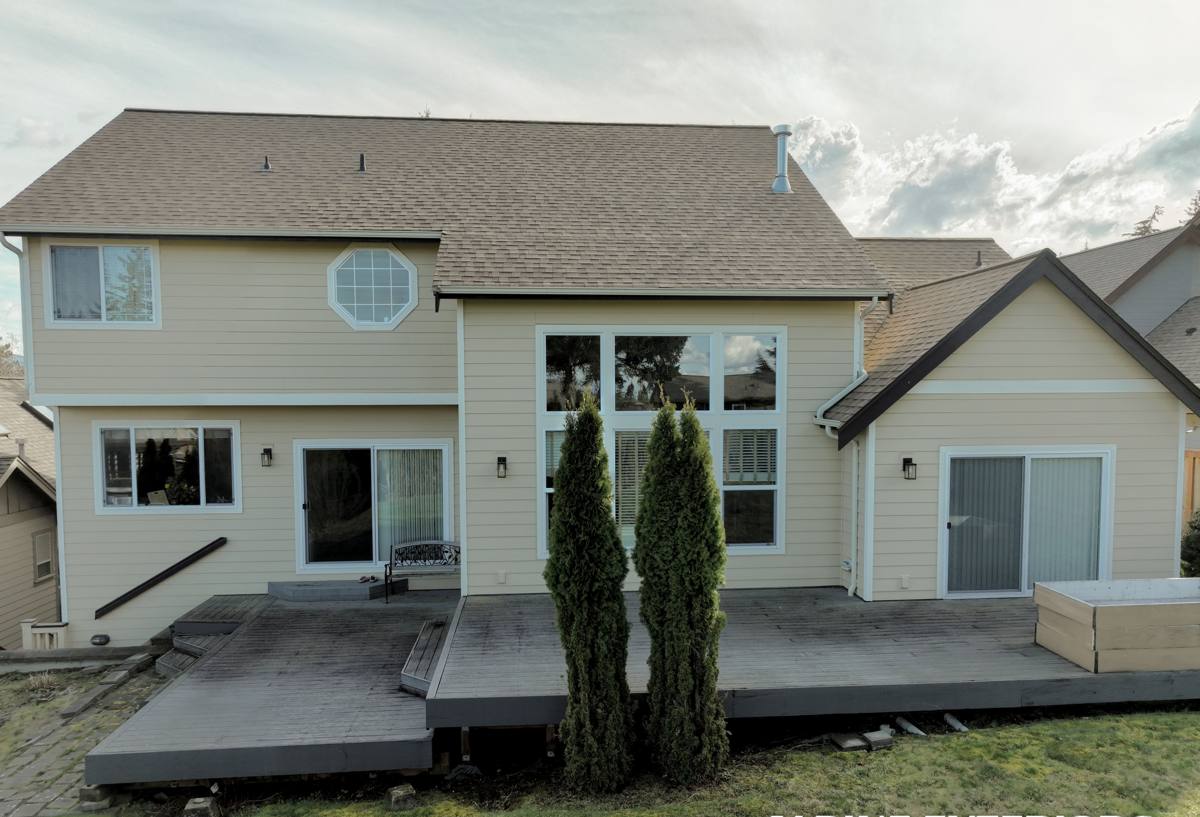
What Edgemoor's Climate Actually Does to a Deck
Salt Air
Homes closer to Bellingham Bay deal with airborne salt that accelerates corrosion on any exposed metal — screws, joist hangers, post bases, railing hardware. On a composite deck, the boards themselves resist salt fine; the fasteners and structural hardware underneath are usually the weak point if they're not rated for coastal exposure.
Driving Rain
Whatcom County doesn't just get rain, it gets rain pushed sideways by wind off the water for days at a time. That matters more for how a deck sheds and drains than for the boards themselves. Ledger board flashing, gaps between boards, and slope away from the house all have to be right, or water finds its way into the substructure and stays there.
Moss and Algae Season
Shade from mature trees plus near-constant moisture from fall through spring is exactly what moss and algae need to take hold. Composite decking is far more resistant to organic growth than wood, but it's not immune — surface texture, drainage, and how much direct light a deck gets all affect how much moss pressure it faces over a Whatcom County winter.
Composite vs. Wood: A Straight Comparison for This Climate
| Factor | Composite Decking | Wood Decking |
|---|---|---|
| Moisture absorption | Very low; capped boards shed water at the surface | Absorbs and releases moisture, driving swelling and cupping |
| Moss/algae resistance | Higher, especially capped/PVC-style products | Lower; porous surface holds moisture and organic growth |
| Annual maintenance | Periodic washing; no staining or sealing | Regular cleaning plus sealing or staining, often yearly here |
| Fastener/hardware exposure | Hidden-fastener systems reduce exposed metal | Surface-nailed or screwed, more exposed hardware |
| Upfront cost | Higher material cost | Lower material cost, higher lifetime maintenance cost |
| Expected service life (coastal exposure) | Long, with correct install and hardware | Shorter without diligent, ongoing maintenance |
Neither material is automatically "right" — a well-maintained wood deck can still look good for years, and plenty of homeowners prefer the look and repairability of real wood. Composite simply shifts the burden from ongoing homeowner maintenance to a correct upfront install, which is a trade-off worth being honest about.
What a Correct Composite Deck Installation Involves
Substructure and Drainage First
The composite boards are the part everyone sees, but the framing underneath is what determines whether the deck holds up. In a climate like this, we pay close attention to joist spacing (often tighter than the manufacturer's bare minimum, especially on angled or diagonal board patterns), ground clearance, and making sure water has somewhere to go once it passes between boards instead of pooling under the deck.
Fastening and Board Spacing
Hidden fastener systems are standard on most composite decks now, and they matter more here than in a dry climate — fewer surface penetrations means fewer points where water and salt air can work into the board or the joist below. Board gapping has to account for the material's expansion and contraction, which shifts with the temperature swings and sustained damp that Whatcom County sees.
Flashing, Ledger, and Edge Details
Where the deck meets the house is the single most common failure point on any deck, composite or wood. Proper ledger board flashing keeps driving rain from tracking behind the siding and into the wall assembly. Picture-frame edges, stair stringers, and post bases all need the same attention — a composite deck with a poorly flashed ledger board is still a wet-framing problem waiting to happen, regardless of what the decking surface is made of.
Hardware Selection
Given the salt air exposure common to Edgemoor, we favor stainless steel or coated fasteners and corrosion-resistant structural hardware over standard galvanized options wherever it's practical. It costs a bit more upfront and saves a lot of grief later.
Maintenance Realities: What Composite Does and Doesn't Solve
Composite decking cuts down on maintenance dramatically compared to wood, but "low maintenance" isn't "no maintenance," especially under Edgemoor's tree cover and rain pattern.
- Surface debris (leaves, needles, seed pods) should be cleared regularly so it doesn't trap moisture against the board
- A seasonal wash-down, especially before winter, helps keep moss and algae from getting a foothold in shaded areas
- Gaps between boards should stay clear so water and debris keep draining as designed
- Railing hardware and fasteners are worth a visual check once a year for corrosion, particularly closer to the water
- Areas under heavy, permanent shade will always need more attention than open, sun-exposed sections of the same deck
None of this is heavy lifting, but skipping it entirely in a climate this wet will shorten the life of even a good composite deck.
Our Process for Edgemoor Composite Decking Projects
Site Visit and Assessment
We look at sun exposure, tree cover, existing drainage, and how close the property sits to salt air influence before we talk products. A deck on an open, south-facing lot has different needs than one tucked under a canopy a block from the water, even within the same neighborhood.
Design and Material Selection
We walk through composite board options with actual trade-offs explained — capped vs. non-capped composite, color and heat retention, and how each performs under sustained moisture and shade. We're not going to push a product that's a poor fit for a shaded, damp lot just because it's popular elsewhere.
Installation
Substructure work, flashing, and framing come first and get done to hold up under this climate specifically, not just to code minimums. Board installation follows manufacturer spec on fastening and spacing, adjusted where local conditions call for tighter tolerances.
Final Walkthrough
We go over drainage, gapping, and basic maintenance expectations with the homeowner before we call the job done — what to watch for in year one, and what's normal wear versus what isn't.
Cost Factors for Composite Decking in Edgemoor
| Factor | Why It Affects Cost |
|---|---|
| Substructure condition | Rebuilding or reinforcing framing adds cost but is often necessary given moisture exposure |
| Deck size and layout | Stairs, multiple levels, and picture-frame edges add labor and material |
| Board tier | Composite lines range from base capped boards to premium PVC-based products |
| Hardware upgrades | Stainless or coated fasteners cost more than standard galvanized options |
| Site access | Sloped, waterfront, or tree-obstructed lots can add labor time |
| Railing and lighting | Composite or metal railing systems and integrated lighting are priced separately from decking |
We don't quote a job without seeing the site — anyone giving a firm number over the phone for a coastal Whatcom County property is guessing. A real estimate accounts for what's actually under the existing deck, if there is one, and what the substructure needs before a single composite board goes down.
Why a Crew That Already Works Edgemoor Matters
A contractor who mostly works drier, inland areas can still install composite decking competently by the book — but "by the book" for a manufacturer's national install guide doesn't always account for sustained coastal rain, salt air corrosion, or moss pressure under mature tree canopy. Knowing which fastener grade to spec, how tight to set joist spacing under a diagonal board pattern, and where flashing tends to fail first in this specific climate comes from having done the work here repeatedly, not from a general contractor's license alone.
It also matters for permitting and code familiarity specific to Whatcom County jurisdictions, and for knowing realistic timelines around the wetter months here, when framing work needs dry windows to go in correctly.
Questions Worth Asking Before You Hire
- Are they licensed and insured to work in Washington, and can they show it without hesitation?
- Do they explain the difference between composite board tiers instead of pushing one product?
- Will they detail how they're handling ledger board flashing and drainage, not just the decking surface?
- Do they use corrosion-resistant hardware as standard practice, or only if asked?
- Can they speak specifically to how the design accounts for shade, moisture, and moss in this area?
- Is the estimate based on an actual site visit, not a phone quote?
If you're weighing composite decking for a home in Edgemoor, we're glad to walk the property, look at what's there now, and put together a straightforward, no-pressure estimate — just fill out the form below.