 Whatcom County
 Decks in Blaine Take a Different Kind of Beating
Blaine sits right on the water at the northern edge of Whatcom County, and that location shapes everything about how a deck ages here. Salt-laden air off the bay works its way into fasteners, flashing, and any exposed end grain. Add in a rainy season that stretches long and a shoulder season where moss and algae take hold on any surface that stays damp and shaded, and you've got conditions that punish decks faster than they would further inland. A deck that would coast along for fifteen years in a dry climate can start showing real structural problems in half that time out here if it wasn't built or maintained with this environment in mind.
We work on decks throughout Blaine and the surrounding Whatcom County coastline regularly, so we're not guessing at what's failing underneath the surface. We know where water tends to collect, which connection points corrode first, and what a deck that's actually safe to walk on looks like versus one that's just been painted over.
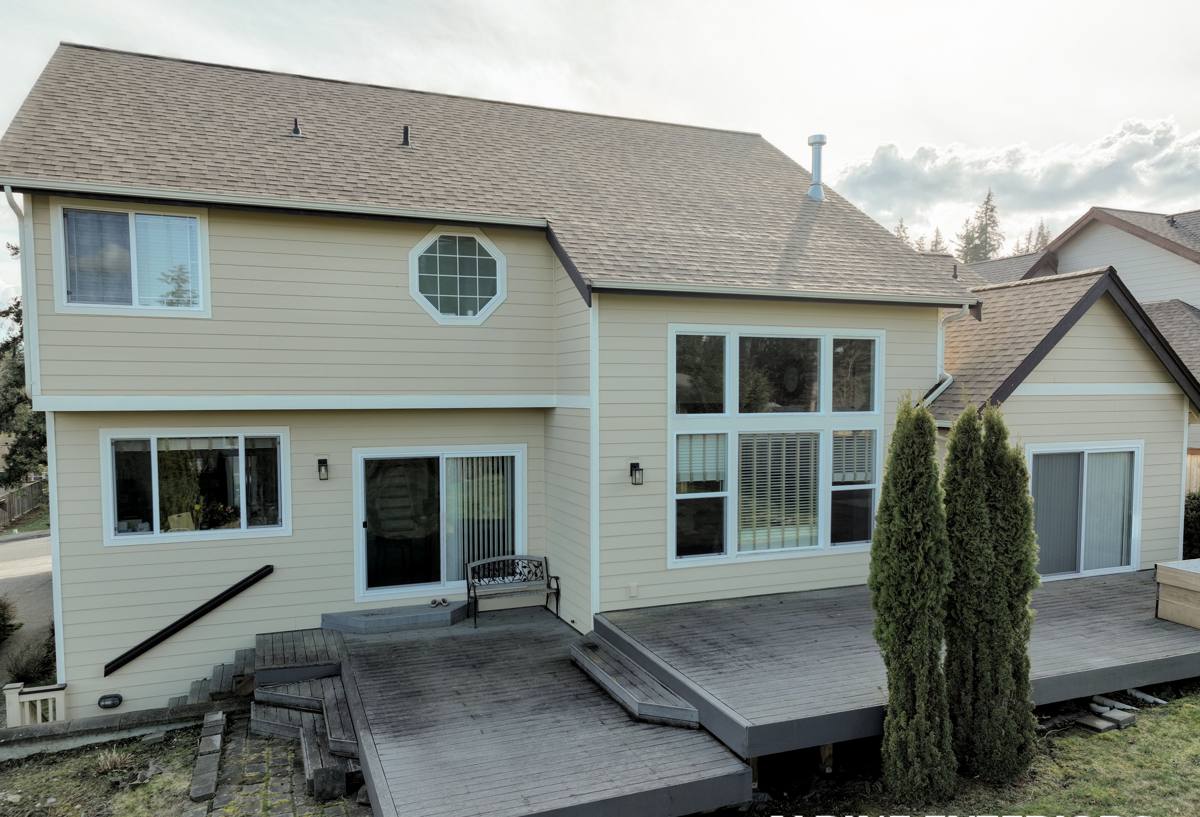
What Salt Air and Moss Actually Do to a Deck
Salt Air and Metal Fasteners
Coastal salt air accelerates corrosion on any metal it touches — nails, screws, joist hangers, bolts. Fasteners that aren't rated for coastal or treated-lumber exposure can start rusting from the inside out, which means a ledger board or joist hanger can look fine on the surface while the actual connection has weakened significantly. This is one of the most common things we find during an inspection that a homeowner had no way of knowing about just by looking.
Moisture and Wood Rot
Long stretches of rain keep wood decks damp for extended periods, and if water isn't shedding properly — because of poor slope, clogged gaps between boards, or failed flashing where the deck meets the house — that moisture sits and soaks in. Rot typically starts at the points where wood meets wood or wood meets fastener: ledger boards, post bases, joist ends, and stair stringers are the usual suspects.
Moss, Algae, and Slip Hazards
Whatcom County's moss season isn't just cosmetic. Moss and algae hold moisture against the wood surface, which speeds up decay underneath, and a mossy deck surface becomes genuinely slippery when wet — a real safety issue on stairs and any sloped section. Left untreated season after season, moss growth can also work into seams and fastener heads, trapping water exactly where you don't want it.
Signs Your Blaine Deck Needs Repair, Not Just Cleaning
- Boards that feel spongy, soft, or flex noticeably underfoot
- Visible gaps, cracking, or splitting around fastener heads
- Rust streaks bleeding out from screws or nails onto the board surface
- A railing or post that wobbles or shifts when you push on it
- Stairs that feel less solid than they used to, especially near the base
- Persistent dark staining or a musty smell near the ledger board where the deck attaches to the house
- Standing water that doesn't drain within a few hours after rain stops
- Moss or algae that returns quickly after cleaning, even in the same season
Any one of these on its own might be minor. Several together, especially near structural connection points, usually mean it's time for a proper inspection rather than a surface fix.
What a Correct Deck Repair Actually Involves
Inspection Before Anything Else
We start by getting underneath the deck where possible and checking the framing, not just the visible decking boards. That means looking at the ledger board connection, joist hangers, post bases, and beam condition. Surface repairs on top of a compromised frame don't hold, and they hide a safety problem instead of fixing it.
Isolating the Actual Damage
Rot and corrosion don't always show up where they started. A soft board might be the result of a failed flashing detail three feet away, or fastener corrosion that's been progressing for years. Part of doing this right is tracing the damage back to its source — usually a moisture intrusion point — so the repair addresses the cause, not just the symptom.
Replacing What's Actually Failed
We replace deteriorated framing members, damaged decking boards, and corroded fasteners with materials suited to coastal exposure — corrosion-resistant hardware rated for treated lumber and salt air conditions, proper flashing where the deck meets the house, and lumber that matches or improves on what's there structurally. We don't replace more than needs replacing, but we also don't patch around a problem that's going to resurface in a year.
Addressing Drainage and Ventilation
A repair that ignores why the damage happened in the first place is a temporary fix. If water isn't draining off the deck surface or air isn't moving underneath it, we look at adjusting board spacing, grading, or ventilation so the deck has a fighting chance against the next few years of Whatcom County weather.
Repair vs. Replacement: How We Make That Call
| Factor | Points Toward Repair | Points Toward Replacement |
|---|---|---|
| Framing condition | Solid, isolated soft spots only | Widespread rot in joists, beams, or ledger |
| Age of structure | Under 15-20 years, built to a decent standard | Original construction quality was already marginal |
| Extent of damage | Localized to a few boards or one connection point | Damage spread across multiple structural systems |
| Fastener condition | Isolated corrosion, easily replaced | Systemic corrosion throughout hardware |
| Budget priority | Extend usable life at lower cost | Want updated layout, materials, or code compliance |
Most decks we look at in Blaine fall somewhere in between — solid enough to repair, but with a few areas that need real attention rather than a quick patch. We'll always tell you honestly which category yours falls into, including when a repair is the right call even if a replacement would be more profitable for us.
Materials That Hold Up in This Climate
Not every decking or fastener product performs the same way under sustained salt air and moisture exposure. When we're doing repair work, we default to hardware and connectors rated for coastal and treated-lumber use — this matters more here than in drier parts of the state, because standard fasteners can corrode well before the wood around them fails. For decking material itself, we'll walk through the trade-offs honestly: pressure-treated lumber is economical but needs regular maintenance to perform well long-term in this climate, while composite and capped composite boards cost more upfront but handle moisture and moss growth with less upkeep. Cedar has real appeal but requires more diligent sealing and cleaning to hold up against a long wet season. There's no universally "right" answer — it depends on your budget, how much maintenance you want to do, and how the deck is used.
Our Process, Start to Finish
- Initial visit and inspection — we look above and below the deck, checking framing, connections, and drainage, not just the surface
- Honest assessment — we explain what we found in plain terms, including what's urgent, what can wait, and what's cosmetic only
- Written estimate — clear scope of work and pricing before anything is touched
- Repair work — framing and fastener replacement first, then decking, then finish work like sealing or staining if included
- Final walkthrough — we check the repair with you before calling the job done
Maintenance Timing Matters
In Whatcom County, the window for deck repair work is shaped by the weather as much as by the damage itself. Doing structural repairs before the heaviest part of the rainy season starts means new lumber and connections aren't immediately soaked before they've had a chance to be properly sealed or finished. If you've spotted a problem, addressing it in a drier stretch rather than waiting it out through another wet season generally means a cleaner repair and less risk of the damage spreading.
Why a Blaine-Familiar Crew Makes a Difference
Deck problems caused by coastal salt air and a long moss season aren't the same as deck problems in a dry inland climate, and a crew that mostly works elsewhere may not immediately recognize the early signs of corrosion-driven failure versus straightforward wear. Working regularly in Blaine and along this stretch of the Whatcom County coast means we've seen how local conditions actually play out over a deck's lifespan — which connection points fail first, which materials hold up, and which shortcuts from an original build tend to cause trouble years later. That familiarity shows up in a more accurate inspection and a repair that's built for the environment it actually has to survive in.
Get a Straight Answer About Your Deck
If your deck in Blaine is showing soft spots, rust stains, wobbly railings, or moss that keeps coming back, it's worth having someone look underneath before the next wet season sets in. We offer free, no-pressure estimates — we'll tell you honestly what needs fixing, what can wait, and what it'll take to get it done right. Fill out the form below to get started.