 Whatcom County
 Building a Deck That Actually Holds Up in Silver Beach
Silver Beach sits close enough to the water that homes here deal with a specific mix of weather stress: near-constant fall and winter rain, humid air that never fully dries out, and a moss season that can stretch from October into May. A deck built with generic, one-size-fits-all methods will show it within a few years — soft boards, green film on the walking surface, rust bleeding out of fastener heads, and a substructure that's rotting quietly underneath while the top still looks fine. Building a deck for this neighborhood isn't fundamentally different from building one anywhere else in Whatcom County, but it does mean paying closer attention to drainage, material selection, and the hardware that holds everything together.
This page covers what we actually look at when we design and build a deck for a Silver Beach property — the decking material, the framing underneath it, the fasteners, and the maintenance reality once it's done.
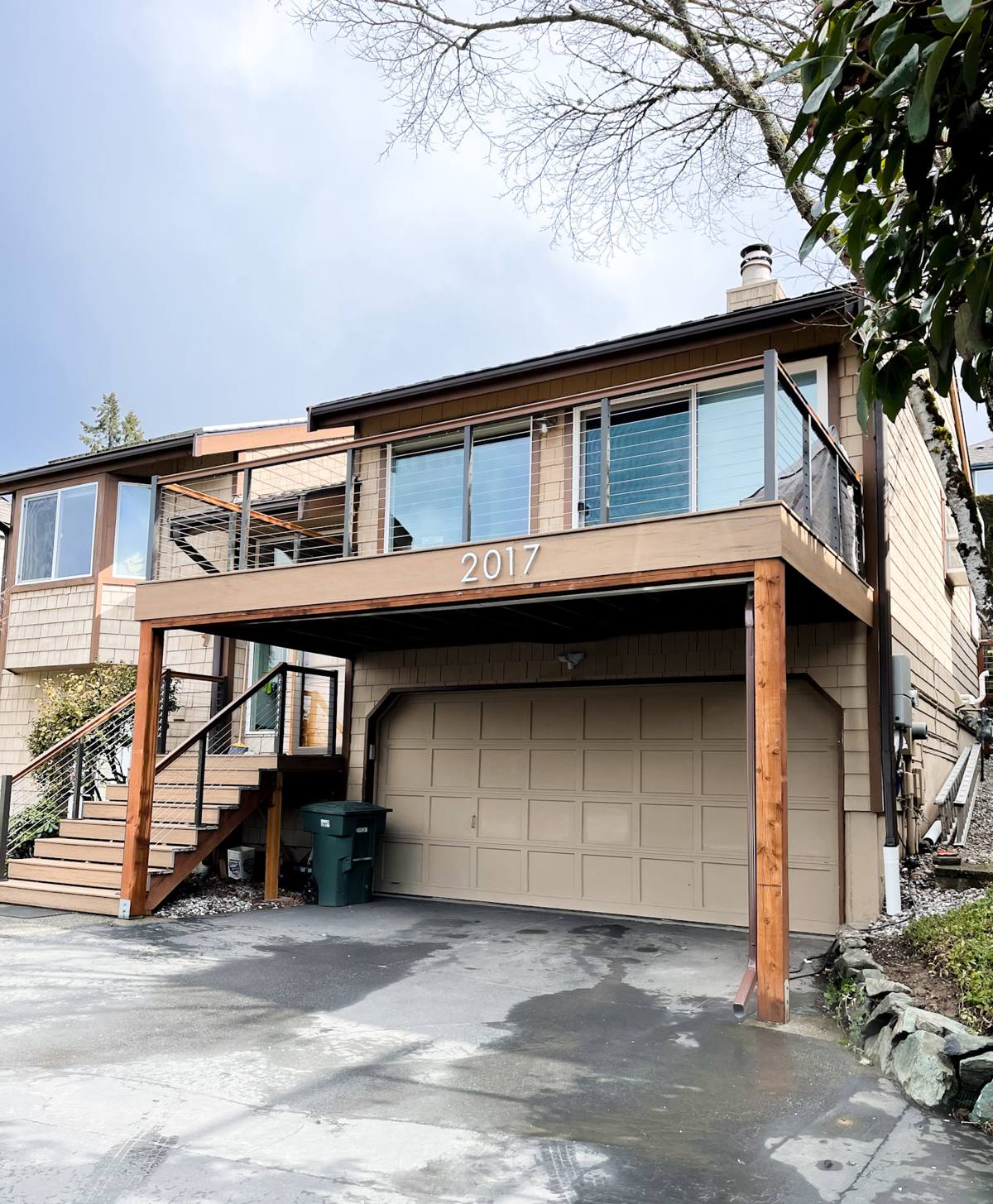
What the Local Climate Does to an Ordinary Deck
Three things drive most of the deck problems we see in this area:
- Driving rain and standing moisture: wind-driven rain gets pushed under railings, into ledger connections, and between deck boards where it can sit instead of draining.
- Moss and algae growth: shaded decks under trees or on the north side of a house stay damp for days after a storm, which is exactly what moss needs to take hold on wood and even some composite surfaces.
- Salt-laden air: homes closer to the water deal with airborne salt that accelerates corrosion on any fastener, bracket, or hanger that isn't rated for it.
None of these are exotic problems — they're just constant. A deck that would be fine in a drier climate needs extra attention here to specific details: flashing at the house connection, gapping and fastener choice on the decking, and hardware that resists corrosion instead of just delaying it.
Decking Material: What We Recommend and Why
There's no single "best" decking material — it depends on budget, how much upkeep the homeowner wants to do, and how exposed the deck is to shade and standing water. Here's how the common options actually perform in this climate:
| Material | Moisture/Moss Behavior | Maintenance | Typical Lifespan Here |
|---|---|---|---|
| Pressure-treated wood | Absorbs moisture readily; needs a clear path for water to shed and regular sealing to resist moss and rot | Annual cleaning and re-sealing recommended | 10–15 years with upkeep |
| Cedar | Naturally rot-resistant but still needs sealing; can gray and hold moss if left untreated | Sealing every 1–2 years | 15–20 years with upkeep |
| Composite decking | Doesn't rot, but lower-quality or older composite products can hold surface moisture and grow algae in shaded spots | Periodic washing, no sealing needed | 25+ years, varies by product |
| PVC/capped composite | Best moisture resistance of the group; sheds water and resists moss buildup even in shade | Occasional washing | 25–30+ years |
For decks in shaded or damp spots — which describes a good number of lots around Silver Beach — we usually steer homeowners toward capped composite or PVC decking, not because wood is a bad material, but because the maintenance schedule required to keep wood moss-free in this climate is more than most people actually keep up with. If budget or aesthetic preference points toward wood, we'll build it, but we're upfront about the sealing schedule it needs to last.
A Note on Ground-Level and Shaded Decks
Low decks with limited airflow underneath, or decks tucked under mature trees, are the ones that develop moss and rot fastest regardless of material. Where the site allows it, we build in extra clearance and gapping to keep air moving under and between the boards — that airflow does more to prevent moss than any coating.
What's Underneath Matters More Than What's on Top
The decking surface is what people see, but the framing underneath is what determines whether the deck is safe and long-lasting. This is where we see the most corner-cutting on older or poorly built decks:
- Ledger board flashing: where the deck attaches to the house needs proper flashing to keep water from tracking behind the siding and into the wall framing — a common source of hidden rot.
- Joist protection: exposed cut ends and joist tops absorb water fastest; capping or taping joists significantly slows rot at the framing level.
- Post-to-footing connections: posts sitting directly in standing water or buried in soil rot from the base up; correct standoff hardware keeps wood off wet surfaces.
- Drainage under the deck: grading and gapping that lets water actually leave the area instead of pooling under low decks.
A deck can look great for the first two or three years even with weak framing underneath — the problems show up later, often as a soft spot near the house connection or a post that's gone spongy at the base. We build the substructure assuming it needs to survive Whatcom County's wet season every single year, not just look good on installation day.
Fasteners and Hardware: The Small Stuff That Fails First
In salt-influenced air, ordinary fasteners are usually the first thing to fail, well before the wood or decking itself. Rust streaks running down a deck board are almost always a fastener problem, not a wood problem. We use stainless or coated fasteners and connectors rated for exterior, corrosive-exposure use, and we match screws and hardware to whatever decking material is going on top — composite and PVC manufacturers often specify particular fastener types to avoid surface staining or mounting failures.
Railings and Guards
Railings take direct weather exposure and also get the most physical contact from daily use, so they need to be both structurally solid and resistant to the same moisture and salt issues as the rest of the deck. We build railing posts with the same attention to base moisture protection as deck posts, and we match railing material to the decking so the whole structure ages consistently instead of one part failing years before the rest.
Our Deck Building Process
- On-site assessment: we look at sun/shade exposure, drainage, and how close the deck sits to grade or standing water before recommending materials.
- Design and material selection: we walk through decking, railing, and hardware options honestly, including what each one costs to maintain over time, not just to install.
- Permitting: we handle the paperwork required for the build so it's inspected and code-compliant.
- Framing and flashing: ledger attachment, joist protection, and post footings are built first and correctly — this is the part that determines how long the deck lasts.
- Decking, railing, and finish work: installed with correct gapping and fastening for the material chosen.
- Walkthrough: we go over what maintenance the specific materials used will actually need.
Maintenance to Expect After We Build
Even the best-built deck in this climate needs some ongoing attention. What that looks like depends on material:
- Wood and cedar decks: annual cleaning and re-sealing, with closer attention to shaded areas prone to moss.
- Composite and PVC decks: periodic washing to clear pollen, debris, and any surface algae, especially in shaded spots.
- All decks: keeping gutters and nearby drainage clear so runoff isn't dumping extra water onto or under the deck.
- All decks: an occasional check of railing posts and stair stringers for movement, which can signal a base moisture issue starting.
We tell homeowners this upfront rather than after the fact — a deck built correctly for this climate still isn't "install and forget," it just needs a lot less intervention than one built without these details in mind.
Why Local Experience on This Kind of Build Matters
Deck framing and flashing details that work fine in a drier region can fail here within a few seasons. A crew that already works Whatcom County properties has seen which ledger connections leak, which shaded spots grow moss fastest, and which fastener choices hold up against the salt-influenced air near the water. That's not a marketing point — it's the difference between a deck that needs real repair work in year five and one that's still solid in year twenty.
Quick Checklist: What a Deck Built for Silver Beach Should Have
- Ledger board properly flashed at the house connection
- Joist tops and cut ends protected from water absorption
- Posts and footings kept clear of standing water and wet soil contact
- Corrosion-resistant fasteners and hardware throughout, not just on the visible surface
- Decking material matched to the site's actual sun/shade and drainage conditions
- Adequate gapping and airflow underneath to discourage moss and rot
- A clear, honest maintenance plan handed off at the end of the job
If you're planning a new deck or replacing one that's showing its age in Silver Beach, we're happy to take a look and walk you through what your specific site needs — no pressure, no upsell. Use the form below to request a free estimate.