 Whatcom County
 Decks in Cordata Face a Different Set of Problems Than Decks Inland
Cordata sits close enough to the water and low enough in the valley that its weather pattern is its own thing: long stretches of driving rain off the Sound, salt-tinged air on windy days, and a moss season that can run from October clear through April. A deck built here does the same job as a deck anywhere — it's an outdoor room — but the materials and details that keep it solid are not the same ones that work in a drier climate. We've built and repaired decks throughout Whatcom County long enough to know which shortcuts show up as callbacks two winters later.
This page is about what a correctly built deck in Cordata actually requires: framing choices, decking material trade-offs, the fastening and flashing details that matter more here than most places, and how we run the job from first look to final walk-through.
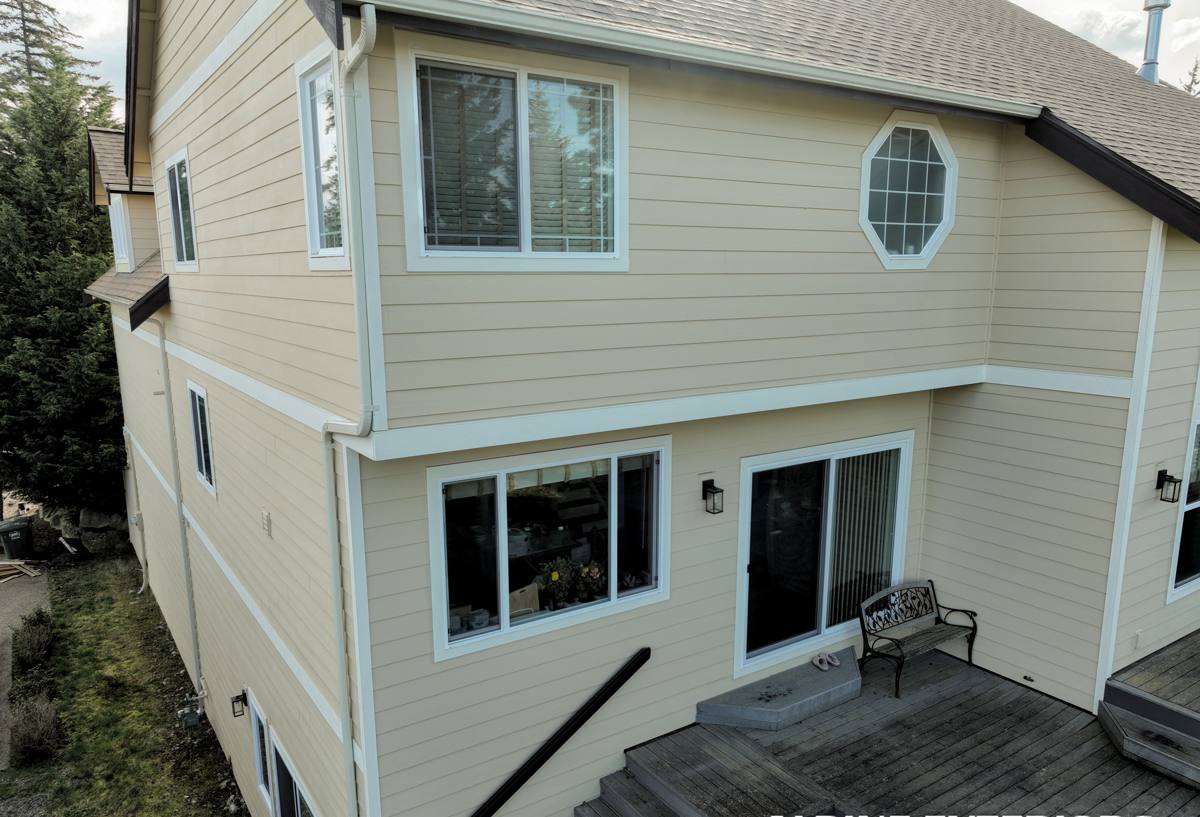
What Whatcom County Climate Does to a Deck
Three things drive almost every deck problem we get called out for in this area:
- Persistent moisture. Rain that falls steadily for days, not just hard occasional storms, means wood and hidden framing stay damp longer between dry spells. Anything that traps water against a surface — poor drainage, tight board spacing, ledger boards without flashing — rots or degrades faster than it would somewhere drier.
- Moss and algae growth. Shaded decks, north-facing decks, and anything under tree cover in Cordata's more wooded lots will grow moss on any surface that stays damp and doesn't get direct sun. Moss holds moisture against the deck surface, and on wood decking it accelerates rot from the top down, not just underneath.
- Salt-tinged air. Cordata isn't beachfront, but Whatcom County's proximity to Bellingham Bay and the Strait means fasteners, brackets, and any exposed metal hardware are exposed to more corrosive air than an inland town would see. Cheap or mismatched hardware corrodes, stains the decking around it, and eventually fails structurally.
None of this means a deck can't last decades here — it means the build has to plan for these conditions from the framing up, not just pick a nice-looking decking board and call it done.
Decking Material Options: Honest Trade-Offs
There's no single "best" decking material — there's a best material for a given budget, look, and maintenance appetite. Here's how the common options actually perform under Whatcom County conditions.
| Material | How it handles our climate | Maintenance reality | Typical lifespan here |
|---|---|---|---|
| Pressure-treated wood | Handles moisture fine when properly sealed; moss and mildew show on the surface if not cleaned/treated | Needs re-staining or sealing every 2-3 years, more often on shaded decks | 15-25 years with upkeep |
| Cedar | Naturally rot-resistant but still needs sealing to fight moss staining and graying | Similar to treated wood — periodic sealing, cleaning | 20-25 years with upkeep |
| Composite decking | Doesn't rot, but lower-quality composites can still grow surface mold/algae in constant shade and damp | Occasional wash-down, no staining or sealing | 25-30+ years, manufacturer-warrantied |
| PVC/cellular decking | Fully moisture-proof core, best resistance to moss staining and rot, most stable in wet-dry cycling | Wash-down only | 30+ years, longest warranties |
For decks in shaded or low-airflow spots — common on wooded Cordata lots — we lean homeowners toward composite or PVC decking specifically because wood decking in constant shade is where we see the worst moss problems and the shortest real-world lifespan, regardless of how well it's sealed the first year or two.
Why We're Selective About Which Composite Products We Install
Not all composite decking is built the same. Early-generation composites with exposed wood-fiber cores absorbed moisture at cut ends and fastener holes, which is a real liability in a climate this wet — that moisture gets trapped and can lead to swelling or surface degradation over time. Our standard is to install capped composite or PVC products where the core is fully sealed on all sides, and to always seal or cap-treat any field cuts. It's a maintenance and moisture-behavior call, not a brand loyalty thing — we'll walk you through the specific product lines that meet that bar.
Framing and Substructure: Where Most Deck Failures Actually Start
Homeowners tend to focus on the decking boards because that's what you see and stand on, but the framing underneath is what determines whether a deck lasts 15 years or 40. In a climate that keeps things wet longer, framing details matter more than they would somewhere dry.
Ledger Board Flashing
The ledger board — where the deck attaches to the house — is the single most common source of hidden rot we find on older Whatcom County decks. Without proper flashing that directs water away from the band joist and wall sheathing, water works its way behind the ledger over years of rain and causes rot that's invisible until the deck is failing structurally. Correct flashing (metal flashing plus a water-resistant barrier, properly lapped) is non-negotiable on every ledger-attached deck we build.
Joist Protection
Pressure-treated joists resist rot at the core, but end cuts, notches, and fastener holes expose untreated wood. We seal all field cuts and use joist tape on top of the joists before decking goes down — this single detail dramatically cuts how much moisture gets into the frame from standing water and debris on the deck surface.
Post Bases and Ground Contact
Any post that sits at or near grade in a climate this wet needs a post base that keeps the wood off the ground and away from standing water, not just a post set in concrete. We use elevated post bases rated for exterior/wet exposure on every deck we build from the ground up.
Fasteners and Hardware: Where Salt Air Shows Up First
This is the detail that gets skipped most often on budget deck builds, and it's the one that fails fastest near Bellingham Bay's air. Standard zinc-coated screws and brackets corrode within a few years of exposure to Whatcom County's damp, salt-tinged air — you'll see rust streaks bleeding down composite or wood decking around every fastener head. We use stainless steel or coated fasteners rated for coastal/marine exposure, and hot-dip galvanized or stainless structural hardware (joist hangers, post brackets, bolts) throughout. It costs more up front and it's the difference between hardware that outlasts the deck and hardware that stains and weakens it within five years.
Drainage and Layout Details That Matter Here
- Board spacing: Gaps sized to let water drain through quickly rather than pooling on the surface, especially important for decks that don't get full sun to dry off after rain.
- Deck orientation and slope: A slight slope away from the house keeps water moving off the deck instead of pooling near the ledger.
- Under-deck drainage: For decks with usable space underneath (patios, storage), an under-deck drainage system keeps that area dry through our long rainy stretches instead of turning it into a damp, moss-prone space.
- Sun exposure planning: On lots with tree cover — common in parts of Cordata — we'll talk through where moss is likely to become a recurring problem and steer material and maintenance planning accordingly.
Our Process for a Cordata Deck Project
- On-site assessment. We look at sun exposure, drainage, existing structure (for replacements), and how the deck ties into the house before quoting anything.
- Design and material walkthrough. We go over decking options, railing styles, and layout with honest trade-offs for your specific site — not a one-size answer.
- Permitting. Deck work in Whatcom County typically requires permits depending on height, size, and attachment to the structure; we handle that paperwork as part of the job.
- Demolition (if replacing). Old decking and, if needed, framing come out, and we inspect the substructure and ledger connection before building back.
- Framing and flashing. Ledger flashing, joist protection, and post bases go in first — the parts you won't see again once decking is down, so we don't rush them.
- Decking, railing, and finish work. Decking installed with proper spacing and fastening, railing to code, and any stairs or lighting finished out.
- Final walk-through. We go over the finished deck with you, including basic maintenance expectations for the material you chose.
Cost Factors for a Custom Deck in Cordata
Every deck quote depends on size, material, height off grade, railing style, and site access — we won't quote a number without seeing the site. But these are the factors that move the price the most:
| Factor | Why it matters |
|---|---|
| Decking material choice | Pressure-treated wood costs least up front; capped composite/PVC costs more but needs far less upkeep over time |
| Deck height and footing depth | Taller decks and Whatcom County's frost depth requirements mean deeper footings, more concrete, more labor |
| Ledger attachment complexity | Older homes sometimes need extra structural work at the band joist to properly support a new ledger |
| Railing style | Basic wood or metal baluster railing costs less than cable rail or glass panel systems |
| Site access and demolition | Tight lots or full tear-out of an old deck add labor time |
Maintenance: Keeping a Cordata Deck Ahead of Moss Season
- Sweep leaves and debris off the deck surface regularly in fall — trapped organic matter is what feeds moss and mildew growth fastest.
- Rinse or gently pressure-wash wood decking each spring before it re-seals for the season.
- Check fastener heads and hardware annually for early rust staining — catching it early is a quick fix, catching it late means replacing boards.
- Keep gutters and downspouts near the deck clear so runoff isn't dumping extra water onto the deck surface or ledger area.
- For composite/PVC decking, an occasional soap-and-water wash is usually all that's needed to keep moss from getting a foothold in shaded spots.
Why Hire a Crew That Already Works in Cordata
A deck built to a generic national spec sheet can still fail here if it ignores what Whatcom County weather actually does over a few winters. We've built and repaired decks throughout this area long enough to know which ledger flashing details get skipped on budget jobs, which hardware corrodes first in this air, and which decking choices turn into moss magnets on shaded lots. That local track record shows up in the details you don't see on day one — the ones that determine whether you're calling us back in five years for a repair or not calling anyone for thirty.
If you're planning a new deck or need to replace one that's showing its age, we'll come take a look and give you a straight, no-pressure estimate — free, with no obligation. Fill out the form below and we'll get in touch.