 Whatcom County
 Board & Batten in Cordata: A Style That Has to Earn Its Keep
Board and batten has become one of the most requested siding styles in Cordata, and it's easy to see why. The vertical lines read as clean and modern on newer builds near the Cordata neighborhood's mixed subdivisions, and they also pair well with the more traditional farmhouse look many homeowners in this part of Whatcom County are going for. But board and batten isn't just a look — it's a fastening and drainage system, and in this climate that system gets tested every winter. Salt air off the Sound, driving rain that comes in sideways during a southwesterly blow, and a moss season that can run eight or nine months out of the year all put real stress on vertical siding. Done right, board and batten holds up beautifully here. Done wrong, it's one of the faster ways to trap moisture behind a wall.
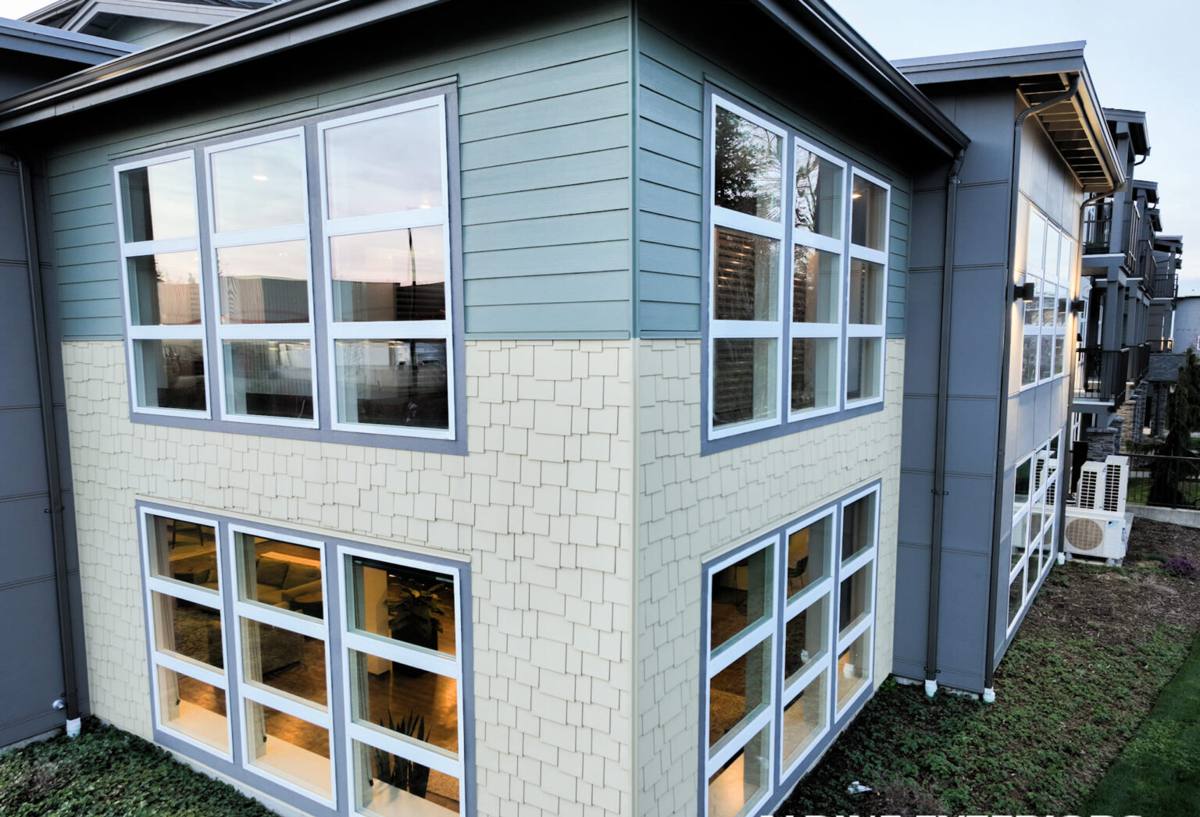
What Board & Batten Siding Actually Is
Board and batten is a two-layer vertical siding pattern: wide flat boards (or panels) installed first, then narrower strips — the battens — installed over the seams between them. The battens cover the joints and create the shadow-line pattern people recognize. There are two common ways to build it:
- True board and batten: individual boards installed with a gap between them, then battens fastened over each gap.
- Panel-and-batten: larger sheet panels installed edge to edge, with battens placed over the seams for the same visual effect with fewer field joints.
Both approaches can look identical from the curb. What separates a good installation from a problem one is almost entirely in the details you can't see once the job is finished — flashing, fastener placement, and how water is allowed to drain out from behind the battens.
What Cordata's Climate Actually Does to Vertical Siding
Moss and Constant Dampness
Whatcom County's long wet season means siding rarely gets a chance to fully dry out between rain events, especially on north-facing walls or under mature tree cover, which is common in and around Cordata's residential streets. Board and batten has more horizontal ledges — the tops of each batten and board — than flat lap siding, and those ledges are exactly where moss and algae like to establish. On wood or engineered wood siding, that sustained dampness eventually works its way into the substrate. On fiber cement, it stays a cosmetic issue that washes off.
Driving, Wind-Driven Rain
Storms coming off the water don't just fall straight down — they get pushed sideways into walls, and vertical board and batten has more vertical seams for wind-driven rain to test than a lapped horizontal profile. If those seams aren't backed with proper flashing and a drainage gap, water finds its way behind the siding rather than running down the face of it.
Salt Air and Fastener Corrosion
Homes closer to the water deal with airborne salt that accelerates corrosion on any fastener or trim that isn't rated for it. Board and batten uses more fasteners per square foot than lap siding because both the boards and the battens need to be secured — which makes fastener quality and placement more important here, not less.
What a Correct Installation Actually Involves
A board and batten job that's going to last in this climate isn't just about nailing boards to the wall. It comes down to a handful of details that don't show up in a photo:
Drainage Plane and Rainscreen Gap
Behind the siding, there needs to be a weather-resistive barrier and, ideally, a furring or rainscreen gap that lets any moisture that does get behind the boards drain and evaporate instead of sitting against the sheathing.
Flashing at Every Penetration
Windows, doors, hose bibs, light fixtures, and the bottom termination at the foundation all need proper flashing integrated with the drainage plane — not just caulk. Caulk is a maintenance item; flashing is the actual water management.
Batten Spacing and Fastening
Battens need consistent spacing and fasteners driven into framing, not just into the boards underneath, and battens should be fastened in a way that allows for the material's normal expansion and contraction rather than fighting it.
Bottom Clearance
The bottom edge of the siding needs clearance from grade, decking, and roof lines so water isn't wicking up from below — a detail that's easy to shortcut and expensive to fix later.
Why We Install This as a James Hardie System Only
We install board and batten exclusively in James Hardie fiber cement — either Hardie's vertical panel products or true board-and-batten configurations built from HardiePanel and HardieTrim battens. We don't offer it in vinyl, LP SmartSide, or bare wood, and that's a deliberate call, not a sales preference. Vertical siding lives or dies on how it handles sustained moisture at all those horizontal ledges and seams, and fiber cement simply doesn't have a moisture-driven failure mode the way engineered wood or solid wood does. It won't swell at cut edges, it won't feed rot at the battens, and it carries a factory ColorPlus finish that holds its color without the repainting cycle wood battens demand. It's also non-combustible, which matters given how dry and fire-prone late summers have become even on the west side of the state. For a style that depends on getting the water management right, we'd rather stand behind one material system we know performs than mix and match on a job.
Comparing Board & Batten Material Options
| Material | Moisture Behavior | Maintenance | Typical Lifespan |
|---|---|---|---|
| James Hardie fiber cement | Doesn't rot, swell, or absorb water at cut edges | Occasional wash; no repainting with ColorPlus finish | 30+ years, backed by transferable warranty |
| Solid wood or primed spruce | Absorbs moisture at joints; prone to swelling and rot in wet climates | Repaint/reseal every few years; caulk maintenance | 10-20 years before major repair |
| LP SmartSide (engineered wood) | Treated to resist moisture but still wood-based; vulnerable at unsealed cuts | Repainting on a cycle; edge sealing on cuts | 15-30 years, install-dependent |
| Vinyl board and batten | Doesn't rot but can warp/buckle with heat and doesn't manage trapped moisture behind it | Low, but limited repair options if damaged | 15-25 years |
How the Job Works, Start to Finish
For a Cordata home, our process starts with a walk of the exterior to look at wall orientation, existing moisture damage, roofline interactions, and how much shade the north and west walls get — all of which affect the drainage detailing we plan for. From there we spec the Hardie panel or board configuration, batten layout, and trim package, and give you a written estimate before anything is scheduled. On the install side, existing siding comes off, the wall is inspected for hidden rot or moisture damage (which does turn up more often than people expect on older Whatcom County homes), the drainage plane and flashing go in first, and then the boards and battens go up with the fastening pattern and clearances the manufacturer's specs call for. We don't skip the parts that don't show.
Keeping Board & Batten Looking Right Once It's Up
Even with the right material, a little homeowner awareness goes a long way in this climate:
- Rinse siding once or twice a year, especially shaded and north-facing walls, to stay ahead of moss and algae buildup.
- Keep gutters clear so overflow isn't running down the wall face during heavy storms.
- Trim back shrubs and trees so air can move across the siding and it can actually dry between rain events.
- Watch caulking at trim and window returns and have it renewed if it starts to crack or pull away.
- Have any impact damage looked at promptly rather than leaving an opening for water to get behind the siding.
Why Local Installation Experience Matters for This Job
Board and batten forgives fewer mistakes than lap siding, and a crew that hasn't installed it much will often treat it like lap siding turned sideways — which is exactly how moisture problems start. Working across Whatcom County gives us a working sense of which walls in a given neighborhood take the worst of the wind-driven rain, where moss builds up fastest, and how the salt air closer to the water changes fastener choices. That's the kind of judgment that shows up years down the road, not on install day.
If you're weighing board and batten for a home in Cordata, we're glad to walk the exterior with you and put together a straightforward, no-pressure estimate — no obligation, just a clear look at what the job would actually involve.