 Whatcom County
 Why Composite Decking Makes Sense in Happy Valley
Happy Valley sits in the part of Whatcom County where the weather doesn't do anything halfway. Rain comes in sideways off the water more often than straight down, salt air works its way into anything with exposed metal or open wood grain, and there's a long stretch of the year — fall through spring — where surfaces just don't fully dry out between storms. That combination is hard on a traditional wood deck. Wood needs to breathe and dry to hold up, and around here it often doesn't get the chance before the next system rolls through.
Composite decking was built for exactly this problem. It doesn't absorb water the way wood does, it doesn't need annual staining or sealing to stay protected, and it resists the graying, splintering, and rot that show up fast on untreated or under-maintained wood decks in this climate. That doesn't mean composite is maintenance-free — nothing outdoors in Whatcom County is — but it shifts the maintenance burden from "protect the material from the weather" to "keep the surface clean," which is a much easier job to stay on top of.
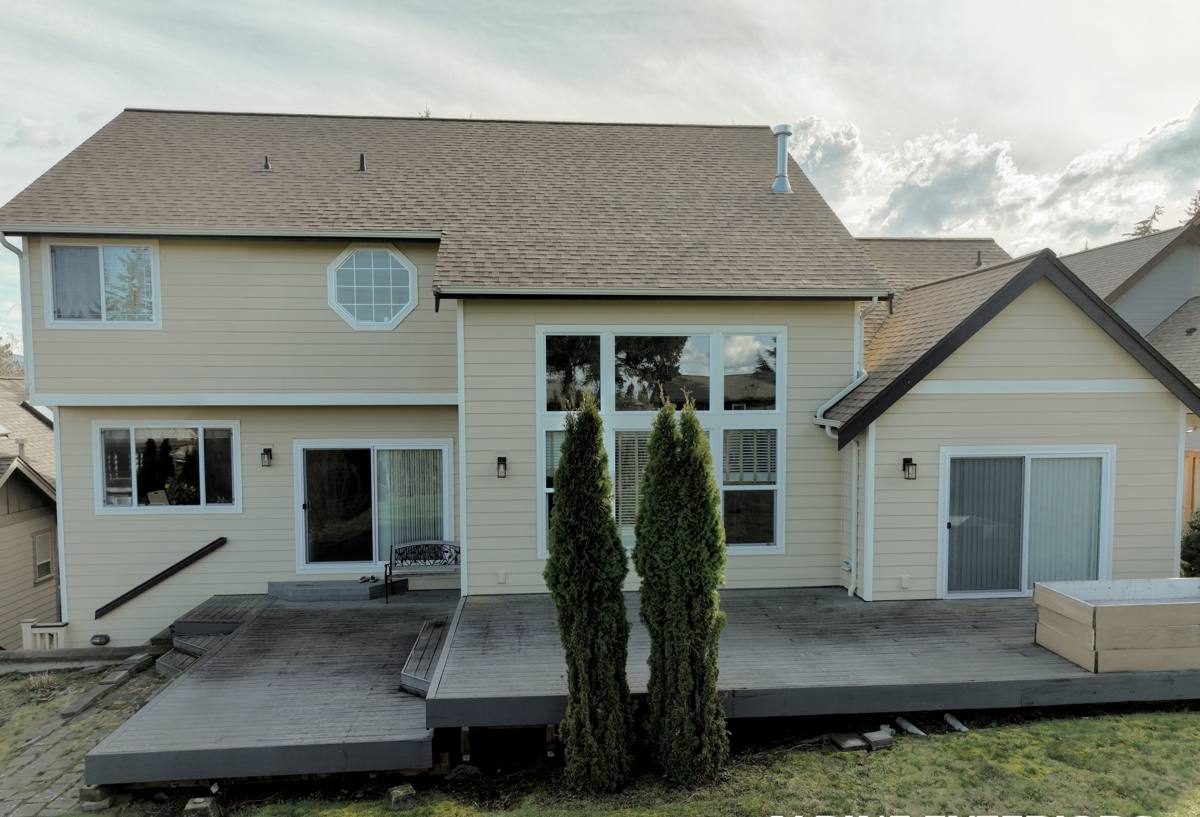
What a Correct Composite Deck Installation Involves
Composite boards are only as good as what's underneath them. Most of the composite deck problems we get called out to inspect — soft spots, board movement, staining, mold in the joints — trace back to substructure or moisture management, not the decking material itself. Doing this right in Happy Valley means paying close attention to a few things that matter more here than they would in a drier climate.
Framing and Joist Protection
Composite boards are heavier than wood and behave differently under load and temperature swings, so joist spacing has to match the manufacturer's spec for the specific board profile — not just "what worked for a wood deck." In a climate with this much sustained moisture, we also treat every cut end and every joist top with a proper joist tape or protective barrier. Untreated framing under composite decking is one of the most common causes of hidden rot, because the boards on top can look fine while the wood underneath is failing.
Fasteners and Hardware
Salt air corrodes standard hardware faster than most homeowners expect, especially on decks with any exposure toward open water or prevailing wind. We use coated or stainless fasteners and connectors rated for the environment, not just what's cheapest at the yard. A rusted-out joist hanger or ledger bolt is a structural problem, not a cosmetic one.
Ledger Attachment and Flashing
Where the deck attaches to the house, flashing has to shed water away from the structure, not just cover the gap. With the amount of driving rain Happy Valley sees, a poorly flashed ledger board is a slow leak waiting to happen — often not visible until there's already damage to the rim joist or siding behind it.
Drainage and Airflow Underneath
Standing moisture under a low deck is what feeds moss, mildew, and eventually structural decay. We grade and, where needed, add ventilation or drainage detailing so air and water can actually move through the substructure instead of sitting there through the wet months.
Composite vs. Wood vs. PVC: What Actually Fits This Climate
| Material | Moisture Behavior | Maintenance in Whatcom County Weather | Typical Lifespan |
|---|---|---|---|
| Pressure-treated wood | Absorbs and releases water; prone to cupping and splitting with repeated wet/dry cycles | Annual cleaning, periodic staining/sealing to hold up against driving rain | 10–15 years with consistent upkeep |
| Cedar or other natural wood | Attractive but softer; moisture and salt air accelerate graying and decay | Regular sealing; higher risk of moss and mildew in shaded, damp spots | 15–20 years with diligent care |
| Composite (capped) | Resists water absorption; won't rot or splinter | Periodic washing to control surface mildew/moss; no staining or sealing | 25–30+ years, manufacturer-warrantied |
| PVC | Fully water-resistant | Low maintenance; can show more surface flex in temperature swings | 25–30+ years |
We install composite most often in this area because it hits the balance homeowners actually want: the low-maintenance moisture resistance of PVC with a look and underfoot feel closer to natural wood, at a cost point that fits most deck budgets. We're straightforward about the trade-offs — composite costs more upfront than treated wood, and if you want the exact look and feel of real cedar, no composite is a perfect match for that. But for a deck that has to survive Whatcom County winters without babying, composite consistently holds up best for the money.
Choosing the Right Board for Happy Valley Conditions
Not all composite decking is built the same, and the differences matter more in a wet, salty coastal climate than they would somewhere dry.
Capped vs. Uncapped Composite
Capped composite has a protective polymer shell around the wood-plastic core, which is what actually blocks moisture absorption and staining. Uncapped or lower-grade composite can still take on water at the core over time, especially at cut ends, which defeats much of the point of switching away from wood. We install capped boards on the vast majority of our composite jobs for this reason.
Color and Heat Considerations
Darker composite boards run hotter in direct sun and can show mineral or salt residue more visibly after it dries. Lighter and mid-tone colors tend to hide water spotting and pollen better between cleanings, which is a real consideration given how often this area gets a rinse of rain followed by a dry spell that leaves residue behind.
Grain Pattern and Slip Resistance
A textured, wood-grain surface isn't just cosmetic — it also helps with footing when a deck is damp, which in Happy Valley is a good part of the year. Smooth or lightly textured boards look clean but can get slick faster once moss spores or algae get a foothold in shaded areas.
Our Process, Start to Finish
- On-site assessment: We look at existing framing (if replacing a deck), drainage, sun/shade exposure, and how close the site is to open water or wind exposure, since that affects hardware and board choices.
- Design and material selection: We walk through board options, colors, and railing systems based on your home and budget — no upsell pressure toward the most expensive line.
- Permitting: Deck work often requires a permit depending on size, height, and attachment to the structure. We handle that process rather than leaving it on the homeowner.
- Framing and structural work: This is where we protect joists, upgrade hardware, and correct any drainage or flashing issues found during assessment — the part of the job that determines how the deck ages, not just how it looks on day one.
- Decking installation: Boards go down per manufacturer spacing and fastening specs, accounting for thermal expansion, which matters through our seasonal temperature swings.
- Final walkthrough: We go over basic care with you before we leave, so you know what routine maintenance actually looks like for your specific board and setup.
Maintenance in a Moss-Prone, Salt-Air Climate
Composite decking cuts out the sanding, staining, and sealing cycle, but it still lives outside in Whatcom County weather, and it still needs a basic care routine to stay looking and performing the way it should.
- Sweep off leaves, needles, and debris regularly — trapped organic matter is what feeds moss and mildew growth on any deck surface.
- Wash the deck at least once or twice a year with a mild soap and soft-bristle brush; a pressure washer on the wrong setting can damage the board's cap layer.
- Pay extra attention to shaded, low-airflow areas under trees or near fences — that's where moss gets started first.
- Check railing hardware and fasteners periodically for corrosion, especially on decks exposed to wind off open water.
- Keep gutters and downspouts clear so runoff isn't dumping extra water directly onto or under the deck.
- Rinse off salt residue after storms if the deck has direct coastal exposure, since dried salt can dull the board finish over time.
Permits and Local Considerations
Deck projects in Whatcom County typically need a building permit once you're past a certain size or height, and attached decks almost always require one regardless of size because of the structural connection to the house. Requirements can also vary depending on whether Happy Valley falls under county jurisdiction or a nearby city boundary for your specific address, and setback rules can matter if the deck is going in near a property line. We check this at the start of a project rather than after materials are ordered, so there are no surprises partway through.
Why It Matters to Hire a Crew That Already Works in Happy Valley
A lot of what separates a composite deck that looks good for five years from one that looks good for twenty-five isn't the brand of board — it's whether the crew building it understands what this specific climate does to a structure over time. That's framing details, fastener choices, and drainage decisions that don't show up in a glossy product brochure but show up fast in a place with this much rain, moisture, and moss pressure. Crews who work Happy Valley and the surrounding Whatcom County area regularly build those habits into every job by default, because they've seen what happens when they're skipped.
If you're weighing composite decking for a home in Happy Valley, we're happy to come take a look, walk the site, and give you an honest read on what your specific deck needs — no pressure, no hard sell. Use the form below to request a free estimate.