 Whatcom County
 Board & Batten in a Neighborhood Built on Character
Sunnyland is one of those Bellingham neighborhoods where the housing stock has real personality — older bungalows, mid-century ramblers, and newer infill homes sitting side by side. Board and batten siding fits that mix well. The vertical lines read as classic Pacific Northwest craftsman on an older home and as clean, modern farmhouse on a newer build. It's a style choice homeowners in Sunnyland ask for specifically, not just because it looks good, but because it holds up differently than horizontal lap siding when water is involved — and in Whatcom County, water is always involved.
This page is about doing board and batten correctly on a Sunnyland home: what the local climate asks of it, what a proper installation actually looks like underneath the reveal, and why we install it in exactly one material system.
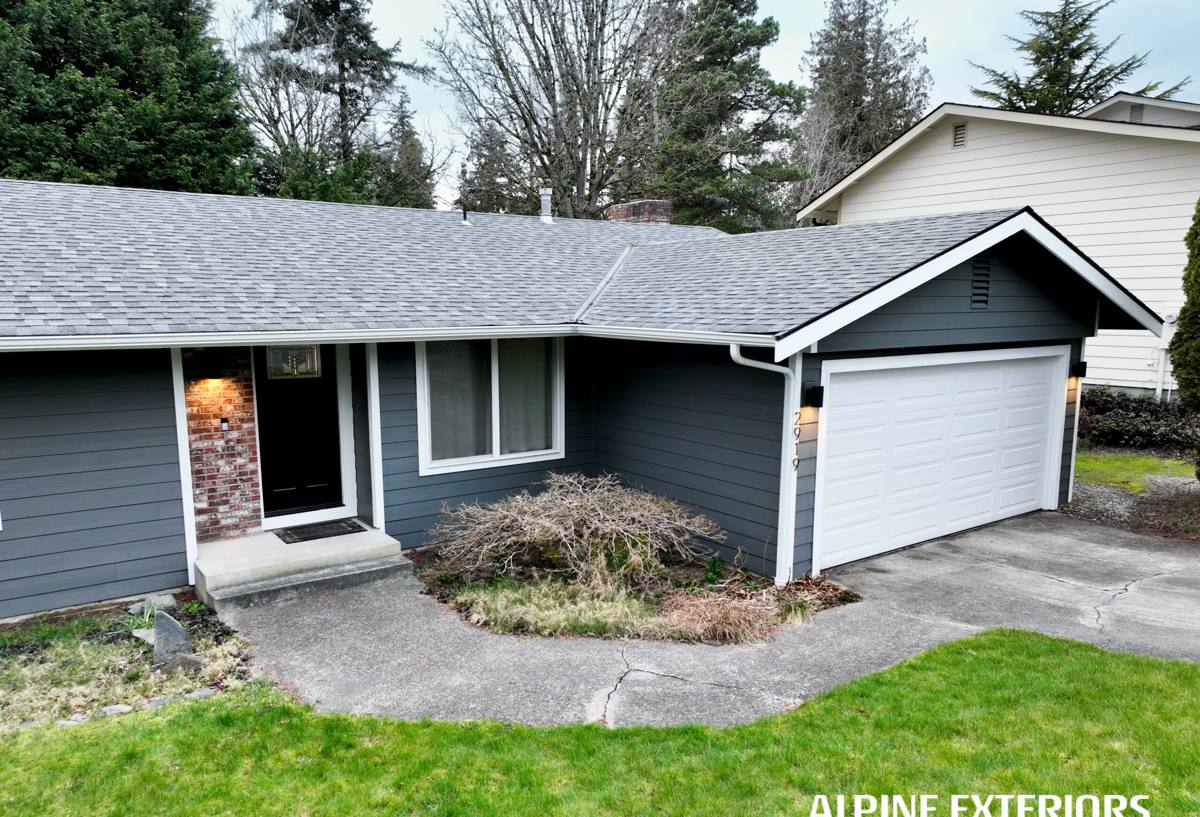
What Whatcom County's Climate Does to Vertical Siding
Sunnyland sits close enough to Bellingham Bay that salt-laden air is a real factor, on top of everything else Whatcom County throws at an exterior wall over a year: long stretches of driving rain, persistent damp shade under mature trees, and a moss and algae season that can run eight or nine months if a wall never gets direct sun. Board and batten siding is more exposed to some of these forces than lap siding, for a simple reason — the vertical boards create more seams running top to bottom, and every one of those seams is a place water can find its way behind the cladding if it isn't detailed correctly.
Salt Air and Fastener Corrosion
Homes closer to the water deal with airborne salt that accelerates corrosion on anything metal — fasteners, flashing, trim screws. Cheap or mismatched fastener hardware is one of the more common failure points we see on board and batten jobs that weren't built for this environment.
Driving Rain and Wind-Driven Moisture
Storms off the Sound don't just fall straight down — wind pushes rain sideways into vertical joints and battens. Without correct flashing and a drainage plane behind the siding, that moisture works its way in over seasons, not days, which is why problems often don't show up until years after a bad install.
Moss, Algae, and Shade
Whatcom County's tree cover and long wet season mean north-facing and shaded walls stay damp far longer than walls in drier climates. Board and batten's vertical battens create narrow ledges and shadow lines where moisture and organic growth can sit if the material itself doesn't resist it.
What a Correct Board & Batten Installation Actually Involves
Board and batten looks simple from the street — vertical boards, battens covering the seams — but the parts you can't see are what determine whether it lasts fifteen years or fifty.
Furring and Drainage
On most Sunnyland homes we install over vertical furring strips, which create a small air gap and drainage channel behind the siding. That gap lets any moisture that does get past the cladding drain and dry out instead of sitting against the wall sheathing.
Weather-Resistive Barrier and Flashing
A correctly lapped weather-resistive barrier goes down first, followed by proper flashing at every horizontal transition — window and door heads, roof-to-wall intersections, and the bottom termination of the siding itself. This is the layer that actually keeps a house dry; the siding is the second line of defense, not the first.
Fastener Selection and Placement
Given the salt air near the bay, we use fasteners rated for that exposure and follow the manufacturer's nailing pattern exactly — spacing, edge distance, and depth all affect how the panel performs in wind and how well it resists water intrusion at the fastener head.
Batten Spacing and Board Movement
Board and batten needs consistent spacing and attention to expansion gaps so the boards can move slightly with temperature and moisture changes without cracking caulk joints or pulling fasteners loose.
Why We Only Install James Hardie Board & Batten
Board and batten is available in engineered wood, vinyl, and various fiber cement products, but we install James Hardie exclusively — specifically their vertical siding panels and Artisan board and batten profiles, factory-finished with ColorPlus Technology. There are practical reasons for that standard, not brand loyalty.
Fiber cement doesn't absorb water the way engineered wood substrates can, which matters directly in a climate where a wall can stay wet for days at a time. It's also non-combustible, holds paint and factory color far longer than field-applied finishes, and James Hardie engineers specific product lines (their HZ5 and HZ10 designations) for different climate zones, including the wetter conditions common on the west side of the Cascades. The ColorPlus factory finish is baked on under controlled conditions, which gives more consistent, longer-lasting color than a site-painted board — a real advantage during a Whatcom County moss season when walls get pressure-washed or treated periodically.
We don't install vinyl or engineered wood board and batten. That's a professional standard, not a knock on every homeowner who has that siding already — it's a reflection of what we're willing to warranty our labor against and what we've seen perform over time in this specific climate.
Our Process for Sunnyland Board & Batten Projects
- On-site assessment: We look at existing siding, sheathing condition, moisture history, and sun/shade exposure on each wall face — this varies a lot even within Sunnyland depending on tree cover and how close a home sits to the bay.
- Tear-off and sheathing check: Old siding comes off and we inspect the sheathing underneath for rot or water damage before anything new goes up. This step gets skipped by corner-cutting crews and it's the single biggest predictor of a siding job's lifespan.
- Weather barrier and flashing: Housewrap or building paper installed and lapped correctly, with flashing detailed at every penetration and transition.
- Furring and drainage gap: Vertical furring installed where the wall assembly calls for it, to keep the siding ventilated and draining.
- Board and batten installation: Hardie panels and battens installed to manufacturer nailing schedules, with correct spacing and fastener choice for the exposure.
- Trim, caulking, and touch-up: Factory-matched caulk and touch-up paint at cut edges and seams to protect the exposed fiber cement edge.
- Final walkthrough: We go over the finished job with the homeowner before calling it done.
What Drives Cost on a Board & Batten Project
Every home is different, but the same handful of factors move the price up or down on most Sunnyland board and batten jobs.
| Cost Factor | Why It Matters |
|---|---|
| Sheathing condition | Rot found during tear-off means repair work before new siding can go up — common on older Sunnyland homes with a history of moisture issues. |
| Wall complexity | Dormers, gables, and multiple roof-to-wall intersections all add flashing detail and labor time. |
| Board width and reveal | Wider boards with narrower battens read differently than narrow boards — this is a design choice that also affects material quantity. |
| Trim scope | Full trim replacement around windows, doors, and corners versus reusing sound existing trim. |
| Access and site conditions | Mature trees, tight lot lines, and sloped yards — all common in this neighborhood — affect staging and scaffolding needs. |
| Color and finish | Factory ColorPlus finishes cost more upfront than field paint but eliminate a repaint cycle for years. |
Maintaining Board & Batten Siding in a Marine Climate
Fiber cement is low-maintenance compared to wood, but "low-maintenance" isn't "no-maintenance" in a climate like this one. A short annual routine keeps a board and batten job performing the way it's supposed to.
- Rinse walls (especially shaded, north-facing ones) once or twice a year to keep moss and algae from establishing.
- Inspect caulk joints at trim, corners, and penetrations for cracking or separation, particularly after the first winter.
- Keep gutters clear and downspouts directed away from the wall base — overflow onto siding is a common, preventable moisture source.
- Trim back vegetation and tree limbs that keep a wall section shaded and damp longer than the rest of the house.
- Watch for any soft spots, discoloration, or paint failure near the ground line, which can indicate splashback or grading issues.
- Touch up any exposed cut edges or chips promptly — factory-finished edges are more resistant, but bare cut edges should still be sealed.
Why Local Experience in Sunnyland Matters
A siding crew that already works this neighborhood knows things a crew from outside the county doesn't have to think about: which wall orientations hold moisture longest given the tree cover here, how much salt exposure to plan fastener selection around depending on proximity to the bay, and how Whatcom County's permitting and inspection process actually runs. That local pattern recognition shows up in small decisions throughout a project — where to add extra flashing attention, which walls need a closer look at the sheathing before committing to a install schedule, and how to sequence work around this area's wetter months.
It also means someone is around after the job is done. Warranty support and follow-up questions are a lot simpler when the crew that installed your siding is still working in Sunnyland next year, not three counties away.
If you're weighing board and batten siding for a Sunnyland home, we're happy to walk the property, look at what's there now, and give you a straight answer on what it would take to do the job right — no pressure, no obligation. Use the form below to request a free estimate.