 Whatcom County
 Board & Batten in a Whatcom County Climate
Board and batten siding has a long history in the Pacific Northwest, and it's easy to see why it keeps showing up on homes around Bellingham. The vertical lines suit everything from a farmhouse-style build near the county's agricultural land to a modern infill home closer to downtown. But the look is only half the story. Whatcom County sits where marine air off Bellingham Bay meets steady winter rain and a moss season that can run from fall through spring. Any siding style installed here has to manage moisture first and look good second — board and batten is no exception, and it actually demands more attention to detail than a standard lap profile because of how the battens and gaps are built.
We install board and batten as a James Hardie fiber cement system, not as a plywood or engineered-wood product. That choice is deliberate, and it matters more in this climate than in drier parts of the country.
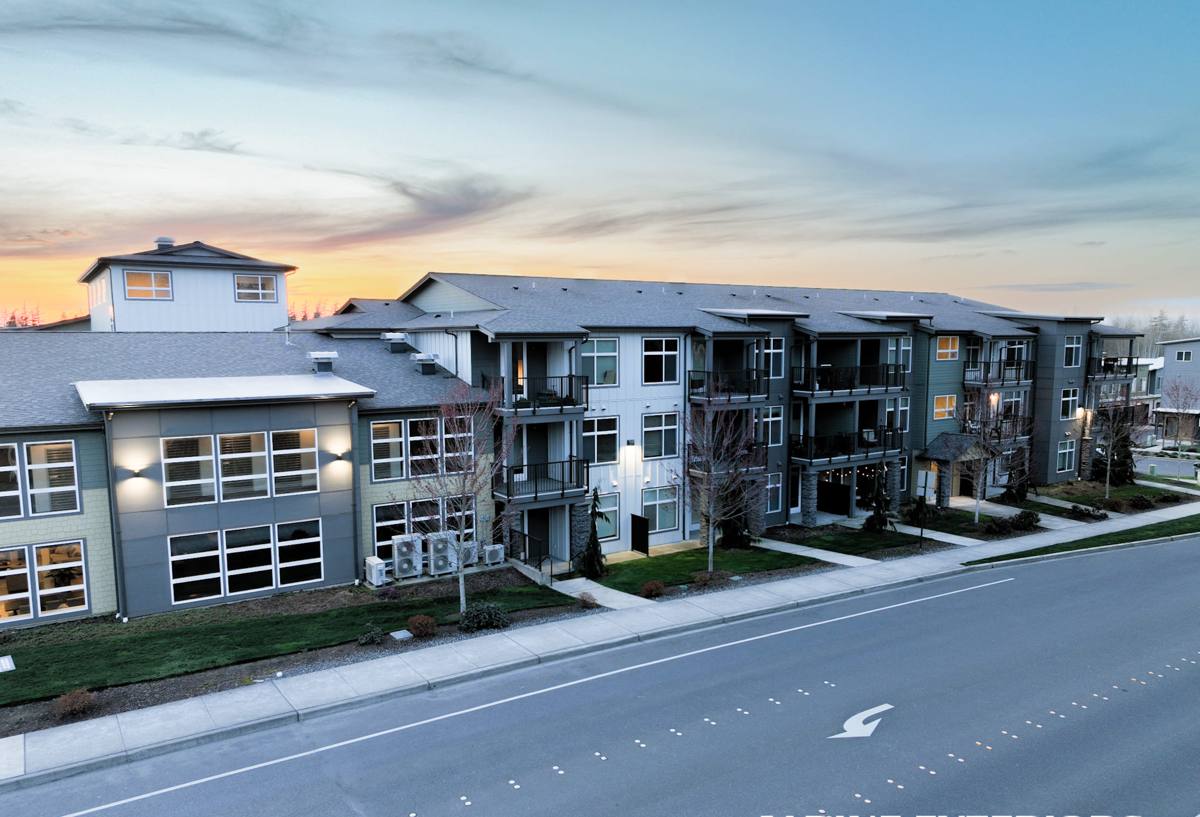
What Bellingham's Climate Does to Board & Batten Siding
Salt Air and Corrosion
Homes closer to the water deal with airborne salt that settles on siding, fasteners, and trim. Over years, salt exposure accelerates corrosion on lower-grade fasteners and can degrade certain coatings faster than manufacturers' general climate ratings assume. Board and batten has more exposed fastening points than lap siding because both the base panels and the vertical battens need to be secured, so fastener quality and placement carry more weight in a salt-air environment.
Driving Rain and Wind-Driven Moisture
Bellingham doesn't just get rain — it gets rain pushed sideways by wind coming off the Sound. That matters for board and batten specifically because the vertical battens create seams and reveals that can channel water if they aren't detailed correctly. A batten that isn't properly spaced, flashed, or fastened becomes a wick instead of a design feature.
Moss and Sustained Dampness
Whatcom County's moss season is long, and moss doesn't just grow on roofs. It takes hold anywhere organic material collects moisture against a surface for weeks at a time — the horizontal ledges created by battens, the bottom edges of panels near grade, and any spot where debris sits against the wall. Moss holds moisture against the substrate, and prolonged dampness is what causes rot, paint failure, and eventually structural damage behind the siding.
Why the Substrate Choice Matters More With This Profile
Board and batten can be built from several materials, and the substrate determines how it survives a Whatcom County winter.
| Substrate | Moisture Behavior | Long-Term Concern in This Climate |
|---|---|---|
| Primed spruce or pine boards | Absorbs moisture at cut edges and fastener holes | Swelling, cupping, and rot at battens and butt joints within a handful of wet seasons |
| Plywood/OSB-based panel systems | Vulnerable at edges and any breach in the coating | Edge swell and delamination if water gets behind the panel |
| Vinyl board and batten | Doesn't absorb water, but traps moisture behind it against the wall assembly | Hides trapped moisture problems until they're advanced; can also crack in freeze-thaw cycling |
| James Hardie fiber cement | Non-combustible, engineered for moisture resistance, factory-sealed edges on HardiePanel and matching battens | Requires correct installation gaps and flashing, but the material itself doesn't rot or swell like wood |
This is the core of why we only install James Hardie: in a climate where moisture exposure is constant rather than occasional, the substrate has to be able to shed water and resist rot on its own, not just wear a coating that holds up until it doesn't.
What a Correct Board & Batten Installation Actually Involves
Board and batten looks simple from the curb, but it has more failure points than a standard lap job if it's rushed. A correct installation for this climate includes:
- A drainable weather-resistive barrier behind the panels, so any moisture that does get past the surface has somewhere to go
- Correct fastener spacing and depth into structural framing — not just into the panel — using fasteners rated for coastal/marine exposure
- Proper reveal spacing between battens so the assembly can expand and contract without stressing seams
- Flashing at every horizontal transition: window and door heads, roof-to-wall intersections, and the bottom termination near grade
- A gap at the base of the siding above grade, hardscape, and roof lines to prevent standing water and give moss less to hold onto
- Factory-finished (ColorPlus) panels and battens where possible, so cut edges and fastener heads are the only points needing field treatment
Skipping any one of these doesn't usually cause a visible problem in year one. It shows up in year five or six, once moisture has had enough wet seasons to work its way in.
Our Process for a Bellingham Board & Batten Project
1. On-Site Assessment
We look at the home's exposure — how close it sits to the water, which walls take the most wind-driven rain, where moss has already established itself on the existing siding, roof, or fencing — before we recommend a batten layout or reveal spacing.
2. Substrate and Moisture Barrier Check
If we're removing existing siding, we inspect the sheathing underneath for rot or prior water damage before anything new goes up. Board and batten only performs as designed over a sound, properly wrapped wall.
3. Installation to Manufacturer Spec
We install James Hardie panels and battens to the manufacturer's fastening, spacing, and flashing requirements — not the minimum needed to pass a quick look. This is where board and batten installations most often go wrong when done by crews unfamiliar with the profile.
4. Final Detailing
Trim, caulking at appropriate joints only (not as a substitute for flashing), and touch-up painting on any field-cut edges are finished before we walk the job with the homeowner.
Why Hardie Is the Only Material We Put on Board & Batten Jobs Here
We get asked why we won't install cedar board and batten, engineered wood panels, or vinyl versions of the style. The honest answer is maintenance burden and moisture risk over time. Cedar looks excellent on day one but needs ongoing refinishing and is a real target for moisture and pest damage in a climate this wet. Engineered wood panels can perform well when kept dry and coated, but a single breach in that coating — a fastener hole, a cut edge, a hairline crack — gives water a path into a substrate that swells and doesn't recover. Vinyl board and batten avoids rot entirely but does it by shedding the problem: it traps moisture behind the panel where you can't see it, and it's the first thing to crack in a hard freeze.
James Hardie fiber cement is non-combustible, holds its factory ColorPlus finish far longer than field-applied paint, and is engineered in HZ5 product lines specifically for the kind of wet, moderate-freeze climate Whatcom County sits in. It comes with a strong transferable warranty when installed to spec, which matters if you sell the home before the siding's functional life is up. None of that replaces correct installation — but it gives an installation done right a much longer runway before it needs attention again.
What to Check Before Hiring for Board & Batten in This Area
- Ask specifically how they detail the top and bottom of each batten — this is where most board and batten failures start
- Confirm they're using a drainable house wrap, not just felt or a basic barrier, given the amount of driving rain the county sees
- Ask what fastener type they use and whether it's rated for coastal/marine exposure
- Get the batten spacing and reveal dimensions in writing before work starts, not decided on-site
- Confirm whether panels and battens are factory-finished or will be field-painted, and what that means for long-term maintenance
A crew that already works in Bellingham and the surrounding parts of Whatcom County has usually already seen what happens to a poorly detailed board and batten job five years in — the moss line at the base, the swelling at a cut edge, the caulk that was asked to do a flashing's job. That's the kind of thing you want built out of a project before it starts, not discovered later.
Get a Straight Answer for Your Home
If you're considering board and batten for a home in Bellingham or elsewhere in Whatcom County, we're happy to walk the exterior with you, look at sun and rain exposure on each elevation, and give you a clear picture of what a correctly built James Hardie board and batten installation would involve for your specific home. Request a free, no-pressure estimate using the form below.