 Whatcom County
 Windows in Birchwood Face a Different Set of Problems
Birchwood sits close enough to the water and the marine weather patterns that move through Whatcom County that its homes take a different kind of beating than houses further inland. Salt-laden air corrodes hardware and fasteners faster than dry climates ever would. Driving rain, pushed sideways by wind off the Sound, finds any gap in flashing or sealant and works it wider over time. And then there's moss season — the long stretch of wet, mild months when anything with a horizontal surface or a shaded north face becomes a growth medium if it isn't detailed correctly. Windows sit right at the intersection of all three problems, because a window is really a hole in the building envelope that has to be sealed, flashed, and drained correctly or it becomes the weak point in the whole wall.
We install windows in Birchwood the way the local climate demands, not the way a generic install guide from a manufacturer based in a dry state would tell you to. That distinction matters more here than almost anywhere else in the county.
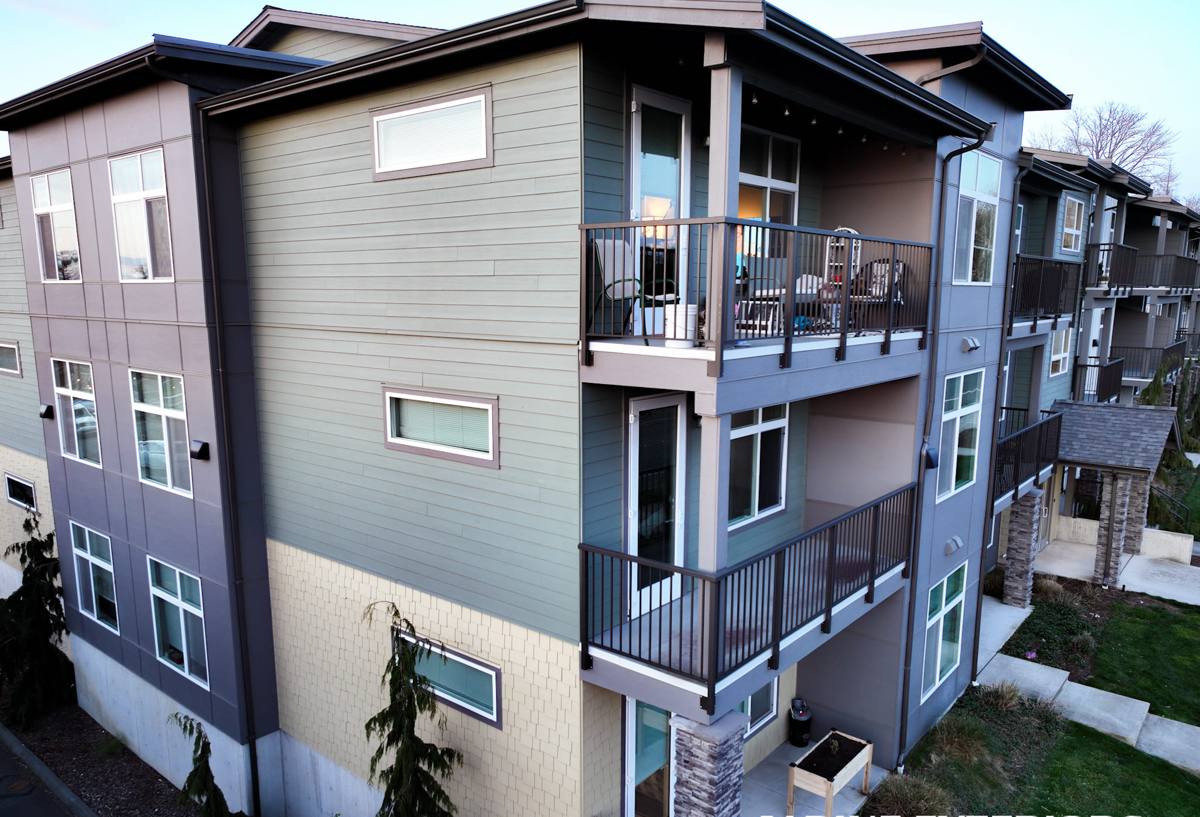
What Whatcom County Weather Actually Does to a Window Opening
Salt Air and Hardware
Salt air accelerates corrosion on anything metal — screws, cam locks, balance systems, and cheap cladding on vinyl frames. Over years, this shows up as stiff or failing hardware, streaking on sills, and premature wear on frames that would otherwise last decades. It's not dramatic, it's cumulative, and it's specific to homes closer to the water, which includes much of Birchwood.
Driving Rain and Wind-Driven Water
Whatcom County gets rain that doesn't just fall — it's pushed sideways by wind, especially during winter storm systems. A window that would perform fine in a calm-rain climate can leak here if the flashing details, sill pan, and sealant joints aren't built to handle water actively being forced against and around the frame. This is the single biggest cause of window-related water damage we see: not a bad window, but an install that didn't account for wind-driven rain.
Moss and Prolonged Moisture
The long wet season in this region means anything that stays damp for weeks at a time — shaded sills, poorly drained trim, north-facing exposures — grows moss and algae. Beyond looking bad, sustained moisture against wood trim or poorly sealed frames leads to rot and finish failure well before the window itself is worn out.
What a Correct Window Installation Actually Involves
A window installation isn't just "remove old window, set new window, caulk the edges." Done right, it's a sequence of steps where each one protects the next. Skipping or rushing any of these is where most leaks and failures originate.
- Opening inspection. Before anything goes in, we check the rough opening for rot, soft framing, or prior water damage. Replacing a window over a compromised opening just seals the problem inside the wall.
- Sill pan flashing. A sloped, sealed pan at the bottom of the opening directs any water that gets past the window back outside instead of into the wall cavity. This is one of the most commonly skipped steps in budget installs, and it's the one that matters most in a wind-driven-rain climate.
- Window-specific flashing tape and integration with the water-resistive barrier. The flashing has to overlap correctly with the house wrap or building paper above and below so water always sheds downward and outward, never into a seam.
- Setting the window level, plumb, and square. A window that's slightly out of square binds, doesn't seal evenly, and stresses the frame over time.
- Shimming and fastening per manufacturer spec. Over- or under-fastening can warp a frame or leave it loose enough to move under wind load.
- Insulating the gap correctly. Low-expansion foam or backer rod, not stuffed fiberglass, so the frame isn't distorted and the gap is actually sealed against air and moisture.
- Interior and exterior sealant. Exterior sealant sheds bulk water; interior sealant controls air leakage and condensation. They do different jobs and both need to be done correctly.
- Trim and finish work. Correctly back-primed and sealed trim resists the prolonged dampness of moss season instead of feeding it.
Our Process for Birchwood Homeowners
1. On-Site Assessment
We walk the home with you, look at existing windows and openings, and talk through what's actually going on — condensation, drafts, fogged glass, sticking sashes, visible rot, or just an outdated window that's due for replacement. Every home in Birchwood has slightly different exposure depending on which direction it faces and how sheltered or exposed the lot is, and that affects what we recommend.
2. Honest Product Recommendation
We'll tell you which window lines and configurations hold up in this climate and which ones are a maintenance headache waiting to happen, based on how they're built and how they perform against moisture — not based on markup. If a cheaper option is genuinely fine for your situation, we'll say so.
3. Written Estimate
You get a clear, itemized estimate — product cost, labor, disposal of old units, and any extra work like rot repair or re-flashing — before anything is scheduled.
4. Installation
Most single-family homes have a full window installation completed in one to a few days depending on the number of openings and whether any framing repair is needed. We protect your interior and landscaping, and we clean up fully at the end of each day.
5. Final Walkthrough
We check every window with you — operation, seals, hardware, and trim — before we consider the job done.
Choosing the Right Window Material for This Climate
There's no single "best" window material — there's the right tradeoff for your home, budget, and exposure. Here's how the common options actually perform in a marine climate like Whatcom County's.
| Material | Moisture & Salt Air Resistance | Maintenance | Typical Tradeoff |
|---|---|---|---|
| Vinyl | Good — won't rot or corrode, though cheap hardware can wear faster near salt air | Low | Budget-friendly, but frame stiffness and hardware quality vary a lot by manufacturer |
| Fiberglass | Very good — dimensionally stable, resists warping in wet-dry cycling | Low | Higher upfront cost, but holds up well long-term in this climate |
| Aluminum | Fair — durable but conducts cold and can corrode without a good finish, especially with salt exposure | Moderate | Strong and slim sightlines, but thermal performance and corrosion resistance need attention |
| Wood (clad or unclad) | Poor to good depending on cladding — unclad wood is vulnerable in a long wet season | High for unclad; moderate for clad | Best appearance for many homeowners, but unclad wood needs real maintenance discipline here |
| Wood-clad composite | Good — cladding protects the wood core from moisture | Low to moderate | Combines wood's look with better weather resistance, at a higher price point |
For most Birchwood homes exposed to salt air and driving rain, we steer people toward vinyl with quality hardware, fiberglass, or clad-wood options rather than unclad wood — not because unclad wood windows are bad products, but because the maintenance burden in this specific climate is high enough that most homeowners end up regretting the choice within a decade if they can't stay on top of refinishing.
Signs Your Windows Need Attention
- Fogging or condensation between the panes of a double- or triple-pane window (a sign the seal has failed)
- Visible gaps, soft spots, or discoloration in the trim or sill
- Windows that are hard to open, close, or lock — often a sign of frame warping
- Noticeable drafts even when the window is fully closed and locked
- Moss or algae buildup on sills or trim that returns quickly after cleaning
- Peeling paint or finish failure around the frame, especially on north-facing walls
- Water staining on interior drywall or trim below or beside a window
- Rising heating bills without another clear explanation
What Drives Cost
Window installation cost varies by opening size, material, glass package, and how much of the surrounding structure needs attention. In general terms, a straightforward replacement into a sound, undamaged opening costs less than a job that involves reframing, rot repair, or upgrading from a smaller to a larger opening. Custom sizes and higher-performance glass packages (built for the extra insulation value that matters in this climate) also add cost. We'll always break this down in writing before work starts so there are no surprises.
Why a Crew That Already Works Birchwood Matters
Window installation looks similar on paper everywhere, but the details that actually prevent failures are regional. A crew used to installing in a dry inland climate may not think twice about sill pan flashing or wind-driven rain details, because where they normally work, it rarely matters. Here, it's the difference between a window that lasts decades and one that leaks within a few winters.
Working regularly in Birchwood and across Whatcom County means we already know how local exposure — proximity to water, prevailing wind direction, tree cover, and how long moss season runs each year — affects what a given home actually needs. We're not learning the climate on your project.
Get a Free, No-Pressure Estimate
If your windows are drafty, fogging, hard to operate, or just showing their age, we're happy to take a look and give you an honest read on what's going on and what it would take to fix it — no pressure, no obligation. Fill out the form below to schedule a free estimate for your Birchwood home.