 Whatcom County
 Why Birchwood Homes Ask More of a Window
Birchwood sits close enough to the water and the wet western Whatcom County weather pattern that windows here take a beating most inland homes never see. Salt-laden air off the Sound works on hardware, screens, and exposed metal. Driving rain — the kind that comes in sideways during a fall or winter storm — tests every seal and flashing detail a window has. And the long stretch of overcast, damp months each year gives moss and algae plenty of time to take hold on north-facing walls and shaded trim, where things rarely fully dry out.
None of that is unique to any one house. It's the baseline for this part of Whatcom County, and it means a window that performs fine in a drier climate can still fail early here if it wasn't built or installed with this exposure in mind. Homes in Birchwood run the gamut from older single-pane originals to double-pane units installed a couple of decades ago that are now fogging up or sticking. Both situations usually point to the same underlying issue: the windows are no longer doing their job of keeping conditioned air in and moisture out.
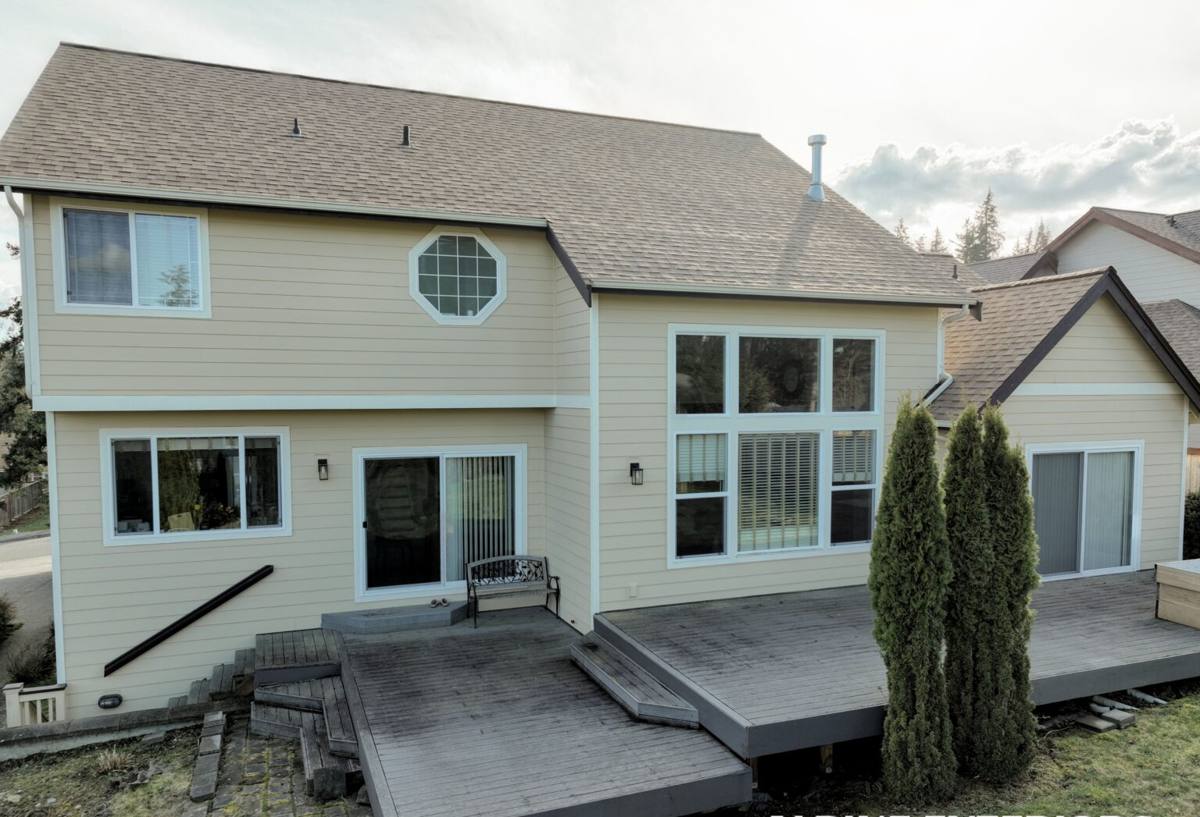
What "Energy-Efficient" Actually Means for This Climate
Energy-efficient windows are rated, not guessed at. The Nation Fenestration Rating Council (NFRC) label on a window gives you real numbers instead of marketing language, and two of them matter most for a house in this part of Washington:
- U-factor — how well the window resists heat loss. Lower is better. This is the number that matters most here, since our climate is defined more by keeping heat in through a long heating season than by blocking summer sun.
- Solar Heat Gain Coefficient (SHGC) — how much solar heat passes through the glass. Less critical in our mild, often overcast summers, but still worth checking on windows with heavy afternoon sun exposure.
There's a third number that gets overlooked but matters a lot in a damp climate: the condensation resistance rating. Windows with poor condensation resistance fog up on the inside during cold, wet stretches, which leads to water sitting on sills and eventually soft wood or mold at the corners. In a climate with as much sustained moisture as Whatcom County gets, this rating deserves as much attention as the U-factor.
Low-E glass coatings and gas-filled sealed units (argon or krypton between panes) are standard on any decent energy-efficient window today. The difference between a good window and a great one usually comes down to the quality of the seal, the frame material, and — just as important — how it's installed.
Signs Your Current Windows Are Costing You Money
Most homeowners don't replace windows because they woke up wanting new windows — they replace them because something's clearly not working anymore. Here's what to look for:
- Fogging or haze between the panes of a double-pane window (the seal has failed and the gas fill is gone)
- Noticeable drafts near the frame, especially during windy, driving-rain weather
- Windows that stick, won't latch, or are hard to open — often a sign of wood swelling from moisture intrusion
- Soft or discolored wood at the sill or lower corners of the frame
- Moss or dark staining building up on frames or trim that stays shaded most of the day
- Rooms near older windows that feel noticeably colder than the rest of the house
- A heating bill that's crept up without an obvious reason
Any one of these is worth a look. Several together usually mean the windows are past the point where sealant or minor repair will fix things for good.
Choosing a Frame Material for Birchwood's Conditions
Frame material has more effect on how a window holds up here than almost any other decision. We install what performs well in sustained moisture and salt air, and we're upfront about the trade-offs of each option rather than pushing whatever has the best margin.
| Frame Material | Moisture Resistance | Maintenance | Typical Lifespan |
|---|---|---|---|
| Vinyl | Very good — won't rot, resists moss staining better than wood | Low — occasional cleaning | 20–30+ years |
| Fiberglass | Excellent — very stable in wet/dry cycling and temperature swings | Low | 30–40+ years |
| Aluminum-clad wood | Good if detailed well; wood core still vulnerable if the seal at joints fails | Moderate — cladding needs to stay sealed at joints | 20–30 years, cladding-dependent |
| Bare wood | Poor in sustained damp exposure without regular upkeep | High — repainting, caulking, and inspection needed regularly | Highly variable |
Our standard for a home this close to the water is vinyl or fiberglass for most installations. It's not that wood windows can't look good — it's that a bare wood frame asks for a level of ongoing maintenance that most homeowners in a climate with this much sustained moisture don't want to keep up with. Aluminum-clad wood can work, but the cladding has to be detailed correctly at every joint, because once moisture gets behind clad wood it doesn't dry out quickly here.
Glass Packages Worth Considering
Standard double-pane low-E glass with argon fill is the baseline we'd recommend for most Birchwood homes. Triple-pane glass adds cost and weight and makes the most sense on north-facing rooms or homes right along more exposed, windier stretches where the extra insulation value pays off faster. Tempered glass is required by code in certain locations near doors, low sills, and wet areas — a detail worth confirming during your estimate rather than after the windows arrive.
What a Correct Installation Involves
A high-end window installed poorly will underperform a mid-range window installed correctly — and in a climate that sees this much driving rain, installation quality is where most window failures actually start. A correct install includes:
- Sill pan flashing that directs any water that gets past the window back out, not into the wall cavity
- Proper integration with the home's weather-resistant barrier (housewrap or building paper) so water sheds over the flashing at every layer, not behind it
- Shimming the unit square and plumb in the opening — an out-of-square window stresses its own seals and hardware over time
- Quality exterior sealant applied at the right joints, not just a bead of caulk around the whole perimeter
- Correct interior air sealing and insulation in the gap between the frame and the rough opening
Because we work on siding as much as windows, we pay close attention to how the window ties into the surrounding wall assembly — the flashing, the trim, and the siding all need to work together as one system. A window installed without regard for what's happening at the siding line is one of the more common ways water finds its way into a wall in this climate.
Our Process for a Birchwood Window Project
- On-site assessment — we look at your existing windows, framing condition, and how the house is exposed to wind and rain before recommending anything.
- Measurements and product selection — we walk through frame material, glass package, and options based on your home and budget, not a one-size answer.
- Scheduling and permitting — if the scope requires a permit, we handle that step so it's not a surprise later.
- Removal and inspection — old windows come out carefully so we can check the framing and sheathing underneath for hidden rot or moisture damage before anything new goes in.
- Installation with proper flashing and sealing — done to hold up against wind-driven rain, not just pass a quick visual check.
- Trim and siding tie-in — finished so the new window looks intentional and sheds water correctly with the surrounding siding.
- Cleanup and walkthrough — we go over how the new windows operate and what maintenance, if any, they'll need.
What Drives the Cost
Every home is different, so we'd rather give you a real number after seeing the job than a number that doesn't hold up once we're on site. That said, here's what typically moves the price up or down:
| Factor | Effect on Cost |
|---|---|
| Number of windows replaced at once | Per-window cost usually drops with larger projects |
| Frame material (vinyl vs. fiberglass vs. clad wood) | Fiberglass and clad wood run higher than vinyl |
| Glass package (double vs. triple pane, tempered glass) | Triple pane and code-required tempered glass add cost |
| Window size and shape | Custom or oversized units cost more than standard sizes |
| Condition of existing framing | Hidden rot repair adds cost, usually not known until removal |
| Trim and siding work needed to finish the opening | More extensive tie-in work adds labor and material |
Broadly, expect a straightforward standard-size vinyl window replacement to run in the low-to-mid thousands per window installed, with fiberglass and larger or custom units running higher. We'll always break the estimate down so you can see what you're paying for rather than a single bottom-line number.
Why a Crew That Already Works in Birchwood Matters
A window installer who works this area regularly already knows what to expect: the moisture load, the wind exposure, the age and construction style of homes in this part of Whatcom County, and the kind of siding and trim details typically found here. That familiarity shows up in fewer surprises during the job and a faster read on what a house actually needs versus what a generic spec sheet suggests.
It also matters after the install. If a question comes up about how a window is operating, or you want a sealant joint checked a year or two down the road, it helps to work with a crew that's still local and reachable — not one that installed windows here once and moved on to the next region.
Keeping New Windows Performing Through Moss Season
Good windows still need a small amount of upkeep in this climate to get their full lifespan. None of it is complicated:
- Clear weep holes along the bottom of the frame so water can drain out instead of pooling
- Keep gutters and downspouts clear so roof runoff isn't dumping extra water near window heads
- Wipe down tracks and frames periodically, especially on shaded, north-facing walls where moss and algae take hold fastest
- Check exterior sealant joints once a year for cracking or separation, particularly after a hard winter
- Trim back vegetation that's keeping a window in constant shade and dampness
- Rinse salt residue off frames and hardware periodically if the home is closer to open water and more exposed to salt air
None of this replaces a good installation — it just protects the investment once it's in. A well-built, well-installed window in this climate should need very little beyond this kind of basic care.
If your Birchwood home has windows that are drafty, fogged, hard to operate, or just past their prime, we're happy to take a look and walk you through honest options for your specific house. Reach out for a free, no-pressure estimate using the form below.