 Whatcom County
 Why Decks in Birchwood Wear Out Faster Than You'd Expect
Birchwood sits close enough to Bellingham Bay that salt-laden air is a daily fact of life, not an occasional nuisance. Combine that with Whatcom County's long stretch of driving rain from fall through spring, and you have a climate that's genuinely tough on exterior wood structures. Salt air accelerates corrosion on fasteners, hardware, and any metal connectors holding a deck together. Driving rain doesn't just fall straight down here — wind pushes it sideways and up under railings, ledger boards, and joints where water has no business being. And because this area rarely gets a hard, dry summer, moss and algae get months of uninterrupted growing time on any horizontal or shaded surface.
None of this means a deck in Birchwood is doomed. It means the materials, fasteners, and construction details matter more here than they would in a drier climate. A deck built the same way you'd build one in Arizona will fail here years ahead of schedule. That's the gap we're closing with every replacement we do in this neighborhood.
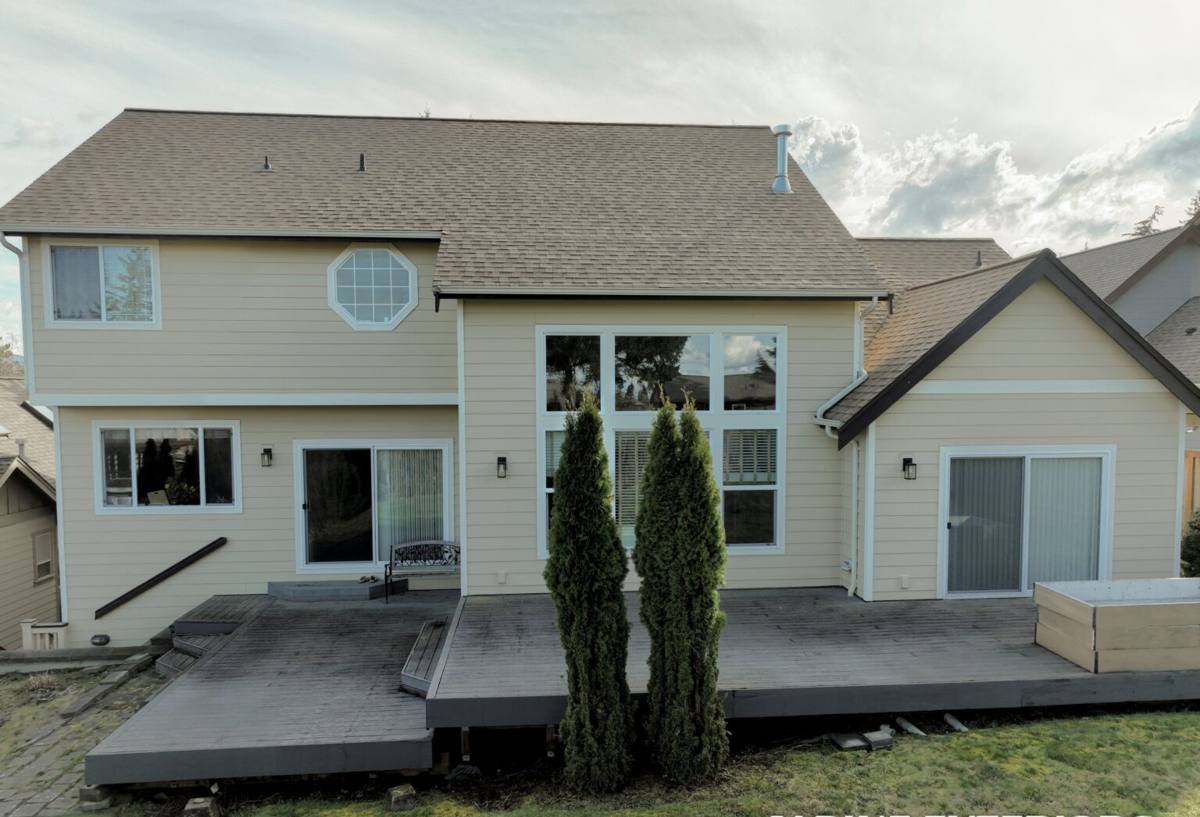
Signs It's Time to Replace, Not Repair
Homeowners often ask whether a problem area can just be patched. Sometimes it can. But there's a point where repair becomes a temporary fix on a structure that's already compromised underneath. Common signs we look for during an assessment:
- Soft, spongy, or spring-back decking boards, especially near the house or in shaded corners
- Visible rot or dark staining at the ledger board where the deck attaches to the house
- Rust streaking or corroded fasteners popping up through the deck surface
- Wobbly railings or posts that move independently of the frame
- Persistent moss or black algae film that returns within weeks of cleaning
- Gaps opening up between boards well beyond normal seasonal movement
- A deck older than 15–20 years that has never had the substructure inspected
If the framing and footings underneath are sound, sometimes a resurfacing job makes sense. But if the ledger connection, joists, or posts show rot or corrosion, patching the surface just hides a structural problem that will keep getting worse under the new boards.
What a Correct Deck Replacement Includes
The Substructure
This is the part nobody sees and the part that matters most. Footings, posts, beams, and joists need to be sized and spaced for the actual loads the deck will carry, not just replaced to match whatever was there before — especially on older Birchwood homes where original decks were sometimes undersized by today's standards. Any wood framing member in contact with moisture-prone areas should be rated for ground contact or protected with proper flashing.
Ledger Attachment and Flashing
The ledger board — where the deck bolts to the house — is the single most common failure point we see in this climate. Done correctly, it includes a code-compliant ledger flashing that directs water away from the house band joist rather than letting it wick in behind the siding. This detail is invisible once the deck is finished, but it's the difference between a deck that lasts decades and one that rots the wall behind it.
Decking Surface
Whatever material is chosen, the boards need proper gapping for drainage and airflow underneath — critical in a climate where things rarely fully dry out between rain events.
Fasteners and Hardware
Given the salt air exposure, fastener choice isn't a place to cut corners. Stainless steel or high-grade coated fasteners rated for coastal exposure cost more up front but avoid the rust streaking and premature failure that cheaper hardware shows within a few seasons here.
Railings and Stairs
Railing posts need solid blocking and connection back to the frame, not just surface-mounted brackets. Stair stringers should be treated or naturally resistant to ground contact, since they're often the first part of a deck to show rot.
Choosing the Right Decking Material for This Climate
There's no single "best" decking material — there's a best material for your budget, maintenance appetite, and how much of that salt-and-rain exposure your deck actually gets (a covered deck under an overhang behaves very differently than one fully exposed to weather).
| Material | How It Handles This Climate | Maintenance | Typical Lifespan |
|---|---|---|---|
| Pressure-treated wood | Good if properly sealed and maintained; softwood is still vulnerable to moss and moisture wicking at fastener points | Annual cleaning and re-sealing recommended | 10–15 years with upkeep |
| Cedar | Naturally rot-resistant and handles moisture well, but greys and can host moss without regular cleaning | Periodic cleaning; sealing optional but extends life | 15–20 years |
| Composite decking | Resists rot and doesn't absorb water like wood, but needs regular cleaning to prevent algae/moss film on the surface | Low — occasional washing | 25+ years |
| PVC/capped composite | Best moisture resistance of the group; least likely to host moss growth long-term | Lowest — occasional washing | 25–30+ years |
We're upfront about trade-offs. Composite and PVC cost more per square foot than treated lumber, but in a climate that gives moss months to establish itself every year, the lower maintenance burden often pays for itself in saved weekends. Wood costs less initially but demands consistent upkeep to hit its full lifespan here — skip a couple of seasons of sealing and that timeline shortens fast.
Our Deck Replacement Process
1. On-Site Assessment
We inspect the existing deck's framing, ledger connection, and footings before quoting anything, so you know whether you're dealing with a straightforward rebuild or a more involved structural fix.
2. Design and Material Selection
We walk through decking, railing, and fastener options against your budget and how exposed the deck actually is to weather and salt air.
3. Permitting
Deck replacements involving structural framing typically require a permit through the local jurisdiction. We handle that paperwork rather than leaving it on you.
4. Tear-Off and Disposal
The old deck comes out down to (or including) the substructure, depending on scope, with old material hauled off the site.
5. Rebuild
Framing, ledger flashing, decking, and railings go in following manufacturer specs and local code — not shortcuts to save an afternoon.
6. Final Walkthrough
We go over the finished deck with you, including basic care guidance specific to the material installed.
Permits and Local Code Considerations
Most deck replacements that touch structural elements — footings, framing, ledger attachment, or railing height and spacing — require a building permit in Whatcom County jurisdictions. Guardrail height, baluster spacing, and stair rise/run all have code minimums that matter both for your safety and for resale, since an unpermitted or non-compliant deck can complicate a future home sale or insurance claim. We pull the necessary permits as part of the job rather than treating it as an optional add-on.
Cost Factors to Expect
Every deck is different, so a firm number only comes from an on-site look. In general, these are the factors that move the price:
| Factor | Why It Matters |
|---|---|
| Deck size and shape | More square footage and complex angles mean more material and labor |
| Decking material chosen | Treated lumber, cedar, composite, and PVC span a wide price range |
| Substructure condition | Rotted framing or undersized footings add rebuild cost beyond the surface |
| Height and stairs | Taller decks and stair runs add framing, railing, and code requirements |
| Railing style | Basic wood balusters cost less than metal cable or glass panel systems |
| Permit and disposal fees | Vary by scope and how much old material needs hauling away |
As a general guide, most full deck replacements in this area land somewhere in the moderate-to-upper range per square foot depending on material and structural work needed — but we'll always give you specifics in writing before any work starts, not a vague estimate.
Keeping Your New Deck Ahead of Moss and Moisture
A well-built deck still needs some seasonal attention in this climate. A little routine care goes a long way toward hitting the full lifespan of whatever material you chose:
- Sweep debris off the deck regularly, especially in fall when leaves and needles trap moisture against the boards
- Rinse or wash the surface a couple of times a year to interrupt moss and algae growth before it takes hold
- Check that gaps between boards stay clear so water can drain instead of pooling
- Inspect fasteners and railing connections annually for rust or looseness
- Re-seal wood decking on the schedule appropriate to the product — don't wait until it looks grey and dry
- Trim back overhanging branches or vegetation that keeps the deck shaded and damp longer than it needs to be
Why Hire a Crew That Already Works Birchwood
A deck replacement done to a generic national spec sheet doesn't account for what Whatcom County actually throws at it. We know which details — ledger flashing, fastener grade, board spacing — matter more here because of the salt air and rain than they would somewhere drier. We're familiar with the local permitting process, so that step doesn't stall your project. And because we work in this area regularly, we're not guessing about how a deck holds up here over time — we see the results of moss season and driving rain on real decks, year after year, and build accordingly.
If your Birchwood deck is showing its age, or you just want an honest opinion on whether it needs replacing or can be repaired, we're happy to take a look. Reach out for a free, no-pressure estimate using the form below.