 Whatcom County
 Why This Climate Is Hard on Bellingham Windows
Bellingham sits where the Salish Sea meets the fringe of the Cascades, and that location cuts both ways for homeowners. The marine air that keeps our summers mild also carries salt and moisture that old window hardware, wood sashes, and worn-out seals were never built to handle for decades on end. Add Whatcom County's long stretch of driving rain — the kind that comes in sideways off the water during a fall or winter system — and windows end up working overtime for close to nine months of the year.
Then there's moss. It doesn't just grow on roofs here. Given enough shade and moisture, it colonizes wood sills, vinyl tracks, and the caulk lines around older window frames, holding water against the building long after the rain itself has stopped. Over a few seasons, that constant dampness is what turns a small gap in a seal into a soft spot in the framing behind it.
Signs a Window Needs Replacing, Not Just Resealing
Most window failures around here don't show up as a dramatic leak — they show up slowly, as small annoyances that get worse each wet season. Here's what we look for during an inspection, and what you can check yourself:
- Fogging or a milky haze between the panes of a double-pane window, which means the seal has failed and the gas fill is gone
- Visible moss, algae, or black staining on the sill, frame, or the siding directly below the window
- Soft or discolored wood at the sill or lower corners when you press on it
- Windows that stick, won't stay open, or need a shove to latch
- Cold drafts near the frame even when the sash is fully closed and locked
- Condensation forming on the inside of the glass or frame during cold snaps
- Interior paint or trim that keeps bubbling or peeling, which usually points to moisture getting in somewhere
One or two of these on an otherwise sound window might just need new weatherstripping or a resealed frame. Several of them together, especially on a window more than twenty years old, usually means it's cheaper in the long run to replace than to keep patching.
Older Aluminum and Wood Windows Especially
A lot of Bellingham homes, particularly older ones near downtown and the waterfront, still have original aluminum-frame or single-pane wood windows. Aluminum conducts cold straight through the frame, which is why those homes often show condensation, and sometimes even ice, on the inside of the glass during a cold snap. Original wood windows can still be beautiful and worth restoring on a historic home, but once the sash and sill have already taken on rot, replacement is usually the more honest answer than another repair cycle.
What a Correct Window Replacement Job Involves
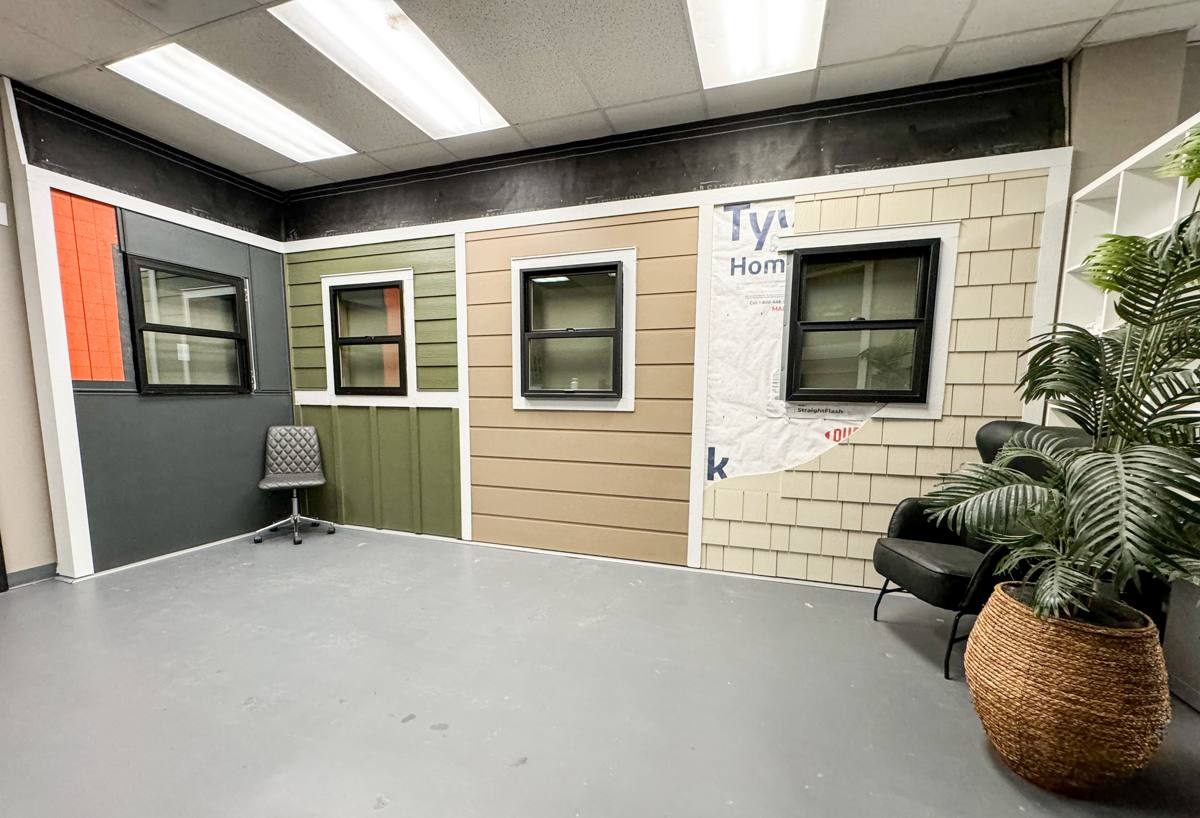
The window itself is maybe half the job. The other half — the part that determines whether it still performs well five or fifteen years from now — is how it's tied into the wall and siding around it. In a climate that sees this much wind-driven rain, that detail work is not optional.
Full-Frame vs. Insert Replacement
- Insert (pocket) replacement — the new window is built to fit inside the existing frame, which stays in the wall. Faster and less disruptive, and a reasonable choice when the existing frame is still sound and dry.
- Full-frame replacement — the old frame comes out entirely, down to the rough opening, so we can inspect and repair the sheathing and flashing underneath before the new window goes in. This is the right call whenever there's any sign of water damage, rot, or a frame that was never flashed correctly to begin with.
We'll tell you honestly which one your windows need after a hands-on look, not just which one is faster for us to install.
Flashing and Moisture Management
This is where a lot of window jobs go wrong, and it's invisible once the trim is back on. A correct installation includes a sloped sill pan to carry any water that gets past the sash back outside, properly lapped flashing tape that ties into the home's weather-resistive barrier, and head flashing that sheds water out and away from the top of the window rather than trapping it against the wall. Skip any one of these steps and you've set up a slow leak that won't show itself for a year or two — right about the time it's done real damage to the framing.
Choosing the Right Window for a Wet, Salt-Air Climate
Frame material matters more here than it does in a drier inland climate, because whatever you choose is going to sit through months of damp weather every year. Here's how the common options generally compare for a coastal Whatcom County home:
| Frame Material | Moisture Behavior | Maintenance | Typical Fit for This Area |
|---|---|---|---|
| Vinyl | Won't rot or corrode; welded seam quality is the main weak point | Low — no painting, occasional cleaning | Solid, budget-friendly default for most homes |
| Fiberglass | Excellent — dimensionally stable, resists swelling and corrosion | Low | Strong choice for exposed, high-wind, or waterfront-adjacent sites |
| Wood, unclad | Handsome but vulnerable to rot without diligent upkeep | High — repainting and sealing on a regular cycle | Best reserved for covered elevations or historic restorations |
| Wood, clad exterior | Good — the cladding shields the wood from direct weather | Moderate | Good when you want a wood interior look with less upkeep |
| Aluminum | Corrodes over time in salt air; conducts cold and invites condensation | Low, but performance degrades | Generally not what we recommend for replacement here |
We install several well-established manufacturers' product lines rather than tying ourselves to just one, because no single line is the right fit for every house or every budget. We'll walk you through the specific options and warranty structures that make sense for your project at the estimate.
Glass and Energy Performance for This Climate
This climate doesn't demand the same things a hot, sunny region does. You're not fighting intense summer heat gain so much as you're fighting steady heat loss through a long, overcast heating season — plus condensation caused by the gap between warm indoor air and a cold window surface.
What Actually Matters Here
- U-factor — the best single predictor of how much heat a window loses; lower is better for our heating-dominated climate
- Low-E coatings — help retain interior heat in winter without noticeably darkening the glass under our already-limited daylight
- Argon or krypton gas fill — improves insulation between panes at minimal added cost
- Warm-edge spacers — reduce the cold-edge effect that causes condensation to form first at the perimeter of the glass
- Double vs. triple pane — double pane with a good Low-E coating performs well for most homes here; triple pane earns its keep on north-facing walls, rooms that run cold, or exposed wind corridors, at a noticeably higher cost
Washington's state energy code sets minimum performance requirements for replacement windows, and we make sure whatever goes in meets or beats that bar. That's not an upsell — it's the baseline we start from.
Our Process for Window Replacement
- An on-site inspection where we check the condition of your existing frames, sills, and the wall assembly behind them, not just the glass
- Accurate measurements and a written proposal that spells out frame material, glass package, and whether the job needs full-frame or insert replacement
- Permit filing on any job where the scope of work requires it
- Install day: careful removal of the old unit, repair of any hidden damage we find, proper flashing and air-sealing, then setting and shimming the new window plumb and square
- Exterior trim and sealant work finished to shed water the same way the rest of your siding does
- A final walkthrough and cleanup before we consider the job done
Permits and Code Considerations in Whatcom County
Window replacement in Bellingham and unincorporated Whatcom County can require a permit depending on the scope of work — particularly if you're changing the size of an opening, altering a bedroom's egress window, or doing larger renovation work alongside the window replacement. Bedroom windows have minimum size and sill-height requirements for emergency egress, and if we're resizing an opening or replacing a window that doesn't currently meet code, we'll flag that up front rather than let it become a surprise later at resale. We handle the permit process on jobs that need one so you don't have to track it down yourself.
What Window Replacement Costs
Every home is different, but these are the factors that move the number most:
| Cost Factor | Why It Matters |
|---|---|
| Insert vs. full-frame replacement | Full-frame costs more but is often necessary once there's hidden rot or bad flashing |
| Frame material | Vinyl is typically the most affordable; fiberglass and clad-wood cost more up front but hold up longer in wet, salty air |
| Glass package | Triple pane and specialty coatings add cost but pay back through comfort and lower heating bills |
| Number and size of openings | Larger and custom-sized windows cost more than standard sizes |
| Access and site conditions | Second-story work, tight lot access, or extensive siding repair around the opening add labor time |
| Hidden damage found during removal | Rot repair to sheathing or framing is priced once we can actually see the condition behind the old frame |
We give a written, itemized estimate before any work starts, and if we find something once the old window is out that changes the scope, we'll tell you before we proceed — not after.
Why Local Experience Matters
A crew that only occasionally works in this climate can install a window correctly on a dry day and still get the flashing detail wrong, because they're used to conditions where a small gap in the weather barrier doesn't get tested nine months a year. Working Bellingham and the rest of Whatcom County on a regular basis means we've seen how these homes actually perform through a full wet season: where moss builds up first, which elevations take the worst of the driving rain, and which older installations tend to fail first. That's the kind of judgment that doesn't come from an install manual.
If your windows are drafty, fogged, or just past their working life, we're happy to take a look and give you a straight answer about what they actually need — replacement, repair, or nothing at all yet. Reach out for a free, no-pressure estimate using the form below.