 Whatcom County
 Why Bellingham Roofs Age Differently Than Roofs Inland
A roof in Bellingham does not fail the same way, or on the same timeline, as a roof forty miles inland. Being this close to the water means salt-laden air moves through the area constantly, and that air is hard on fasteners, flashing, and any metal component that isn't rated for it. Add in Whatcom County's long wet season — months of driving rain coming off the Strait and the Sound — and you have a climate that tests every seam, lap, and penetration on a roof twice a year instead of once. Then there's moss. Between the shade cover common in Bellingham neighborhoods and the moisture that never really leaves the wood and shingles alone from fall through spring, moss and algae get a running start that most other parts of the state don't deal with.
None of this means Bellingham roofs need exotic materials or gimmicks. It means the basics — ventilation, underlayment, flashing detail, and fastener choice — have to be done correctly, not just done. A roof that would be fine for twenty-five years in a drier climate can start showing granule loss, moss lift, or soft decking in half that time here if it was installed without those specifics in mind.
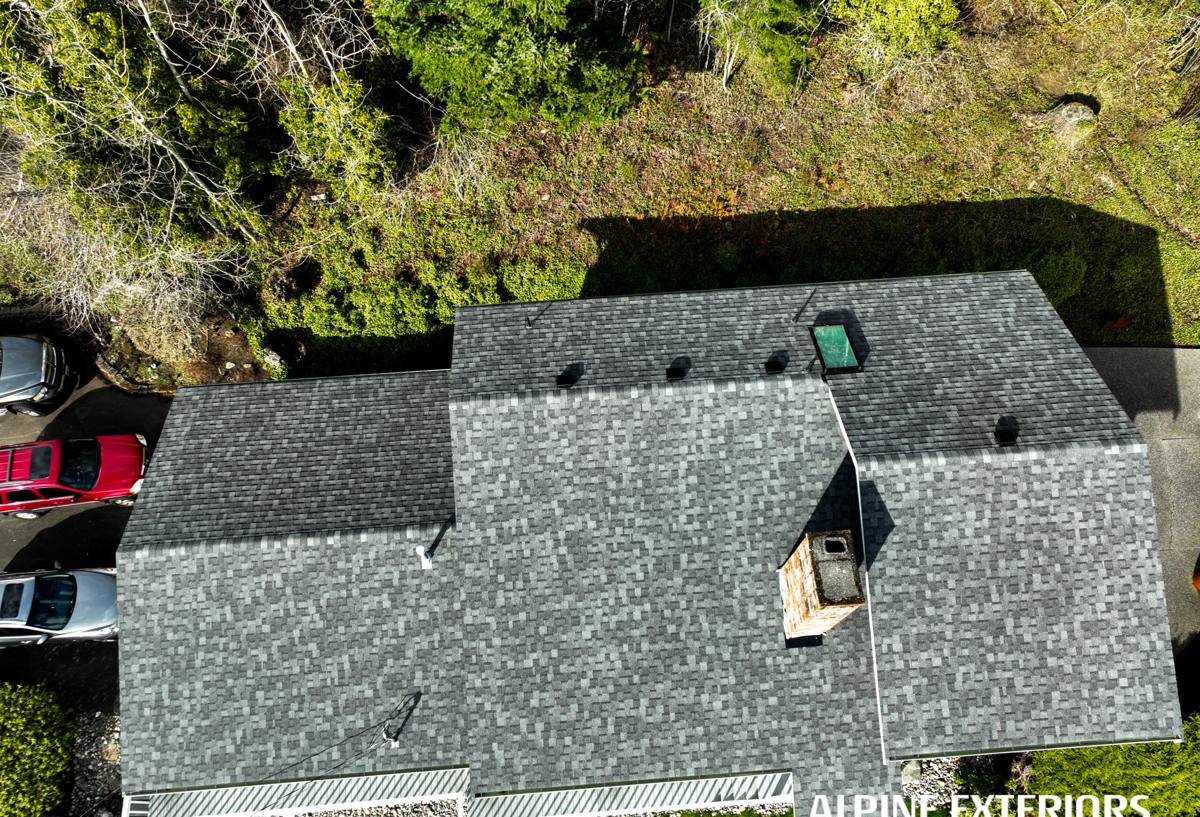
Signs a Bellingham Roof Needs Replacement, Not Another Repair
Homeowners often call us after a repair that didn't hold, or after noticing a problem and wondering if it's isolated. A few patterns tend to point toward full replacement rather than a patch:
Age combined with moss history
A roof in the 18-25 year range that has had recurring moss growth, especially on north-facing slopes, has usually had moisture sitting against the shingle surface for years. Even if there's no active leak yet, the granule layer underneath that moss is often compromised.
Granule loss in the gutters
Some granule loss is normal as shingles age. Heavy, consistent granule buildup in gutters after our fall and winter rains usually means the shingles are past their protective life, not just cosmetically worn.
Soft spots or sagging in the decking
If you can feel give when walking the roof, or see sagging from the ground, water has likely reached the plywood or OSB decking underneath. At that point, a surface repair won't address the structural issue.
Multiple recurring leak points
One leak might be a flashing fix. Leaks showing up in different spots after every heavy rain usually mean the underlayment and field of the roof are failing broadly, not just at one detail.
What a Correct Roof Replacement Actually Involves
A roof replacement done right in this climate isn't just stripping old shingles and nailing down new ones. The parts that matter most are often the parts you can't see once the job is finished.
- Full tear-off: we remove existing roofing down to the decking rather than layering over old shingles, so we can actually see the condition of the deck and address problems instead of covering them.
- Deck inspection and repair: any soft, delaminated, or water-damaged sheathing gets replaced before anything new goes down. Roofing over bad decking is a short-term fix that fails.
- Ice-and-water shield at vulnerable areas: valleys, eaves, and penetrations get self-adhering membrane, not just standard underlayment, because these are the spots where driving rain and wind-driven moisture find their way in first.
- Synthetic underlayment across the field: more water-resistant and more tear-resistant than old-style felt, which matters given how often this roof will see saturated conditions.
- Corrosion-resistant flashing and fasteners: given the salt air near the water, we don't cut corners on metal components that will spend years exposed to it.
- Balanced ventilation: intake at the eaves and exhaust at the ridge, sized to the attic, so moisture from inside the house doesn't get trapped against the new roof deck.
Material Choices for Whatcom County Homes
There's no single "best" roofing material for every Bellingham home — it depends on the roof's pitch, the amount of shade and moss exposure, the home's style, and budget. Here's how the common options compare against this specific climate:
| Material | Moss/algae resistance | Performance in driving rain | Salt air durability | Typical lifespan here |
|---|---|---|---|---|
| Standard architectural asphalt shingle | Moderate; benefits from algae-resistant granules | Good with proper underlayment | Good; fasteners are the concern, not the shingle itself | 20-25 years |
| Algae-resistant (AR) asphalt shingle | Better; copper/zinc granules slow moss and algae growth | Good | Good | 25-30 years |
| Metal roofing (standing seam or panel) | Strong; moss struggles to get a foothold on smooth metal | Excellent shedding performance | Depends heavily on coating quality; needs a coastal-rated finish | 40+ years |
| Cedar shake | Poor without diligent maintenance; naturally holds moisture | Fair; more seams to maintain | Fair; hardware needs to be corrosion-resistant | 20-30 years with upkeep |
We're honest with homeowners about cedar: it looks great and plenty of Bellingham homes carry it well, but it demands more regular moss and moisture maintenance than asphalt or metal in this climate. We'll install it if that's what a homeowner wants and the roof suits it, but we'll also tell you upfront what the maintenance commitment looks like rather than let you find out after the fact.
Our Process, Start to Finish
- On-site inspection: we walk the roof (or use safe alternative inspection where the roof isn't walkable) and check the attic from inside, looking at ventilation, decking condition, and existing moisture damage.
- Written estimate: a clear scope covering material, tear-off, decking allowance, flashing, and ventilation work — no vague line items.
- Material delivery and site protection: landscaping, siding, and gutters get protected before tear-off starts.
- Tear-off and deck assessment: old roofing comes off, decking gets inspected and repaired as needed, and we walk you through anything we find before covering it up.
- Underlayment, flashing, and ventilation installation: the parts that determine how the roof performs in our wet season go in first.
- New roofing installed to manufacturer specification: correct nailing pattern, exposure, and fastening for wind and moisture exposure specific to this area.
- Cleanup and magnetic sweep: job site and yard cleared of debris and stray fasteners.
- Final walkthrough: we go over the finished roof with you before calling the job done.
Ventilation and Moisture: The Part Most Homeowners Never See
Roof failures in Whatcom County are often blamed on the shingles when the real cause is trapped moisture underneath them. A house generates humidity from cooking, showers, and daily living, and that moist air rises into the attic. Without balanced intake and exhaust ventilation, it condenses against the underside of the roof deck — which, combined with our exterior rain load, keeps the decking damp from both directions.
What proper ventilation looks like
Continuous or evenly spaced intake vents at the eaves paired with ridge or high-point exhaust vents, sized according to the attic's square footage. Bathroom and kitchen exhaust fans should vent outside the roof or wall — never dump into the attic space, which is a surprisingly common issue we find during tear-offs.
Why this matters for warranty coverage
Most shingle manufacturers require adequate attic ventilation for their warranty to remain valid. A beautiful new roof installed over a poorly ventilated attic can void that coverage even if the installation itself was correct.
Moss, Algae, and What Keeps a New Roof Looking New
Replacing a roof resets the clock, but it doesn't remove Bellingham's growing conditions for moss and algae. A little ongoing attention keeps a new roof performing the way it's supposed to for its full service life.
- Keep overhanging branches trimmed back so roof surfaces get sunlight and airflow, which slows moss growth significantly.
- Have gutters cleaned at least twice a year — clogged gutters back water up under the shingle edge, exactly where you don't want standing moisture.
- Avoid pressure washing the roof surface directly; it can strip granules and shorten shingle life. Soft washing or manufacturer-approved treatments are safer.
- Have zinc or copper strips installed near the ridge if moss has historically been a heavy problem on a particular slope — rain carries trace metal down the roof and inhibits regrowth.
- Schedule a roof check after major windstorms, which are common here, to catch lifted shingles or displaced flashing early.
Why a Crew That Already Works Bellingham Matters
Roofing contractors who work primarily inland or in drier parts of the state don't always account for the details that matter here — the ventilation margin needed for constant moisture, the fastener grade appropriate for salt air, or how aggressively moss needs to be addressed at install. A crew that regularly works Whatcom County roofs has already seen what happens when those details are skipped, because we're often the ones called to fix it years later. That local experience shows up in the small decisions made during installation, not just in the finished appearance of the roof.
What Affects the Cost of a Bellingham Roof Replacement
| Cost factor | Why it matters here |
|---|---|
| Roof size and pitch | Steeper roofs take longer to work safely and use more material per square |
| Decking condition | Moisture-related deck repair is common in older Bellingham roofs and adds material and labor |
| Material choice | Standard asphalt, algae-resistant asphalt, and metal carry different upfront and lifespan costs |
| Number of existing layers | Removing multiple old layers of roofing takes more tear-off labor and disposal |
| Ventilation upgrades | Bringing an under-ventilated attic up to standard adds a modest cost but protects the new roof |
| Flashing and penetration count | Chimneys, skylights, and multiple roof planes each add detail work |
We don't quote a roof over the phone with a flat per-square number, because the factors above genuinely change the scope from house to house. A proper estimate starts with actually looking at the roof and the attic.
If your roof is showing its age, has a moss problem that keeps coming back, or you just want an honest read on how much life it has left, we're glad to come take a look. Fill out the form below for a free, no-pressure estimate from a crew that works Bellingham and Whatcom County roofs year-round.