 Whatcom County
 Windows Built for South Hill's Weather, Not Just Its View
South Hill sits up on the hillside with some of the more exposed sightlines in Bellingham, and that exposure cuts both ways. The same elevation and openness that gives these homes their view also means more direct wind, more driving rain off the bay, and more salt-laden air working against every window in the wall. Add in Whatcom County's long, damp moss season, and you have a climate that is genuinely tougher on window assemblies than most manufacturers' warranty language assumes.
Window installation here isn't just about picking a product and setting it in the opening. It's about understanding how wind-driven moisture moves against a hillside home, how salt air accelerates corrosion on hardware and fasteners, and how a poorly flashed window becomes a slow, hidden water problem long before anyone sees a stain on the drywall. This page is about doing that job correctly, on this specific kind of house, in this specific place.
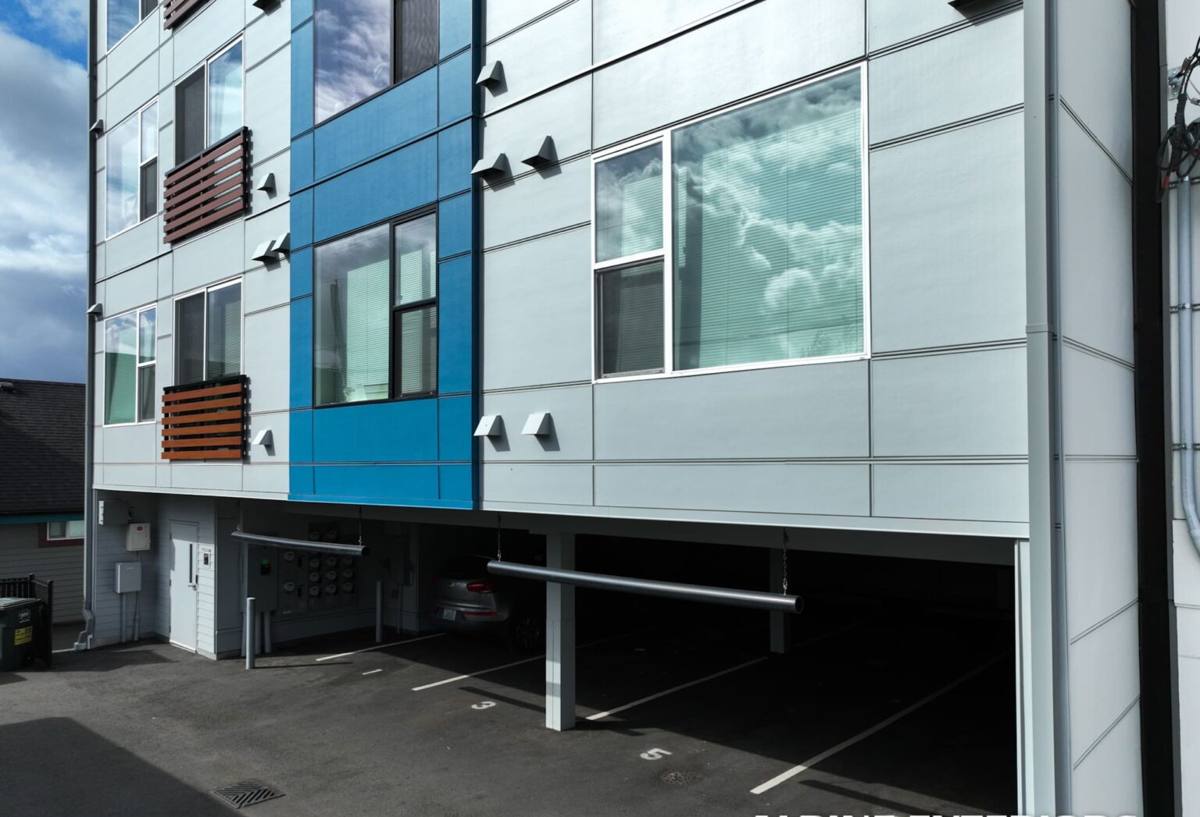
What South Hill's Climate Actually Does to Windows
Wind-Driven Rain
Whatcom County doesn't get the heaviest rainfall totals in the state, but it gets persistent, wind-pushed rain — and on an elevated, exposed lot like much of South Hill, that wind has fewer obstructions to slow it down. Wind-driven rain doesn't just fall on a window, it's forced sideways and upward into gaps, laps, and seams that a calmer climate would never test. A window installation that isn't detailed for wind-driven rain will eventually leak, even if the window itself is a good product.
Salt Air
Proximity to the bay means airborne salt settles on everything, including window frames, hardware, and fasteners. Salt air accelerates corrosion on lower-grade screws, hinges, and cranks, and it degrades some finishes faster than inland installations ever experience. This is one of the reasons material and hardware choice matters more here than in a typical inland Whatcom County neighborhood.
Moss and Prolonged Dampness
Our moss season isn't a cosmetic issue — it's a sign of how long surfaces stay wet. Anywhere moisture lingers around a window opening — sills, bottom corners, un-flashed trim — you get the same conditions that grow moss on a roof: rot, mildew, and slow wood decay. A correctly sealed and flashed window sheds water fast enough that it never gets the chance to sit and soak in.
Signs a South Hill Home Needs Window Attention
- Fogging or moisture between panes (failed seal on a double- or triple-pane unit)
- Visible gaps, drafts, or whistling during windstorms
- Soft or discolored trim, sill, or wall material around the window opening
- Windows that are difficult to open, close, or lock — often a sign of frame movement or swelling
- Condensation on the interior glass in cold weather, especially in older single-pane units
- Visible corrosion on hinges, cranks, or exterior hardware
- Noticeably higher heating bills without another clear cause
What a Correct Window Installation Actually Involves
The window itself is only part of the job. Most window failures we're called out to inspect aren't a bad product — they're an installation that skipped a step that matters most in exactly this climate.
Opening Prep
Before a new window goes in, the opening needs to be checked for rot, proper rough opening sizing, and a sound structural frame. Installing a good window into a compromised opening just delays the same problem.
Flashing, in the Right Order
Flashing has to integrate with the home's water-resistive barrier in the correct shingle-lap sequence — sill pan first, then side flashing, then head flashing over the top, each one overlapping the layer below so water is always directed outward and down, never trapped behind the next course. This sequence matters more on a wind-exposed hillside lot than almost anything else in the job.
Sealing and Insulation
The gap between the window frame and the rough opening needs to be insulated and sealed without over-packing it, which can bow the frame and affect operation. Exterior sealant beads need to be continuous, with no gaps where wind-driven rain can find a path in.
Hardware and Fastener Selection
Given the salt air here, we favor corrosion-resistant fasteners and hardware rated for coastal-adjacent exposure rather than standard-grade components that are fine 20 miles inland but wear faster on an exposed hillside home.
Final Adjustment and Testing
Every installed window should open, close, and lock smoothly, with no daylight visible at the frame edges and no play in the sash. We check this on every unit before considering the job finished.
Our Process for South Hill Window Projects
- On-site assessment. We look at every window opening individually — sun exposure, wind exposure, existing water damage, and how the home's construction handles moisture — before recommending anything.
- Honest product guidance. We'll walk through material, glass, and hardware options suited to this specific home and its exposure, with straightforward pros and cons — not a one-size-fits-all pitch.
- Written scope and timeline. You know what's being installed, how the openings will be flashed and sealed, and roughly how long the work will take before anything starts.
- Careful removal and opening inspection. Old windows come out carefully so we can check the opening underneath for hidden rot or moisture damage before it's covered up again.
- Correct installation sequence. Sill pan, flashing, insulation, sealing, and hardware — done in order, every time, not shortcuts to save an afternoon.
- Final walkthrough. We test operation on every window and walk the job with you before we consider it done.
Comparing Window Materials for a South Hill Home
| Material | Performance in Salt Air / Wind-Driven Rain | Maintenance | Typical Trade-Offs |
|---|---|---|---|
| Vinyl | Good corrosion resistance; hardware quality varies by manufacturer | Low — no painting, occasional cleaning | Budget-friendly; frame color/finish options are more limited than other materials |
| Fiberglass | Strong resistance to moisture, warping, and corrosion | Low | Higher upfront cost; excellent long-term stability in wind-exposed locations |
| Wood-clad | Depends heavily on cladding quality and installation detailing | Moderate to high — interior wood needs periodic attention | Best interior appearance; more installation-sensitive in wet, exposed conditions |
| Aluminum | Prone to corrosion in salt air unless specifically coated/rated | Moderate | We generally steer clients away from standard aluminum this close to the bay |
What Affects the Cost of a Window Installation Here
| Factor | Why It Matters |
|---|---|
| Number and size of openings | More or larger windows mean more material and labor |
| Existing damage found at the opening | Rotted framing or sheathing needs repair before a new window goes in — this is common on older South Hill homes |
| Window material and glass package | Fiberglass and upgraded glass (double- vs. triple-pane, low-E coatings) cost more than base vinyl |
| Access and elevation | Upper-floor or steep-lot openings on hillside homes can require additional staging or equipment |
| New construction vs. retrofit framing | Retrofit installs into existing openings are typically less invasive than full frame replacements |
We don't quote a job without seeing the openings in person — anyone offering a firm number sight unseen is guessing, and on an older hillside home that guess is often wrong.
Why a Local Crew Matters for This Job
A window installer who works across Whatcom County regularly sees how homes in specific settings — hillside, waterfront, low-lying, tree-covered — actually perform over years, not just on install day. That matters here. A crew unfamiliar with wind-driven rain off the bay or the corrosive effect of salt air on standard hardware can install a technically fine window that still underperforms on a South Hill lot. Local experience means fewer surprises: we've seen how these openings age, what fails first, and what detailing actually holds up through a full Whatcom County winter.
It also means accountability. A local crew is easy to reach if a question comes up six months or two years after the install — not a distant outfit that's moved on to the next region.
A Homeowner's Pre-Project Checklist
- Note which windows draft, fog, stick, or show visible moisture damage
- Check trim and sills for soft spots or discoloration
- Ask any contractor for their flashing and sealing sequence, not just the window brand
- Confirm whether hardware is rated for coastal-adjacent exposure
- Get a written scope that includes opening inspection, not just "install windows"
- Ask how they handle unexpected rot or damage found once old windows are removed
Get a Straightforward Look at Your Windows
If your South Hill home has windows that draft, stick, fog, or just haven't kept up with what this climate demands, we're glad to take a look and give you an honest, no-pressure assessment. Use the form below to request a free estimate — no obligation, just a clear read on what your windows actually need.