 Whatcom County
 Why Siding Installation in Columbia Isn't a Generic Job
Columbia sits close enough to the water and to the wet, mossy microclimate that defines this part of Whatcom County that siding here takes a different kind of beating than siding fifty miles inland. Salt-laden air corrodes fasteners and hardware faster than dry-climate air. Driving rain, pushed sideways by wind off the water, finds every gap in flashing and trim that a calmer climate would never expose. And the long moss season — stretching from fall through spring in this part of Washington — keeps north-facing and shaded walls damp for months at a stretch. None of that is a reason to panic about your siding. It's a reason to make sure whoever installs it understands the difference between siding that looks right on installation day and siding that's actually built for what Columbia throws at it over the next 30 years.
This page is specifically about siding installation as a service in this neighborhood — not a general primer on siding. If you're weighing a full re-side or replacing a section of failing wall, here's what actually matters for a Columbia home.
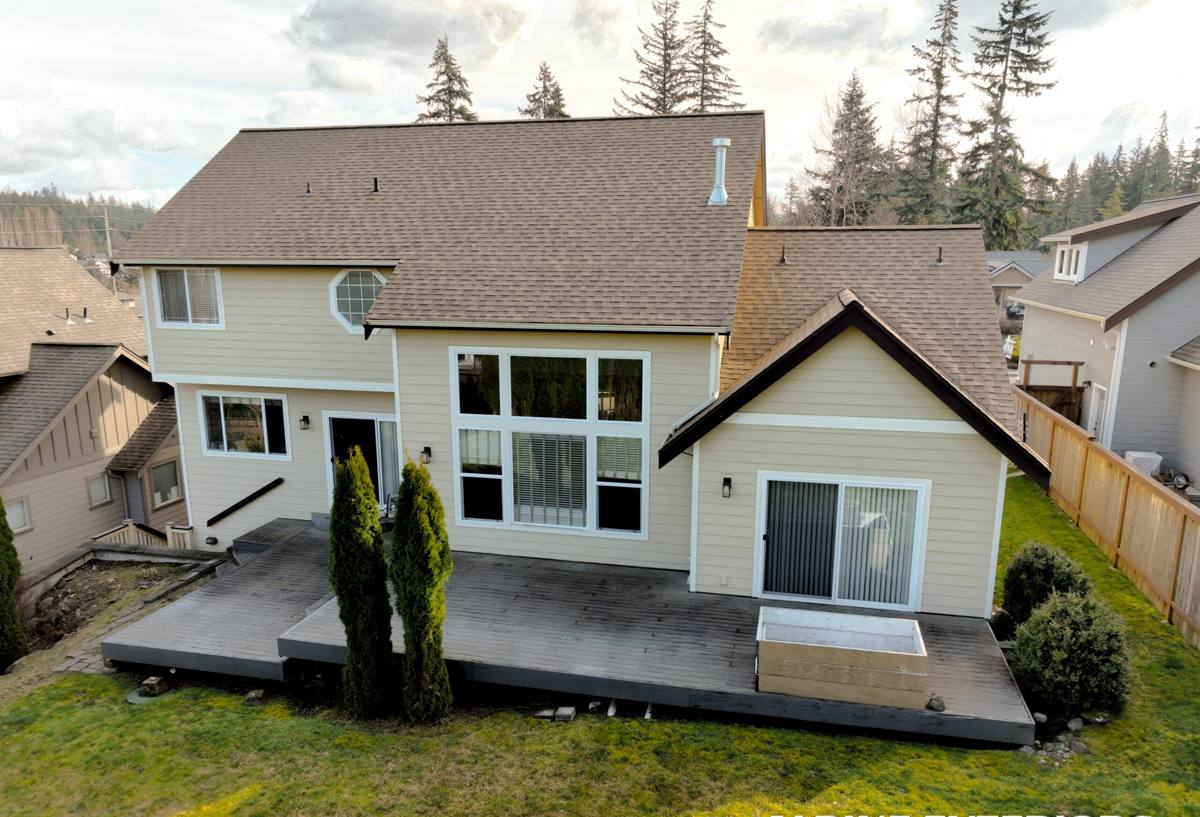
What Columbia's Climate Actually Does to Siding
Salt Air and Metal Fatigue
Homes closer to the water deal with airborne salt that accelerates corrosion on nails, screws, flashing, and any exposed metal trim. Cheap or mismatched fasteners are often the first thing to fail — not the siding material itself. A siding job that skimps on corrosion-resistant fasteners and flashing will show rust streaks and loosening panels years before the siding is actually worn out.
Driving Rain and Wind-Driven Moisture
Rain that falls straight down is relatively easy for any siding system to shed. Rain that's pushed sideways by wind is a different problem — it gets behind laps, around window and door trim, and into any seam that isn't properly lapped, caulked, or flashed. This is why the water-resistive barrier and flashing details behind the siding matter as much as the siding itself.
Moss, Algae, and Prolonged Dampness
Shaded walls, north exposures, and anywhere siding sits close to landscaping stay damp longer here than in drier parts of the state. Porous or organic siding materials absorb that moisture and stay wet longer, which is exactly the environment moss and algae need to establish. Non-absorbent materials dry out faster and give moss less to hold onto.
What a Correct Siding Installation Involves
Good siding starts before a single piece of siding goes up. The parts nobody sees are the parts that determine whether the job lasts.
- Water-resistive barrier: A continuous, properly lapped weather barrier behind the siding, installed shingle-style so water is always directed outward and down.
- Flashing at every penetration: Windows, doors, vents, hose bibs, and any other wall penetration need dedicated flashing — not just caulk.
- Rainscreen or drainage gap where appropriate: A small air gap behind the siding lets any moisture that does get through drain and evaporate instead of sitting against the sheathing.
- Correct fastener type, spacing, and depth: Under- or over-driven fasteners are one of the most common causes of premature siding failure, and the wrong fastener material corrodes fast in salt air.
- Proper clearances: Siding held the right distance off grade, decks, and roof lines so it isn't sitting in standing water or trapped moisture.
- Caulking and sealant only where specified: Over-caulking a lap-siding system can trap moisture instead of letting it drain, which does more harm than good.
Skip any one of these and the siding can look perfect for a year or two before problems start showing up as bubbling paint, soft trim, or streaking at the seams.
Why We Install Only James Hardie Fiber Cement
We don't install vinyl siding, LP SmartSide, Cemplank, Allura, primed spruce, or cedar. That's a deliberate standard, not an oversight, and it's especially relevant in a climate like Columbia's.
Vinyl siding is affordable and low-maintenance in mild, dry conditions, but it expands and contracts significantly with temperature swings, and prolonged exposure to damp, shaded conditions can encourage mildew in the panel laps where it can't easily be cleaned. Wood products — cedar or primed spruce — look great new but require ongoing paint and sealant maintenance to keep moisture out, and in a moss-prone, high-moisture climate that maintenance schedule gets demanding fast. Engineered wood products like LP SmartSide use a wood-strand core that, while treated, is still an organic substrate that depends entirely on the integrity of its factory coating and correct installation to keep moisture out over decades.
James Hardie fiber cement is non-combustible, doesn't have an organic core for moisture to feed on, and holds its factory-applied ColorPlus finish far longer than field-applied paint on wood or engineered wood. It handles the freeze-thaw and wet-dry cycling common here without warping, and it gives moss and algae less to grip onto than porous or organic surfaces. Hardie's HZ5 product line is specifically engineered for wetter, cooler climates like ours. That combination — non-combustible, dimensionally stable, factory-finished, and climate-engineered — is why we standardized on it and don't install alternatives, even when a homeowner would prefer a lower upfront cost.
Material Comparison for a Climate Like Columbia's
| Material | Moisture Behavior | Moss/Algae Resistance | Salt Air Durability | Maintenance |
|---|---|---|---|---|
| James Hardie Fiber Cement | Non-organic core, dimensionally stable | Better resistance, dense surface | Strong with correct fasteners | Low — factory finish, periodic wash |
| Vinyl | Doesn't absorb, but traps moisture behind laps | Moderate — mildew common in shaded laps | Moderate — can become brittle over time | Low, but limited repair options |
| Cedar | Absorbs moisture, prone to swelling/checking | Low resistance without upkeep | Moderate — hardware corrodes faster | High — regular staining/sealing |
| LP SmartSide | Engineered wood core, coating-dependent | Moderate, coating-dependent | Moderate | Moderate — coating maintenance matters |
This isn't a claim that the other materials are unusable — plenty of homes around the region have them and get by fine with regular maintenance. It's why, given what this specific climate does to a wall over 20-30 years, fiber cement is the material we're willing to warranty our installation work on.
Our Installation Process
- On-site assessment: We inspect the existing siding, sheathing, and trim, looking specifically for moisture damage, soft spots, and problem areas common in this climate — shaded walls, roof-to-wall transitions, and anywhere the old siding shows staining or moss growth.
- Tear-off and sheathing check: Old siding comes off and we inspect the sheathing underneath. Any water-damaged sheathing gets addressed before anything new goes up — covering damaged sheathing with new siding just hides a problem.
- Weather barrier and flashing: A new, continuous water-resistive barrier goes on, with flashing detailed at every window, door, and penetration.
- Hardie installation to manufacturer spec: Panels or lap siding installed at the correct fastener spacing, clearances, and reveal, using corrosion-resistant fasteners appropriate for a coastal-influenced climate.
- Trim, caulking, and touch-up: ColorPlus touch-up paint at cut edges, trim installed, and sealant applied only where it belongs in the system.
- Final walkthrough: We walk the exterior with you before calling the job done.
Signs Columbia Homeowners Should Watch For
- Soft or spongy siding when pressed, especially near the bottom courses or under windows
- Persistent moss or algae growth that returns quickly after cleaning
- Bubbling, peeling, or flaking paint on wood or engineered siding
- Visible gaps, warping, or panels that have pulled away from the wall
- Rust streaks running down from nail heads or trim
- Rising utility bills that could point to a compromised weather barrier
- Water stains or musty smells on interior walls that back onto exterior siding
Any one of these on its own might just need a repair. Several at once, especially on a home that's had its original siding for 20+ years, is usually a sign it's time to talk about full replacement rather than patching.
What Affects the Cost of a Columbia Siding Job
| Factor | Why It Matters Here |
|---|---|
| Extent of sheathing repair | Moisture-prone areas like Columbia see more hidden sheathing damage under old siding than drier regions |
| Home size and wall complexity | More corners, gables, and penetrations mean more flashing and labor |
| Siding profile chosen | Lap, shingle, and panel styles all price differently within the Hardie product line |
| Trim and accessory work | Fascia, soffit, and trim replacement often gets bundled with a full re-side |
| Access and site conditions | Slopes, tight lot lines, and landscaping near the home can affect labor time |
We won't quote a number without seeing the home, but we can walk you through realistic ranges once we've assessed the specific job.
Why It Matters That We Already Work in Columbia
Siding installation done right requires knowing how a specific climate behaves, not just following a generic spec sheet. A crew that regularly works Whatcom County homes near the water already knows which walls in a neighborhood like Columbia tend to hold moisture, where moss establishes fastest, and how much fastener corrosion resistance actually matters here versus a drier part of the state. That local pattern recognition shows up in the details — where extra flashing gets added even though it's not strictly required, or where a drainage gap makes more sense than a tight installation. It's the difference between a crew installing siding correctly on paper and a crew installing siding correctly for this specific place.
Get a Straight Answer for Your Home
If your siding is showing wear, or you're planning ahead for a replacement, we're happy to take a look and give you a straightforward assessment — no pressure, no hard sell. Fill out the form below for a free estimate on siding installation for your Columbia home.