 Whatcom County
 Why Sehome Roofs Wear Differently Than Roofs Inland
Sehome sits close enough to the water and the weather patterns off Bellingham Bay that roofs here take a specific kind of beating: salt-laden air that accelerates corrosion on exposed metal, driving rain that comes in sideways during winter storms, and a moss season that can run eight months or longer under the tree cover common in this neighborhood. None of these things are dramatic on their own, but stacked together year after year, they shorten the useful life of a roof that wasn't built with this climate in mind.
A roof system designed for a drier, calmer region will often look fine for the first several years in Sehome and then fail faster than expected — moss lifting shingle edges, fasteners corroding under a salt-air exposure they weren't rated for, or underlayment that never gets a chance to fully dry out between rain events. New roof installation in this part of Whatcom County isn't just about swapping old material for new; it's about specifying and installing a system that accounts for those local realities from the start.
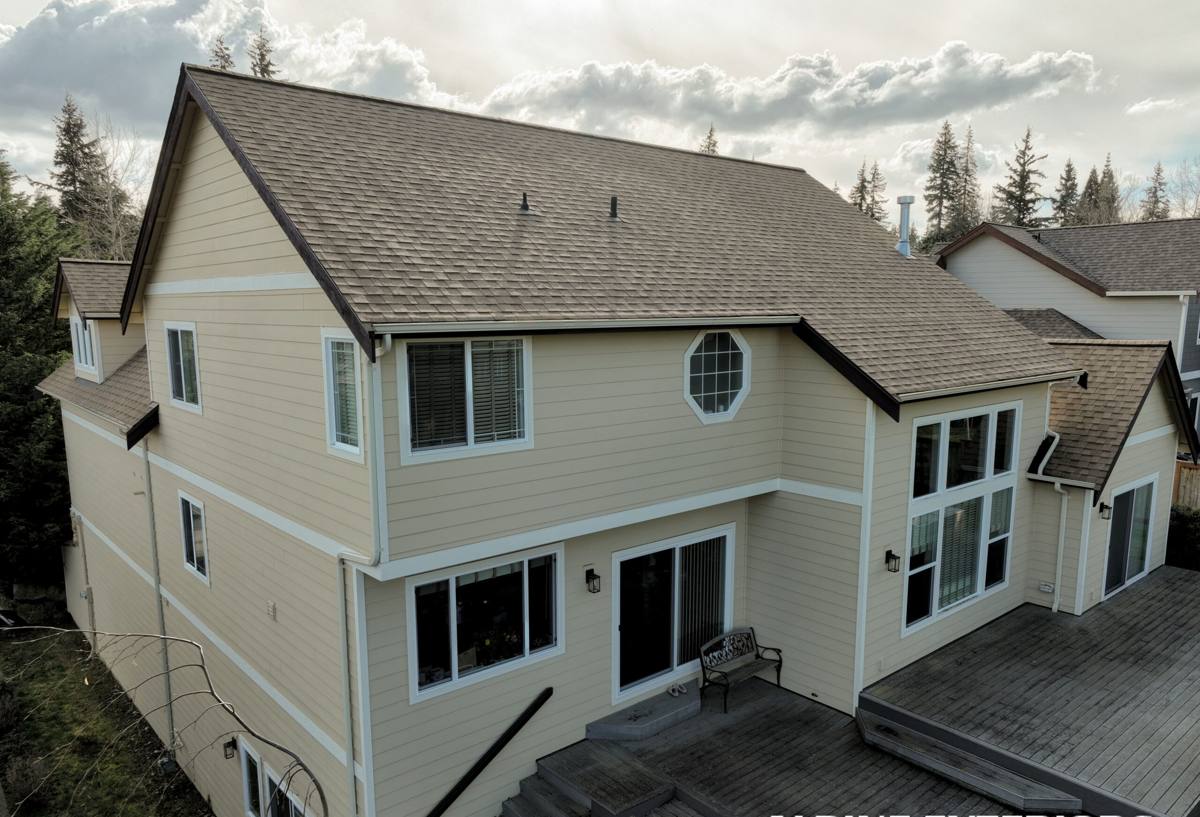
Signs a Sehome Home Needs a New Roof, Not Another Repair
Most homeowners call us after noticing a leak, but by the time water is visible inside, the roof has usually been compromised for a while. Here's what tends to signal that repair is no longer the honest answer:
- Shingles that are cupping, curling, or missing granules across large sections rather than one isolated spot
- Moss or algae growth that's thick enough to hold moisture against the roof surface, not just surface staining
- Soft spots or sagging in the roof deck when walked (a sign the sheathing underneath has taken on water)
- Flashing around chimneys, vents, or valleys that's rusted, lifted, or was never properly step-flashed to begin with
- A roof original to the home that's past 20-25 years old, regardless of how it looks from the ground
- Repeated repairs to the same area of roof within a couple of years
If only one or two of these apply and the roof is otherwise sound, a targeted repair is usually the right call — we'll tell you that plainly. New roof installation makes sense when the underlying deck, ventilation, or overall material life has run out, not just the top layer.
What a Correct New Roof Installation Actually Involves
Tear-Off and Deck Inspection
A proper job starts with removing the old roofing down to the deck — not layering over it. This is the only point where we can actually see the condition of the sheathing, check for soft or delaminated plywood, and confirm the framing underneath is sound. Any bad decking gets replaced before anything new goes down; skipping this step is how a new roof ends up failing from the inside within a few years.
Underlayment Built for Wet Winters
Given how much driving rain this area sees, underlayment choice matters more here than in drier climates. We use synthetic or ice-and-water-shield underlayment at eaves, valleys, and other vulnerable transitions, providing a secondary water barrier if wind-driven rain gets past the primary roofing material — which it eventually will, on any roof, during a strong enough storm.
Flashing Details
Flashing failures cause more leaks than worn-out shingles do. Correct step flashing at walls, counter-flashing at chimneys, and properly lapped valley flashing are what actually keep water out long-term. This is also where a lot of lower-cost installations cut corners, because flashing work is slow and detail-heavy compared to laying field shingles.
Ventilation That Matches the Home
A roof that can't breathe traps moisture in the attic, which speeds up deck rot and gives moss and mildew a head start from the inside. We balance intake (soffit vents) and exhaust (ridge or roof vents) based on the attic's actual size and existing venting, not a one-size-fits-all formula.
Material Options for Whatcom County Conditions
There's no single "best" roofing material — the right choice depends on budget, roof pitch, how long you plan to stay in the home, and how much maintenance you're willing to keep up with. Here's how the common options stack up for a coastal Whatcom County property like Sehome:
| Material | Typical Lifespan | How It Handles This Climate | Maintenance Burden |
|---|---|---|---|
| Architectural asphalt shingle | 25-30 years | Good performance with proper underlayment and flashing; moss-resistant granule options help in shaded, damp areas | Moderate — periodic moss treatment recommended |
| Standing seam metal | 40-50+ years | Sheds rain and moss very well due to slick surface; needs corrosion-resistant fasteners and coatings near salt air exposure | Low, but installation quality is critical |
| Synthetic/composite shingle | 30-50 years | Resists moisture absorption and moss better than wood-based products | Low to moderate |
| Cedar shake | 20-30 years with upkeep | Attractive but absorbs moisture readily; requires diligent moss and moisture management in a wet, shaded climate | High — regular treatment needed to avoid premature rot |
We'll talk through these trade-offs honestly rather than pushing whatever's easiest to install. If a homeowner wants cedar for the look, we'll explain what upkeep that choice requires here specifically, rather than pretending it behaves the same as it would in a drier region.
Our Installation Process
- On-site assessment — we inspect the current roof, attic, and ventilation, and take measurements for an accurate material estimate
- Written estimate — clear scope of work, material options, and pricing, with no vague allowances
- Scheduling around weather — we plan installation windows with Whatcom County's rain patterns in mind, and protect the open roof if conditions shift mid-project
- Tear-off and deck repair — old material removed, deck inspected and repaired as needed
- Underlayment and flashing installation — the part that determines whether the roof actually stays dry
- Roofing material installation — installed to manufacturer specification, which is also what keeps the material warranty valid
- Ventilation check and adjustment — confirming intake and exhaust are balanced for the finished roof
- Final walkthrough — cleanup, debris removal (including magnetic sweep for nails), and a review of the finished work with the homeowner
Why Local Experience in Sehome Matters
A crew that regularly works in Sehome and the surrounding Bellingham area already knows what this climate does to a roof over time — which underlayment products hold up, which fastener grades resist salt-air corrosion, and how much ventilation a typical Sehome attic actually needs versus what a generic spec sheet suggests. That experience shows up in fewer callbacks and a roof that performs the way it's supposed to in year eight or year fifteen, not just on install day.
It also means a crew that understands permitting and inspection expectations in Whatcom County, and can schedule around this region's rain patterns instead of getting caught mid-tear-off by a storm that a crew from a drier area might not have planned for.
Moss and Ventilation: The Two Issues That Shorten Roof Life Here
Two problems account for most premature roof failures we see in this area, and both are addressable at installation time rather than left to chance:
Moss
Moss doesn't just look bad — it holds moisture against the roof surface and can work under shingle edges over time, especially on north-facing slopes or areas shaded by trees. Moss-resistant shingle options (with embedded copper or zinc granules) and, where practical, zinc or copper strips near the ridge can meaningfully slow regrowth. No treatment eliminates moss permanently in this climate, but the right combination reduces how often it needs attention.
Ventilation
An underventilated attic traps warm, moist air against the roof deck from below, which speeds up rot and can void material warranties. This is easy to overlook because it's invisible from the ground — it only shows up years later as premature deck failure or ice damming in a hard freeze.
Roof Care Checklist Between Installation and Your Next Inspection
- Clear gutters and downspouts at least twice a year, more often if there are conifers nearby
- Have moss growth treated before it becomes thick enough to hold water against the shingles
- Keep tree branches trimmed back from the roofline to reduce shade, debris, and abrasion
- Check attic ventilation isn't blocked by insulation or storage
- Have flashing around chimneys and vents checked after any major windstorm
- Schedule a professional roof inspection every couple of years, even with no visible problems
If you're weighing a roof repair against full replacement, or just want an honest read on where your current roof stands, we're happy to take a look. The estimate is free, there's no pressure attached, and you'll get a straight answer about what your Sehome home actually needs — use the form below to get started.