 Whatcom County
 Roofing in Everson: A Different Set of Problems Than Most Contractors Plan For
Everson sits in the Nooksack River valley, close enough to the water and the marine air pattern that moves through Whatcom County to deal with a roofing climate that's harder on materials than most homeowners realize. It's not just rain volume — it's the combination of near-constant moisture, cool temperatures that never quite dry a roof out between storms, and long stretches of shade and humidity that let moss and algae get established and stay established. A roof that would hold up fine in a drier inland climate can fail early here if it wasn't built with this environment in mind.
We install new roofs for homeowners in Everson and the surrounding Whatcom County area, and the jobs we get called back to fix are almost always the same story: a roof that looked fine on installation day but was never detailed for the amount of water this region actually sees. Underlayment that was adequate but not generous, valleys and flashing that were "good enough," ventilation that wasn't sized for how slowly a roof deck here actually dries. None of that shows up in year one. It shows up in year six or seven, as soft decking, granule loss, or moss working its way under shingle tabs.
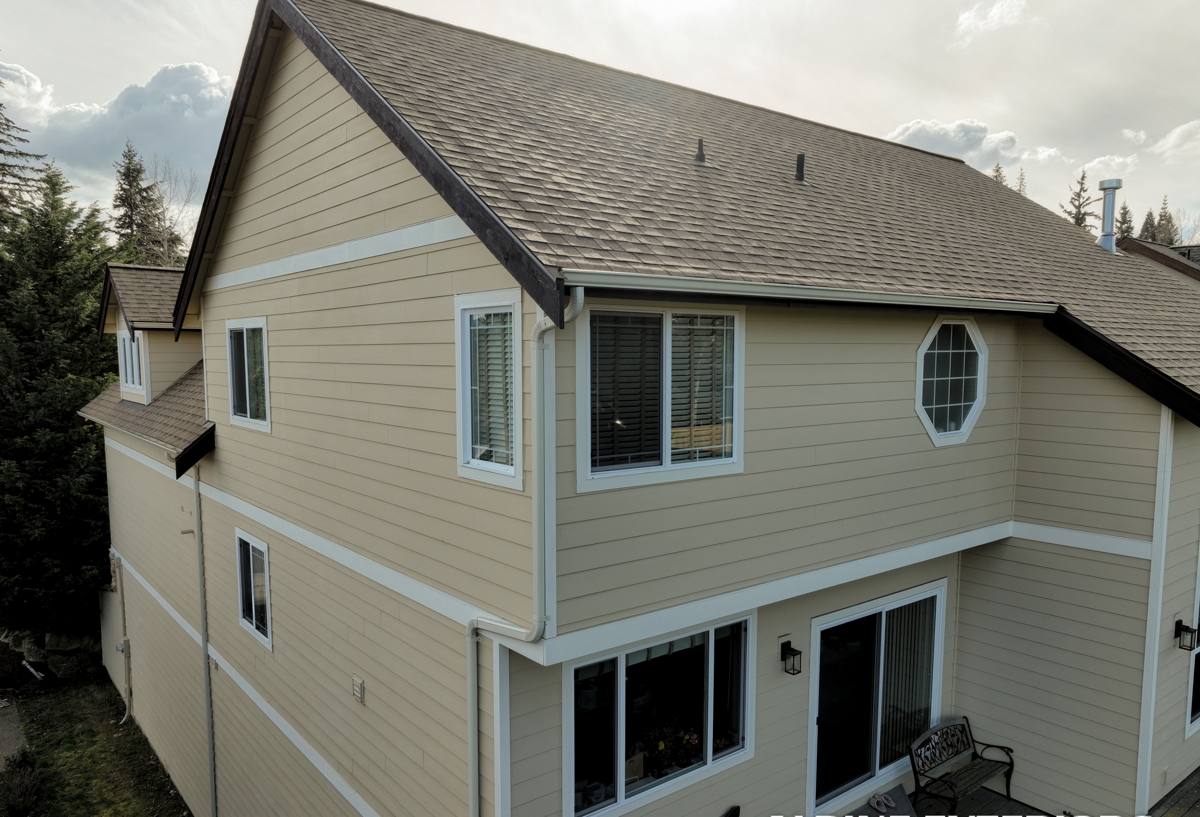
What Everson's Climate Actually Does to a Roof
Persistent moisture and moss
Moss doesn't just sit on top of a roof — its root structure lifts shingle edges and holds water against the surface, which accelerates granule loss and, over time, lets water find its way under the shingle mat. In Everson's tree cover and cloud cover, moss season isn't really a season; it's closer to a year-round low-grade pressure that ramps up hard in fall and winter. A roof without a moss-resistant strategy built in will need moss treatment or removal on a recurring basis regardless of how good the shingle is.
Driving rain and wind-driven wet
Storms coming off the water don't always fall straight down. Wind-driven rain gets pushed sideways into laps, valleys, and any gap in flashing that wouldn't be a problem in a calmer climate. This is why lap and fastener details that pass code minimums elsewhere aren't always enough here — the roof needs to be built assuming water will be pushed somewhere it "shouldn't" go.
Salt air and slow drying
Whatcom County's proximity to the water means salt-laden air is part of the exposure for a lot of properties, which accelerates corrosion on exposed fasteners, flashing, and metal roofing components that aren't rated for it. Combined with slower drying cycles, this is a climate that punishes shortcuts on metal quality and fastener choice more than most.
Signs Your Everson Home Is Due for a New Roof
Roofs rarely fail all at once. The signs are usually visible for a year or two before a leak actually shows up inside the house. Worth checking for:
- Granules collecting in gutters or at downspout outlets — a sign the shingle surface is wearing down
- Moss or dark algae streaking that keeps coming back within months of cleaning
- Shingles that are cupping, curling at the edges, or visibly lifting
- Soft or spongy spots when walking the roof, or sagging visible from the ground
- Daylight visible through the roof deck from inside the attic
- Water stains on ceilings or in the attic, especially near valleys, chimneys, or skylights
- A roof that's 20+ years old and has never had a full tear-off
Any one of these on its own might just mean a repair. Two or more together, especially on a roof past its expected lifespan, usually means it's time to talk about full replacement instead of patching.
What a Correct New Roof Installation Actually Involves
A new roof is more than shingles. The parts nobody sees are what determine whether the roof performs for 20-30 years or starts failing in year eight. In a climate like Everson's, we treat these as non-negotiable:
Full tear-off, not a layover
Roofing over an existing layer traps moisture and hides deck damage. We remove the old roofing down to the deck on every install so we can actually inspect the plywood or sheathing underneath and replace any section that's soft, delaminated, or water-damaged before anything new goes down.
Ice and water shield in the vulnerable zones
Valleys, eaves, and roof penetrations get self-adhering waterproof membrane, not just standard felt. This is the single biggest defense against wind-driven rain finding a way in, and it matters more here than in drier parts of the state.
Synthetic underlayment across the field
The rest of the roof gets a full synthetic underlayment layer — more tear-resistant and more water-resistant than old-style felt paper, and it holds up better to the extended exposure time that a multi-day install in wet weather sometimes requires.
Proper ventilation
A roof deck that can't dry out between storms is a roof deck that rots from underneath, regardless of how good the shingles are. We size and balance intake and exhaust ventilation to the actual attic, not a generic rule of thumb, which matters a lot in a climate where the roof rarely gets a long dry stretch to recover.
Corrosion-resistant metal and fasteners
Flashing, drip edge, and fasteners are specified for the salt-air exposure common in this part of the county, not just whatever is cheapest at the supply house.
Our Installation Process
- On-site inspection and estimate. We walk the roof (and the attic, when accessible) to assess deck condition, ventilation, and any problem areas before quoting anything.
- Material selection. We go over shingle or metal options, moss-resistance features, and warranty structure so you're choosing based on what actually fits the house and budget — not a sales pitch.
- Scheduling around Whatcom County weather. We plan install windows to minimize the days a deck sits exposed, and we tarp and protect any exposed sections if weather moves in mid-job.
- Tear-off and deck inspection. Old roofing comes off, the deck gets inspected board by board, and any damaged sheathing is replaced and documented before we move forward.
- Underlayment and flashing. Ice and water shield in vulnerable areas, synthetic underlayment across the field, new flashing at every penetration, valley, and wall intersection.
- Roofing installation. Shingles, metal, or your chosen material installed to manufacturer spec with fastener patterns rated for regional wind exposure.
- Ventilation check and final walkthrough. We confirm intake/exhaust balance and walk the finished roof with you before calling the job done.
- Cleanup and magnetic sweep. Full site cleanup including a magnetic sweep for stray nails and fasteners.
Choosing a Roofing Material for Everson's Climate
There's no single "best" roofing material — the right choice depends on budget, roof pitch, how much moss and moisture exposure the site actually gets (a heavily shaded, tree-covered lot is a different case than an open one), and how long you plan to be in the house. Here's how the common options compare for this climate specifically:
| Material | Typical Lifespan | Moss/Moisture Resistance | Maintenance |
|---|---|---|---|
| Standard asphalt shingle | 20-25 years | Moderate — benefits from algae-resistant granules | Periodic moss removal, gutter clearing |
| Algae-resistant (AR) shingle | 25-30 years | Better — copper/zinc granules slow algae growth | Lower moss regrowth, still needs some upkeep |
| Standing seam metal | 40-50+ years | High — moss struggles to root on smooth metal | Low; occasional debris clearing |
| Wood shake | 20-30 years with upkeep | Low — porous surface holds moisture, needs active moss control | High; not our default recommendation in this climate |
We're upfront when a material isn't a good fit for a given roof or budget. Wood shake, for example, can look great, but in a climate this wet it demands a level of ongoing maintenance most homeowners underestimate — it's a maintenance-and-moisture trade-off worth knowing about before you commit, not a reason to rule it out entirely if you're prepared for the upkeep.
What Drives the Cost of a New Roof
| Factor | Why It Matters Here |
|---|---|
| Roof size and pitch | Steeper roofs take longer to work safely and use more underlayment overlap |
| Number of valleys and penetrations | Each one needs waterproof detailing — more of them means more labor and material |
| Deck condition | Rot or soft sheathing found during tear-off adds repair cost, but skipping it isn't an option |
| Material choice | Metal and premium shingles cost more up front but need less maintenance long-term in this climate |
| Access and site conditions | Trees, steep lots, and limited staging area affect labor time |
We give a written estimate that breaks these out so you know what you're actually paying for, rather than a single lump number.
Why a Roofer Who Already Works Everson Matters
A crew that works Whatcom County regularly already knows how the weather here behaves during an install — when to push a start date because a system is moving through, how long a section of deck can safely stay exposed, and which details actually matter versus which are just code minimums. That local familiarity shows up in fewer surprises mid-project and a roof that's built for the conditions it will actually face, not a generic install plan copied from a drier region.
It also matters after the job is done. A local crew is reachable if a question comes up during the first storm season, and we stand behind our own workmanship on top of whatever manufacturer warranty comes with the materials.
Permits, Inspections, and Warranty
Roof replacement typically requires a permit in Whatcom County, and we handle that as part of the project rather than leaving it to the homeowner. We schedule any required inspections and make sure the finished roof is documented and compliant. On the warranty side, you're generally looking at two separate things: the manufacturer's material warranty (which varies by product and can often be extended with certified installation) and our workmanship warranty, which covers the installation itself. We'll walk you through both in plain terms before you sign anything — no fine print surprises.
If your roof is showing wear, past its expected lifespan, or you just want an honest opinion on what shape it's really in, we're glad to take a look. Reach out for a free, no-pressure estimate using the form below.