 Whatcom County
 Why Metal Roofing Makes Sense in Samish
Samish sits close enough to Samish Bay and the Salish Sea that salt-laden air is a daily fact of life for the homes out here, not an occasional nuisance. Add Whatcom County's long wet season, near-constant driving rain off the water, and the shade from fir and cedar cover that keeps roofs damp well after a storm passes, and you've got a climate that is genuinely hard on roofing. Metal roofing holds up to that combination better than most alternatives, which is why we see more homeowners in this area asking about it every year.
That said, "metal roofing" covers a wide range of products and installation quality, and not all of it is suited to a marine, moss-prone environment like Samish. This page covers what actually matters for a metal roof out here: material choice, coating, fastening, ventilation, and the install details that separate a roof that lasts thirty-plus years from one that starts showing problems in five.
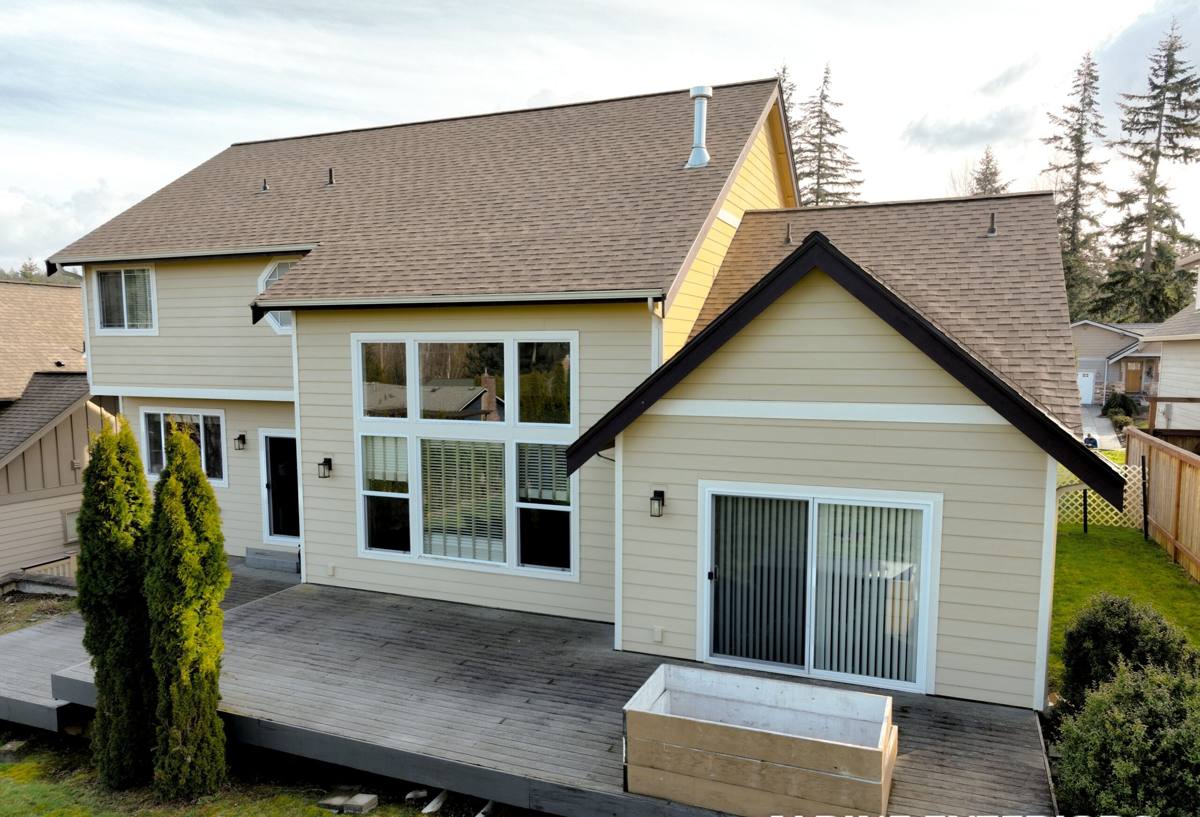
What Samish's Climate Actually Does to a Roof
Salt Air and Corrosion
Airborne salt from the bay accelerates corrosion on any exposed metal, including fasteners, flashing, and panel edges. It doesn't take a waterfront lot for this to matter — salt carries on wind well inland from the shoreline, so even homes set back from the water get some exposure. The practical effect is that not every metal roofing product sold in the Pacific Northwest is rated for coastal-adjacent use, and the fastener and flashing metals matter as much as the panel itself.
Driving Rain and Wind-Driven Water
Storms coming off the water tend to push rain sideways rather than straight down, which means water gets forced up under laps, around penetrations, and into seams that would stay dry in a calmer climate. A roof detailed for typical inland rainfall can leak here even when every individual component is fine, simply because the water is arriving from an angle the details weren't built for.
Moss, Shade, and Moisture Retention
Whatcom County's moss season runs long, and Samish's tree cover means many roofs stay shaded and damp for extended stretches, especially on north-facing slopes. Moss holds moisture against roofing material, and on the wrong substrate that constant dampness leads to premature wear. Metal sheds moss more effectively than most roofing types because it doesn't give organic growth the textured, porous surface it needs to establish, but it isn't immune — moss can still build up in valleys, at the base of ridge caps, and anywhere debris collects.
Choosing the Right Metal Roofing System
Not every metal roof is built the same way, and the differences matter more in a climate like this than they would somewhere drier and inland.
| System Type | How It's Attached | Best Fit |
|---|---|---|
| Standing seam | Concealed fasteners, interlocking vertical seams | Homes wanting maximum weather-tightness and minimal exposed metal for salt to attack |
| Exposed-fastener panel | Screws driven through the panel face | Lower upfront cost; requires more diligent long-term fastener maintenance in salt air |
| Metal shingle/shake profile | Interlocking panels styled to resemble shingles or shakes | Homeowners wanting a traditional look with metal's durability |
Standing seam is generally our recommendation for properties closer to the water or fully exposed to prevailing weather, since the concealed fastener design gives salt air far fewer points to attack over time. Exposed-fastener systems cost less and perform well, but the gasketed screws are a wear item — they should be part of any maintenance conversation rather than something to install and forget.
Coating and Finish
The paint or coating system on a metal roof is what actually fights corrosion and UV breakdown — the base metal (steel or aluminum) is only part of the story. In a salt-air environment we steer homeowners toward coatings with strong track records for coastal exposure rather than the cheapest finish available. This is a case where the visible color coat is doing real protective work, not just cosmetic work, so it's worth asking specifically what coating system is being quoted.
What a Correct Metal Roof Installation Involves
Metal roofing has a reputation for longevity, but that reputation only holds if the installation is done right. A poorly installed metal roof can fail faster than a well-installed asphalt roof. Here's what we consider non-negotiable on a Samish install:
- Corrosion-resistant fasteners and flashing matched to the panel metal, so two dissimilar metals aren't sitting against each other and accelerating each other's corrosion (galvanic corrosion)
- Proper underlayment as a secondary water barrier, since wind-driven rain can get past the panel laps in a bad storm even on a well-installed roof
- Correctly lapped and sealed seams oriented to shed water in the direction our prevailing storms actually come from, not just downhill
- Ice-and-water shield or equivalent protection at eaves, valleys, and penetrations, where wind-driven water concentrates
- Ventilation that keeps the roof deck dry from underneath, since trapped moisture under a metal roof causes deck rot regardless of how good the metal itself is
- Panel and fastener spacing that accounts for thermal expansion, so panels aren't fighting themselves as temperatures swing
Any one of these done wrong can undermine an otherwise good product. This is why we treat the installation process as equally important to the material selection when we scope a job.
Our Process for a Samish Metal Roof
1. On-Site Assessment
We look at the existing roof structure, deck condition, ventilation, tree cover, and exposure to prevailing wind and rain. A home tucked in the trees with heavy shade gets a different moss-management plan than one more open to the sky.
2. System and Coating Recommendation
Based on that assessment, we recommend a panel type and coating suited to the property's specific exposure — not a one-size-fits-all package. A waterfront-adjacent home and a shaded interior lot in the same neighborhood can reasonably end up with different specifications.
3. Tear-Off and Deck Inspection
We remove the existing roofing and inspect the deck underneath before anything new goes on. Damp climates like this one hide deck damage that isn't visible from the surface, and it's far cheaper to address rot or soft spots at this stage than after a new roof is already installed over them.
4. Underlayment, Flashing, and Ventilation
This is where most of the long-term performance is decided. We install the water barrier, flashing, and venting details built for driving rain and salt exposure, not generic minimums.
5. Panel Installation
Panels go on with corrosion-resistant fasteners, correct lap direction, and spacing that accounts for expansion. We check seams and penetrations as we go rather than only at final inspection.
6. Final Walkthrough
We walk the finished roof with the homeowner, review what was done, and go over any maintenance points specific to that roof's exposure and shade conditions.
Maintenance in a Salt-Air, Moss-Prone Climate
Metal roofing is low-maintenance compared to most alternatives, but "low" isn't "none," especially in Samish's conditions.
- Clear debris from valleys and low points a couple times a year so organic matter and moisture don't sit against the panel
- Have gasketed fasteners on exposed-fastener systems checked periodically, since gaskets are a wear item in salt air
- Keep an eye on areas under heavy tree shade, where moss and moisture linger longest
- Rinse accumulated salt residue off periodically if the home is close to open water
- Have flashing and penetration seals inspected every few years rather than waiting for a visible leak
Cost Factors to Expect
Metal roofing costs more upfront than asphalt shingles, and pricing depends on several factors specific to the property, not just square footage.
| Factor | Why It Affects Cost |
|---|---|
| Panel system (exposed-fastener vs. standing seam) | Standing seam requires more labor and material to install correctly |
| Roof complexity (valleys, dormers, penetrations) | More cuts, flashing, and seaming labor |
| Deck condition found at tear-off | Rot or soft decking found in a damp climate adds repair scope |
| Coating/finish tier | Coastal-grade coatings cost more but reduce long-term corrosion risk |
| Access and pitch | Steeper or harder-to-access roofs increase labor time |
We won't quote a number without seeing the roof, but we'll always walk you through what's driving the price on your specific property so there are no surprises.
Why It Matters That We Already Work in Samish
A crew that mostly works drier, inland roofs can install a technically correct metal roof and still miss the details that matter for salt exposure and driving rain — because those conditions never come up in their day-to-day work. We're out in Whatcom County's marine climate regularly, which means we're already thinking about galvanic corrosion, wind-driven water, and moss management before we ever step on the roof, not figuring it out as we go. That local familiarity shows up in the small decisions — seam orientation, fastener choice, flashing detail — that determine whether a metal roof performs for thirty years or needs attention in five.
If you're weighing metal roofing for a home in Samish, we're glad to take a look and walk you through what your specific property needs. Reach out for a free, no-pressure estimate using the form below.