 Whatcom County
 Why Lynden Siding Takes a Beating
Lynden sits inland from Bellingham Bay but still gets a steady dose of Pacific moisture moving up the Whatcom County lowlands — driving rain off the water, damp marine air that carries salt further inland than most homeowners expect, and long stretches of gray, humid weather that keep exterior surfaces wet for days at a time. Add in Lynden's open farmland-to-residential mix, where wind has room to build before it hits a wall, and you get siding conditions that punish weak materials fast.
The result is a long moss and algae season that can run eight months or more in a typical year. Anything porous, poorly sealed, or improperly flashed on a Lynden home starts showing streaking, soft spots, or peeling paint well before it would in a drier climate. Siding here isn't just a cosmetic layer — it's the first and most important line of defense against a wet, salt-tinged, moss-friendly environment that never really lets up.
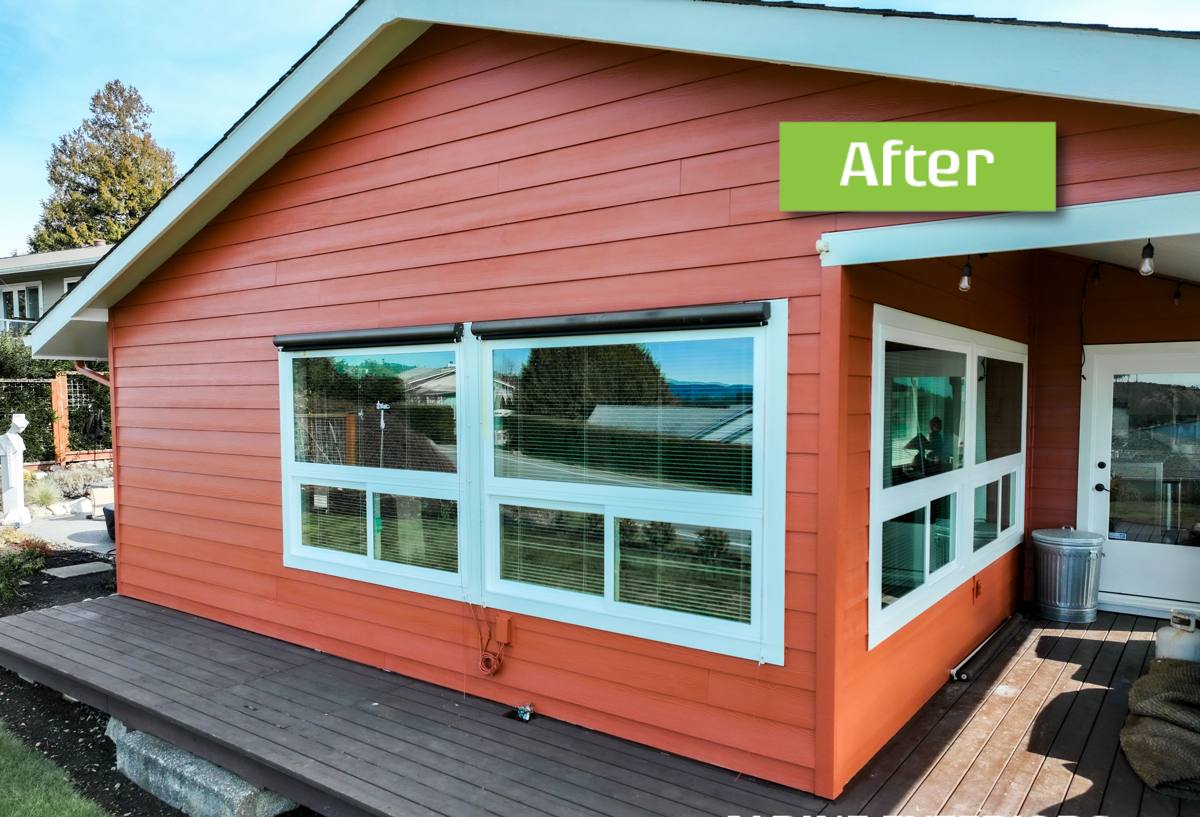
What James Hardie Brings to a Home Like Yours
We install James Hardie fiber cement siding exclusively, and Lynden's climate is exactly the kind of environment Hardie's products were engineered to handle. Fiber cement doesn't absorb water the way wood-based products do, it won't feed rot the way untreated or lightly primed materials can, and it holds paint and color far longer than vinyl or spruce-based siding exposed to constant damp and UV cycling.
ColorPlus Factory Finish
Most Hardie siding we install carries the ColorPlus finish — a baked-on, multi-coat finish applied at the factory under controlled conditions, not brushed on at the job site. In a climate where field-applied paint has to cure through damp air and gets tested by moss growth almost immediately, a factory finish that's already fully cured before it reaches your house is a real advantage. It resists fading, chipping, and the kind of early paint failure that shows up on lesser products within a few wet Whatcom County winters.
Climate-Engineered HZ Product Lines
Hardie manufactures its siding in different HZ (HardieZone) formulations matched to regional climate demands — some engineered for hot, dry climates, others for the kind of cool, wet, moisture-heavy conditions we get in the Pacific Northwest. We spec the product line appropriate for Whatcom County's climate zone, which matters more than most homeowners realize: the wrong HZ formulation for the region can mean more moisture movement in the board itself over time, even if the surface finish looks fine at first glance.
What a Correct Installation Actually Involves
Fiber cement siding is only as good as the installation behind it. Most of the siding failures we get called out to inspect on older homes — regardless of brand — trace back to installation shortcuts, not the material itself. In a wet climate like Lynden's, those shortcuts show up faster and cost more to fix.
Flashing and Water Management First
Before a single piece of siding goes up, the water management layer has to be right: a weather-resistive barrier installed correctly, properly lapped and sealed window and door flashing, kick-out flashing where rooflines meet walls, and drainage planes that let any moisture that does get behind the siding find its way back out instead of sitting against the wall sheathing. On a home exposed to Lynden's driving rain, this hidden layer matters as much as the visible siding.
Fastening, Clearances, and Joints
Hardie publishes specific fastening patterns, minimum clearances from grade, decks, and roof lines, and joint treatment requirements — and all of them exist because moisture finds every gap a shortcut installer leaves. Panels fastened too tight or too loose, joints that aren't properly caulked and backed, or siding installed too close to grade or a patio surface all create entry points for the kind of sustained dampness Whatcom County winters produce in abundance.
Caulking and Sealant Details
Every trim intersection, window edge, and panel joint needs the right sealant, applied correctly, not just enough to look finished. In a climate with this much sustained moisture exposure, a bead of caulk that fails in year three instead of year fifteen is the difference between a siding job that lasts and one that needs rework.
How Hardie Compares to the Alternatives We Don't Install
We get asked regularly why we don't offer vinyl, LP SmartSide, or cedar alongside Hardie. Each of those products has legitimate strengths — vinyl is inexpensive and low-maintenance in mild climates, engineered wood siding installs quickly, and cedar has a natural look many homeowners love. But weighed against what a Whatcom County exterior has to survive year after year, we've standardized on fiber cement because it holds up with fewer trade-offs.
| Material | Moisture/Rot Resistance | Fire Resistance | Typical Maintenance in This Climate |
|---|---|---|---|
| James Hardie Fiber Cement | Excellent — non-organic, won't rot | Non-combustible | Occasional wash; factory finish holds long-term |
| Vinyl | Good surface resistance, but can trap moisture behind it; prone to warping in temperature swings | Combustible, can melt/deform | Low, but early fading and brittleness in UV/damp cycling |
| LP SmartSide (engineered wood) | Wood-based core; vulnerable at cut edges and unsealed joints | Combustible | Regular joint/edge inspection and resealing |
| Cedar | Natural resistance, but needs consistent sealing to stay ahead of constant damp exposure | Combustible | Frequent refinishing, higher upkeep in wet climates |
The pattern is consistent: fiber cement's non-organic composition simply doesn't give moss, rot, or moisture the same foothold that wood-based or moisture-permeable products do — which matters enormously in a place where siding rarely gets a real chance to dry out between rain events.
Our Process for Lynden Projects
Every job starts with an on-site inspection, not a phone estimate. We look at the current siding and sheathing condition, check for existing moisture damage around windows and roof intersections, and walk the exterior to identify grading, drainage, and clearance issues before we ever talk product or color.
- On-site assessment of existing siding, sheathing, and moisture-prone areas
- Written scope covering product line, trim details, flashing plan, and color
- Removal of old siding and inspection of the sheathing underneath for hidden damage
- Correction of any water-management issues found before new siding goes up
- Installation to Hardie's published specifications, including fastening, clearances, and joint treatment
- Final walkthrough covering care and what to watch for going forward
If we find rotted sheathing or evidence of long-term moisture intrusion once the old siding comes off — which isn't unusual on older Lynden homes — we address it before installation continues rather than closing new siding over an existing problem.
Maintenance Checklist for a Whatcom County Home
Correctly installed Hardie siding is low-maintenance, but "low" isn't "none," especially with an eight-month moss season working against you. A few habits go a long way:
- Rinse siding annually, and more often on shaded, north-facing walls where moss and algae take hold fastest
- Keep gutters clear so overflow doesn't run down the wall face during heavy rain
- Trim back plantings and tree limbs that keep siding shaded and damp longer than necessary
- Check caulking at trim, window, and joint lines once a year for cracking or gaps
- Watch for any soft spots, staining, or bubbling near grade level or below decks and patios
- Repaint or refinish only with products compatible with ColorPlus finishes if a touch-up is ever needed
Cost Factors on a Lynden Siding Project
| Factor | Why It Moves the Price |
|---|---|
| Home size and wall complexity | More corners, gables, and trim details mean more cutting, flashing, and labor time |
| Existing sheathing condition | Hidden rot or moisture damage found during tear-off adds repair scope |
| Product line and profile | Lap, shingle, and panel styles carry different material and labor costs |
| Trim and accessory scope | Corner boards, window trim, and fascia work add to the total beyond field siding alone |
| Access and site conditions | Multi-story walls, tight lot lines, or landscaping obstacles affect labor time |
We don't publish blanket per-square-foot pricing because these factors vary too much from one Lynden property to the next — but we'll walk you through exactly what's driving your number during the estimate, line by line.
Why a Crew That Already Works Lynden Matters
Installation quality is the single biggest variable in how long fiber cement siding actually performs, and a crew that regularly works Whatcom County homes already understands the local conditions before they show up: how much clearance to leave near grade given the rainfall here, which wall orientations need extra attention for moss and algae exposure, and how the region's damp winters affect cure times and scheduling. That local familiarity isn't a marketing point — it shows up in fewer callbacks and siding that still looks right ten and fifteen years out.
If you're weighing a siding replacement or planning ahead for one, we're happy to take a look at your home and talk through what correct installation looks like for your specific walls, roofline, and exposure. Reach out for a free, no-pressure estimate using the form below.