 Whatcom County
 Building a Deck That Actually Holds Up in Fairhaven
Fairhaven sits close enough to Bellingham Bay that its homes take a different kind of weather beating than houses ten miles inland. The salt-laced air off the water, the driving rain that comes sideways off a Pacific storm, and a moss season that can run eight months out of the year all work on an outdoor structure at the same time. A deck built with generic, one-size-fits-all specs from a big-box plan set will show its age in Fairhaven years before it should. A deck built for these specific conditions won't.
This page covers what a custom deck actually needs to hold up here — materials, structure, hardware, and the details that separate a deck that lasts fifteen years from one that lasts forty. It's written for Fairhaven homeowners planning a new deck, and for anyone comparing bids and wondering why they don't all look the same.
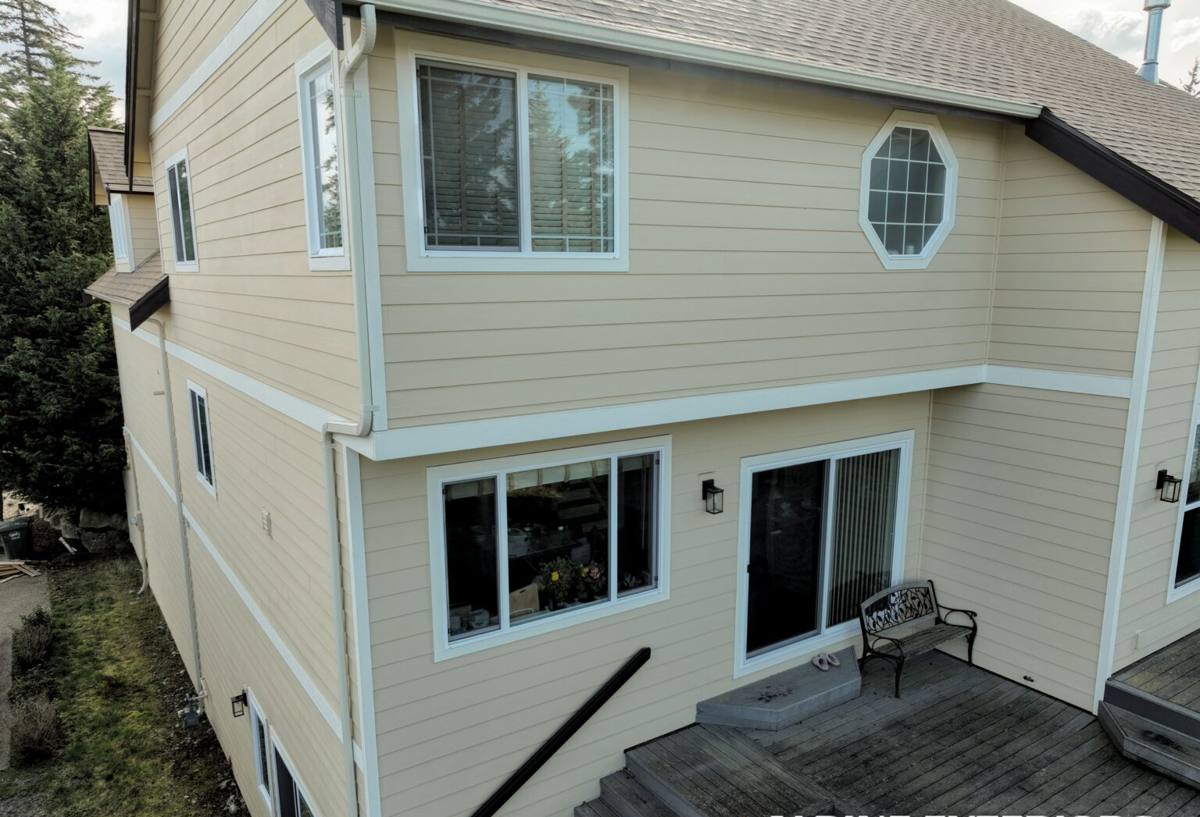
What Salt Air and Moss Season Do to an Unprotected Deck
Three things drive almost every deck failure we see near the water in Whatcom County:
Salt-Laden Air
Airborne salt from the bay accelerates corrosion on any exposed metal — fasteners, joist hangers, railing brackets — far faster than the same hardware would corrode a few miles inland. Once a fastener starts rusting, it swells, cracks the wood fiber around it, and lets water in. That's the start of a slow rot cycle that's invisible from the top of the deck for years.
Driving Rain
Storms coming off the water don't just fall straight down — they push rain horizontally into ledger connections, under railing posts, and into any gap that wasn't properly flashed or sealed. A deck detail that would be fine in a drier climate can leak here simply because the water is arriving at an angle, not from above.
Extended Moss and Algae Growth
Whatcom County's damp, mild, low-sun winters give moss and algae months to establish themselves on horizontal wood and composite surfaces. Beyond looking bad, a moss mat holds moisture against the decking surface around the clock, which is exactly the condition that rots wood and stains or degrades lower-grade composite boards.
None of this means a deck in Fairhaven can't last decades — it means the design and installation have to account for these three things from the start, not get patched around later.
Choosing the Right Decking Material
There's no single "best" decking material for every Fairhaven home — the right call depends on budget, how exposed the deck is to weather, and how much upkeep you actually want to do. Here's how the common options compare for this specific climate:
| Material | How It Handles Salt Air & Rain | Moss/Algae Resistance | Maintenance |
|---|---|---|---|
| Pressure-treated wood | Good if properly sealed and re-coated; end cuts need field treatment | Moderate — needs regular cleaning and re-sealing | Annual cleaning, re-seal every 1-3 years |
| Cedar | Naturally rot-resistant but softer; benefits from a breathable sealer | Moderate — same as PT, needs upkeep | Cleaning and oiling every 1-2 years |
| Composite (mid-to-high grade) | Excellent — doesn't absorb moisture or corrode | Good, especially capped boards; still needs periodic washing | Occasional washing, no sealing/staining |
| PVC decking | Excellent — fully synthetic, unaffected by salt or moisture | Good, easiest to clean | Lowest — soap and water |
Composite and PVC cost more up front but remove the recurring maintenance burden that salt air and moss season make especially demanding on wood. Wood decking isn't wrong for Fairhaven — plenty of homeowners prefer the look and are willing to keep up with sealing — but going in knowing the maintenance schedule is part of doing the job honestly.
Framing and Substructure — The Part Nobody Sees
The decking boards get all the attention, but the framing underneath is what actually determines how long a deck lasts. In a marine climate this matters more, not less.
- Joists and beams should be rated for ground contact or fully protected with a code-compliant coating, not just "treated" lumber assumed to be sufficient everywhere.
- Any cut end, notch, or drilled hole in treated lumber needs field-applied preservative — the factory treatment doesn't reach exposed cuts.
- Joist tops should have a protective tape or flashing strip before decking goes down, so screw penetrations don't become entry points for water.
- Airflow underneath the deck matters — a low deck with poor ventilation traps humidity against the framing, which is a bigger problem here than in a drier region.
A deck that looks great from the top but was framed with shortcuts underneath is the single most common source of "why is my five-year-old deck already failing" calls.
Fasteners, Flashing, and Ledger Connections
If there's one detail that separates a deck built for this climate from one that isn't, it's what's holding it together and how the ledger board connects to the house.
Fastener Grade
Standard galvanized fasteners corrode faster in salt air than most homeowners expect. For decks in Fairhaven and other coastal Whatcom County areas, we use stainless steel or high-grade coated fasteners rated for coastal/corrosive environments — it costs more up front and pays for itself by not needing to be replaced along with rotted wood in eight years.
Ledger Flashing
The ledger board — where the deck attaches to the house — is the single most common leak point on any deck, anywhere. Proper step flashing and a water-resistant barrier behind the ledger are non-negotiable, especially with rain that's frequently blown sideways by wind off the bay.
Post Bases and Railing Anchors
Post bases should be set to keep wood off standing water, with corrosion-resistant hardware at every connection point. A railing post that rocks slightly after a few years is almost always a sign the base connection was undersized or the wrong hardware grade for the environment.
Railings, Stairs, and Code Requirements
Whatcom County follows the Washington State building code for deck construction, which sets minimum requirements for railing height, baluster spacing, guard strength, and stair geometry on any deck above a certain height. Beyond meeting code, a few practical choices matter specifically for this area:
- Railing hardware should match the fastener grade used elsewhere on the deck — mixing a good frame with cheap railing brackets just moves the corrosion problem up.
- Stair treads see the most direct rain and the most moss buildup of any part of the deck; a slightly textured or grooved board surface helps with slip resistance during wet months.
- Cable and metal-baluster railings look great but need a corrosion-rated spec near the water — not every cable railing system is built for a salt-air environment.
Our Process, Start to Finish
We keep the process straightforward and give you real information at each step instead of surprises at the end:
- On-site assessment — we look at sun and wind exposure, drainage around the foundation, and how close the deck sits to the ground or water table before recommending a design.
- Material and design conversation — we walk through the material comparison above against your budget and how much maintenance you actually want to take on.
- Permitting — we handle the Whatcom County or City of Bellingham permit process as required for the project's size and height.
- Demo and framing — old structures removed if needed, new framing built to the substructure standards above, with inspections at the required stages.
- Decking, railing, and finish work — boards, railings, stairs, and any lighting or built-ins installed to spec.
- Final walkthrough — we go over the finished deck with you, including a realistic maintenance schedule for the material you chose.
Maintenance Checklist for a Fairhaven Deck
Whatever material you choose, a few habits go a long way toward getting the full lifespan out of it in this climate:
- Sweep leaves and debris off the deck regularly through fall — trapped organic matter is what moss and algae feed on.
- Rinse or lightly wash the deck surface a few times a year, more often in shaded or north-facing areas that stay damp longer.
- Check railing posts and stair stringers annually for any looseness — early movement is cheap to fix, later movement often isn't.
- Re-seal wood decking on the schedule recommended for the product — don't wait until it visibly grays and cracks.
- Keep gutters and downspouts near the deck clear so runoff isn't dumping extra water onto or under the structure.
- Inspect the ledger flashing area every couple of years, especially after a hard winter storm season.
Why It Matters to Hire a Crew That Already Works Fairhaven
A lot of deck problems we get called to fix started with a design or material choice that would have been perfectly reasonable somewhere drier. A contractor who doesn't regularly work this close to Bellingham Bay may not think to spec stainless fasteners, plan for extra moss maintenance, or detail the ledger flashing for sideways rain — not out of carelessness, just because it isn't the default in their usual service area.
Working in Fairhaven and the rest of Whatcom County regularly means we're not guessing at how salt air, rain, and moss season affect a deck over time — we're seeing it on the decks we've already built and on the ones we get called to repair. That local track record is what a design plan on paper can't tell you.
If you're planning a new deck or replacing one that's showing its age, we're happy to take a look and give you a straightforward, no-pressure estimate — just fill out the form below.