 Whatcom County
 Building a Deck That Actually Holds Up in Edgemoor
Edgemoor sits close enough to Bellingham Bay that salt-tinged air, wind-driven rain, and heavy tree cover shape almost every outdoor structure in the neighborhood — decks included. A deck built to a generic spec sheet might look fine the first summer, but two or three wet Whatcom County winters later, homeowners often find soft spots at the ledger board, corroding fasteners, or a slick green film that never fully goes away. Building a deck for this specific setting means thinking about moisture, salt exposure, and shade from day one, not treating them as afterthoughts.
We build decks throughout Whatcom County, but Edgemoor's mix of elevated lots, mature tree canopy, and proximity to the water gives it its own set of demands. This page walks through what a correctly built deck for this area actually involves — from the framing up.
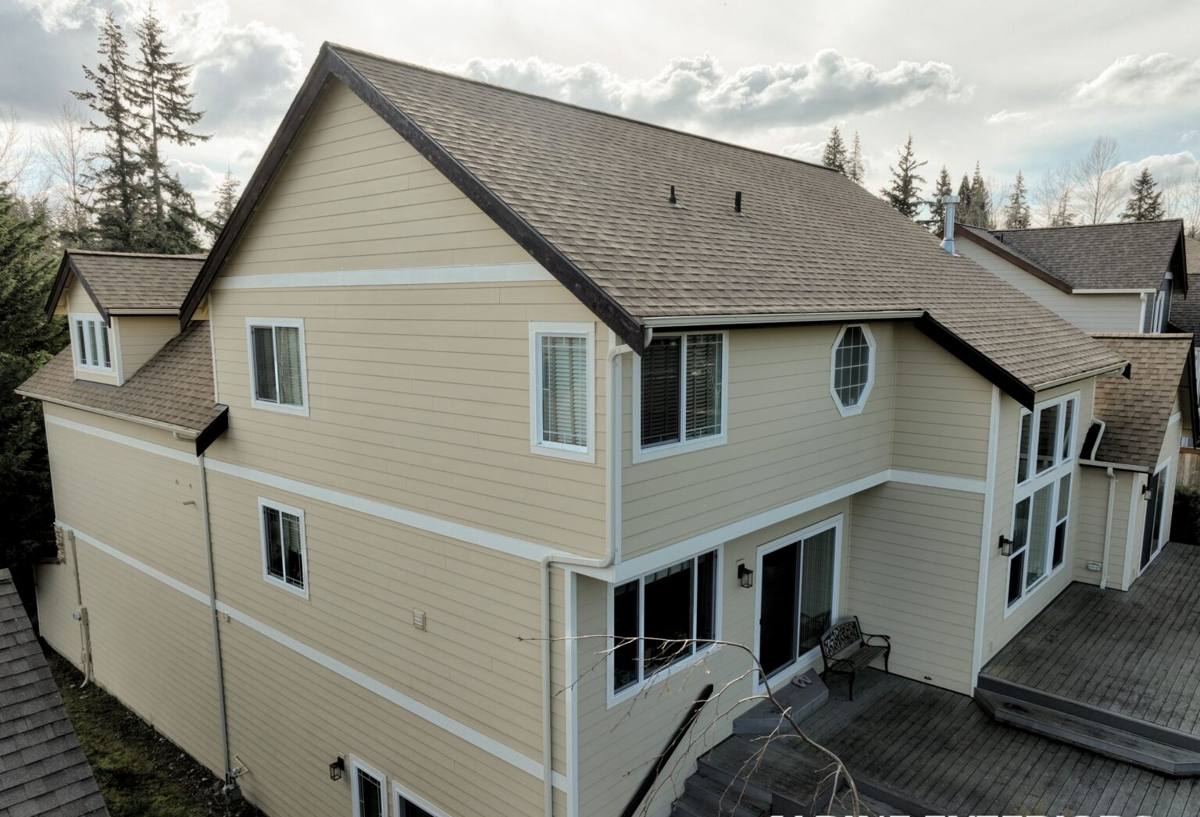
What Edgemoor's Climate Actually Does to a Deck
Three conditions drive almost every deck problem we see in this part of the county:
- Salt air: Proximity to Bellingham Bay means airborne salt accelerates corrosion on any fastener, bracket, or hardware that isn't rated for it. Standard hot-dip galvanized screws can start showing rust streaks within a couple of seasons.
- Driving rain: Wind off the water pushes rain sideways into ledger connections, stair stringers, and any spot where two pieces of material meet. Flashing and gap spacing matter more here than in a drier, inland yard.
- Moss and shade: Tree-covered lots common in Edgemoor keep decking damp long after a storm passes. Moss and algae take hold fastest on north-facing decks or ones tucked under fir and cedar canopy, and they make boards genuinely slippery, not just unsightly.
None of these are exotic problems — they're just the normal cost of building outdoors in western Whatcom County. The fix isn't a gimmick material, it's correct detailing at every layer of the build.
Getting the Framing and Foundation Right
Footings
Whatcom County's clay-heavy, often waterlogged soils mean footing depth and drainage matter as much as footing size. We size and place footings to local frost depth and soil conditions rather than defaulting to the smallest size code allows, because an undersized footing on saturated ground is where deck movement starts.
Ledger Attachment
The ledger board — where the deck ties into the house — is the single most common failure point on any deck in a wet climate. It has to be properly flashed with the flashing lapped correctly over the house's water-resistive barrier, not just caulked and hoped for. A poorly flashed ledger lets water track behind siding and into wall framing, which turns a deck problem into a siding and structural problem.
Framing Lumber and Hardware
We use pressure-treated framing rated for ground contact where it's within a few inches of soil, and we match every joist hanger, screw, and structural connector to the type of treated lumber being used — some newer treatment chemicals corrode standard galvanized hardware faster than older formulations did. In a salt-air neighborhood like Edgemoor, we lean toward stainless or heavy-coated fasteners at any connection exposed to weather, even where code would allow less.
Choosing Decking Material for a Marine, Shaded Lot
There's no single "best" decking material — there's a best fit for a given lot, budget, and how much upkeep the homeowner actually wants to do. Here's how the common options hold up under Edgemoor-type conditions:
| Material | Upfront Cost | Maintenance | Performance in Salt Air / Shade |
|---|---|---|---|
| Pressure-treated wood | Lowest | Annual cleaning, re-staining every 2-3 years | Prone to moss and cupping in shaded, damp spots without regular upkeep |
| Cedar | Moderate | Regular sealing to maintain color and resist moisture | Naturally rot-resistant but still needs cleaning to prevent moss buildup in shade |
| Composite decking | Higher | Periodic washing, no staining or sealing | Handles moisture well; textured composites resist algae film better than smooth boards |
| PVC decking | Highest | Low — occasional washing | Fully moisture-resistant; best option for consistently shaded, damp areas |
For a sun-exposed deck on an open lot, treated wood or cedar can be a perfectly reasonable, budget-friendly choice. For a heavily shaded deck under fir or cedar canopy — common on the more wooded Edgemoor lots — composite or PVC earns its higher price back in avoided maintenance, because those boards simply don't hold moisture the way wood fibers do.
Railings, Fasteners, and Hardware Built for Salt Exposure
Railings take a disproportionate amount of weather because they're the tallest, most exposed part of the structure. Wood railings on a bay-adjacent lot need the same maintenance discipline as the decking — cleaning, sealing, and inspection for movement at post connections. Metal or cable railing systems need to be specified in a finish rated for coastal exposure; standard mill-finish aluminum or basic powder coat can pit and discolor faster than expected this close to the water.
We treat fastener selection as part of the design, not an afterthought at the hardware store. That means:
- Stainless steel or heavy-duty coated screws at all exposed connections
- Hot-dip galvanized or stainless structural hardware matched to the lumber's treatment chemical
- Hidden fastening systems specified with corrosion-resistant clips where the product allows it
- Post bases and brackets set with proper standoff from standing water, not flush to a wet surface
Managing Moss, Drainage, and Airflow
Moss doesn't grow because a board is "bad" — it grows because moisture sits on a surface longer than it should. Good deck design fights that with a few straightforward moves: proper board spacing so water drains through rather than pooling, a slight slope away from the house, and joist framing that allows airflow underneath rather than trapping damp air against the ground. On heavily shaded lots, we'll also talk through whether some selective tree trimming near the deck footprint — done by the homeowner or an arborist, not us — would meaningfully cut down on moss regrowth, since more sun and airflow is often the cheapest long-term fix available.
Surface texture matters too. A smooth, painted, or heavily sealed board can actually become more slippery once a thin algae film forms, while a lightly textured composite or a properly maintained wood surface sheds that film more easily during routine cleaning.
Our Deck Building Process
Every deck we build in Edgemoor and the surrounding Whatcom County area follows the same sequence, adjusted for the specific lot:
- On-site assessment — we look at sun exposure, tree canopy, slope, existing drainage patterns, and how the deck will tie into the house.
- Design and material selection — we walk through decking, railing, and hardware options against your budget and how much maintenance you actually want to do.
- Permitting — we handle the paperwork with Whatcom County or the City of Bellingham as applicable, based on deck height and footprint.
- Footings and framing — built to local soil and frost conditions, with corrosion-resistant hardware throughout.
- Ledger flashing and waterproofing — the connection to your home gets the same attention as the rest of your siding envelope.
- Decking, railing, and finish work — installed to the manufacturer's spacing and fastening specs, not shortcuts.
- Final walkthrough — we cover basic maintenance so the deck actually reaches its expected lifespan.
Permits and Whatcom County Requirements
Most raised decks require a building permit, and the exact requirements depend on height above grade, proximity to property lines, and whether the deck is attached to the house. Some Edgemoor lots also carry additional considerations around slope stability or setback given the terrain near the bay. We pull the required permits and coordinate inspections as part of the build, so homeowners aren't left tracking down paperwork on their own.
What to Watch For Once Your Deck Is Built
A well-built deck still needs a homeowner to keep an eye on a few things, especially in this climate. Use this as a rough seasonal checklist:
- Sweep debris and standing leaves off the surface regularly, especially in fall
- Wash off moss or algae film before it gets established, rather than after
- Check railing posts for any looseness or movement once a year
- Look underneath the deck occasionally for standing water or blocked drainage
- Re-seal or re-stain wood decking on the schedule your finish product calls for
- Watch the ledger connection area for any staining or soft spots on the siding above it
None of this is heavy work, but skipping it is how a well-built deck starts showing problems years earlier than it should.
Why It Matters to Hire a Crew That Already Works Edgemoor
A deck built by a crew that mostly works drier, inland climates will often use standard fasteners, standard flashing details, and a standard material list — because that's what works where they usually build. In Edgemoor's marine, shaded conditions, those standard choices are exactly where problems start. We already know which fastener grades hold up near the bay, which decking materials actually resist moss on a shaded lot, and how Whatcom County and Bellingham permitting works for deck projects. That local knowledge doesn't add cost to a project — it just means the deck is built right the first time instead of needing early repairs.
If you're planning a new deck or replacing one that's showing its age, we're happy to come take a look and talk through what makes sense for your specific lot. Reach out for a free, no-pressure estimate using the form below.