 Whatcom County
 Windows Built for South Hill's Weather, Not Just the Opening
South Hill homes sit in a part of Whatcom County that takes a steady beating from the elements — salt-laden air moving in off the water, driving rain that comes in sideways for weeks at a stretch, and a moss season that seems to run longer every year. None of that is unique to any one street, but it adds up differently on every house depending on orientation, tree cover, and how old the existing windows are. A window that's "fine" on a sheltered inland lot can fail fast on an exposed South Hill elevation, and that's the gap a lot of standard window replacement jobs miss.
Custom windows aren't about upsizing everything to premium glass. They're about matching the window — size, frame material, glazing, and installation detail — to the specific wall it's going into. On a South Hill home that might mean a different sill flashing detail on the weather-facing side than on the sheltered side, or a frame material chosen specifically because it won't corrode near salt air. That's the kind of decision-making a local crew makes without having to think twice, because we've already made it on the house down the road.
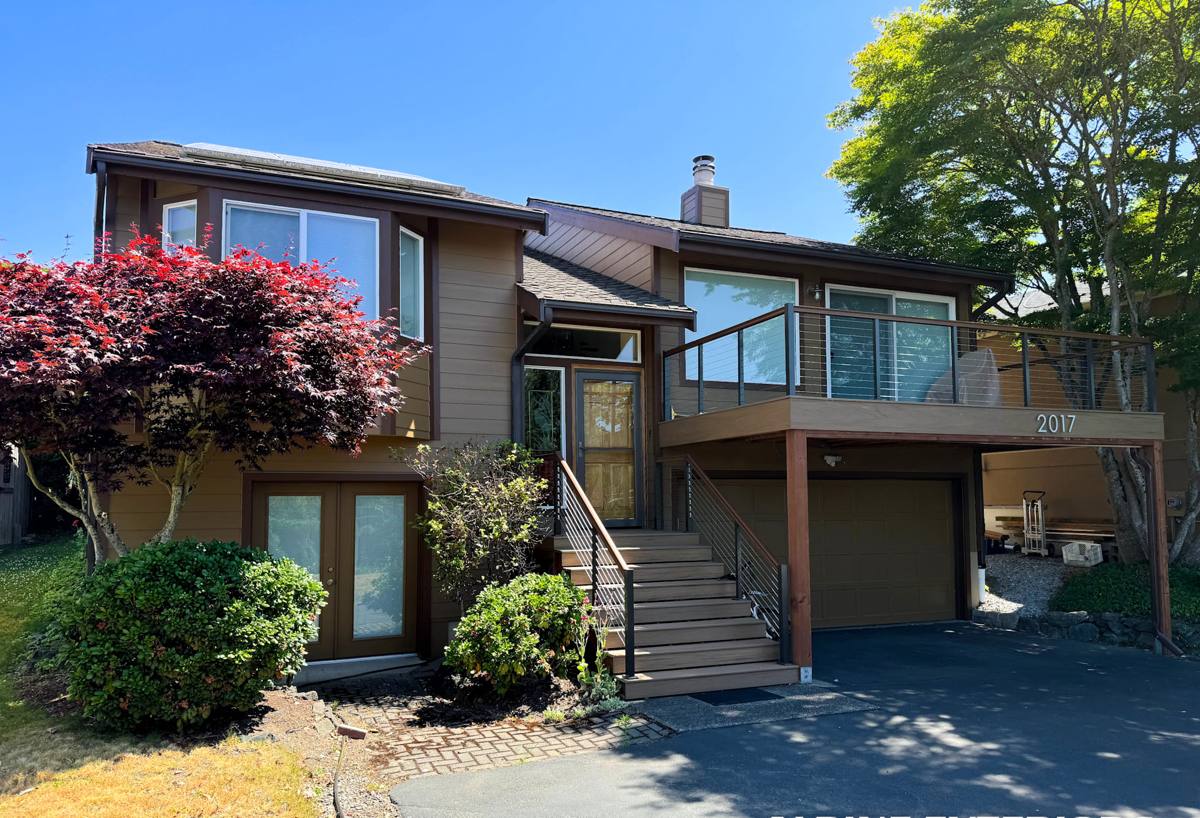
What Whatcom County Weather Actually Does to Windows
Salt Air and Metal Components
Homes with any exposure to marine air see accelerated corrosion on window hardware — hinges, cranks, locks, and especially aluminum components that aren't marine-rated. It's slow and easy to ignore until a window won't latch properly or a frame starts pitting. We spec hardware and frame finishes with that exposure in mind rather than assuming inland-grade materials will hold up the same way.
Driving Rain and Wind-Driven Water
Whatcom County doesn't just get rain, it gets rain pushed sideways by wind off the water. That matters enormously for window installation because it's not the glass that fails first — it's the flashing and sealant details around the rough opening. A window can have excellent glass and still leak if the sill pan, house wrap integration, and flashing tape weren't done correctly. This is the single most common failure point we see on older installs in this area.
Moss, Algae, and Prolonged Moisture
A long damp season means moss and algae get a foothold anywhere moisture sits — on sills, in corners, along poorly sloped trim. Beyond looking bad, that constant moisture accelerates wood rot around window openings and breaks down caulk and sealant faster than in drier climates. Detailing that sheds water quickly, rather than letting it pool, is a bigger factor in long-term performance here than in most parts of the country.
What a Correct Custom Window Job Involves
"Custom" simply means the window is built to the actual opening and the actual performance needs of that wall, rather than pulled off a shelf in a stock size and forced to fit. On a South Hill remodel or replacement, that typically covers:
- Accurate measurement of each opening — old homes are rarely square, and forcing a stock unit into an out-of-square opening is where leaks start
- Frame material selection based on exposure — vinyl, fiberglass, or wood-clad, chosen for the specific wall's sun and moisture exposure
- Glazing package matched to orientation — more solar gain control on south and west-facing walls, different considerations on shaded north walls
- Full removal of old flashing and sealant, not just caulking over what's already there
- New sill pan flashing that directs any water that gets past the window back outside the wall assembly
- Proper integration with the existing house wrap or weather barrier, shingled correctly so water sheds down and out
- Interior and exterior trim work that seals cleanly without trapping moisture behind it
Skip any one of those steps and the window itself barely matters — water will find the gap. This is why window replacement is as much a moisture-management project as a glass-and-frame project, especially in a climate like this one.
Our Process for a South Hill Window Project
1. On-Site Assessment
We walk the exterior and look at more than just the windows themselves — siding condition around each opening, existing flashing, signs of past water intrusion, and how exposed each elevation is to wind and rain. This tells us if any given window is a straightforward swap or if there's underlying rot or flashing damage that needs to be addressed first.
2. Measuring and Product Selection
Every opening gets measured individually. We talk through frame material, glazing, and trim options based on that specific wall's exposure and your budget — not a one-size answer for the whole house.
3. Installation
Old units come out, openings get inspected for hidden damage, and new flashing and sealant details go in before the new window is set. We don't caulk over old, failed flashing — that just hides a problem instead of fixing it.
4. Final Weatherproofing and Walkthrough
Trim, exterior sealant, and interior finish work are completed, and we walk the job with you so you know what was done and why, including anything worth keeping an eye on going forward.
Frame Material Trade-Offs for This Climate
| Frame Material | How It Handles Local Conditions | Maintenance |
|---|---|---|
| Vinyl | Good moisture and salt-air resistance, no corrosion risk on hardware if quality components are used | Low — occasional cleaning |
| Fiberglass | Very stable in temperature and moisture swings, holds up well to sustained damp exposure | Low |
| Wood-Clad | Attractive interior wood look with an exterior shell, but the cladding seams need correct detailing to keep moisture out long-term | Moderate — depends on cladding integrity over time |
| Aluminum | Prone to corrosion and thermal performance issues in marine air unless it's a marine-rated, thermally broken product | Higher — watch for pitting and hardware wear |
We'll walk you through what fits your home and budget rather than steering everyone toward the same product. The right call often varies window by window on the same house, depending on which wall it's on.
Why a Local Crew Matters More Than It Sounds Like It Should
Window installation is detail work, and the details that matter change with the climate. A crew that mostly works drier inland regions may not default to the flashing sequence or hardware spec that a South Hill home actually needs — not because they're careless, but because it's not what they run into every day. Working Whatcom County homes regularly means we're not guessing at how much wind-driven rain a given wall sees, or which frame materials hold up once salt air gets into the equation. That familiarity shows up in fewer callbacks and windows that are still performing well years after installation, not just on move-out day.
It also means we can talk through your specific house honestly — which walls need the more robust detailing and which don't, so you're not overpaying for the same spec on every opening when it isn't necessary.
Cost Factors to Expect
Custom window pricing depends on more variables than most people expect, and any contractor quoting a flat per-window number without seeing your home is guessing. The main factors:
- Opening size and whether any framing needs to be resized
- Frame material selected
- Glazing package (standard dual-pane vs. upgraded low-E or solar control glass)
- Condition of the existing opening — hidden rot or flashing damage adds repair work before the new window goes in
- Number of windows done at once — bundling multiple openings typically reduces the per-window cost of labor and setup
- Trim and finish complexity, especially on older homes with detailed original trim
Rather than quote a number that won't hold up once we see your house, we price it after the on-site assessment so the estimate reflects your actual openings and conditions.
Signs Your South Hill Home's Windows Need Attention
You don't need to wait for an obvious leak to justify a look. Common early signs in this climate include fogging between panes (a failed seal), drafts you can feel even with the window latched, wood trim that's soft or discolored near the sill, difficulty opening or latching hardware that's corroded, and visible moss or algae staining collecting around the frame. Any of these are worth a look before the next wet season, since moisture problems here tend to compound rather than stay static.
If your South Hill home's windows are past due, or you're planning a remodel and want it done with this climate in mind from the start, we're happy to come take a look. Reach out for a free, no-pressure estimate using the form below.