 Whatcom County
 Composite Decking Built for Cordata's Weather, Not Just Cordata's Look
Cordata sits close enough to the water and the marine layer that a deck here lives a different life than a deck in a drier inland climate. The wood-look composite boards you see in catalogs are engineered to handle moisture, but "handles moisture" and "installed correctly for Whatcom County" are two different things. A deck that's framed, drained, and fastened without accounting for months of standing damp, driving rain off the Strait, and a moss season that can run from October into May will show problems within a few years — cupping boards, soft framing under the surface, green film that never fully goes away no matter how often it's washed.
We build decks for this specific neighborhood's conditions, not a generic Pacific Northwest average. That means the substructure, the fastening system, and the board selection all get chosen with Whatcom County's wet season in mind, not just the dry months when the project gets scheduled.
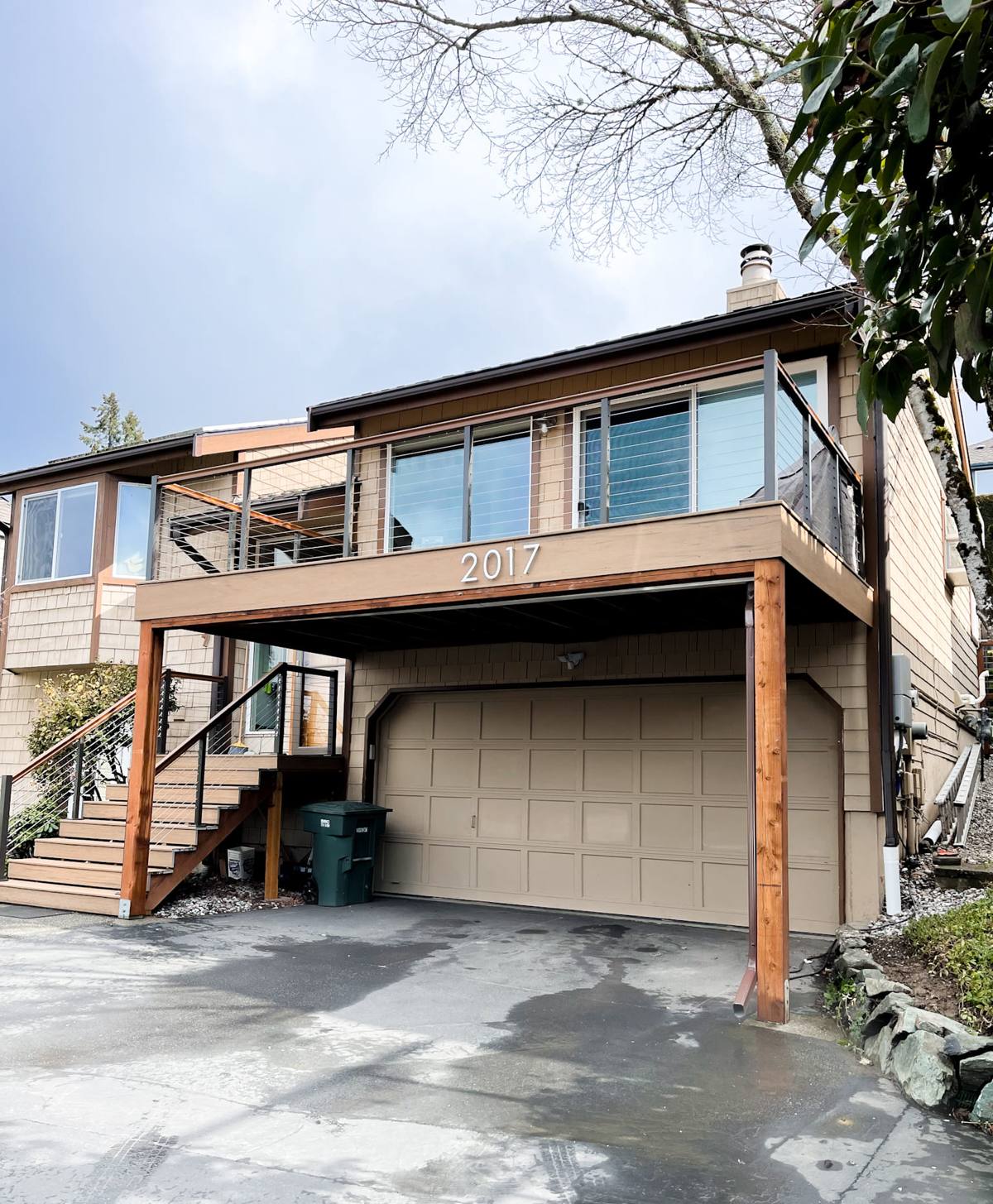
What Cordata's Climate Actually Does to a Deck
Driving Rain and Standing Moisture
Rain in this part of Whatcom County rarely falls straight down — wind pushes it sideways into ledger connections, stair stringers, and the gaps between boards. Composite decking sheds surface water fine, but the framing underneath, the flashing at the house connection, and the fasteners are where water actually causes damage over time. A deck built without proper ledger flashing or with joists that can't drain and dry between storms will rot from the inside while the composite surface still looks brand new.
Salt Air
Proximity to Bellingham Bay and the Strait means a steady low dose of salt-laden air, even well inland from the immediate waterfront. Salt air accelerates corrosion on any exposed metal — fasteners, joist hangers, railing brackets, screws. Composite boards themselves don't corrode, but a deck is only as good as the metal holding it together, and that's where salt exposure quietly does its damage over years.
Moss and Algae Season
Shade, moisture, and mild temperatures are exactly what moss and algae need, and Whatcom County offers all three for a long stretch of the year. Composite decking resists rot but not surface growth — moss and algae will colonize any horizontal surface that stays damp and shaded, composite or wood. The difference is in the board's surface texture and how the deck is built to shed water and get airflow underneath, which determines how bad that growth gets and how easy it is to keep under control.
What a Correctly Built Composite Deck Includes
A composite deck that holds up here isn't just "composite boards on a wood frame." Every layer matters:
- Framing: Pressure-treated or naturally durable lumber, sized and spaced to the composite manufacturer's span rating — composite boards typically need tighter joist spacing than wood.
- Ledger flashing: A properly flashed, water-diverting connection where the deck meets the house — the single most common failure point we find on older decks in this area.
- Joist protection: A tape or wrap barrier over the top of each joist so fastener penetrations don't become entry points for standing water.
- Airflow underneath: Enough clearance and ventilation below the deck surface that the framing can actually dry out between rain events instead of staying damp for weeks.
- Fasteners and hardware: Stainless steel or coated hardware rated for coastal/marine exposure, not standard galvanized fasteners that corrode faster under salt air.
- Board fastening system: Hidden clip systems or approved face-screwing, installed with the manufacturer's specified gapping for seasonal expansion and contraction.
- Picture-framing and trim: Solid, weather-rated fascia and border boards that hide fastener lines and give the deck a finished edge that also sheds water away from cut ends.
Choosing the Right Composite Board for This Neighborhood
Not every composite product performs the same way in a wet, shaded, salt-air environment. We steer homeowners toward boards with a fully capped surface on all four sides — cap composite resists moisture absorption at the core far better than uncapped or partially capped boards, which matters a lot when a deck sits under tree cover or gets minimal direct sun to dry out between rains. We also weigh surface texture: a wood-grain embossed finish can look great but may hold more moss spores in its grooves than a smoother, low-texture finish. There's no universally "best" board — it's a trade-off between appearance, grip underfoot, and how much moss maintenance the homeowner wants to do.
Cost Factors to Understand Before You Budget
| Factor | Why It Changes the Price |
|---|---|
| Board tier (capped vs. partially capped) | Fully capped boards cost more upfront but resist moisture and staining longer in a wet climate |
| Substructure condition | Replacing rotted or undersized framing adds cost but is not optional if the existing structure is compromised |
| Deck height and access | Elevated decks need more substructure work, railing, and sometimes stairs |
| Railing system | Composite, aluminum, and cable rail systems vary widely in material cost and installation time |
| Ledger and flashing work | Older homes often need the ledger connection rebuilt to current standards, which is labor-intensive but critical |
| Square footage and layout | Cuts, angles, and picture-framing detail add labor beyond a simple rectangular footprint |
We'll walk through actual numbers for your specific deck during a site visit — square footage, framing condition, and product selection all move the estimate more than any single line item.
Our Process for a Cordata Composite Deck Build or Replacement
- On-site assessment: We look at the existing structure (if there is one), check for rot or moisture damage, and evaluate drainage, shade exposure, and how the deck ties into the house.
- Product selection: We walk through board tiers, colors, and railing options based on your budget and how much sun or shade the deck actually gets.
- Demo and framing: Old decking and any compromised framing come out; new framing goes in sized correctly for the composite product's span requirements.
- Flashing and moisture protection: Ledger flashing, joist tape, and any necessary drainage detailing get installed before a single composite board goes down — this step is what determines whether the deck lasts.
- Decking installation: Boards are installed with proper gapping and fastening for temperature and moisture movement over the seasons.
- Railing, trim, and finish work: Fascia, picture-framing, and railing get installed and squared up for a clean finished look.
- Final walkthrough: We go over care and maintenance specific to a shaded, wet-climate deck — mainly around moss control and seasonal cleaning.
Maintaining a Composite Deck Through a Whatcom County Winter
Composite decking is lower-maintenance than wood, but "low-maintenance" isn't "no-maintenance" in this climate. A few habits keep a deck performing the way it should:
- Sweep leaves and debris off regularly in fall — trapped organic matter under leaves is what feeds moss and algae growth.
- Rinse or lightly scrub shaded areas a couple times during the wet season rather than waiting until spring.
- Keep gutters and downspouts near the deck clear so runoff isn't dumping extra water directly onto the deck surface.
- Check railing hardware annually for corrosion, especially on decks with more open exposure to weather.
- Avoid pressure washing at high pressure directly into board grooves — it can drive water into fastener holes and damage the surface texture.
Why a Local Crew Matters for This Job
Composite decking installation isn't complicated in principle, but building one that actually performs through a Whatcom County wet season takes knowing what fails here and why. A crew that mainly works drier climates may under-detail the flashing, skip joist protection, or under-spec the fastener hardware because it's never had to answer for a deck that sat under standing moisture for six months straight. We work in this area regularly, which means we're not guessing about how much airflow a deck needs under tree cover in Cordata, or which hardware actually holds up against the salt air coming off the water. It also means if something needs a warranty follow-up or a maintenance question comes up two winters in, we're a phone call away, not a company that did one job in the area and moved on.
Get a Straight Answer on Your Deck
If you're planning a new composite deck or replacing an aging one, we're happy to come take a look, walk the site, and give you an honest read on what it'll take — no pressure, no upsell on products you don't need. Fill out the form below for a free estimate.