 Whatcom County
 Why Blaine's Coastline Climate Is Hard on Siding
Blaine sits right on the water at the top of Whatcom County, which means homes here take on a combination of weather stress that inland siding never has to deal with. Salt-laden air off Semiahmoo Bay and the Strait of Georgia works its way into seams, fasteners, and any exposed wood edge, accelerating corrosion and finish breakdown in ways that don't show up on a house twenty miles inland. Add the long, wet Pacific Northwest storm season with driving, wind-blown rain that hits siding at an angle instead of straight down, and you get moisture pushed into laps and joints that a dry-climate installation would never have to resist.
Then there's moss. Whatcom County's combination of shade, humidity, and mild temperatures gives moss and algae a long growing season on north-facing walls, under eaves, and anywhere airflow is limited. On the wrong siding material, that moss holds moisture against the surface for months at a time, which is exactly the condition that causes rot, paint failure, and swelling. None of this makes siding replacement in Blaine impossible to get right — it just means the material and the installation details matter more here than they do in most of the country.
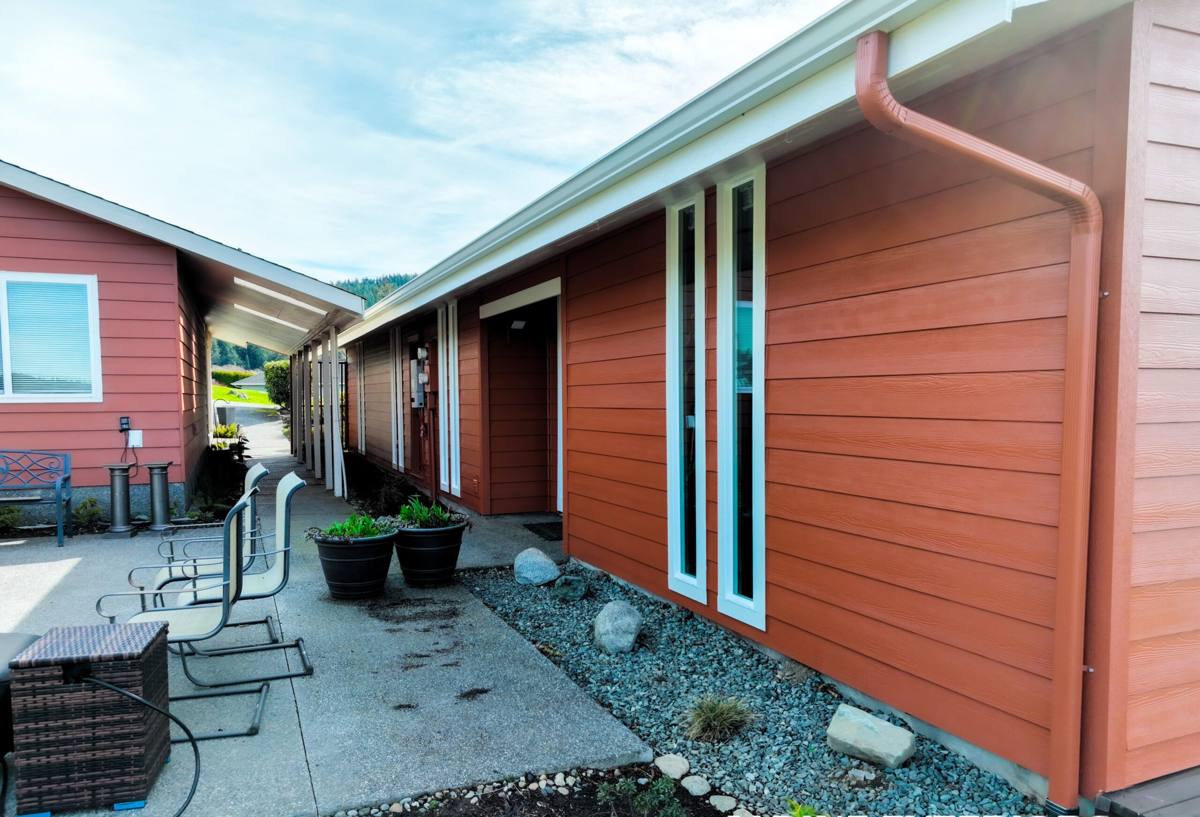
Signs a Blaine Home Needs Siding Replacement, Not Another Repair
Coastal weather usually doesn't destroy siding all at once — it wears it down over years until patch repairs stop being worth doing. These are the signs we look for when we're deciding whether a Blaine home is a repair job or a replacement job:
- Soft or spongy spots when you press on the siding, especially near the bottom courses and around window trim
- Paint that's peeling, bubbling, or chalking heavily on more than one wall, not just the sun-exposed side
- Persistent moss or dark staining that comes back within a season of being cleaned
- Visible warping, cupping, or gaps opening up between boards or panels
- Rot or discoloration around window and door trim, which usually means water has already gotten behind the siding
- Siding that's original to a house built more than 20-25 years ago, especially if it's never been replaced
If you're only seeing one or two of these in a small area, a repair may still make sense. Once moisture damage shows up in multiple places, it's usually a sign the whole wall assembly — not just the visible siding — has been compromised, and that's when full replacement becomes the honest recommendation.
What a Correct Siding Replacement Actually Involves
It Starts Underneath the Siding, Not With It
The siding itself is the least complicated part of a proper replacement. What actually determines whether a Blaine home stays dry for the next 30 years is what goes on underneath it: the water-resistive barrier, the flashing at every window, door, and roofline intersection, and the fastening pattern. In a high-moisture, salt-air environment, skipping or rushing any of these steps is how houses end up with hidden rot behind brand-new-looking siding within a few years.
Tear-Off and Inspection
We remove the old siding down to the sheathing and inspect for rot, soft spots, or existing water damage before anything new goes up. This is the point where problems that have been hiding for years finally get found — and fixed — instead of sealed back up under new material.
Weather Barrier and Flashing
A new weather-resistive barrier goes on correctly lapped so water sheds downward and outward, never into a seam. Flashing gets installed at every penetration — windows, doors, hose bibs, light fixtures, roof-to-wall transitions — because these are the spots where the vast majority of siding failures actually start.
Installation to Manufacturer Spec
Correct fastener spacing, proper gapping at butt joints, and factory-specified clearances above rooflines, decks, and grade all matter more in a wet coastal climate than they do somewhere dry. We install to the manufacturer's written specification, not to a shortcut that "usually works."
Why We Install Only James Hardie Fiber Cement
We standardized on James Hardie fiber cement siding for every project we take on, including Blaine homes, and we don't install vinyl, LP SmartSide, or other fiber cement brands. That's a deliberate call, not a sales preference. Fiber cement is non-combustible and doesn't rely on paint or a factory coating to keep water out the way wood-based products do — it's engineered to hold up structurally in wet, coastal conditions. James Hardie's ColorPlus factory finish is baked on and warranted against fading and cracking, which matters directly here: a wall that gets hit with salt air and driving rain needs a finish that isn't depending on a field-applied paint job to survive.
James Hardie also builds region-specific product formulations — their HZ5 line is engineered for climates with more moisture and freeze-thaw cycling, which fits the Pacific Northwest better than a one-size-fits-all product. We'd rather install one material extremely well, backed by a strong transferable warranty, than offer a menu of options where some are a worse fit for this coastline.
James Hardie Product Lines We Work With
| Product | Best Use | What It Offers |
|---|---|---|
| HardiePlank Lap Siding | Most homes, traditional look | Widest color and texture selection, proven long-term performer |
| HardiePanel Vertical Siding | Accent walls, modern facades | Clean vertical lines, often paired with lap siding |
| HardieShingle | Craftsman and cottage-style homes | Shingle look without the maintenance of real wood shakes |
| HardieTrim | Window, door, and corner trim | Matches siding durability so trim doesn't fail before the field siding does |
Our Process, Start to Finish
Estimate and Assessment
We walk the exterior, check for existing moisture damage, and talk through what we're seeing before we ever talk product or price. If a wall only needs repair, we'll say so.
Scope and Product Selection
We put together a written scope covering tear-off, any sheathing repair, weather barrier, flashing detail, the specific Hardie product and profile, and color, so there's no ambiguity about what's included.
Installation
Our crew handles tear-off, moisture barrier, flashing, and installation as one continuous process rather than handing pieces off between subcontractors, which is where a lot of quality control gets lost on other jobs.
Final Walkthrough
We walk the finished job with you, check caulking and trim details, and make sure everything matches the agreed scope before we consider the job done.
What Siding Replacement Costs Depend On
We don't quote prices without seeing the house, but the honest answer is that cost on a Blaine project is driven by a handful of factors that are worth understanding before you start comparing bids:
| Factor | Why It Matters |
|---|---|
| Home size and wall complexity | More corners, dormers, and trim details mean more labor and material |
| Extent of existing damage | Rotted sheathing found during tear-off adds material and labor not visible in an initial walk-around |
| Siding profile and texture | Lap width, shingle style, and vertical panel accents price differently |
| Color: standard vs. custom ColorPlus | Standard palette colors are typically more cost-efficient than custom-matched finishes |
| Trim and accessory scope | Full trim replacement adds cost but avoids mismatched old trim against new siding |
Be cautious of any bid that's dramatically lower than the others for the same scope — on a coastal home, that gap is almost always coming out of the weather barrier and flashing detail, which is exactly where you can't afford to cut corners.
Why a Crew That Already Works Blaine Matters
A siding crew that regularly works Whatcom County's coastline already knows how differently a Blaine wall behaves compared to a house thirty miles inland — where moss builds up fastest, which wall orientations take the worst of the driving rain, and how much clearance to leave for salt-air corrosion around fasteners and trim. That's not something you can fully substitute with a generic install manual. It shows up in details like flashing choices around water-facing windows and fastener selection that holds up to salt exposure over decades, not just years.
It also means we're not learning the region's failure points on your house. We've seen what coastal moisture does to siding that wasn't installed with this climate in mind, and we build every Blaine job around avoiding those specific problems from the start.
If your siding is showing wear, or you're just trying to figure out whether repair or replacement makes more sense for your Blaine home, we're happy to take a look and walk you through it honestly. Request a free, no-pressure estimate using the form below.