 Whatcom County
 Why Bellingham Siding Wears Differently Than Siding Inland
Bellingham sits close enough to the water that salt-laden air reaches homes well beyond the immediate shoreline, and it sits under a weather pattern that delivers long stretches of driving, wind-pushed rain rather than the occasional downpour. Add in a moss season that can run most of the fall through spring on shaded north- and west-facing walls, and you have three separate stressors working on your siding at once: salt accelerating corrosion of fasteners and trim metal, wind-driven rain finding every gap and seam, and moss and algae holding moisture against the wall surface for months at a time. None of these three problems shows up the same way a hot, dry climate's siding failures do — cracking and UV fade are secondary concerns here. Moisture intrusion and slow material breakdown are the real threats.
That combination means siding repair in Whatcom County isn't just about patching what's visibly broken. It's about understanding what's happening behind the siding, not just on top of it.
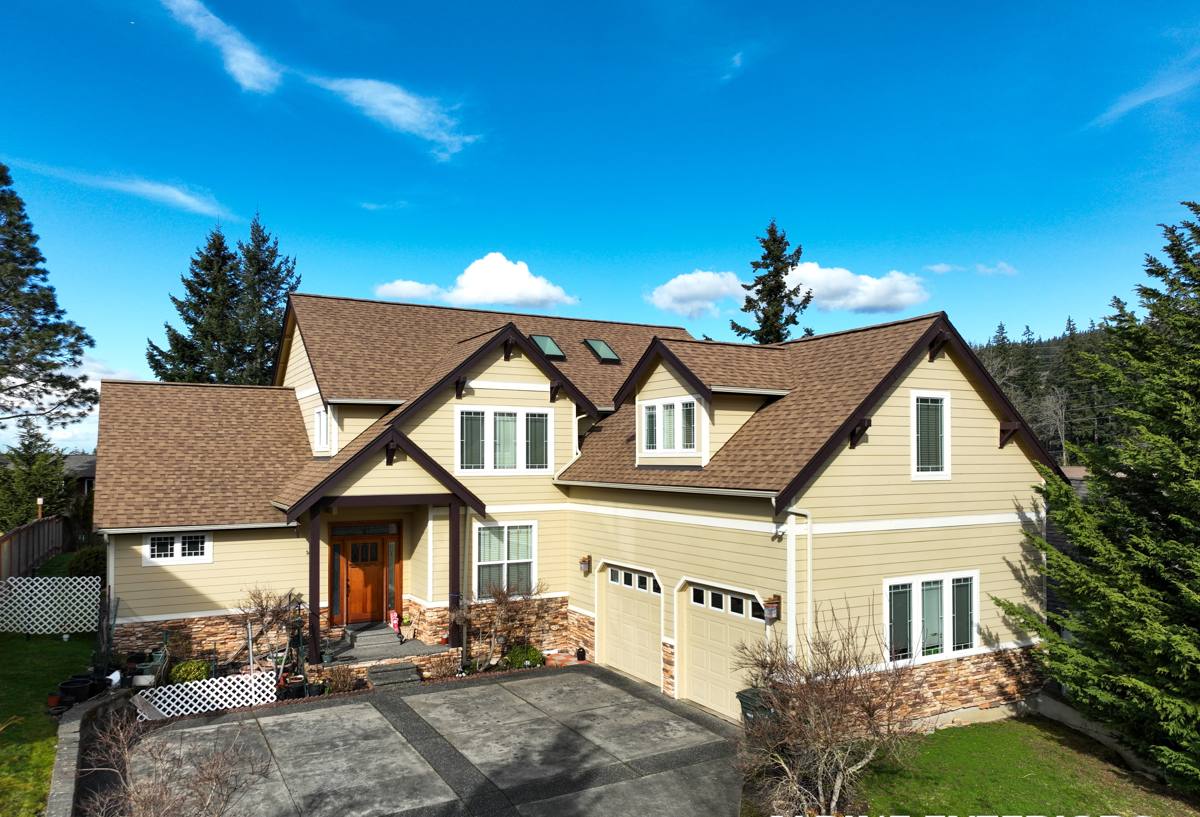
Signs Bellingham Homeowners Should Watch For
Siding problems in this climate rarely announce themselves with a dramatic failure. They start small and stay hidden until the damage has spread. Walk your home's exterior a couple of times a year and look for:
- Soft or spongy spots when you press on siding, especially near the bottom courses and around window trim
- Dark streaking, green film, or moss growth that keeps returning even after cleaning
- Paint or finish that's bubbling, peeling, or flaking in patches rather than evenly across a wall
- Visible gaps, cracks, or separation at seams, corners, and butt joints
- Rust staining running down from nail heads or metal trim pieces
- Warping, cupping, or boards that no longer sit flat against the wall
- A musty smell near exterior walls inside the home, which often points to moisture already past the siding
Any one of these on its own might be minor. Several showing up in the same area, especially on a wall that faces prevailing weather or sits in shade most of the day, usually means water has been getting behind the siding for a while.
How Siding Materials Hold Up to Repair in This Climate
Not all siding responds to repair the same way once moisture and salt air have been working on it. What's repairable — and how long a repair reasonably holds — depends heavily on the material underneath.
| Material | How it typically fails here | Repairability |
|---|---|---|
| Cedar / wood | Rot at butt joints and bottom courses, cupping, moss holding moisture in the grain | Repairable if caught early; rot spreads fast once it starts and often means replacing full boards |
| Vinyl | Cracking from impact, warping from heat behind dark colors, panels popping loose in wind | Individual panels can be swapped, but color-matching aged vinyl is difficult and water can travel behind panels unnoticed |
| OSB-based lap siding | Swelling and delamination at edges once moisture penetrates the composite core | Poor — swollen sections generally cannot be repaired and require full board replacement |
| Fiber cement (James Hardie) | Failures are almost always installation-related — caulking, flashing, or fastening — not the material itself | Strong — the board resists moisture absorption, so repairs are usually targeted and localized rather than widespread |
This is a big part of why we standardized on James Hardie fiber cement for the installation work we do. It's non-combustible, engineered for wet Pacific Northwest climates, and doesn't swell, rot, or feed moss the way wood-based products can. When we're called out to repair a home with Hardie siding, the underlying board is almost never the problem — it's usually a caulking joint, a flashing detail, or a fastener that needs attention. That's a very different repair conversation than what we have on homes with wood or OSB-based siding showing widespread moisture damage.
A Word on LP SmartSide and Similar Engineered Wood Products
We don't install LP SmartSide or comparable engineered wood siding, and repair calls are part of why. These products use a wood-strand core with a resin coating, and once that coating is breached — at a cut edge, a fastener hole, or a seam that's opened up — moisture gets into the core and the material swells. Swollen engineered wood doesn't shrink back down once it dries; the damage is permanent at that spot. We're happy to make honest repairs on it when asked, but we won't pretend it holds up in this climate the way fiber cement does.
What a Correct Siding Repair Actually Involves
A repair that just covers the visible damage is a repair that fails again in a year or two. Doing it right means treating the visible siding as a symptom, not the whole problem.
Step 1: Find the water path, not just the damage
Before we replace or patch anything, we trace where water is actually entering — a cracked caulk joint, a missing or mis-lapped flashing, a fastener that backed out, or a seam that was never properly sealed. Fixing the siding without fixing the entry point means the repair is temporary.
Step 2: Check what's behind the siding
Once damaged material is pulled, we look at the house wrap, sheathing, and framing underneath. If moisture has reached the sheathing, that needs to be addressed before new siding goes back on — covering wet sheathing with new siding just traps the problem.
Step 3: Match material and profile
Replacement pieces need to match the existing siding's profile, reveal, and finish as closely as possible. On older homes this sometimes means sourcing discontinued profiles or, when a section is too far gone to patch cleanly, discussing a full re-side of that wall or elevation instead.
Step 4: Reseal and re-flash correctly
Every joint, corner, and penetration gets proper flashing and sealant rated for exterior use — not just caulk smeared over a gap. This is the step that's most often done poorly on quick patch jobs, and it's the one that determines whether the repair lasts.
Repair or Replace: How to Think About It
Homeowners often call assuming they need a full re-side when a targeted repair would do, or assume a patch will work when the damage is too widespread to justify it. A few factors that actually drive the decision:
| Factor | Leans toward repair | Leans toward replacement |
|---|---|---|
| Extent of damage | Isolated to one or two areas | Recurring across multiple walls or elevations |
| Cause | A single identifiable flashing or caulking failure | Systemic issues — original installation lacked proper flashing throughout |
| Material condition | Rest of the siding is sound and matchable | Siding is at or past its expected service life, or the product is discontinued |
| Sheathing condition | Sheathing behind damaged area is dry | Moisture has spread into sheathing or framing across a wider area |
| Age of siding | Siding is relatively new with a clear one-time cause | Original siding is decades old and showing wear elsewhere too |
We'll give you a straight answer either way. If a repair genuinely solves the problem, that's what we'll recommend — a full re-side isn't the right call just because it's more work for us.
Why Local Experience With Bellingham's Climate Matters
A repair crew that mostly works drier inland areas can miss things that are routine knowledge for a crew working Whatcom County walls every week. Knowing which elevations catch the worst of the wind-driven rain, recognizing early-stage moss damage before it's obvious, and understanding how salt air affects fastener choice and trim metal over time all come from doing this work locally and repeatedly — not from a general contracting background. It also means we're not guessing at product performance in this climate; we've watched how different materials hold up on homes throughout the county over years, not months.
Maintaining Repaired Siding Through Moss Season
A good repair buys you time, but ongoing maintenance protects the investment. A few habits that matter most here:
- Keep gutters clear so overflow isn't running down siding walls during heavy rain
- Trim back vegetation and tree cover that keeps shaded walls damp longer than they need to be
- Gently clean moss and algae growth before it establishes rather than after, using methods appropriate to your siding material
- Recaulk visibly cracked or gapped joints promptly rather than waiting for a full season
- Have a yearly walk-around, ideally after the wettest months, to catch new issues early
These are simple habits, but they're the difference between a repair that lasts a decade and one that needs redoing in a couple of years.
Get an Honest Look at Your Siding
If you're seeing soft spots, staining, recurring moss, or gaps in your Bellingham home's siding, it's worth having someone look before the damage spreads further into the wall. We'll walk the exterior with you, explain what we're seeing and why, and give you a straightforward repair or replacement recommendation — no pressure either way. Reach out for a free estimate using the form below.