 Whatcom County
 Roofing for Nooksack's Wet Side of the Mountains
Nooksack sits in the part of Whatcom County where the weather off the Pacific and the pull of the foothills combine into long, wet winters, heavy fall rain, and short bursts of real summer heat. A roof here isn't just shedding water a few times a year — it's dealing with near-constant moisture for months, followed by UV exposure that bakes and dries out anything that wasn't installed correctly the first time. Asphalt shingle roofing is still the most practical choice for most homes in this area, but "asphalt shingles" covers a wide range of quality, and the difference between a roof that lasts 20 years and one that fails at 12 almost always comes down to the details of the install, not the shingle brand on the wrapper.
This page is about that one job — asphalt shingle roofing — done right for a Nooksack home, not a generic overview of every roofing system we offer.
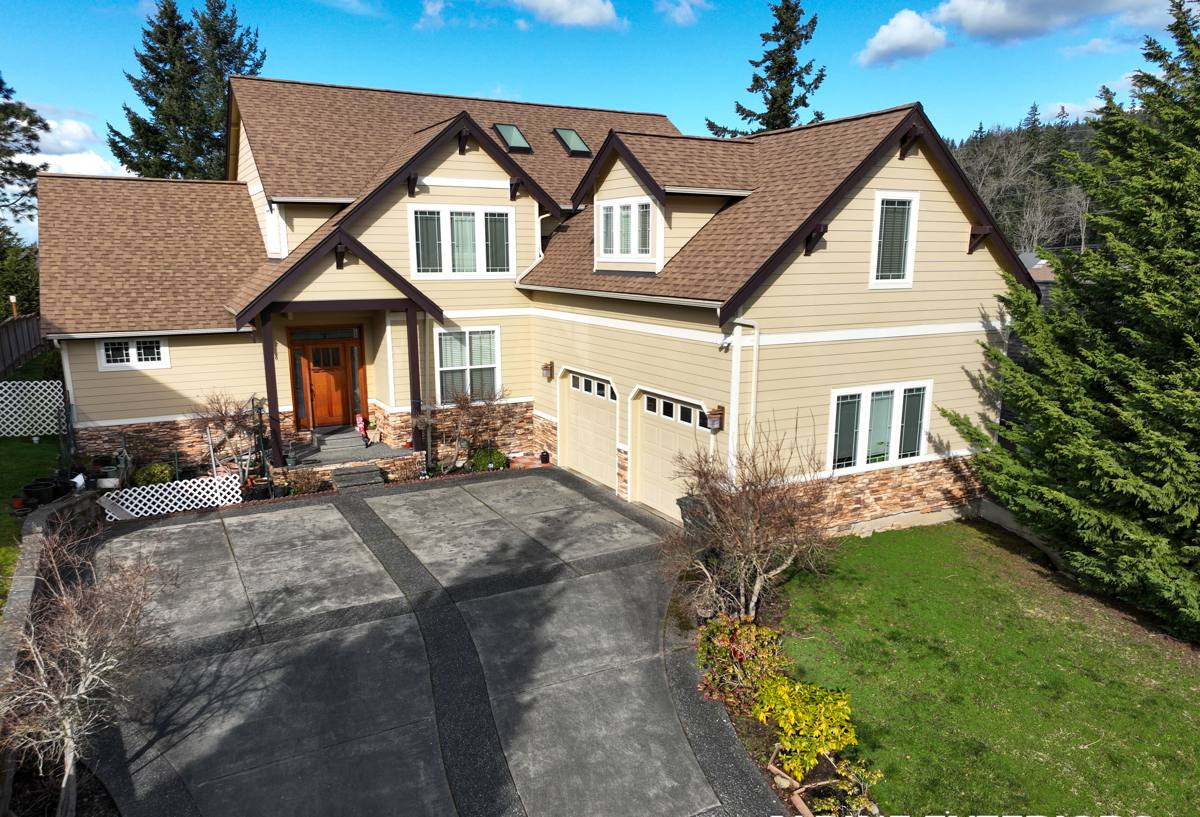
What Whatcom County's Climate Actually Does to a Roof
Salt air, driving rain, and a long moss season all take their toll on roofing in this part of the county, and Nooksack is no exception. A few specific ways that shows up:
- Moss and moisture retention: Shaded roof planes and north-facing slopes stay damp longer through fall and winter, giving moss and algae time to establish. Moss holds water against the shingle surface, which speeds up granule loss and can work its way under tabs over time.
- Wind-driven rain: Storms coming through the county don't just rain down — wind pushes water sideways and up under shingle edges, valleys, and flashing if those details weren't installed with enough overlap and sealant.
- Freeze-thaw cycling: Whatcom County doesn't get deep, sustained freezes most winters, but the repeated cycle of near-freezing nights and wet days stresses shingles, nails, and flashing seams over a roof's lifespan.
- UV and thermal swings: Summer sun exposure between rain events dries out asphalt shingles faster than in a consistently dry climate, which is part of why product quality and proper attic ventilation both matter more here than the marketing suggests.
None of this means asphalt shingles are a bad fit for Nooksack — they're used successfully on the majority of homes in this area. It means the install has to account for these conditions instead of following a generic checklist.
What a Correct Install Looks Like Here
Underlayment and Ice/Water Protection
Given how much of the year this region spends wet, we don't treat underlayment as an afterthought. Synthetic underlayment across the full roof, with self-adhering ice-and-water membrane at eaves, valleys, and around penetrations, gives the roof a real second line of defense if wind-driven rain gets past the shingle layer.
Flashing Details
Most leaks we get called out to inspect on older Whatcom County roofs trace back to flashing — around chimneys, skylights, sidewalls, and roof-to-wall transitions — not the shingles themselves. Step flashing, counter-flashing, and properly lapped valley metal are non-negotiable parts of a correct install, not upgrades.
Nailing Pattern and Fastening
Manufacturer nailing specs exist for a reason, and skipping them is one of the most common shortcuts on rushed re-roofs. Correct nail placement and count is what keeps shingles in place during the windier storms that move through the county, and it's directly tied to whether a manufacturer warranty is actually valid if you ever need to use it.
Ventilation
A roof deck that can't breathe traps moisture from inside the house against the underside of the shingles year-round. We check and correct intake and exhaust balance as part of every re-roof — this is covered in more detail below.
Signs a Nooksack Roof Needs Attention
| What You See | What It Usually Means |
|---|---|
| Dark streaks or green/black patches | Algae or moss growth — cosmetic at first, but left alone it holds moisture against the shingle |
| Granules collecting in gutters | Normal in small amounts on a new roof; heavier loss signals shingles are aging past their protective life |
| Curling or cupping shingle edges | Sun and moisture cycling breaking down the shingle mat, often tied to poor attic ventilation |
| Soft spots or sagging when walked | Deck moisture damage underneath — needs inspection before it spreads |
| Daylight in the attic or staining on rafters | Active or past leak, usually at a flashing point, not a shingle field |
Choosing a Shingle for This Climate
We install a range of asphalt shingle products, and the right one depends on your roof's exposure, your budget, and how long you want to plan around before your next re-roof. Broadly, options fall into three tiers:
| Shingle Type | Typical Lifespan | Best For |
|---|---|---|
| 3-tab / economy | 15–20 years | Budget-focused projects, rentals, or roofs nearing a planned remodel |
| Architectural / dimensional | 25–30+ years | Most Nooksack homes — better wind resistance and a heavier mat that holds up to this climate |
| Premium / algae-resistant | 30+ years | Shaded lots, north-facing roof planes, or homeowners who want to minimize moss maintenance |
For most homes in this area, we steer people toward architectural shingles with algae-resistant granules. The upcharge over 3-tab is modest, and given how much of the year Nooksack roofs stay damp, that granule treatment earns its keep. We'll walk you through actual product options and warranty terms for your roof rather than pushing one line — the right call depends on your roof's specific exposure.
Ventilation and Moisture Control
This is the part of a re-roof that's easy to skip and expensive to ignore. Intake vents at the eaves and exhaust at the ridge need to work together to move air across the underside of the roof deck. Without that airflow, moisture from inside the home condenses against the deck through the wetter months, which shortens shingle life from underneath — no amount of premium shingle upstairs fixes a ventilation problem below it. We assess your attic's current ventilation as part of every estimate and include corrections in the scope when needed, not as a surprise add-on later.
Our Process for a Nooksack Re-Roof
- On-site inspection and estimate: We look at the existing roof, deck condition, ventilation, and any problem areas (valleys, chimneys, skylights) before quoting anything.
- Clear written scope: Materials, underlayment, flashing approach, and ventilation corrections spelled out — no vague line items.
- Tear-off and deck inspection: Old roofing removed down to the deck so we can check for soft spots or damage that photos and ground-level inspections can't catch.
- Underlayment, flashing, and shingle install: Done to manufacturer spec so warranty coverage stays intact.
- Cleanup and walkthrough: Magnetic sweep for nails, debris cleared, and a walkthrough so you know what was done and what to watch for going forward.
Cost Factors for a Nooksack Roofing Project
| Factor | How It Affects Cost |
|---|---|
| Roof size and pitch | Steeper roofs take longer and require more safety setup, adding labor cost |
| Number of layers to remove | Tear-off of multiple old layers adds disposal and labor time |
| Deck condition | Rotten or soft sheathing found during tear-off needs replacement before shingles go down |
| Shingle tier | 3-tab, architectural, and premium products carry different material costs |
| Flashing and detail work | Roofs with more valleys, chimneys, or skylights need more flashing labor |
| Ventilation corrections | Adding or upgrading intake/exhaust vents is a modest add if planned into the scope upfront |
We give straightforward, written estimates after seeing the roof in person — we don't ballpark pricing sight unseen, because the deck condition and detail work genuinely change the number.
Why a Crew That Works This Area Matters
A roofing crew that regularly works Whatcom County knows what this climate does to a roof over time, not just what a spec sheet says. That means recognizing moss patterns tied to shading and slope, knowing which flashing details tend to fail first on older homes in this area, and setting ventilation up to handle a genuinely wet climate rather than a national-average one. It also means being reachable if a question comes up after the job is done — we're not driving in from out of the area for a one-time install.
What to Ask Any Roofing Contractor Before You Hire
- Are you licensed and insured in Washington, and can you provide proof?
- Will you inspect the deck during tear-off, not just estimate from the ground?
- What underlayment and ice-and-water protection is included, not optional?
- How will attic ventilation be assessed and addressed?
- Is the manufacturer warranty tied to certified installation, and does your crew qualify?
- What's actually in writing — scope, materials, and cleanup — before work starts?
Get an Estimate
If your Nooksack roof is showing moss, granule loss, or you just want an honest read on how much life it has left, we're happy to take a look. The estimate is free, there's no pressure, and you'll get a straight answer about what your roof actually needs — use the form below to get started.