 Whatcom County
 Why Siding Repair Looks Different in Sunnyland
Sunnyland is one of Bellingham's older residential neighborhoods, and homes here carry a mix of siding generations — some original wood lap siding from decades past, some vinyl added during a remodel, some newer fiber cement. What almost every house in this part of Whatcom County has in common is exposure. Sunnyland sits close enough to Bellingham Bay that salt-laden air reaches the siding on a regular basis, and that air arrives alongside driving rain off the water and a moss season that can run most of the year. Siding repair here isn't just about patching a hole or replacing a cracked board — it's about understanding why that board failed in the first place and making sure the repair doesn't fail the same way in three years.
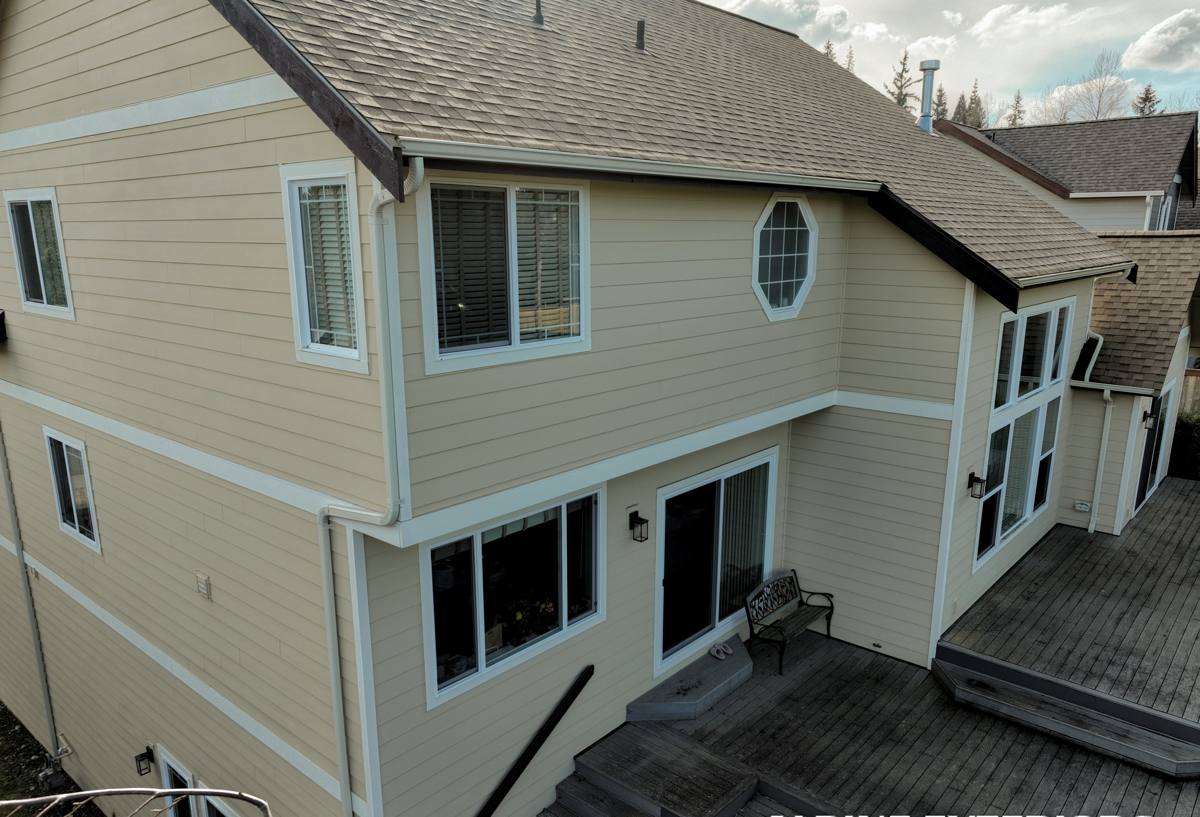
What Whatcom County's Climate Does to Siding
Salt air
Airborne salt is corrosive to fasteners, flashing, and any metal trim tucked behind or around siding panels. Over years, it also breaks down cheaper paint finishes faster than inland exposure would, which is why houses closer to the water tend to show chalking, fading, and edge failure sooner than the same siding would show a few miles inland.
Driving rain
Wind-driven rain off Bellingham Bay doesn't just fall straight down — it gets pushed sideways into laps, seams, and butt joints. Siding that was installed with tight or improperly caulked joints, or without correct overlap, gives that wind-driven water a path behind the surface. Once water gets behind siding, the damage happens where you can't see it until it's advanced.
A long moss season
Shade, humidity, and the region's mild wet winters add up to moss and algae that can take hold on horizontal siding surfaces, trim, and anywhere debris collects. Moss holds moisture against the surface far longer than open air would, which accelerates rot in wood substrates and can stain or degrade lesser paint finishes on other materials.
Signs a Sunnyland Home Needs Siding Repair Now
Most siding failures we see in this neighborhood give warning signs well before they become structural. Homeowners who catch these early save real money on the repair:
- Soft or spongy spots when you press on the siding, especially near the bottom courses or below windows
- Paint that's peeling, bubbling, or chalking heavily in one area but not others
- Visible gaps at seams, corners, or trim where caulking has shrunk or pulled away
- Moss or dark staining concentrated on north- or west-facing walls
- Warped, cupped, or bowed boards, particularly on older wood siding
- Water stains or musty smell on interior walls that back up to exterior siding
- Fastener heads showing rust streaks bleeding down the siding face
None of these mean the whole house needs new siding. But they do mean the area should be opened up and inspected before the next wet season, not after.
What a Correct Repair Job Actually Involves
A repair that just covers the visible damage without addressing the cause is a repair you'll be paying for again. A correct job starts with removing enough surrounding material to see how far the moisture has traveled — often further than the visible damage suggests — and checking the condition of the water-resistive barrier, flashing, and framing underneath.
From there, the work generally includes:
- Cutting out and removing all damaged and moisture-compromised material, not just the section that looks bad
- Inspecting and repairing the underlying weather barrier and flashing, especially at windows, doors, and penetrations
- Letting any wet framing dry, or replacing it, before closing the wall back up
- Installing new siding material with correct overlap, fastening pattern, and clearances
- Re-sealing joints and transitions with the right sealant for the material and location
- Matching the color and profile closely enough that the repair doesn't stand out as a patch
Skipping the underlying inspection is the single most common shortcut in siding repair, and it's the reason so many "repairs" fail again within a few years — especially in a climate that gives water this many chances to get in.
Repair, Panel Replacement, or Full Re-Side? How We Decide
Not every damaged section needs to become a full re-siding project, and not every spot repair is actually the right call. The decision comes down to how contained the damage is and how much of the rest of the siding is nearing the end of its service life.
| Situation | Recommended Approach | Why |
|---|---|---|
| Isolated damage (one impact spot, one leak point), siding otherwise sound | Targeted repair | No reason to replace performing material; fix the cause and the visible damage |
| Damage repeats in the same area after a prior repair | Panel or section replacement plus root-cause fix | Recurring failure usually means the underlying flashing or barrier issue was never solved |
| Multiple areas failing across different walls, siding beyond original warranty life | Full re-side | Patching aging siding piecemeal costs more over time than one correctly sequenced replacement |
| Original wood siding with widespread moisture damage | Full re-side, typically to fiber cement | Wood in this climate keeps absorbing water at the same rate; repair alone doesn't change that exposure |
We'll always tell you honestly which category your home falls into rather than defaulting to the bigger job.
Our Process for Sunnyland Siding Repair
- Inspection. We walk the exterior, check every wall exposure, and probe suspect areas rather than just looking at surface condition.
- Diagnosis. We identify whether the damage is from a failed seal, missing flashing, direct impact, or long-term moisture exposure from moss and shade.
- Scope and estimate. You get a clear explanation of what needs to come off, what's underneath it, and what the repair will involve — no vague line items.
- Repair. We remove compromised material, correct the underlying issue, and install new siding to match.
- Final check. We confirm sealants, flashing, and fastening are correct before we call the job done, since these are the details that determine whether the repair holds through the next wet season.
Why We Repair With James Hardie
When a repair calls for new siding material rather than a patch of the exact original product, we install James Hardie fiber cement — the only siding brand we put on homes. Hardie doesn't absorb water the way wood does, so it isn't feeding the same rot cycle that caused the original damage. Its factory-applied ColorPlus finish is baked on and formulated to hold color and resist the fading and chalking that salt air and UV accelerate on lesser paint jobs, which matters on a wall that's going to keep taking wind and rain off the bay for the next several decades. Hardie's HZ product lines are engineered for wet climate zones like ours, and the product carries a strong transferable warranty backing that performance.
We don't install LP SmartSide, vinyl, or primed wood as replacement material during a repair, even when it would be a faster or cheaper match to what's already on the house. Our standard is that a repair should outlast the conditions that caused the original failure, and in a climate with this much salt air, rain, and moss, that's the product we're willing to stand behind.
What Siding Repair Costs in Sunnyland
Repair costs vary more than replacement costs, because so much depends on what's found once the wall is opened up. These are the factors that move the price the most:
| Cost Factor | Why It Matters |
|---|---|
| Extent of hidden moisture damage | Framing repair or replacement adds real labor beyond the siding itself |
| Accessibility | Second-story walls, tight setbacks, and areas over landscaping take longer to work safely |
| Color and profile matching | Matching an existing product line closely enough to blend is more work than a straight swap |
| Number of separate damaged areas | Several small repairs across a house often cost more in aggregate than one larger contiguous section |
| Flashing and barrier condition | Replacing failed flashing correctly is a small added cost that prevents the same failure from repeating |
We give a firm, itemized estimate after inspection rather than a phone-quote guess, because in this climate the visible damage is rarely the whole story.
Maintaining Repaired Siding Through Whatcom County Winters
A good repair still needs basic upkeep to get its full lifespan out of the local climate:
- Rinse moss and algae buildup off horizontal surfaces and trim before it has a chance to hold moisture against the siding for months
- Keep gutters clear so overflow isn't running down the wall face during heavy rain
- Trim back vegetation that's shading a wall and keeping it damp longer than the rest of the house
- Walk the exterior after major windstorms and check caulking at joints and trim annually
- Address small paint or seal issues immediately rather than waiting for the next repair cycle
Why Hiring a Crew That Already Works Sunnyland Matters
A repair crew that works this neighborhood regularly already knows which wall exposures in Sunnyland take the worst of the wind-driven rain, how far moss damage typically travels under a shaded eave, and what correct flashing looks like on the housing stock that's common here. That familiarity means less time spent diagnosing and more time spent fixing the actual problem — and it means the repair is built around how this specific stretch of Whatcom County's climate behaves, not a generic checklist.
If you're seeing early warning signs on your siding, or you already know there's a problem area that needs attention before the next wet season sets in, we're happy to take a look. Reach out for a free, no-pressure estimate — we'll tell you plainly what we find and what it will take to fix it right.