 Whatcom County
 Why South Hill Decks Wear Out Faster Than People Expect
South Hill sits close enough to Bellingham Bay that salt air is a real factor in how exterior wood and hardware age, and it sits squarely in a part of Whatcom County that gets long stretches of driving rain from fall through spring. Add the shade from mature trees on many South Hill lots and you get a long moss season — moss and algae that hold moisture against decking boards for months at a time. None of this is dramatic on its own, but stacked together, year after year, it's exactly the combination that shortens the life of a deck.
Most deck damage we find isn't from one bad storm. It's from slow, repeated wetting and drying, salt-laced air corroding fasteners, and moss holding water against wood surfaces long after a rain has stopped. A deck repair done for a South Hill home needs to account for that pattern, not just patch whatever is visibly broken.
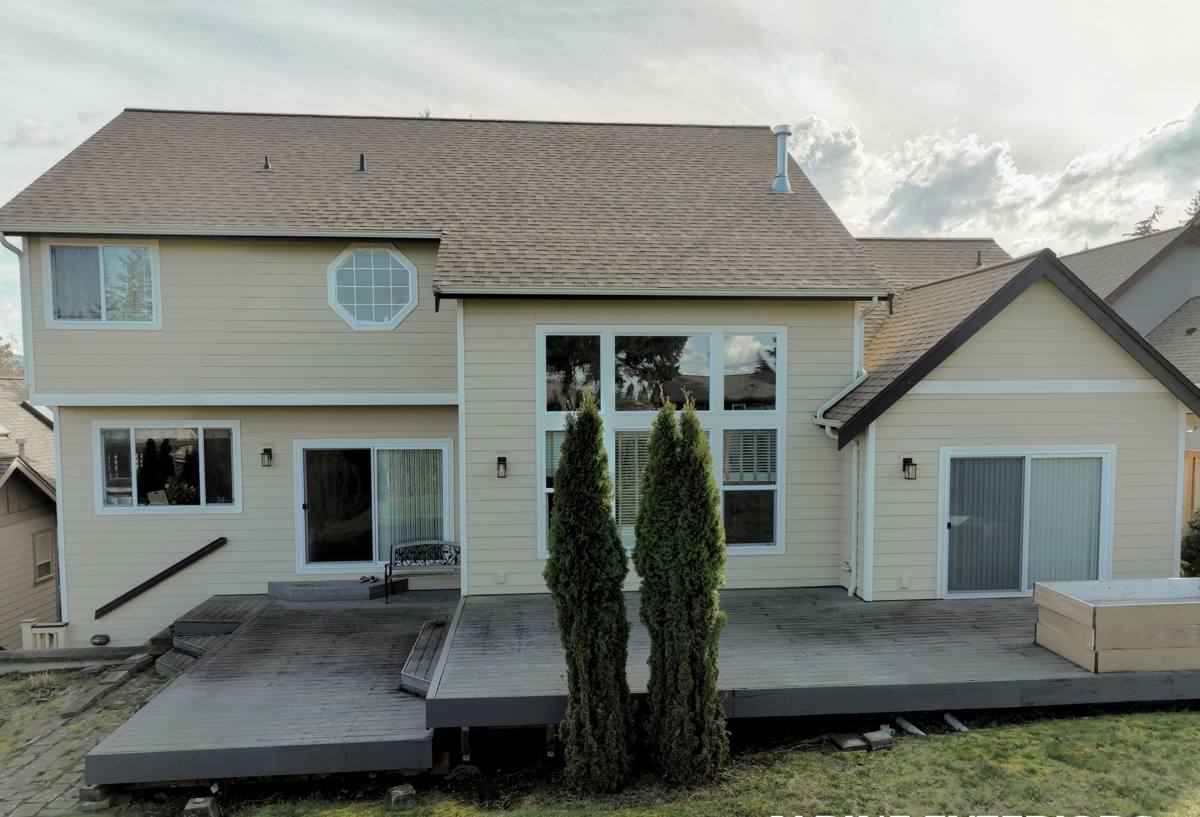
Common Deck Problems We See on South Hill Homes
Rot at the Ledger Board
The ledger board — where the deck attaches to the house — is the single most important connection on the whole structure, and it's also the spot most likely to trap water if it wasn't flashed correctly when the deck was built. On older South Hill homes, we regularly find ledger boards that were never properly flashed against the siding or sheathing. Water works its way behind the board over years, and by the time it shows up as soft wood or a stain on the siding above, there's often hidden rot in the framing behind it.
Corroded or Failing Fasteners
Salt-influenced air doesn't just affect homes right on the water. It travels, and over enough years it accelerates corrosion in nails, screws, and joist hangers — especially older galvanized hardware that wasn't rated for coastal exposure. Corroded fasteners lose grip strength gradually, which is why a deck can feel "a little bouncy" long before anything looks visibly wrong.
Moss, Algae, and Trapped Moisture
A deck shaded by trees or a north-facing wall can stay damp for days after a storm passes. Moss and algae growth isn't just cosmetic — it holds water against the wood surface, softens the top layer of fibers, and creates a slick, slippery walking surface that's a real fall hazard on stairs and ramps.
Loose or Undersized Railings
Railings and stair stringers take direct abuse from rain and freeze-thaw cycles at the post bases. We see posts that have rotted at the base where they meet a concrete footing, and railing systems that were adequate when installed but no longer meet current code spacing or load requirements.
What a Correct Deck Repair Actually Involves
A repair that actually holds up in this climate goes beyond swapping a few boards. On every deck repair we start with a structural check, not just a surface check:
- Inspect the ledger board connection and flashing where the deck meets the house
- Check joist hangers and fasteners for corrosion or loosening, not just visible rust
- Probe deck boards, joists, and posts for soft spots with an awl, not just a visual look
- Confirm post bases are set above standing water and footings haven't shifted
- Check railing height, baluster spacing, and stair stringer condition against current code
- Look for gaps or missing flashing where the deck surface meets the house siding or a door threshold
Skipping the structural check is how a homeowner ends up paying twice — once for cosmetic board replacement, and again a year or two later when the framing underneath finally fails.
Our Deck Repair Process
We keep this straightforward because it needs to be repeatable, not because it's complicated:
- On-site assessment. We walk the whole deck, check the ledger connection, and probe suspect boards and framing members before quoting anything.
- Scope and options. We tell you plainly what's cosmetic, what's structural, and what can honestly wait versus what shouldn't. You get a clear scope, not a guess.
- Repair the structure first. Ledger flashing, joist hangers, framing, and post bases get corrected before any decking or railing goes back on top.
- Replace decking, rails, and stairs as needed. Matched or upgraded materials, fastened with hardware rated for our coastal-influenced air.
- Final check and cleanup. We confirm the deck is level, secure, and code-compliant on railings and stairs before we call it done.
Repair vs. Replace: What Actually Drives the Decision
Not every problem deck needs to be torn out. The honest answer usually comes down to how much of the structure — versus just the surface — is affected.
| Factor | Favors Repair | Favors Replacement |
|---|---|---|
| Ledger board condition | Sound, properly flashed once corrected | Widespread rot behind the ledger or into house framing |
| Framing (joists, beams, posts) | Isolated soft spots, easily sistered or swapped | Rot or corrosion spread across multiple structural members |
| Decking surface | Localized board damage, moss staining | Most boards cupped, splintering, or rotted through |
| Railings and stairs | Loose but structurally sound, code-compliant spacing | Out of code, rotted posts, or unsafe stringer condition |
| Age of the deck | Under roughly 12–15 years, one issue at a time | Original construction quality unknown, multiple systems failing at once |
We'll always tell you if a "repair" would just be delaying an inevitable rebuild — that's not a call we make lightly, and it's one we explain in plain terms with what we actually find on-site.
Signs Your Deck Needs Attention Now
- Boards that feel spongy, springy, or noticeably softer underfoot in specific spots
- A stain, dark line, or bubbling paint on the siding directly above the ledger board
- Railings or posts that move when you push on them from the side
- Persistent green or black growth on boards that doesn't dry out between rains
- Gaps opening up between the deck and the house wall
- Visible rust streaking from screws, nails, or joist hanger hardware
- Stairs that feel uneven, bouncy, or have a stringer pulling away from a step
Materials: What We Use and Why
Pressure-Treated Wood
Still a solid, cost-effective choice for framing and often for decking itself, provided it's properly sealed and re-sealed on a regular schedule. In a climate with this much rain and moss pressure, an unsealed or infrequently maintained wood deck will show wear years before a well-maintained one.
Composite and Capped Decking
Composite decking resists moisture absorption and moss staining better than raw wood, which matters given how long South Hill decks stay damp under tree cover. The trade-off is a higher upfront cost and the need for correct spacing and fastening — composite behaves differently than wood under temperature swings, and installation mistakes show up as buckling or gapping down the line. We'll walk you through the real maintenance difference rather than oversell either option.
Fasteners and Hardware
This is where we don't cut corners regardless of decking material. Given the salt-influenced air in this part of Whatcom County, we use fasteners and joist hangers rated for coastal or high-corrosion exposure, even on repairs where the original hardware wasn't.
Why Hiring a Crew That Already Works South Hill Matters
A deck built or repaired for a landlocked, dry-climate town doesn't need the same attention to flashing details, fastener grade, or moss management that a South Hill deck needs. A crew that regularly works this specific part of Whatcom County has already seen which failure points show up first here — the ledger, the fasteners, the shaded corners that never fully dry — and builds the repair around those realities instead of a generic checklist. That's less about a sales pitch and more about not making you pay for the same lesson twice.
After the Repair: Keeping It That Way
A repaired deck still needs upkeep in this climate. A yearly rinse to knock back moss and algae before it takes hold, a resealing schedule for wood decking (roughly every one to three years depending on sun exposure and traffic), and keeping gutters and downspouts clear so runoff doesn't dump extra water onto the deck surface all go a long way toward making a repair last rather than needing to be redone.
If you're noticing soft spots, moss buildup, a wobbly rail, or just want an honest read on where your deck stands, we're happy to come take a look. The estimate is free, there's no pressure to move forward, and you'll get a clear, straight answer about what's actually going on — just fill out the form below to get started.