 Whatcom County
 Why Decks in Silver Beach Wear Out Faster Than the Manual Says
Every deck manufacturer publishes a lifespan estimate, and almost none of those numbers were calculated with a Whatcom County winter in mind. Silver Beach sits in a stretch of the county where salt-laden air, long stretches of driving rain, and a moss season that can run eight months or more all work on wood and fasteners at the same time. That combination does more damage than any single factor alone — moisture gets driving help from wind-blown rain, salt air accelerates corrosion on anything metal, and moss holds all of it against the deck surface long after a drier climate would have let the wood dry out.
The result is a pattern we see a lot in this area: decks that look fine from a distance but have soft joists, rusted-through fasteners, or a ledger board connection that's been quietly rotting behind the siding for years. A deck replacement done right for Silver Beach isn't just about swapping old boards for new ones — it's about building the structure underneath to actually hold up to this specific climate.
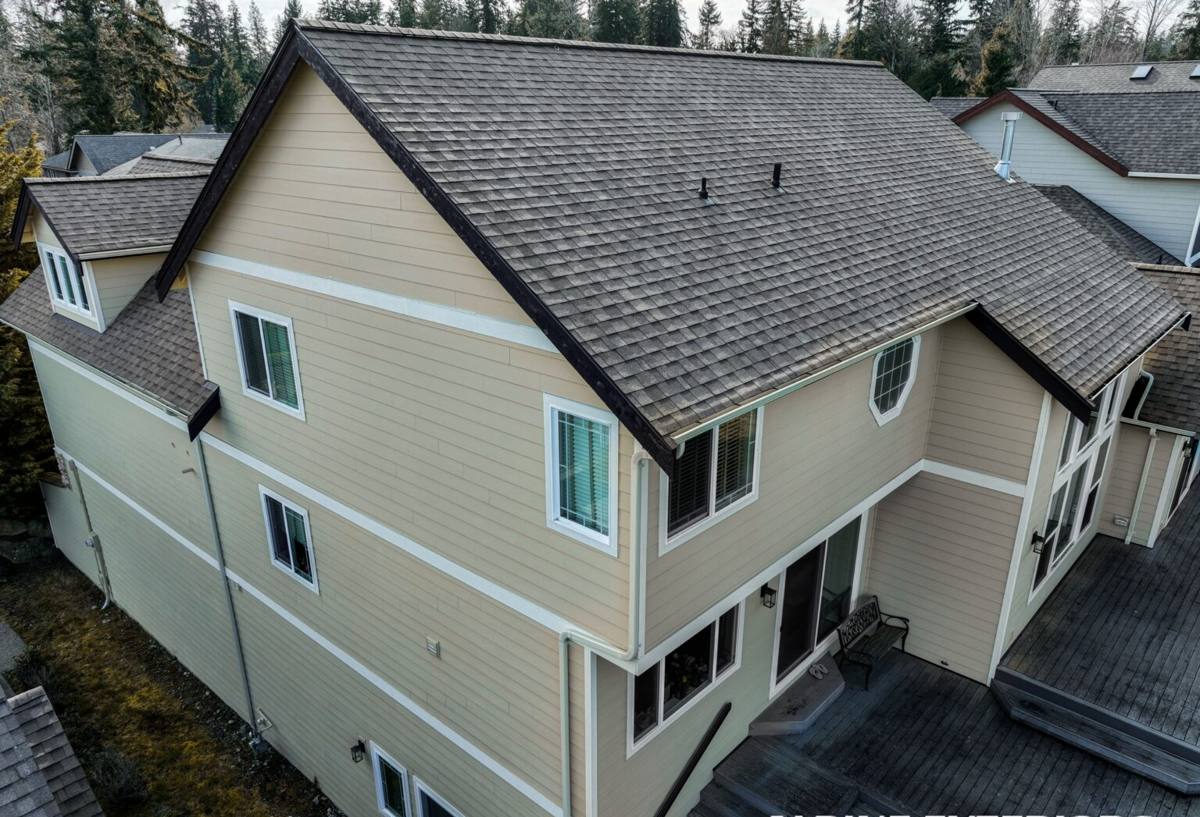
Signs a Deck Needs Replacement, Not Just Repair
Repair makes sense when the problem is isolated. Replacement makes sense when the structure itself has been compromised. Here's how to tell which situation you're in:
- Boards feel spongy or spring underfoot in more than one area, not just near a planter or downspout
- You can push a screwdriver into the end grain of joists or the ledger board with light pressure
- Fasteners are rusted, staining the wood around them, or have started to back out on their own
- Railing posts wiggle at the base — this usually means the framing they're bolted to has softened
- Moss or dark staining returns within weeks of cleaning, no matter how often you scrub it
- The deck was built before current flashing standards and has no visible flashing where it meets the house
- Footings have shifted, cracked, or heaved, causing the deck to feel uneven or slope toward the house
One or two of these on their own might be repairable. Several together, especially involving the ledger board or footings, usually means the framing has reached the point where patching it is a short-term fix on a structure that needs to come out.
What a Correct Deck Replacement Actually Involves
The Ledger Board Connection
This is the single most important detail on any deck attached to a house, and it's the one most likely to be done wrong on older builds. The ledger board bolts the deck to the structure of the house, and if it isn't flashed correctly, water runs behind it and rots both the ledger and the house framing behind the siding. In a climate that gets as much sustained rain as this one, a proper ledger flashing detail — with flashing tucked under the house's water-resistive barrier, not just caulked over the top — isn't optional.
Framing and Footings
We use pressure-treated lumber rated for ground contact on any framing member exposed to moisture, and we check footing depth and size against current code rather than just matching whatever was there before. A lot of older decks in this area were built on undersized or shallow footings that have slowly shifted with freeze-thaw cycles and saturated soil. Replacement is the chance to fix that permanently instead of building a new deck on the same compromised foundation.
Fasteners and Hardware
Salt air corrodes standard fasteners faster than most homeowners expect, especially anything closer to open water or exposed to prevailing wind. We use stainless steel or coated fasteners rated for exterior and coastal-influenced exposure, along with structural hardware — joist hangers, post bases, hold-downs — rated for the same conditions. Cheaper hardware might save a little upfront, but replacing a deck because the fasteners failed years before the boards did is money spent twice.
Choosing Decking Material for This Climate
There's no single "best" decking material — there's a best material for your budget, maintenance tolerance, and how much moss and moisture exposure your specific lot gets. Here's how the common options actually perform in a wet, moss-prone climate like this one:
| Material | Moisture & Moss Behavior | Maintenance | Typical Lifespan |
|---|---|---|---|
| Pressure-treated wood | Absorbs water, needs sealing to resist moss and rot | Annual cleaning and re-sealing | 10–15 years with upkeep |
| Cedar | Naturally rot-resistant but still needs sealing in wet shade | Sealing every 1–2 years | 15–20 years with upkeep |
| Composite decking | Doesn't rot, but can hold surface moisture and grow moss in shaded, poorly ventilated spots | Periodic cleaning, no sealing | 25–30 years |
| PVC decking | Fully moisture-resistant, least hospitable surface for moss | Occasional cleaning | 25–30+ years |
Composite and PVC cost more upfront but remove the sealing cycle entirely, which matters in a climate where a missed sealing year can mean visible moisture damage by the following winter. Wood costs less to install but only performs as well as the maintenance schedule behind it — and on a shaded, damp lot, that schedule needs to be kept consistently, not just when the deck starts looking rough.
A Note on Ventilation
Whatever material you choose, how the deck is built matters as much as what it's built from. Boards installed too tight together, or framing with poor airflow underneath, trap moisture regardless of material — that's often why composite decks in shaded yards still grow moss along the edges. Proper board spacing and joist layout that allows air to move underneath the deck cuts down on moss regrowth no matter what surface you choose.
Railings, Stairs, and Code Requirements
Deck replacement is also the point where an older deck gets brought up to current building code, which matters both for safety and for resale. Common issues we find on older Silver Beach decks include railing heights below current requirements, baluster spacing wide enough for a small child to pass through, and stair stringers sized for a smaller structure than what's actually being supported. Whatcom County requires permits for most deck replacement work, particularly when it involves structural changes, height above a certain threshold, or work attached to the house — and inspections at the framing stage confirm the footings, ledger connection, and structural members meet code before the decking goes on.
Skipping the permit might save time upfront, but it creates real problems at resale, when an uninspected structure can hold up a sale or trigger a buyer's inspector to flag it. We pull permits as a standard part of the process, not an upcharge.
Our Deck Replacement Process
- On-site assessment — we check the ledger connection, footings, framing, and existing drainage before quoting anything, so the estimate reflects what's actually under the deck, not just its square footage
- Design and material selection — we walk through decking options, railing style, and layout based on how you use the space and how much maintenance you want to take on long-term
- Permitting — we handle the permit application and schedule the required inspections with the county
- Demolition and disposal — the old deck comes out, including footings if they're undersized or in the wrong location for the new layout
- Framing and flashing — new footings, joists, and ledger board with proper flashing, built to current code
- Decking, railings, and stairs installed — with attention to fastening method, spacing, and drainage underneath
- Final walkthrough — we go over care and maintenance for whatever material you chose, so you know what upkeep it actually needs in this climate
What Affects the Cost of a Deck Replacement
| Factor | Why It Matters |
|---|---|
| Deck size and height | Larger decks and those requiring taller footings or stairs need more material and labor |
| Decking material | Wood costs less upfront; composite and PVC cost more but need far less long-term maintenance |
| Ledger and framing condition | Rot found behind siding during demo can add house-side repair work beyond the deck itself |
| Footing count and depth | Undersized or shifted footings often need to be replaced, not reused, adding to the structural scope |
| Railing and stair complexity | Custom railing styles, multiple stair sections, or code upgrades add labor and material |
| Permit and inspection requirements | Structural work attached to the house generally requires permitting and scheduled inspections |
We give a firm, written estimate after the on-site assessment — not a phone-quote guess — because the condition of what's under an old deck varies enough on this kind of lot that a real number requires actually looking at it.
Maintaining a New Deck in This Climate
- Sweep or blow off leaves and debris regularly — trapped organic matter is what feeds moss growth
- Clean the deck surface at least once a year, more often in heavily shaded areas
- Reseal wood decking on schedule — don't wait until it looks dry, since damage starts before it's visible
- Check the ledger flashing area annually for any signs of water staining on the siding above it
- Keep gutters and downspouts near the deck clear so runoff isn't draining directly onto or under it
- Trim back vegetation that shades the deck and slows drying after rain
Why Hire a Crew That Already Works in Silver Beach
Deck replacement done by a crew unfamiliar with this specific climate tends to repeat the same mistakes the original deck had — undersized footings, minimal flashing, fasteners rated for a drier region. A crew that already works Whatcom County knows which details actually matter here: how deep footings need to go given local soil and moisture conditions, which fastener grades hold up against the salt air common to this part of the county, and how to frame for drainage and airflow so moss doesn't reclaim a brand-new deck by its second wet season.
That local experience also means a faster, more accurate estimate — we're not guessing at what a Silver Beach lot will throw at a deck, we've built and replaced them under these exact conditions before.
If your deck is showing its age or you're planning ahead of a problem, we're happy to take a look and give you an honest read on repair versus replacement. Use the form below to request a free, no-pressure estimate.