 Whatcom County
 Building Decks That Actually Hold Up in Sehome
Sehome sits close enough to the water and high enough on the hill that its homes catch a particular mix of weather: salt-tinged air rolling in off Bellingham Bay, long stretches of driving rain through fall and winter, and the kind of shaded, damp microclimate that keeps moss thriving nine months out of the year. A deck built without that combination in mind will look fine for a season or two and then start showing problems — cupped boards, soft spots at the ledger, green film on every horizontal surface, fasteners bleeding rust down the face boards. A deck built for Whatcom County conditions from day one avoids most of that.
This page covers what we actually do differently when we build a deck in Sehome specifically, not just "a deck in the Pacific Northwest." The framing, fastener choices, ledger flashing, and material picks all get adjusted for a coastal-influenced, high-moisture, moss-prone site.
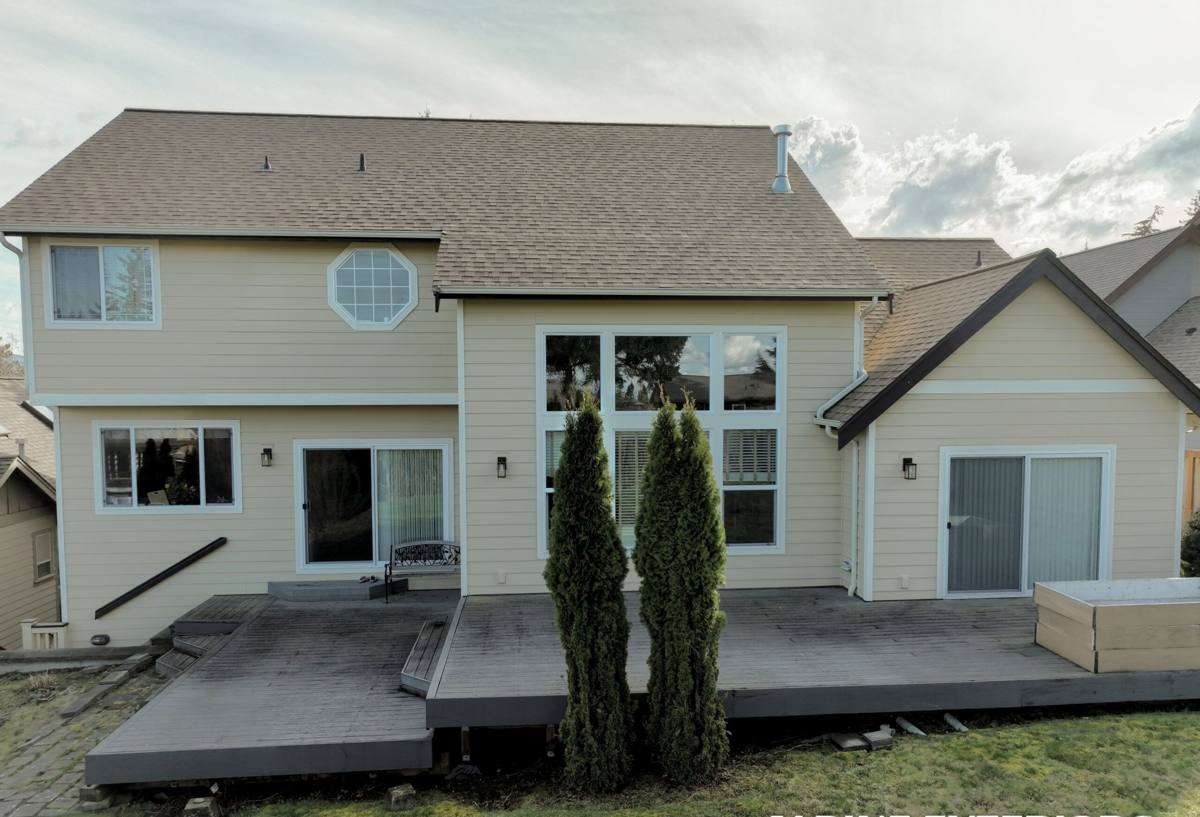
What Sehome's Climate Does to an Outdoor Deck
Salt Air and Metal Fatigue
You don't need to be beachfront to get salt exposure — Bellingham Bay's air moves inland on prevailing winds and settles on anything metal. Standard electro-galvanized screws and joist hardware corrode faster here than the box label suggests. Once a fastener starts rusting, it weakens from the inside, and by the time you see staining on the decking above it, the hardware underneath may already be compromised.
Driving Rain and Water Path
Whatcom County doesn't just get rain — it gets rain pushed sideways by wind off the Strait and the bay often enough that water finds its way into gaps most builders don't think to seal. Ledger boards, stair stringers, and post bases are the usual failure points. If water gets behind the ledger flashing or pools at a post base with no way to drain, rot starts in a spot you can't see until the damage is structural.
Moss, Algae, and Shade
Sehome's tree cover and the region's long grey stretches mean many decks sit in partial shade most of the year. That's a moss and algae incubator. Beyond looking bad, a mossy deck surface holds moisture against the wood or composite cap far longer than a clean, sun-exposed one, and it turns every walking surface slick the moment it rains — which in this county is often.
What a Correct Deck Build Includes Here
A deck that's built right for this specific area isn't a different design — it's the same solid framing and layout everyone should get, plus a handful of details most crews skip when they're not used to building in a wet, coastal-adjacent county.
- Stainless steel or heavy-duty coated structural screws and joist hardware, not standard electro-galvanized, anywhere exposed to weather or ground contact
- Full ledger flashing with a proper drip edge and self-adhering membrane behind it, not just caulk at the house connection
- Joist tape on every joist top before decking goes down, so screw penetrations don't become water entry points
- Post bases set above grade with a drainage gap, never buried or sitting in standing water after a storm
- Decking spaced correctly for airflow and drainage, not tight-fit for looks, which trades longevity for a few weeks of a cleaner appearance
- Stair stringers and any framing near grade rated or treated for ground contact, since splashback and shade keep that zone damp longer than the rest of the structure
Choosing the Right Decking Material for Sehome
There's no single "best" decking material — there's the right one for how the deck sits, how much shade it gets, and what the homeowner wants to maintain. Here's how the common options actually perform under Whatcom County's rain-and-moss conditions, in plain terms.
| Material | How It Handles Local Moisture | Moss/Algae Behavior | Maintenance |
|---|---|---|---|
| Pressure-treated fir/hem-fir | Good if sealed and re-sealed on schedule; end grain is the weak point | Needs regular cleaning or moss takes hold fast in shaded spots | Annual inspection, re-seal every 1-2 years |
| Cedar | Naturally moisture-resistant, still benefits from a finish | Better natural resistance, but still needs occasional cleaning in shade | Re-oil or re-stain every 2-3 years |
| Capped composite | Excellent — doesn't absorb water or swell | Can still grow surface algae/moss film in deep shade; cleans off easily | Occasional wash, no sealing or staining |
| Uncapped composite | Moderate — some older-generation boards absorb moisture at cut ends | More prone to surface growth than capped versions | Periodic cleaning, end-cap sealing recommended |
We'll walk through this table with you against your actual site — how much sun the deck gets, whether it's tucked under trees, and what upkeep you're honestly willing to do — rather than pushing one product as the universal answer.
Why We're Cautious with Certain Composite Products
Not every composite deck board is built the same, and we've become selective about which lines we install. Older or budget composite formulations can be more sensitive to moisture at cut ends and fastener penetrations, which matters a lot in a climate that stays wet for months at a stretch. Our standard is to use capped composite products with a documented warranty structure and manufacturer-specified fastening and edge-sealing details — and to follow those installation specs exactly, since composite failures are very often installation-sensitivity issues (unsealed cuts, wrong fastener spacing, insufficient ventilation underneath) rather than a flaw in the board itself. That's a trade-off worth discussing with you directly, not a one-size answer.
Our Deck Building Process
1. On-Site Assessment
We look at sun exposure, drainage slope, tree cover, and how the deck ties into the house before recommending a material or layout. A deck plan that ignores the site's actual shade and drainage pattern is a plan that fights the climate instead of working with it.
2. Design and Material Selection
We go over decking, railing, and fastener options with real numbers on cost and maintenance, not just what looks good in a sample rack. This is where the material comparison above gets applied to your specific yard.
3. Permitting
Most decks over a certain height or attached to the structure need a permit through the local jurisdiction. We handle that paperwork and build to the inspected standard, not around it.
4. Framing and Flashing
This is the stage that determines whether the deck lasts 10 years or 30. Ledger flashing, joist tape, correct fastener grade, and post base drainage all happen here, before a single deck board goes down.
5. Decking, Railing, and Finish Work
Boards get spaced for drainage and airflow, railing gets set to code, and any stairs get built with the same moisture protection as the main structure.
6. Final Walkthrough
We walk the finished deck with you, point out what maintenance (if any) the material needs, and make sure everything's solid before we call it done.
Maintenance That Actually Matters in This Climate
A well-built deck still needs some upkeep in Whatcom County's climate — the goal is to make that upkeep minimal and manageable, not to pretend it's zero.
- Sweep leaves and debris off the deck surface regularly in fall — trapped wet leaves are a top cause of surface staining and early moss growth
- Rinse or lightly scrub shaded areas a couple times a year to knock back moss and algae before it gets established
- Check fastener heads and railing connections annually for early rust or looseness
- Keep gutters and downspouts near the deck clear so runoff isn't dumping extra water onto the structure
- Re-seal wood decking on the schedule appropriate to the species, don't wait until it's visibly graying
- Confirm post bases and stair bottoms stay clear of soil buildup or mulch that traps moisture against the wood
Common Problems We Get Called to Fix
A large share of our deck work in this area isn't new builds — it's repairing decks that were built without the local climate in mind. The patterns repeat often enough to be worth naming.
- Soft or spongy decking near the house connection, usually from a ledger flashed with caulk alone instead of a proper flashing and membrane system
- Rust streaks below fastener heads, a sign standard hardware was used where stainless or coated fasteners were needed
- Persistent moss and slick spots in shaded corners that were never addressed with drainage or spacing during the original build
- Post bases sitting in standing water after storms because grading and drainage weren't considered at construction
If any of that sounds like your current deck, it's usually cheaper to address the specific failure point than to wait until it forces a full rebuild.
Why Hire a Crew That Already Works in Whatcom County
Deck-building fundamentals — framing, load paths, code compliance — don't change from region to region. What changes is judgment: knowing that a fastener spec that's fine in a drier climate isn't enough here, knowing which decking products handle this area's shade and moisture well, and knowing how the local permitting process actually works. A crew that builds decks across many different climates has to relearn those judgment calls every time they land in a new one. A crew that works Sehome and the rest of Whatcom County regularly has already made those calls and adjusted for them — it's built into how we frame, flash, and fasten every job, not something we figure out on your project.
If you're planning a new deck or dealing with an existing one that's showing its age, we're happy to take a look and give you a straight, no-pressure estimate — just fill out the form below and we'll get in touch.