 Whatcom County
 Building New in Samish: Why Window Installation Isn't an Afterthought
If you're framing a new home in Samish, the windows are one of the few components that have to perform on three fronts at once: they need to look right for decades, they need to hold their energy numbers through a Whatcom County winter, and they need to keep water out through a climate that throws salt-laden air, sideways rain, and months of shaded moss growth at every exterior surface. New-construction window installation is fundamentally different from a replacement job in an existing wall — there's no old flashing to inspect or learn from, no existing frame to lean on. Whatever gets built into the rough opening now is what that wall system lives with for the next 30-plus years.
That's the opportunity, too. New construction lets us set up the window opening correctly the first time — proper flashing sequence, correct fastening for the frame type, and glass packages matched to orientation and exposure — instead of retrofitting a compromise around what's already there. For a Samish build sitting close enough to the water and open terrain to catch salt-bearing wind off the Sound, getting this sequence right from day one matters more than it does in a lot of inland Whatcom County lots.
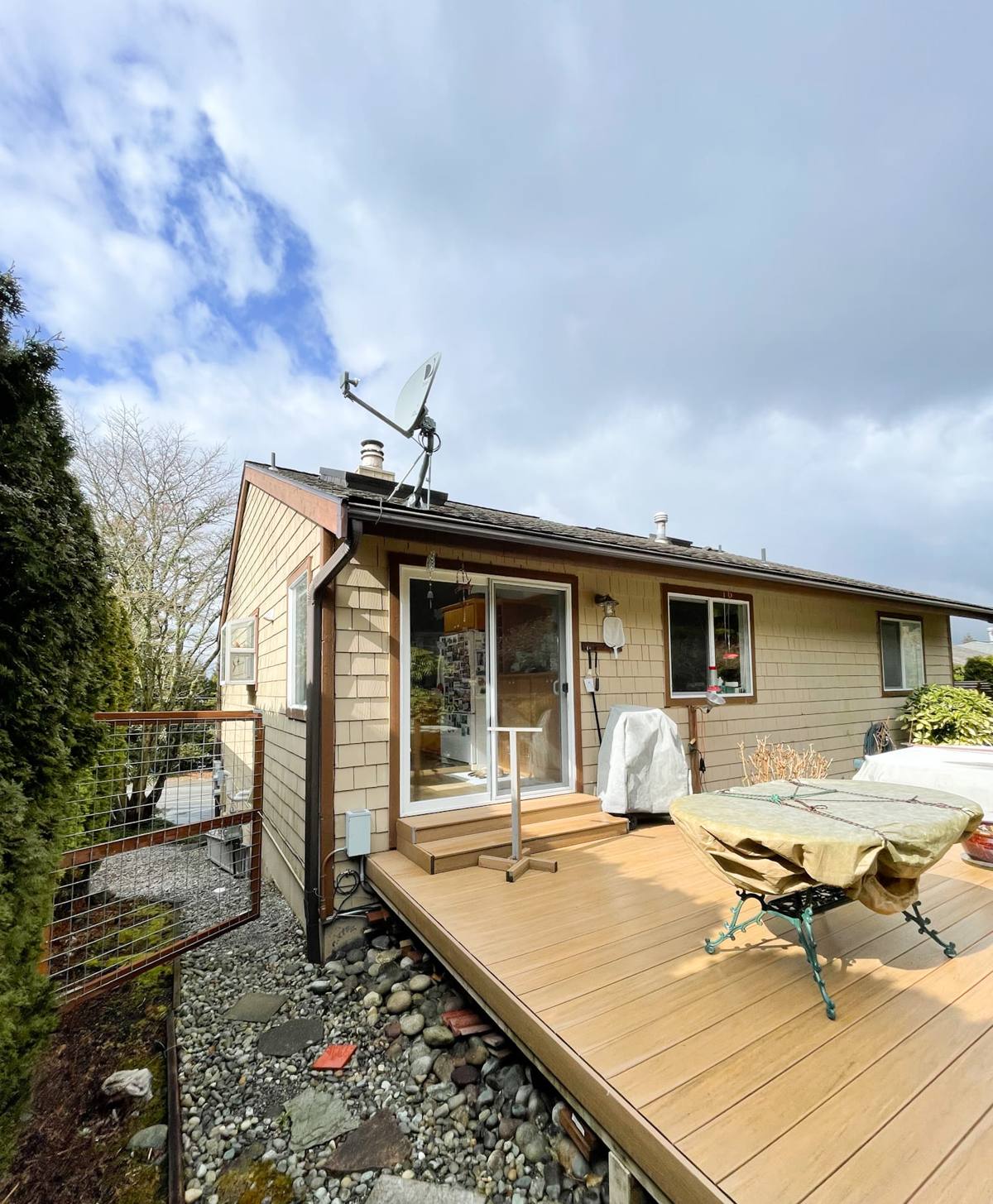
What Samish's Climate Actually Does to a Window Opening
Three regional realities drive most of our decisions on a new-construction window job here:
- Salt air: Proximity to Samish Bay and Bellingham Bay means airborne salt settles on exterior hardware, cladding, and window frames. Over years this accelerates corrosion on lower-grade fasteners and hardware, and it's part of why we're particular about the metals and finishes specified around each opening.
- Driving rain: Whatcom County storms frequently come in with real wind behind them, which pushes water sideways and upward at wall penetrations — not just straight down. A window opening that only sheds water vertically will eventually leak here. The flashing has to manage wind-driven water, not just gravity.
- Long moss season: Extended damp, shaded conditions during much of the year keep exterior surfaces wet longer than in drier climates. Any spot where water can get trapped behind trim, sills, or cladding stays wet longer and is more prone to rot and mildew before it ever dries out.
None of these are exotic problems — builders across the Pacific Northwest deal with versions of all three. But Samish's specific exposure, sitting near open water and catching weather off the Sound, means the margin for a sloppy flashing detail or a cheap sill pan is smaller than it would be on a sheltered inland lot.
Why This Isn't Just a "Buy a Good Window" Problem
We get asked, reasonably, whether spending more on the window unit itself solves these issues. It doesn't, not by itself. A high-end window installed with a poor flashing sequence will still leak. A mid-tier window installed correctly, with proper sill pan flashing, WRB integration, and sealant placement, will usually outperform it. The unit matters, but the installation detail around the rough opening is what actually keeps water out of the wall assembly over time.
What a Correct New-Construction Window Install Involves
On a new build, we're installing into a bare rough opening, which means every layer of the water management system gets built in order, with no shortcuts to correct later. Our sequence generally includes:
- Rough opening check: Confirm the opening is square, plumb, and sized correctly for the specified unit before anything else happens — a slightly out-of-square opening causes problems for the life of the window.
- Sill pan flashing: A sloped, sealed pan at the bottom of the opening so any water that does get past the window has a way out instead of a place to pool.
- WRB (weather-resistive barrier) integration: The house wrap or building paper gets lapped and sealed with the window flanges in the correct shingle-style order — always working top-down so upper layers overlap lower ones, never the reverse.
- Window setting and fastening: The unit is set, checked for level and square again, and fastened per the manufacturer's specified pattern — this affects both the warranty and how the window performs in wind.
- Flashing tape and sealant at head, jambs, and sill: Compatible materials (not just "whatever caulk is on the truck") sealed in the right sequence, with a weep path left open at the sill so incidental water can still drain.
- Backer rod and exterior sealant joint: Sized and tooled correctly so the joint flexes with temperature and building movement instead of cracking.
- Interior air sealing: Often skipped by less careful crews, but it matters for energy performance and condensation control — a gap here shows up later as drafts or moisture on the interior sill.
Skipping or rushing any one of these steps doesn't usually show up as a problem on move-in day. It shows up two, five, or ten years later as staining, soft trim, or a musty smell near the window — right when it's expensive and disruptive to fix, because now it means opening up finished wall and siding instead of an unfinished stud bay.
Choosing a Frame Material for a Coastal Whatcom County Build
Frame material is one of the bigger decisions on a new build, and the right answer depends on budget, maintenance appetite, and how exposed the home is. Here's how the common options stack up for a Samish-area house dealing with salt air and sustained moisture:
| Frame Material | Moisture & Salt Air Behavior | Maintenance | Typical Fit |
|---|---|---|---|
| Vinyl | Doesn't corrode or rot; performs well in salt air | Low — occasional cleaning | Budget-conscious builds, rentals, most standard new construction |
| Fiberglass | Very stable dimensionally, holds paint/finish well over decades, strong moisture resistance | Low | Higher-exposure sites, larger openings, homeowners planning to stay long-term |
| Wood-clad (clad exterior, wood interior) | Good if the cladding and flashing details are done correctly; the wood core is vulnerable if water gets behind the clad shell | Moderate — clad exterior needs less upkeep than raw wood, but any breach needs prompt attention | Higher-end interiors where a wood look/feel indoors is a priority |
| Aluminum | Conducts heat and cold readily, prone to condensation in our damp winters unless thermally broken; can corrode faster in direct salt exposure without a marine-grade finish | Moderate | Commercial or specific architectural applications more than typical residential |
Our default recommendation for most Samish-area new construction is vinyl or fiberglass, specifically because both shrug off the salt-air and moisture exposure without the added maintenance burden that wood-clad and untreated aluminum carry in this climate. We'll still install what a homeowner or builder specifies — this is about giving you the honest maintenance and moisture trade-offs up front, not steering everyone to one product.
Glass Packages and Energy Code Compliance
Washington's energy code sets minimum U-factor requirements for new-construction windows, and those numbers matter more in Whatcom County than in milder parts of the state given our winter temperatures and the amount of cloud-cover, low-light months the region gets. A few practical points:
- Low-E coatings are standard on virtually every new-construction window now — they help hold heat in during winter without meaningfully limiting the daylight we already don't get enough of much of the year.
- Double vs. triple pane is a real cost-vs-performance decision. Triple pane improves U-factor and sound dampening but adds cost and weight; for most Samish builds, a well-specified double-pane low-E unit meets code and performs well, with triple pane reserved for larger openings or homeowners prioritizing maximum efficiency.
- Orientation matters. South- and west-facing openings see more solar gain and more direct wind-driven rain depending on the lot's exposure; we'll sometimes recommend a different glass coating or additional flashing attention on those elevations specifically.
- Condensation resistance is worth asking about directly — in a consistently damp climate, a window with poor condensation resistance can fog or sweat on the interior in winter, which is a comfort issue, not just an aesthetic one.
Getting Your Energy Code Documentation Right the First Time
Every new-construction permit in Whatcom County requires documentation that the installed windows meet the specified U-factor and solar heat gain numbers. We track this as part of the job, not as an afterthought scramble at final inspection — it's one more reason to loop in your window installer early rather than after the building envelope is already closed up.
Our Process on a Samish New-Construction Job
Whether we're working directly for a homeowner or alongside a general contractor, our process for a new build looks like this:
- Plan review: We look at window schedules, elevations, and rough opening sizes before the walls are even framed, so sizing and product selection are locked in early.
- Product selection walkthrough: We go over frame material, glass package, and hardware options against your budget and how exposed the site is to wind and water.
- Coordination with the framing and siding schedule: Windows go in at a specific point in the build sequence — after the WRB is on, before siding closes up the wall. We coordinate timing so nothing gets rushed or installed out of order.
- Installation following manufacturer specs: Every unit is set and flashed per that manufacturer's written instructions, which is also what keeps the product warranty intact.
- Documentation: Photos of flashing and WRB integration before siding closes the wall — useful for your own records and for any future work on the home.
- Final walkthrough: We check operation, sealant lines, and trim fit with you before calling the job complete.
What Drives Cost on a New-Construction Window Package
Every build is different, but these are the factors that move the price most on a Samish-area new-construction window package:
| Factor | Why It Matters |
|---|---|
| Number and size of openings | More glass and larger units mean more material and labor, straightforwardly |
| Frame material | Vinyl is typically the most affordable; fiberglass and wood-clad cost more per unit |
| Glass package | Triple-pane, tinted, or high solar-control coatings add cost over a standard double-pane low-E unit |
| Site exposure | Higher-exposure elevations may warrant extra flashing membrane or upgraded sealant systems |
| Custom or specialty shapes | Non-standard sizes, arched tops, or large sliding/multi-panel units cost more than stock rectangular windows |
| Access and building stage | Coordinating install timing tightly with framing and siding crews keeps labor efficient; delays or out-of-sequence work add cost |
Depending on these factors, whole-house new-construction window packages in this area commonly range from the low thousands for a smaller, simpler home to well into five figures for a larger house with premium glass and frame upgrades. We'll give you a real number once we've seen the plans — broad ranges only get you so far when every build's window schedule is different.
A Practical Checklist for Homeowners and Builders
Before your window install starts, it's worth confirming these items — whether with us or with whoever you're hiring:
- Rough openings match the window schedule and manufacturer specs, checked before the crew shows up on install day
- WRB (house wrap) is installed and ready for proper shingle-lap integration with the window flanges
- Sill pan flashing is included as a line item, not assumed or skipped
- Frame material and glass package are confirmed in writing, including U-factor for code documentation
- Installer follows the specific manufacturer's fastening and flashing instructions for that product line — this affects warranty validity
- Photos of flashing details are taken before siding or trim closes up the opening
- Interior air sealing is included, not left for the insulation crew to "figure out"
Why a Local Whatcom County Crew Makes a Difference
A window installer who mostly works drier, more sheltered inland climates can install a technically fine window that still isn't set up for what Samish weather actually does to it. Working new construction across Whatcom County, including the salt-air and driving-rain exposure closer to the water, means our flashing sequencing and product recommendations are built around what actually holds up here — not around a generic install method that happens to work fine somewhere with a gentler climate. We also know the local permitting expectations and energy code documentation Whatcom County inspectors want to see, which keeps your build moving instead of stalling at inspection over paperwork.
If you're planning a new build in Samish and want a window package that's specified and installed correctly the first time, we're happy to walk your plans and give you a straightforward, no-pressure estimate — just fill out the form below to get started.