 Whatcom County
 Why Window Performance Matters More in Nooksack
Nooksack sits in a part of Whatcom County where the weather doesn't do anything halfway. Winters bring long stretches of driving rain pushed in off the Salish Sea and Georgia Strait, humidity stays high enough for moss and mildew to get a foothold on anything shaded or north-facing, and the salt-tinged marine air works its way into window frames, hardware, and seals faster than most homeowners expect. None of that is dramatic on its own, but it adds up year after year. A window that's a good fit for a dry inland climate can underperform here — not because the glass is bad, but because the installation and the frame material weren't matched to what this specific area actually throws at a house.
Energy-efficient windows done right in Nooksack aren't just about a lower heating bill, though that's real. They're about keeping moisture out of the wall cavity, keeping frames from swelling or rotting, and keeping the house comfortable without the furnace running nonstop from October through April. That's a different design problem than "install windows," and it's why the details matter more here than in a lot of the country.
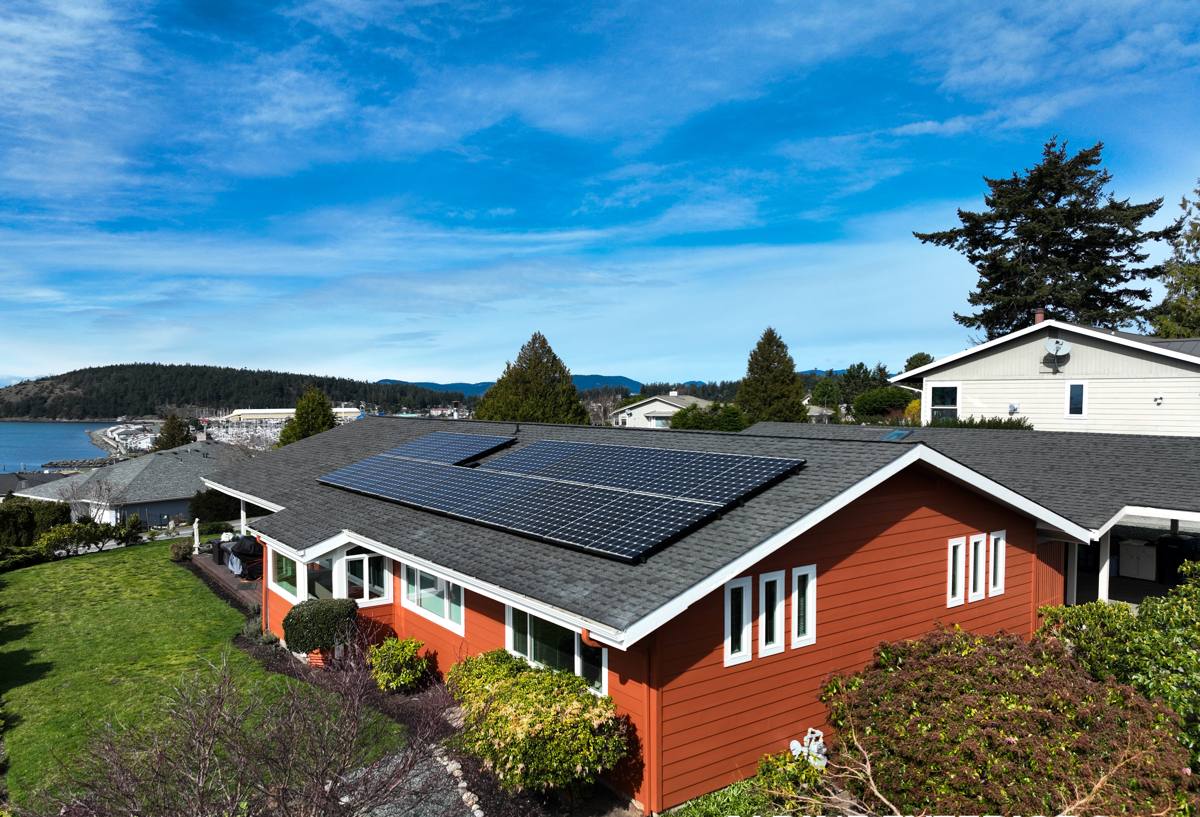
What Whatcom County's Climate Actually Does to Windows
Driving Rain and Wind-Driven Moisture
Rain here doesn't just fall — a lot of it comes in sideways during winter storms. That means flashing, sill pans, and the seal between the window frame and the rough opening have to actually shed water, not just resist it in calm conditions. A window that's caulked in but not properly flashed can look fine for a year or two and then start showing water staining or soft trim, usually right when it's hardest to trace back to the install.
Moss, Mildew, and the Long Wet Season
Whatcom County's moss season isn't a few weeks — it's most of the year on shaded elevations. Moss and algae hold moisture against whatever they're growing on, and window sills, tracks, and lower frame sections are prime real estate if drainage isn't designed in. Weep holes that are undersized, blocked, or missing altogether are one of the most common reasons a window starts failing early in this climate.
Salt Air and Hardware Corrosion
Being close enough to marine air means hardware — hinges, locks, balance systems — corrodes faster than inland installations. Cheaper stamped-steel hardware can start sticking or seizing within a few years. It's a smaller issue than moisture, but it's a real one, and it's part of why we talk through hardware quality, not just glass package, when a Nooksack homeowner is picking windows.
What "Energy-Efficient" Actually Means for a Nooksack Home
Energy efficiency in a window comes from three things working together: the glass package, the frame material, and the installation. Get one wrong and the other two can't fully compensate.
- Glass package: Double-pane with low-E coating and argon gas fill is the practical standard for this climate — it cuts winter heat loss and summer solar gain without the cost jump of triple-pane, which is rarely justified for our winter temperatures.
- Frame material: Vinyl and fiberglass both perform well here and resist moisture better than wood, which needs ongoing maintenance to avoid swelling and rot in this humidity.
- Installation quality: Proper flashing, sill pan drainage, air-sealing with the right materials (not just caulk over gaps), and correct shimming so the sash operates and seals evenly for years — not just on day one.
We'll be direct about one thing: we don't install every window product on the market, and that's a standard we hold ourselves to, not a knock on any specific brand. Some window lines have installation tolerances or warranty structures that make them a poor match for the moisture load this area sees, or they require maintenance routines that most homeowners don't realize they're signing up for. When we recommend against a product, it's about long-term performance in this specific climate, not marketing.
Comparing Common Window Options for This Climate
| Frame Type | Moisture Resistance | Maintenance | Typical Fit for Nooksack |
|---|---|---|---|
| Vinyl | High — won't rot, minimal absorption | Low — occasional cleaning | Strong all-around choice, good value |
| Fiberglass | High — very stable in temperature swings | Low | Excellent, especially for larger openings or dark exterior colors |
| Wood (clad or unclad) | Moderate — depends on cladding and upkeep | High — needs regular sealing/painting | Workable for character homes, but higher maintenance burden here |
| Aluminum | Low — poor thermal performance, prone to condensation | Low | Not recommended for energy-efficiency goals in this climate |
What a Correct Installation Looks Like
Before the Window Ever Goes In
We check the rough opening for existing rot or water damage — a surprisingly common find on older Nooksack homes where a prior window leaked slowly for years. Any soft or damaged framing gets addressed before a new window goes in, because installing an efficient window into a compromised opening just hides the problem.
During Installation
- Sill pan flashing installed to direct any water that gets past the window back out, not into the wall
- Weather-resistant barrier integrated with the flashing in the correct shingle-lap order
- Window shimmed level and square so the sash seals evenly and doesn't bind over time
- Low-expansion foam or backer rod and sealant used for air-sealing around the frame — not just caulk
- Weep holes checked and kept clear so the window can drain as designed
- Interior and exterior trim sealed to shed water away from the frame
After Installation
We walk the homeowner through operation, hardware care, and what normal condensation looks like versus a sign of a problem — useful information in a climate where indoor humidity plus cold glass can produce condensation even on a well-installed window during the coldest stretches.
Signs a Nooksack Home Needs Window Attention
- Drafts or cold spots near windows even when they're closed and locked
- Visible moisture, fogging, or discoloration between the panes (a sign the seal has failed)
- Soft or discolored trim or sill, especially on north- or west-facing walls
- Moss or persistent green staining building up on sills or lower sashes
- Windows that are hard to open, close, or lock — often a sign of frame swelling or corroded hardware
- Noticeably higher heating bills compared to similar-sized homes nearby
Cost Factors to Expect
Every home is different, so we won't quote a number without seeing the openings, but the main cost drivers for a Nooksack window project are consistent:
| Factor | Why It Matters Here |
|---|---|
| Number and size of openings | Larger and more numerous windows mean more material and labor |
| Frame material | Vinyl is typically the most cost-effective; fiberglass costs more upfront but holds up well long-term |
| Condition of existing openings | Rot or water damage found during removal adds repair work before the new window can go in |
| Access and story height | Second-story or hard-to-reach windows take more time and equipment |
| Full-frame vs. insert replacement | Full-frame allows us to fix flashing and drainage issues; inserts are faster but can't correct underlying problems |
Why It Matters to Hire a Crew That Already Works Nooksack
A lot of window problems in this part of Whatcom County trace back to installation decisions that would be perfectly reasonable somewhere drier — a flashing detail skipped, weep holes undersized, a caulk-only seal instead of a proper sill pan. None of those show up on inspection day. They show up two or three winters later, after enough driving rain and enough moss season have had time to find the gap.
Working in Nooksack and the surrounding parts of Whatcom County regularly means we're not guessing at how this climate behaves — we're accounting for it in every installation, from how we flash the opening to which hardware we're willing to put our name behind. That's the difference between a window that looks good at handoff and one that's still performing well a decade in.
Our Process
- On-site assessment: We look at existing window condition, framing, and any signs of past moisture issues.
- Honest recommendation: We walk through frame material and glass package options suited to your home and budget — no upselling to a product that doesn't make sense for the situation.
- Written estimate: Clear scope, clear pricing, no surprise add-ons sprung mid-project.
- Careful removal and prep: Old windows come out cleanly, and we address any rot or damage in the opening before anything new goes in.
- Correct installation: Flashing, drainage, air-sealing, and hardware set up the way this climate actually requires.
- Walkthrough: We show you how everything operates and what to expect from your new windows.
If you're noticing drafts, fogged glass, or windows that just don't feel right anymore, it's worth having someone take a look before another wet season passes. We offer free, no-pressure estimates for Nooksack homeowners — fill out the form below and we'll set up a time to come take a look.