 Whatcom County
 Ferndale's Climate Is Harder on a Roof Than It Looks
Ferndale sits close enough to the water that salt-laden air is a real factor in how long a roof lasts, not just a talking point. Add Whatcom County's long stretch of wet months, heavy tree cover in a lot of neighborhoods, and the mix of driving rain and wind that comes through off the Strait, and you've got a set of conditions that will find every weak point in a roofing job within a few years — sometimes faster. Asphalt shingles can handle this climate well, but only when the installation accounts for it. A shingle roof built to a generic spec, or installed by a crew that normally works a drier region, tends to show its age in Ferndale much sooner than it should.
Salt Air and Metal Components
Salt air doesn't hurt the shingles themselves much, but it accelerates corrosion on the metal parts of a roofing system — nails, flashing, vent caps, and gutter hardware. A roof that uses bargain fasteners or thin, uncoated flashing will show rust streaking and early failure at those points well before the shingles themselves wear out. This is one of the most common shortcuts we see on older Ferndale roofs, and it's one of the cheapest things to get right the first time.
Moss Season Is Longer Here Than People Expect
Between the shade from mature trees on many Ferndale lots and the sheer number of damp, low-light months in a Whatcom County year, moss has a long runway to establish itself. Moss isn't just cosmetic — it holds moisture against the shingle surface, lifts shingle edges as it grows, and works its way under tabs and around flashing over time. A roof with poor ventilation or the wrong shingle exposure will grow moss faster and shed it worse than one built with this climate in mind.
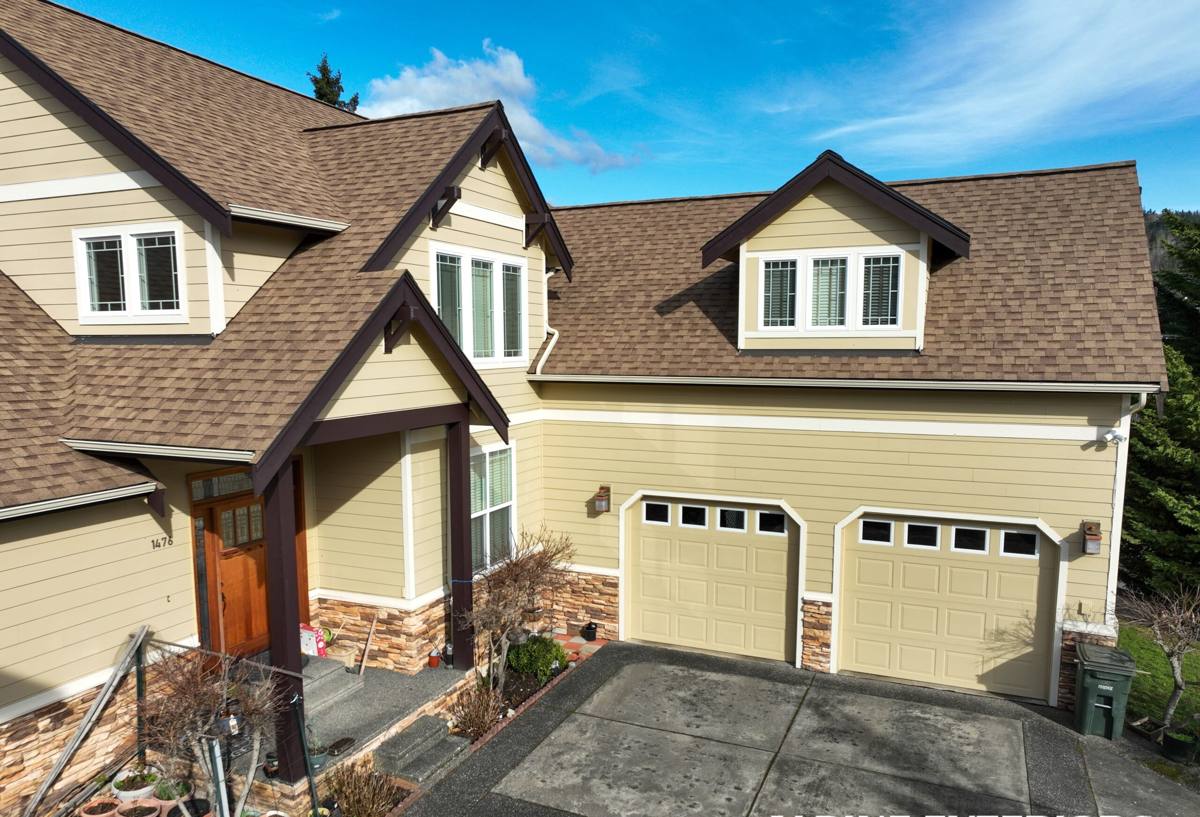
What a Correctly Built Asphalt Shingle Roof Needs Here
An asphalt shingle roof is a system, not just a layer of shingles nailed to plywood. In a climate like Ferndale's, a few parts of that system matter more than they would in a drier area, and skipping them is where most premature roof failures start.
Underlayment and Ice-and-Water Protection
A synthetic underlayment with a good moisture rating over the full deck is the baseline. At eaves, valleys, and any low-slope transitions — the spots where wind-driven rain gets pushed backward under shingles — a self-adhered ice-and-water membrane belongs underneath, not just at the edge for show. This detail matters more on homes with lower roof pitches or valleys that collect debris, which is common on a lot of Ferndale roof lines.
Ventilation That Actually Balances
Intake at the eaves and exhaust at the ridge need to be sized to work together. A roof with plenty of ridge vent but no real intake will still trap moist attic air, which speeds up deck rot from underneath and shortens shingle life from below — a problem that's easy to miss because it doesn't show up on the surface until it's advanced.
Flashing at Every Transition
Chimneys, skylights, sidewalls, and any roof-to-wall intersection need step flashing and counter-flashing done correctly, not caulk used as a substitute for metal. Caulk fails; properly lapped flashing doesn't need to be redone every few years. This is one of the most common corner-cutting spots we find when we're asked to look at leaks on existing Ferndale homes.
Choosing the Right Shingle for a Ferndale Roof
Not every asphalt shingle product is a good fit for this climate. The differences that matter most here are wind rating, algae resistance, and how the shingle sheds moss and moisture over time.
| Shingle Type | Typical Lifespan | How It Handles Ferndale's Climate |
|---|---|---|
| 3-Tab Shingles | 15-20 years | Lowest upfront cost; thinner profile sheds moss less effectively and shows wear faster under sustained wet conditions |
| Architectural / Laminate Shingles | 25-30 years | Heavier, more wind-resistant, better algae-resistant granule options available — the standard choice for most of our Ferndale installs |
| Impact-Rated Shingles | 25-30+ years | Added durability against debris and hail impact; a good option on homes with heavy overhanging trees |
We generally steer homeowners toward algae-resistant architectural shingles for anything near the water or under tree cover, since the granule treatment slows the black streaking that shows up faster here than in drier parts of the state. It costs a little more upfront and pays for itself in appearance and reduced cleaning over the life of the roof.
Our Process for a Ferndale Asphalt Shingle Roof
- Inspection and assessment — we check the deck, existing ventilation, flashing condition, and moss/moisture damage before quoting anything, not after tear-off starts.
- Tear-off and deck check — old material comes off completely so we can see the actual deck condition; soft or rotted sheathing gets replaced, not covered over.
- Underlayment and ice-and-water install — full synthetic underlayment plus membrane at eaves, valleys, and other vulnerable transitions.
- Ventilation correction — intake and exhaust are balanced to the attic's actual size and layout, not just whatever was there before.
- Shingle installation — proper nailing pattern and exposure per manufacturer spec, which is what keeps the wind and warranty ratings valid.
- Flashing and detail work — step flashing, counter-flashing, and vent boots done properly at every penetration and transition.
- Cleanup and walkthrough — magnetic sweep for stray nails, full site cleanup, and a plain-language review of warranty coverage and maintenance expectations.
Problems We Commonly Find on Existing Ferndale Roofs
When we're called out to look at an older roof in the area, a handful of issues show up again and again:
- Moss buildup at north-facing slopes and shaded valleys that's been left to grow instead of gently removed
- Rusted or undersized flashing at chimneys and sidewalls, often patched with caulk instead of replaced
- Nail pops and lifted tabs from wind exposure combined with aging, brittle shingles
- Blocked or missing intake ventilation, leading to attic condensation and premature deck wear
- Granule loss and algae streaking on shingles that were never algae-resistant to begin with
Most of these are catchable early with a basic inspection, which is worth doing every couple of years even on a roof that isn't showing obvious problems yet.
Maintenance That Actually Extends Roof Life Here
A well-installed roof still needs some upkeep in this climate. None of this is complicated, but it's the kind of thing that gets skipped until there's already a leak.
- Keep gutters and valleys clear of needles and debris, especially going into the wet months
- Have moss removed gently (not scraped or pressure-washed aggressively) before it spreads across a slope
- Check attic ventilation isn't blocked by insulation or storage
- Look at flashing around chimneys and vents every year or two for rust or lifted seams
- Address small leaks immediately — deck rot spreads quietly and gets expensive fast
Why It Matters to Hire a Crew That Already Works in Ferndale
Roofing standards that work fine in a dry inland climate don't automatically hold up here. A crew that already works Whatcom County roofs day in and day out knows which shingle lines actually resist algae in this air, where moss tends to establish first on a given roof pitch, and which flashing details fail early near the water. That's not something you can fully substitute with a generic install checklist — it comes from having repaired the mistakes and seen which shortcuts actually cause problems in this specific climate. It also means we're a known, reachable local business if a warranty question or storm-related issue comes up later, not a crew that worked through the area once and moved on.
What a Ferndale Asphalt Shingle Roof Typically Involves Cost-Wise
Pricing depends on roof size, pitch, number of penetrations, and how much deck repair is needed once the old material comes off — we won't quote a number without seeing the roof. In general terms, expect the total to move up with steeper pitches, more valleys and flashing details, and any plywood replacement uncovered during tear-off. Upgrading to an algae-resistant architectural shingle over a basic 3-tab adds modest cost per square but tends to be worth it given how this climate treats untreated shingles.
If you're dealing with a roof that's showing moss, granule loss, or age-related wear, or you're planning ahead for a replacement, we're happy to take a look and walk you through what we're actually seeing — no pressure, no inflated scope. Fill out the form below for a free estimate and we'll get back to you with a straight answer.