 Whatcom County
 Why Fairhaven Roofs Wear Differently Than Roofs Inland
A roof in Fairhaven does not age the same way a roof in a dry, inland town does. Sitting close to Bellingham Bay means the air carries salt, and salt is hard on anything metal — fasteners, flashing, gutter hardware. Add in Whatcom County's long, wet fall-through-spring stretch, where roofs stay damp for days at a time instead of drying out between storms, and you get the conditions that shorten roof life faster than the calendar would suggest: persistent moss and algae growth, granule wear from driving rain, and slow moisture intrusion at any seam that isn't sealed correctly.
None of that means Fairhaven homes need exotic materials or gimmicks. It means the replacement has to be done with this specific climate in mind — the right underlayment, the right flashing details, and ventilation that actually keeps the attic dry. A roof built for a drier climate, installed here without adjustment, will show problems years before it should.
Signs You're Looking at a Replacement, Not Another Repair
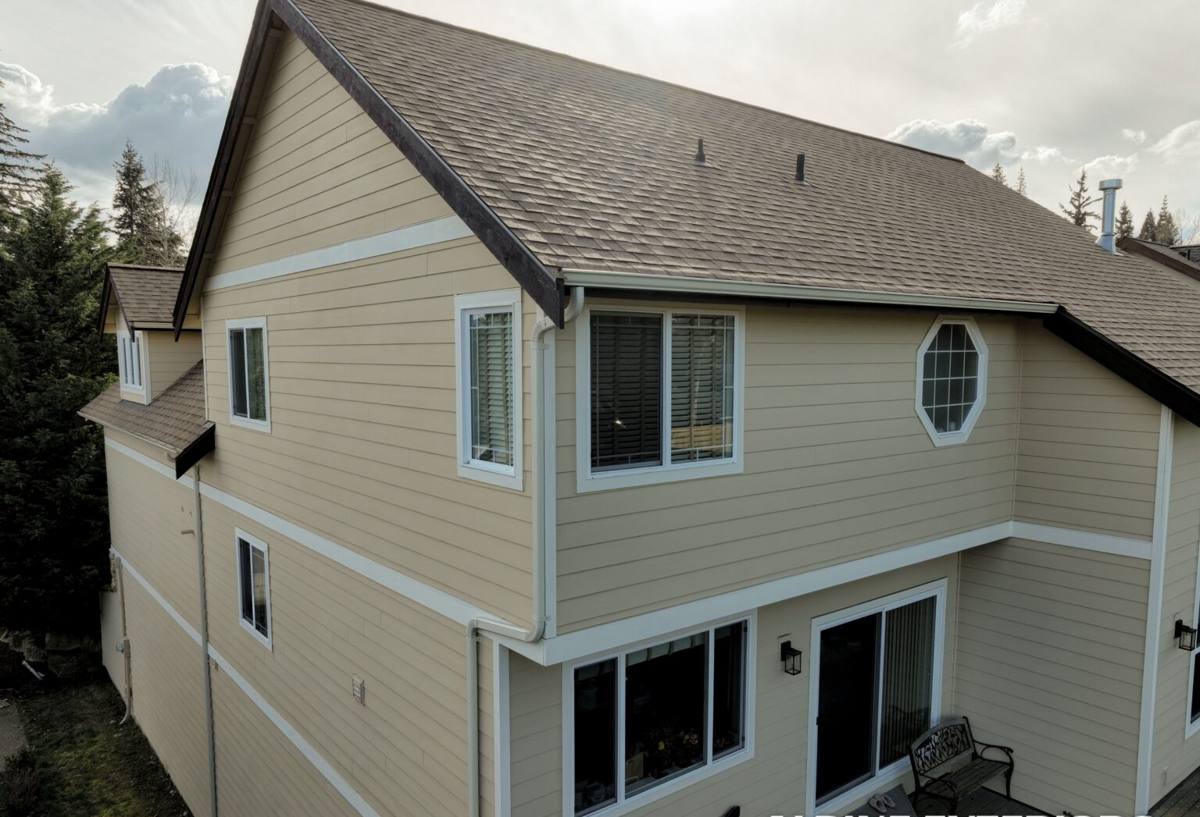
Repairs make sense when the roof is fundamentally sound and the problem is isolated. Replacement makes sense when the roofing material itself has reached the end of its service life or the damage is spread across multiple areas. In a climate like ours, moss and moisture make it easy to miss the difference — a homeowner sees moss and thinks "cleaning," when the moss is actually a symptom of granule loss and slowing drainage underneath.
- Shingles that are curling, cupping, or losing granules in patches rather than just at the edges
- Moss forming thick mats (not just surface streaks) especially on north-facing or shaded slopes
- Soft, spongy decking felt underfoot in the attic or from the ground with a ladder inspection
- Leaks showing up in more than one location, or in a new spot each time it rains hard
- A roof already at or past 20–25 years for asphalt, or showing a second layer from a prior overlay
- Daylight visible through the roof deck from inside the attic
If you're only seeing one or two of these, a repair may still buy you time. If you're seeing several at once, replacement is usually the more honest recommendation — and cheaper in the long run than repeated patch work.
Why Moss Isn't Just Cosmetic Here
Whatcom County's moss season runs long because shaded, moisture-retentive roof slopes rarely get enough sun to fully dry out. Moss holds water against the shingle surface far longer than bare roofing would, which accelerates granule loss and can lift shingle edges enough for wind-driven rain to work underneath. Left untreated for years, moss doesn't just look bad — it actively shortens the roof's remaining life.
What a Correct Roof Replacement Actually Involves
A roof replacement is more than swapping old shingles for new ones on top of the same deck. Done correctly, it includes:
- Full tear-off down to the decking — not an overlay on top of failing material
- Deck inspection and repair, replacing any sheathing that's rotted, delaminated, or soft
- Ice-and-water barrier at eaves, valleys, and other vulnerable transitions, which matters more here given how much of the year the roof stays wet
- Synthetic underlayment across the full deck as a secondary moisture barrier
- New flashing at every wall, chimney, skylight, and vent penetration — reused flashing is one of the most common sources of "new roof, same leak" complaints
- Correct fastening pattern per the manufacturer's wind-rated specification, not just whatever's fastest
- Balanced ventilation matched to the attic's intake and exhaust needs
- Full cleanup, including a magnetic sweep for stray nails
Skipping any one of these doesn't always show up right away. It shows up in year three or four, as a leak at a chimney, premature moss regrowth, or shingles that fail early because the deck underneath was never actually sound.
Material Options That Actually Hold Up in a Coastal, Mossy Climate
There's no single "best" roofing material — the right choice depends on budget, roof pitch, and how much long-term maintenance you're willing to do. Here's how the common categories compare for a Fairhaven property specifically:
| Material | Moss/Algae Resistance | Salt-Air Behavior | Typical Lifespan | Maintenance Load |
|---|---|---|---|---|
| Architectural asphalt shingle | Moderate; algae-resistant granule options help | Fine if flashing/fasteners are corrosion-resistant | 25–30 years | Periodic moss treatment, gutter care |
| Standing seam metal | Good; sheds moisture fast, little surface for moss to grip | Needs a coated, corrosion-rated panel and fastener system near the water | 40–50+ years | Low; occasional fastener/seal check |
| Composite/synthetic shingle | Good; engineered surface resists moss better than standard asphalt | Generally stable, but confirm fastener spec | 30–50 years (product-dependent) | Low to moderate |
We install across these categories rather than pushing one option. Our job is to walk you through the honest trade-offs — upfront cost versus lifespan, appearance versus maintenance — not to steer you toward whatever's easiest to install.
Ventilation and Moisture Control: The Part That Gets Skipped
An attic that can't breathe traps warm, moist air against the underside of the roof deck. Over a Whatcom County winter, that trapped moisture condenses, soaks into the sheathing, and creates exactly the damp conditions moss and rot thrive on — regardless of how good the shingles on top are. Correct ventilation balances intake (usually at the soffits) with exhaust (usually at the ridge), so air actually moves through the attic instead of stagnating.
This is one of the most common things we find missing or mismatched on older Fairhaven roofs — soffit vents painted shut, insulation blocking intake, or an exhaust vent added without any matching intake. Fixing this during a replacement costs little compared to fixing it after the deck has already started to rot.
Our Process for a Fairhaven Roof Replacement
- On-site inspection — we look at the roof surface, the attic, ventilation, and flashing details, not just a drive-by estimate
- Written scope and material selection — a clear breakdown of what's being replaced, what materials are being used, and why
- Property protection — tarping landscaping, protecting gutters and siding, staging materials to minimize disruption
- Tear-off and deck repair — full removal, with any compromised sheathing replaced before anything new goes down
- Underlayment, flashing, and ventilation — the layers that determine whether the roof actually performs in our climate
- Installation — to manufacturer spec, accounting for wind exposure common to properties near the water
- Final walkthrough — reviewing the finished roof with you before we consider the job done
- Cleanup and documentation — full site cleanup and paperwork for your warranty records
What Roof Replacement Cost Depends On
Every roof is different, so exact pricing only comes from an on-site look. But the main cost drivers are consistent:
| Factor | Why It Matters |
|---|---|
| Roof size and pitch | More surface area and steeper pitches mean more material and labor time |
| Number of existing layers | Tearing off two layers of old roofing costs more than tearing off one |
| Decking condition | Rotted or soft sheathing found during tear-off has to be replaced, which isn't always visible beforehand |
| Material choice | Asphalt, composite, and metal carry different upfront costs and lifespans |
| Roofline complexity | Valleys, dormers, and multiple penetrations add flashing work and labor time |
| Access and site conditions | Tight lots, steep driveways, or difficult staging can affect labor time |
Why a Crew That Already Works Fairhaven Matters
A roofing crew that regularly works this part of Whatcom County isn't guessing about how the climate behaves — they've seen how salt air affects exposed metal near the water, how long moss actually takes to become a structural problem instead of a cosmetic one, and how driving rain finds its way through a flashing detail that would hold up fine somewhere drier. That local pattern recognition shows up in small decisions: which fastener finish to spec, when to schedule a tear-off so the deck isn't left exposed during a wet stretch, and which flashing details need extra attention on homes closer to the water.
It also matters for the practical side of the job — familiarity with local permitting requirements and inspection expectations, and supplier relationships that keep material lead times predictable instead of leaving a torn-off roof waiting on backordered shingles during a rainy week.
Living With a Whatcom County Roof After Replacement
A correctly installed roof still benefits from a little seasonal attention, especially given how long our wet season runs:
- Clear gutters and downspouts before the fall rains start, so water isn't backing up under the roofline
- Have moss treated at the first sign of regrowth rather than waiting for full mats to form
- Check flashing around chimneys, skylights, and walls once a year for any lifting or sealant wear
- Trim back overhanging branches that keep shaded areas of the roof damp longer than they need to be
- Watch for granule buildup in the gutters — a normal small amount early on, but a sign of wear if it increases over time
A few minutes of seasonal attention is far cheaper than an emergency repair mid-storm.
If your Fairhaven roof is showing its age, or you just want an honest opinion on repair versus replacement, we're happy to take a look. The estimate is free, there's no pressure to commit on the spot, and you'll get a straight answer about what your roof actually needs — just fill out the form below.