 Whatcom County
 Why Board & Batten Behaves Differently in Fairhaven
Fairhaven sits close to Bellingham Bay, which means homes here deal with a specific combination of weather that inland Whatcom County properties don't see as often: salt-laden marine air, wind-driven rain coming straight off the water, and a moss and algae season that can run from early fall through late spring in the shaded, tree-canopied lots common in this part of town. Board & batten siding — with its vertical boards and narrow battens covering the seams — is a great architectural fit for the craftsman bungalows, cottages, and character homes you find throughout Fairhaven. But that same vertical profile has more seams and more edges than a standard lap siding job, and every one of those seams is a place where salt air, rain, and moisture can work their way in if the installation isn't done correctly for this climate.
This page focuses on one thing: what it takes to do board & batten siding right on a Fairhaven home, given what this specific stretch of Whatcom County throws at a house year-round.
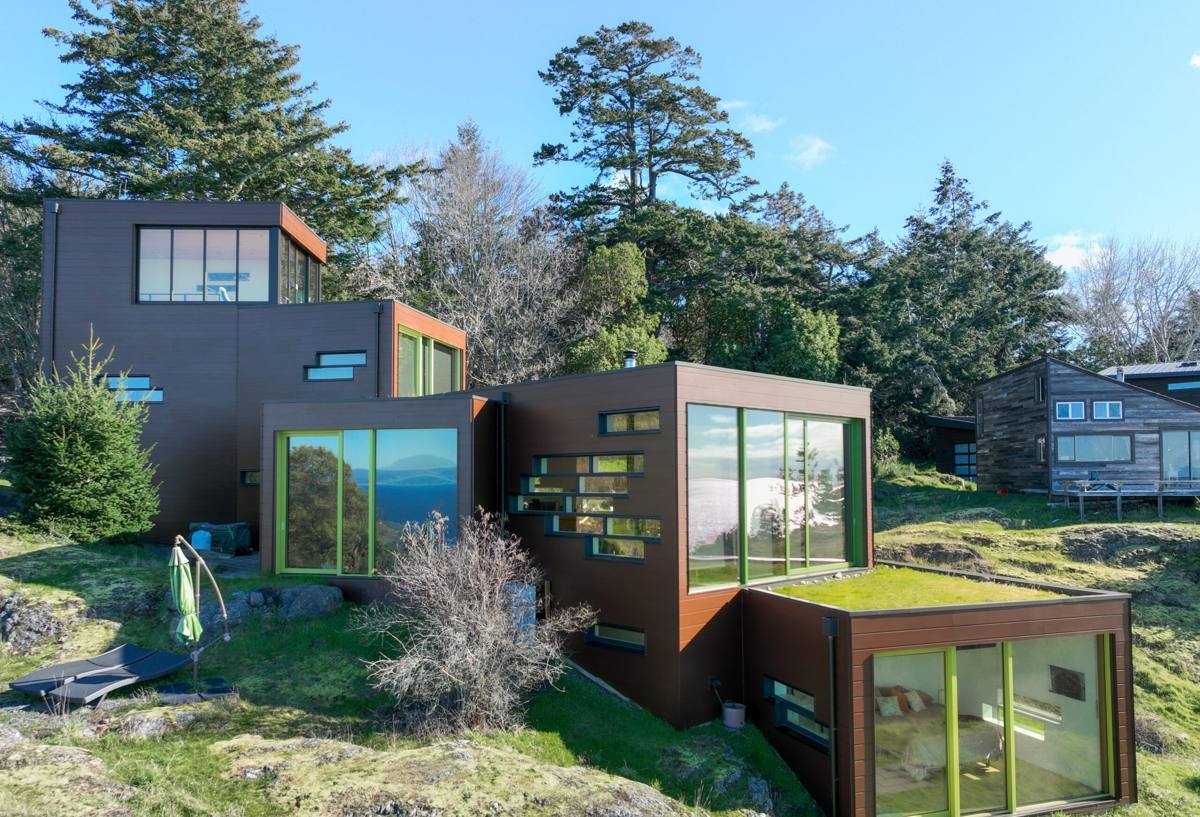
What Board & Batten Siding Actually Is
Board & batten is a vertical siding style: wide flat boards installed side by side, with narrower strips (the battens) fastened over the seams between them. It reads as clean, linear, and a little more architectural than horizontal lap siding, which is part of why it shows up so often on older Pacific Northwest homes and on newer builds trying to match that look. The style lives or dies on how the seams and battens are detailed, because those seams are the weak point in any board & batten system.
The Traditional Wood Version's Problem
Older board & batten siding in this region was almost always solid wood. Wood board & batten depends on paint and caulk to keep water out of the seams, and both of those fail faster in a marine climate than they do inland. Moss and algae that take hold on shaded wood siding hold moisture against the surface far longer than the wood was designed to tolerate, and once water gets behind a batten, it has nowhere to go but into the wall assembly. That's the pattern we see repeatedly on older wood board & batten homes in this area: cupped or split boards, failed caulk lines, and soft spots at the bottom courses where splashback and standing moisture do their damage over years.
Why We Only Install This Look in James Hardie Fiber Cement
We install James Hardie fiber cement exclusively — we don't install vinyl, LP SmartSide, cedar, primed spruce, or other fiber cement brands for board & batten or any other siding style. That's a standard, not a sales pitch, and it's worth explaining why it matters specifically for this style in this location.
- Dimensional stability: Fiber cement doesn't swell and shrink with moisture the way wood does, which matters a lot on a profile that depends on tight, consistent batten seams. Wood battens that swell and dry repeatedly work their fasteners loose over time; fiber cement holds its shape.
- Non-combustible core: James Hardie board & batten is fiber cement through and through, not a wood or wood-composite substrate with a coating on top.
- Factory-applied ColorPlus finish: The finish is baked on at the factory rather than field-painted, which holds up better against salt air and UV than a job-site paint job, and it's the reason you're not repainting a Fairhaven-facing wall every few years.
- Climate-engineered product lines: Hardie's HZ10 formulation is built for wetter, cooler climates like ours, which is a meaningful difference from a product engineered for a drier region and shipped here anyway.
- A real transferable warranty: Backed by the manufacturer, not just the installer, and it stays with the house if you sell.
We're not going to tell you vinyl or LP SmartSide are junk — plenty of homes have them and get by fine. What we will say is that we've made a professional call to standardize on one system we can install to spec every time and stand behind, and for a vertical, seam-heavy style going on a salt-air, high-moisture lot, that call matters more than it would on a dry-climate ranch house.
What a Correct Installation Involves
Board & batten siding fails less because of the material and more because of how it's put on the wall. The details below are where a correct job and a corner-cut job diverge, and they're the same details we'd point to on any board & batten inspection in this climate:
- A drainage plane behind the siding — a rainscreen gap or drainable housewrap — so any moisture that does get past the cladding has somewhere to go besides your sheathing.
- Flashing at every horizontal transition: window and door heads, trim boards, deck ledgers, and roof-to-wall intersections, with kickout flashing where a roofline meets a wall to keep runoff from driving rain out and away from the siding instead of behind it.
- Fasteners driven flush, not overdriven, at the manufacturer's specified pattern and edge distance — overdriven nails crack fiber cement and create entry points for water.
- Batten placement that actually covers the panel joint with the correct reveal, not just centered by eye.
- Caulking only at the joints Hardie specifies, with the right sealant — over-caulking a fiber cement joint that's supposed to breathe traps moisture instead of shedding it.
- Proper clearance at grade, decks, and patios so the bottom edge of the siding isn't sitting in standing water or constant splashback off hardscaping.
On a Fairhaven property, we also pay close attention to wall orientation. Walls facing the water or open to prevailing weather take a heavier, more direct load of wind-driven rain, and that's where flashing details and fastening get the most scrutiny during our install and our final walkthrough.
James Hardie Board & Batten Options
There are two ways to get the board & batten look in the James Hardie lineup, and the right one depends on the home's architecture and how much of an authentic, deep-shadow-line look you want.
| System | What It Is | Best For |
|---|---|---|
| HardiePanel Vertical Siding + HardieTrim Battens | Large vertical fiber cement panels with separate trim battens installed over the panel seams | Straightforward vertical applications, larger wall sections, budget-conscious board & batten look |
| Hardie Artisan Board & Batten Collection | A premium, thicker-profile system designed to replicate authentic, deep-set traditional board & batten with a more dimensional shadow line | Craftsman and character homes where the traditional board & batten look is the whole point |
Color-wise, ColorPlus finishes hold their look longer in salt air than field-applied paint, which is worth factoring in if you're choosing a darker color for a Fairhaven-facing elevation — dark, field-painted finishes are the first to show fading and chalking in this kind of exposure.
What Moves the Cost on a Fairhaven Board & Batten Project
We don't quote pricing sight unseen, but these are the factors that consistently move a board & batten estimate up or down, and they're worth thinking through before you call anyone:
| Factor | Why It Matters |
|---|---|
| Existing siding & sheathing condition | Tear-off often reveals moisture damage behind older wood siding that has to be repaired before new siding goes on — common on older Fairhaven homes with a history of wood board & batten or lap siding. |
| Wall complexity & trim detail | Board & batten uses more linear material per square foot than lap siding because of the battens, and homes with a lot of window and door trim, gables, or dormers take more labor to detail correctly. |
| Site access | Hillside lots, tight side yards, and mature landscaping — all common in Fairhaven — can slow staging and material handling. |
| Panel system chosen | Standard HardiePanel with battens versus the Hardie Artisan collection carries a real cost difference for the deeper, more authentic profile. |
| Rainscreen / drainage upgrade | Adding or upgrading a rainscreen gap where one doesn't currently exist is additional work, and it's the single best moisture-management upgrade for this climate. |
Our Process
- On-site assessment: We look at the existing siding, sheathing, and any signs of past moisture intrusion before we talk numbers.
- Moisture and drainage plan: We determine whether the wall needs a new or upgraded rainscreen or drainage plane behind the new siding.
- Material selection: HardiePanel with battens or the Artisan Board & Batten collection, in a ColorPlus finish that suits the home and its exposure.
- Tear-off and sheathing check: Old siding comes off, sheathing gets inspected and repaired where needed — we don't cover up damage with new siding.
- Installation to manufacturer spec: Flashing, fastening, and batten placement done to Hardie's published specifications, not shortcuts.
- Final walkthrough: We go over the finished job with you, including care and warranty paperwork.
Living With Board & Batten in Fairhaven's Climate
A correctly installed James Hardie board & batten system is genuinely low-maintenance, but "low-maintenance" doesn't mean "no attention," especially this close to the water. A few habits go a long way:
- Keep gutters and downspouts clear so runoff isn't sheeting down the siding face during heavy rain events.
- Trim back vegetation and tree canopy near the walls where you can — shade and still air are what let moss and algae establish on siding in the first place.
- Rinse salt spray and grime off lower courses on water-facing walls periodically, especially after storms.
- Do a seasonal walk-around looking at caulk joints, trim, and flashing, particularly before the wet season sets in each fall.
- Address any soft spots, staining, or gaps at trim promptly rather than waiting for the next dry stretch to deal with them.
Why Hiring a Crew That Already Works in Fairhaven Matters
Whatcom County covers a lot of ground, and not every part of it sees the same weather. A crew that works Fairhaven regularly already knows how wind-driven rain off the bay behaves against a wall, which elevations take the worst of it, and how aggressively moss and algae establish on shaded, tree-covered lots that are common here. That's the kind of knowledge that shows up in where we place kickout flashing, how we detail a water-facing gable, and what we flag as a moisture risk before it becomes a repair. It also means realistic timelines and material lead times specific to this area, not a generic estimate written for a different climate zone.
If you're considering board & batten siding for a Fairhaven home, we're happy to walk the property with you, look at what's there now, and talk through what a correct James Hardie installation would involve for your specific walls and exposure — no pressure, no obligation. Use the form below to request a free estimate.